 Whatcom County
 Why Happy Valley Roofs Wear Differently Than Roofs Inland
Happy Valley sits close enough to the water and the weather patterns that roll through Whatcom County that its roofs face a different combination of stresses than a roof twenty miles inland. It's not any single factor that causes problems — it's the combination, repeated year after year. Salt-laden air off the water accelerates corrosion on exposed metal fasteners and flashing. Driving rain, pushed sideways by wind instead of falling straight down, finds its way into laps and seams that would stay dry in a calmer climate. And a long, damp moss season — often running from fall through spring — gives organic growth months to establish itself on north-facing slopes and shaded valleys before a homeowner even notices.
None of this means asphalt shingle roofing is a poor choice here. It remains one of the most practical, cost-effective options for this climate when it's specified and installed correctly. The problems we see on Happy Valley roofs almost always trace back to shortcuts taken during installation, not a flaw in the material itself.
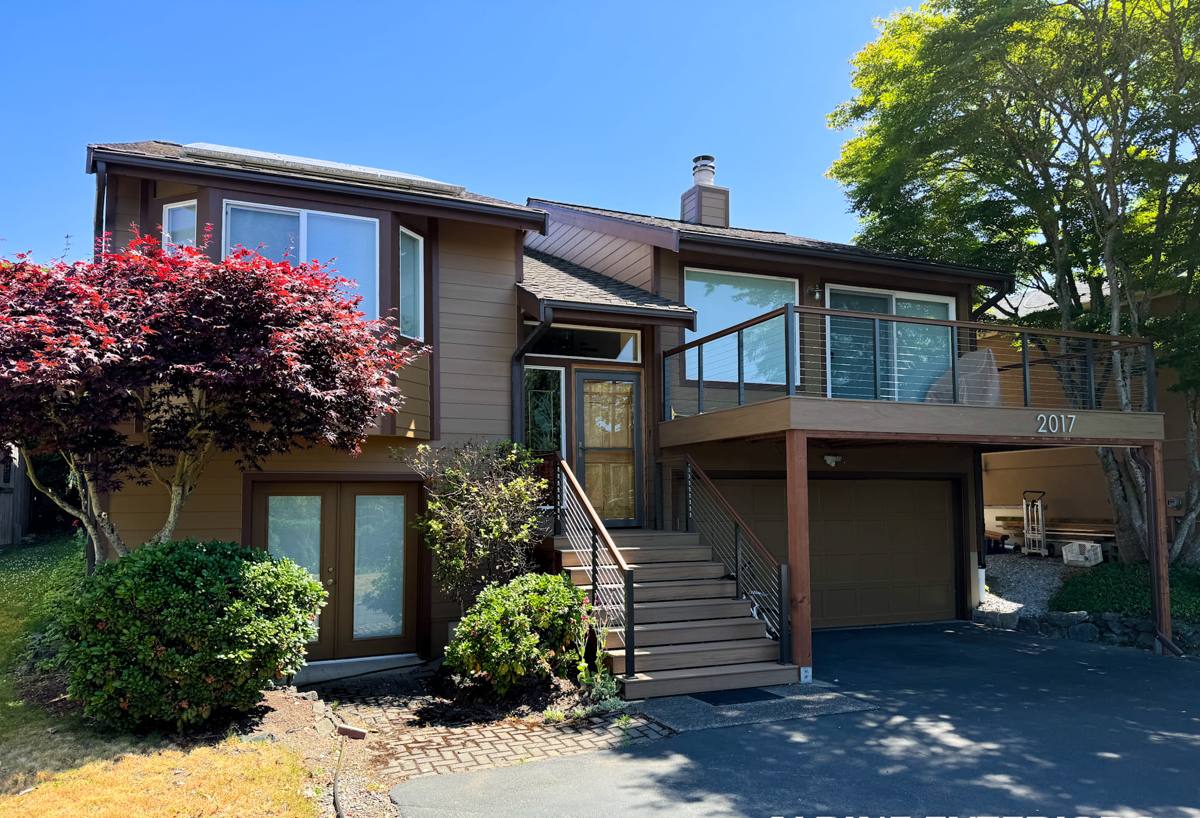
What "Correct" Actually Means for This Neighborhood
A roofing job that would pass fine in a drier climate can fail early here. When we scope a shingle roof for a Happy Valley home, we're not just matching the existing look — we're building in margin against the specific ways this climate attacks a roof.
Wind and Rain Exposure
Wind-driven rain doesn't just sit on top of shingles; it can be pushed under tabs and along exposed edges if the underlayment, sealant strips, and nailing pattern aren't right. We pay close attention to starter courses, rake edges, and any transition where two roof planes meet — these are the spots where a marginal install shows its weaknesses first during a real Whatcom County storm.
Salt Air and Metal Components
Flashing, drip edge, and fasteners are all exposed to airborne salt, which speeds up corrosion compared to homes further from the water. We favor corrosion-resistant metal and fastener specifications for homes in this part of the county rather than treating every roof the same regardless of location.
Moss and Shade
Homes tucked under mature trees or on north-facing slopes hold moisture longer, which is exactly what moss needs to take hold. A correct install anticipates this with proper flashing at valleys and penetrations, so that moss growth is a maintenance issue you manage over time — not a moisture pathway into your roof deck.
Shingle Options for This Climate
Not every asphalt shingle product performs the same way under sustained damp conditions and salt exposure. Here's how the common tiers compare for a Happy Valley application.
| Shingle Type | Wind Rating | Moss/Algae Resistance | Typical Lifespan Here | Best Fit |
|---|---|---|---|---|
| 3-Tab (standard) | Lower (60-70 mph typical) | None built in | 12-18 years in this climate | Budget-driven projects, rental properties |
| Architectural / Dimensional | Higher (110-130 mph typical) | Available with algae-resistant granules | 20-28 years in this climate | Most Happy Valley homes — our default recommendation |
| Impact-Resistant Architectural | Higher, plus Class 4 impact rating | Available with algae-resistant granules | 20-28 years, better resistance to debris damage | Homes under trees or with storm debris exposure |
We steer most Happy Valley homeowners toward an architectural shingle with algae-resistant (copper- or zinc-infused) granules. It costs more up front than a basic 3-tab, but in a climate with this much sustained moisture, the difference in how long the roof looks and performs well is significant enough that we consider it the honest default rather than an upsell.
How We Install Asphalt Shingle Roofing on Happy Valley Homes
The process is straightforward, but the details inside each step are where climate-specific decisions get made.
- Tear-off and deck inspection. We remove the old roofing down to the deck and inspect for soft spots, rot, or prior water damage — common where moss has been sitting against the deck for years. Any damaged sheathing gets replaced before anything new goes down.
- Ice-and-water shield at vulnerable areas. Eaves, valleys, and penetrations get a self-adhered waterproof membrane, not just standard felt. Given how much wind-driven rain this area sees, this layer is where a lot of long-term protection comes from.
- Synthetic underlayment across the field. We use synthetic underlayment rather than older felt products for better tear resistance and more reliable moisture protection during the install window itself, since Whatcom County weather rarely gives you a guaranteed dry stretch.
- Corrosion-resistant flashing and drip edge. Chimneys, valleys, sidewalls, and roof edges get new metal flashing rated for coastal-adjacent exposure, sealed and integrated with the underlayment rather than just caulked over the old flashing.
- Shingle installation to manufacturer nailing spec. Proper nail placement and count matter more here than in calmer climates — under-nailing is one of the most common causes of early wind damage we find on older roofs in this area.
- Ventilation check and correction. We verify intake and exhaust airflow through the attic space, correcting it where needed (see below).
- Final inspection and cleanup. We walk the roof, check every penetration and edge, and do a full magnetic sweep of the yard and landscaping for stray fasteners.
Ventilation and Moisture Control Matter More Here
A shingle roof isn't just the surface layer — it's a system that depends on the attic beneath it staying properly ventilated. In a climate with as much sustained humidity and rainfall as Whatcom County sees, poor attic ventilation traps moisture, which can lead to premature deck rot, mold, and shingles failing from underneath rather than from weather exposure on top. We check soffit intake and ridge or roof-vent exhaust as a standard part of any shingle roofing job here, not as an add-on. If your attic is under-vented, we'll tell you plainly what that's doing to your roof's lifespan and what it would take to correct it.
Living With Moss, Algae, and Salt Air After Installation
Even a correctly installed roof needs some seasonal attention in this environment. Moss season here is long, and letting growth sit unchecked is the single biggest thing that shortens an otherwise good roof's life.
- Keep overhanging branches trimmed back to reduce shade and debris buildup on north-facing slopes.
- Have gutters cleared before the fall rains start, so water isn't backing up under the eave line.
- Address visible moss growth early with a gentle, roof-safe treatment rather than pressure washing, which can strip granules and shorten shingle life.
- Have flashing and sealant at penetrations (vents, chimneys, skylights) checked every few years — this is where salt-air corrosion shows up first.
- Watch for granules collecting in gutters or downspouts, which can signal a shingle surface starting to break down.
Signs Your Happy Valley Roof Needs Attention
A quick self-check can catch problems before they turn into interior damage. If you notice any of the following, it's worth having someone take a closer look.
- Shingles that look cupped, curled, or are missing granules in patches
- Dark streaking or thick moss growth, especially on shaded slopes
- Soft or spongy spots when walking the roof (a sign for a professional to check, not a DIY step)
- Rust staining around flashing, vents, or metal edges
- Daylight visible through the roof deck from inside the attic
- Water stains on interior ceilings after a heavy wind-driven rain event
- Granules accumulating in gutters or at the base of downspouts
What Drives Cost on a Job Like This
Every roof is different, but the same handful of factors tend to move the price up or down on a Happy Valley shingle project.
| Factor | Why It Matters |
|---|---|
| Roof size and pitch | Steeper roofs take longer and require more safety setup, which affects labor cost |
| Number of layers to remove | Tear-off of multiple old layers adds time and disposal cost |
| Deck condition | Rotted or soft sheathing found during tear-off needs replacement before shingles go down |
| Shingle tier chosen | Architectural and algae-resistant products cost more upfront than 3-tab |
| Flashing and penetration count | Chimneys, skylights, and multiple valleys add material and labor |
| Ventilation corrections | Adding or upgrading intake/exhaust vents adds cost but protects the whole roof system |
We give straightforward, itemized estimates so you can see exactly where the cost is going, rather than a single lump number that hides what you're actually paying for.
Why Hiring a Crew That Already Works Happy Valley Matters
Roofing crews that mainly work drier, calmer climates can do fine work in general and still under-spec a roof for conditions they don't see often — lighter nailing patterns, standard underlayment where a waterproof membrane belongs, or flashing that isn't rated for salt exposure. A crew that regularly works Whatcom County, including neighborhoods like Happy Valley, has already seen what fails here and builds against it as a matter of course, not as an upgrade you have to ask for. That local pattern recognition — knowing which valleys collect debris, which slopes hold moss longest, which flashing details tend to corrode first near the water — is hard to substitute for.
Our Approach to Every Job
We treat every roof as its own project, not a template. That means an honest inspection before we quote anything, a clear explanation of what your roof actually needs versus what would just be an upsell, and a written estimate that breaks down materials and labor so there are no surprises. If your roof only needs targeted repair rather than full replacement, we'll tell you that — a roof that's sound structurally and just needs flashing work or a moss treatment doesn't need to be torn off.
If you're noticing wear on your roof or just want an honest read on where it stands, we're happy to take a look. Reach out for a free, no-pressure estimate using the form below, and we'll walk your roof with the specific conditions of Happy Valley and the wider Whatcom County climate in mind.