 Whatcom County
 Building a Deck That Can Handle Happy Valley's Weather
Happy Valley sits close enough to Bellingham Bay and the Salish Sea that homes here deal with a specific combination of punishment: salt-laden air moving in off the water, long stretches of driving rain through fall and winter, and a moss season that can run from October well into April. A deck built for a drier inland climate doesn't hold up the same way out here. Boards cup, fasteners corrode, and shaded corners grow a green film that turns slick within a season or two. Composite decking, installed correctly for this specific environment, is one of the more sensible answers to that problem — but "composite decking" covers a wide range of products and installation approaches, and not all of them are built for what Whatcom County throws at a deck.
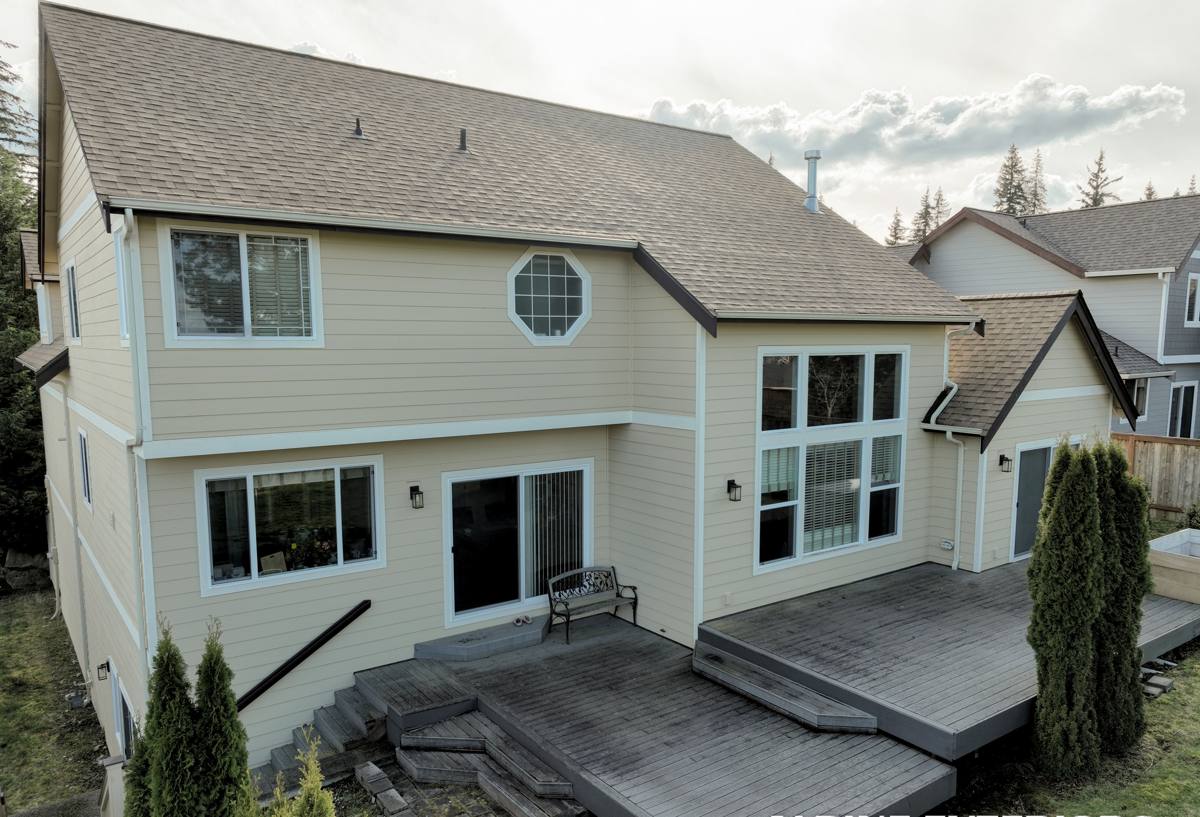
What This Climate Actually Does to a Deck
Before talking about materials, it helps to understand the three things working against any outdoor structure in this part of the county:
Salt Air
Proximity to saltwater accelerates corrosion on anything metal — fasteners, joist hangers, railing hardware. Left unaddressed, this is often what fails first on a deck, well before the decking boards themselves show real wear.
Driving Rain
Whatcom County doesn't just get a lot of rain — much of it comes in sideways during winter storms, which means water gets driven into joints, end grain, and fastener holes that would stay dry in a gentler climate. Any decking material that isn't fully sealed on all six sides is vulnerable to moisture intrusion over time.
Moss and Algae Season
Shaded, damp, and cool for months at a time — that's exactly the environment moss and algae need. Decks under tree cover or on the north side of a house are especially prone to a slick green surface that's both unsightly and genuinely dangerous underfoot.
Why Composite Makes Sense for Happy Valley Homes
Composite decking is manufactured from a blend of wood fiber and recycled plastic (or, in higher-end lines, a mostly mineral-based core), which means it doesn't have the open grain structure that lets wood absorb water, swell, and eventually rot. That matters a great deal in a climate where boards rarely get a long enough dry stretch to fully recover between rain events. It also doesn't require the annual sanding, staining, or sealing that keeps a cedar or fir deck looking decent — a real consideration for homeowners who don't want a maintenance project every spring.
That said, composite isn't maintenance-free, and it isn't automatically the right call for every situation. We'll walk through both the strengths and the real trade-offs below, because a homeowner who understands what they're buying makes a better long-term decision than one who's just told "composite is better."
Capped vs. Uncapped: What You're Actually Buying
Most of the confusion around composite decking comes down to one distinction: whether the board has a protective cap or not.
- Uncapped composite is the older style — a solid wood-plastic blend all the way through. It's more affordable but more porous, meaning it can still absorb moisture at the surface and is more prone to staining, mold, and fading over time.
- Capped composite has a co-extruded polymer shell wrapped around the core, usually on three or four sides. This shell is what actually resists moisture, staining, and UV fading. In a climate like ours, with sustained damp and low winter light, the cap is doing most of the real work.
For a Happy Valley application, we generally steer homeowners toward fully-capped boards, especially on any deck with shade exposure or proximity to salt spray. The upfront cost difference is real, but so is the difference in how the deck looks and performs after five or six wet Whatcom winters.
What's Underneath Matters as Much as the Boards
A composite deck is only as good as the substructure it sits on. This is the part that doesn't show in a photo but determines whether the deck is still solid in fifteen years.
Framing and Fasteners
Given the salt air here, we specify corrosion-resistant hardware — stainless steel or heavily coated fasteners and joist hangers — rather than standard galvanized. The cost difference is modest; the difference in service life is not.
Ledger Flashing
Where the deck attaches to the house, proper flashing is what keeps driving rain from working its way behind the siding and into the wall assembly. This is one of the most common places we find water damage on older decks in this area, and it's almost always a flashing detail that was skipped or done poorly.
Joist Spacing
Composite boards typically require tighter joist spacing than wood decking — often 12" on center for angled or diagonal installations. Following the manufacturer's spacing requirements isn't optional; it's what prevents the bounce and long-term sag that give composite decking a bad reputation when it's installed by someone unfamiliar with the product.
Airflow Underneath
Low clearance decks that don't allow air to move underneath trap moisture and encourage moss and mildew to creep up from below. Where grade allows, we build in enough clearance and, where it doesn't, we look at venting or drainage solutions to keep the underside from staying perpetually damp.
Our Installation Process
- Site evaluation — we look at drainage, sun/shade exposure, proximity to salt spray, and the condition of any existing structure before recommending a board type or fastening system.
- Substructure build or inspection — new framing is built to spec with corrosion-resistant hardware; existing framing being reused is inspected for rot, proper flashing, and adequate joist spacing before any composite board goes down.
- Board layout and fastening — most capped composite lines use a hidden fastener/clip system that leaves no screw heads on the surface, which also reduces the number of exposed metal points that can corrode or stain the board around them.
- Edge and end treatment — cut ends and edges get proper trim or fascia coverage so exposed core material isn't left open to moisture.
- Railing and hardware — matched to the same corrosion standard as the deck fasteners, since railing hardware takes the same salt-air exposure and often fails first if it's an afterthought.
- Final walkthrough — we go over gap spacing, drainage, and basic care with the homeowner before calling the job done.
Composite vs. Wood vs. PVC: An Honest Comparison
| Material | Moisture Resistance | Maintenance | Upfront Cost | Best Fit |
|---|---|---|---|---|
| Pressure-treated wood | Moderate — absorbs water, needs sealing | Annual sanding/staining | Lowest | Budget-conscious owners willing to maintain it |
| Cedar | Naturally decent, degrades without upkeep | Regular sealing/staining | Moderate | Homeowners who want a natural look and don't mind upkeep |
| Uncapped composite | Good, but porous at the surface | Low — occasional cleaning | Moderate | Budget-conscious owners wanting less upkeep than wood |
| Capped composite | Very good — sealed shell resists moisture and staining | Low — periodic washing | Higher | Homes with heavy shade, salt exposure, or long-term owners |
| PVC decking | Excellent — fully synthetic, no wood fiber | Lowest | Highest | Maximum moisture exposure (near water, low clearance) |
There's no single "best" material here — it's a question of how much upkeep a homeowner wants to do versus what they're willing to spend up front, and how exposed the specific site is to shade, spray, and standing moisture.
What Actually Drives the Cost of a Composite Deck
| Factor | Why It Matters |
|---|---|
| Board tier (uncapped vs. capped, mineral-based lines) | Material cost per square foot varies significantly, and this is usually the biggest swing in overall price |
| Substructure condition | Reusing sound existing framing costs far less than a full rebuild |
| Deck size and layout complexity | Curves, multiple levels, and diagonal board patterns all add labor |
| Railing system | Composite or metal railing systems cost more than basic wood but match the low-maintenance goal |
| Site access | Difficult access or grade can add labor time for material staging and framing |
| Hardware upgrades | Stainless or marine-grade fasteners cost more than standard, but matter more here than in a drier inland area |
Rather than quote a flat number that won't mean much until we've actually seen the site, we walk every project through these factors during the estimate so the homeowner understands exactly what's driving the price up or down.
Living With a Composite Deck in Whatcom County
Low-maintenance doesn't mean zero-maintenance, especially with moss season factoring in every year. A simple seasonal routine keeps a composite deck looking and performing the way it should:
- Sweep debris off regularly — wet leaves and needles left sitting are what feed moss and algae growth
- Rinse or wash the surface a couple of times a year, more often in shaded areas, using a soft brush and mild soap
- Keep gutters and downspouts clear so runoff isn't dumping extra water directly onto or under the deck
- Check railing and stair hardware periodically for early signs of corrosion, especially closer to the water
- Avoid pressure washing at high pressure directly into board seams, which can force water where it shouldn't go
- Trim back overhanging branches where possible to cut down on shade and moisture retention
Why Local Installation Experience Matters
Composite decking manufacturers write their installation specs for a general climate, not specifically for the Salish Sea corridor. A crew that only occasionally installs decking, or that's used to drier conditions, can follow the manufacturer's minimum spec and still end up with a deck that struggles here — wrong fastener grade, inadequate flashing at the ledger, joist spacing that's technically within range but not tight enough for our wet-dry cycling. A crew that works Happy Valley and the surrounding parts of Whatcom County regularly has already seen what fails in this specific environment and builds past the minimum spec accordingly. That's not a marketing point — it's the difference between a deck that needs attention again in five years and one that doesn't.
If you're weighing a composite deck for a Happy Valley property, we're happy to walk the site, talk through board options, and put together a straightforward estimate with no pressure attached. The form below is the easiest way to get that conversation started.