 Whatcom County
 Why Happy Valley Decks Wear Out Faster Than the Manual Says
Happy Valley sits close enough to the water and the weather patterns off Bellingham Bay that decks here take a different kind of beating than a deck in a drier inland climate. It's not one big storm that does the damage — it's the combination of things stacking up year after year: salt-tinged air working into fasteners and hardware, long stretches of driving rain that finds every gap in the flashing, and a moss season that can run from October clear through April if a deck sits shaded or under trees. A deck built to a generic spec sheet, without those three factors in mind, tends to show real problems five to eight years sooner than it should.
Most of what we get called out for in this neighborhood isn't a single failure — it's moisture that's been getting in slowly, doing quiet damage under boards and around framing where nobody looks until something feels soft underfoot or a railing starts to wobble.
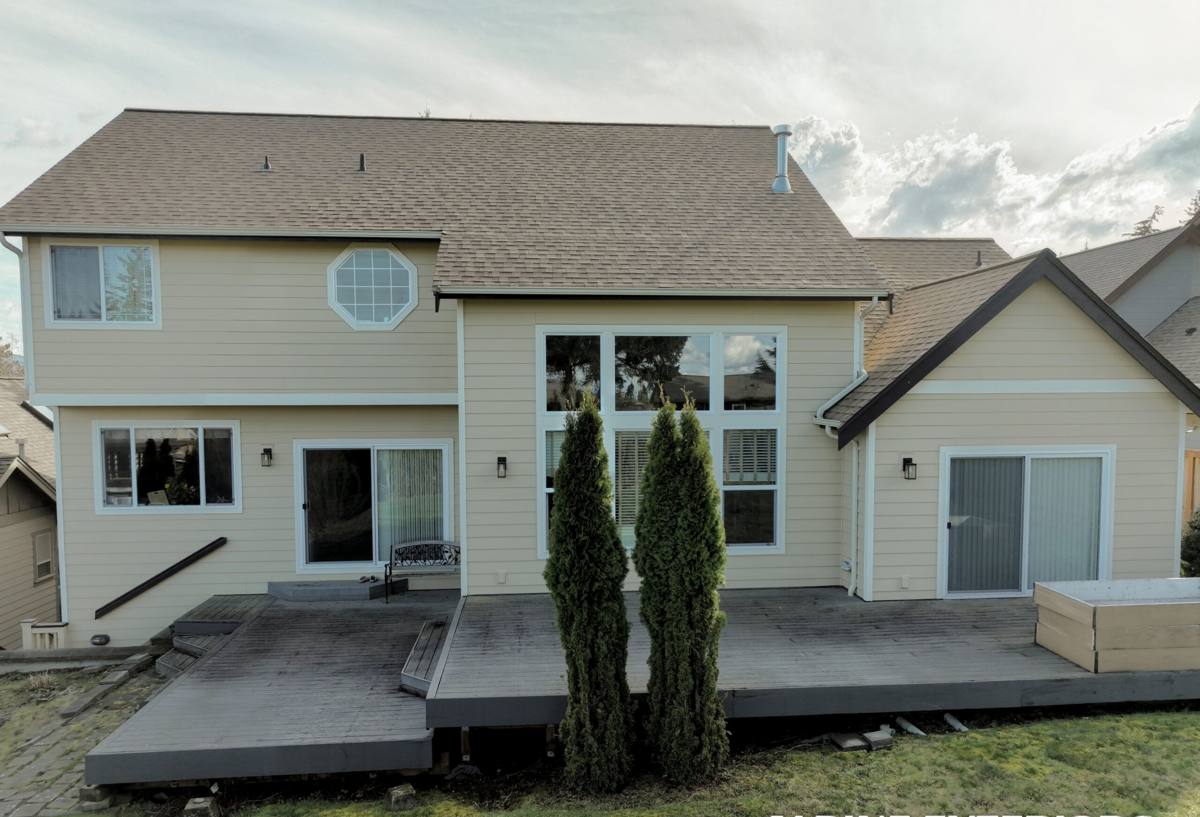
How the Local Climate Actually Damages a Deck
Salt Air and Metal Fatigue
Even a few miles from saltwater, airborne salt accelerates corrosion on anything metal — joist hangers, structural screws, railing brackets, and post bases. Corroded hardware loses holding strength long before it looks obviously rusted through, which is why we always pull a sample of fasteners during an inspection rather than just eyeballing them from below.
Driving Rain and Wind-Driven Moisture
Whatcom County storms rarely come straight down — wind pushes rain sideways into ledger boards, under railing posts, and behind any trim that isn't properly flashed. That sideways rain is the main reason ledger board rot (where the deck attaches to the house) is one of the most common repairs we make in this area.
Moss and Prolonged Dampness
Moss itself doesn't rot wood directly, but it holds moisture against the deck surface for days after everything else has dried out. On shaded decks or ones near mature trees, that trapped dampness is what actually breaks down the wood fibers and finish over time, and it makes boards slicker and more dangerous underfoot.
Signs a Happy Valley Deck Needs Repair
Some of these you can check yourself before calling anyone out:
- Boards that feel spongy, springy, or noticeably softer in one area than the rest of the deck
- Green or black staining that comes back within weeks of cleaning it off
- Railings or posts that flex or wiggle when you lean on them
- Rust streaks running down from screw heads or metal brackets
- Gaps opening up where the deck meets the house siding or foundation
- Standing water that takes more than a day to drain after rain stops
- Stairs that feel uneven or have visibly sagging stringers
- A musty smell coming from underneath the deck, especially after a wet stretch
Any one of these on its own might be minor. Two or three together, especially near the ledger or stairs, usually means moisture has already reached the framing and it's worth having someone look underneath, not just at the surface.
Repair vs. Replace: What Actually Decides It
| Factor | Usually Repairable | Usually Needs Replacement |
|---|---|---|
| Framing/joists | Solid, dry to the touch, no soft spots | Soft, crumbling, or discolored throughout |
| Ledger board | Isolated soft section, house rim joist still sound | Rot has spread into the house's rim joist |
| Surface boards | A handful of boards affected | Most boards showing rot, cupping, or splitting |
| Hardware | Surface rust only, structure still tight | Corrosion has eaten into the metal, connections loose |
| Age of deck | Under 15 years, built to current code | Older, undersized framing, or no permit on file |
These are general guidelines, not hard rules — the only way to know for certain is to physically check the framing, which is where a lot of DIY assessments go wrong. Surface boards can look fine while the structure underneath is already compromised.
What a Correct Repair Actually Involves
A repair that only replaces what's visible from the top tends to fail again within a couple seasons. A repair that holds up in this climate needs to address the parts nobody sees:
- Ledger flashing: if the ledger board shows any rot, we check and correct the flashing between the deck and the house — this is the single most common source of repeat failures we see on older Happy Valley decks
- Joist and beam condition: every framing member under a repair area gets probed, not just visually inspected, since rotted wood can look solid from a few feet away
- Fastener upgrade: corroded hardware gets replaced with fasteners rated for outdoor and coastal-influenced exposure, not standard interior-grade screws
- Drainage and airflow: we address whatever is trapping moisture in the first place — poor grading underneath, missing gaps between boards, or vegetation growing too close to the structure
- Railing and stair structure: these take the most repeated stress and are checked for loose connections even when they don't look visibly damaged
Materials: What We Use and Why
For structural framing repairs, we use pressure-treated lumber rated for ground contact or above-ground exposure depending on where it sits, matched to current code requirements. For decking surfaces, the choice between wood and composite comes down to trade-offs, not a clear winner:
| Wood Decking | Composite Decking | |
|---|---|---|
| Upfront cost | Lower | Higher |
| Moss/mildew resistance | Needs regular cleaning and sealing | Better resistance, but not immune |
| Maintenance | Annual cleaning, periodic sealing | Occasional washing, no sealing |
| Repair approach | Individual boards easy to replace | Board matching can be harder over time as product lines change |
| Feel underfoot | Warmer, more traditional | Consistent, but can get slick when mossy if not textured |
We don't push one product over the other as a blanket rule — it depends on how shaded the deck is, how much upkeep the homeowner wants to do, and what's already in place. What we won't do is install composite decking without properly ventilated framing underneath, since trapping moisture against composite boards in a wet climate like this one causes its own set of problems down the line. That's a standard we hold regardless of what's asked for, because the callback repair costs more than doing it right the first time.
Our Repair Process
- On-site inspection: we check the deck from above and underneath, probe suspect boards and framing, and check hardware condition
- Written scope: a clear breakdown of what's being repaired, what materials are used, and what it costs — no vague line items
- Demo of affected areas only: we remove what needs to come out without disturbing sound structure unnecessarily
- Structural correction first: framing, flashing, and fasteners get addressed before anything cosmetic
- Surface repair or replacement: matching boards where possible, replacing full sections where board matching isn't practical
- Final check: railings, stairs, and connections get tested under load before we call it done
What Repairs Typically Cost
Small repairs — a handful of boards, a section of railing, or hardware replacement — are usually the least expensive category. Mid-range repairs involving ledger board work or partial joist replacement cost more because of the framing access involved. Larger repairs that touch most of the structure start to approach replacement cost, which is often the point where full replacement makes more long-term sense. We give an honest opinion on which category a given deck falls into rather than defaulting to the most expensive fix.
Keeping a Repaired Deck From Failing Again
A good repair buys time, but Whatcom County's wet season will keep testing it. A few habits make a real difference:
- Sweep off debris and standing water regularly during the fall and winter moss season
- Clean moss and algae off the surface at least once a year, ideally before it gets a foothold
- Trim back vegetation that's shading the deck or blocking airflow underneath
- Check hardware and fasteners for early rust once a year, before it spreads
- Reseal wood decking on the manufacturer's recommended schedule rather than waiting for visible wear
Why Local Experience Matters for This Job
Deck repair isn't the same job in every climate. A crew used to dry-climate framing details can miss the specific failure points that show up in Whatcom County — undersized ledger flashing, hardware that wasn't rated for salt-air exposure, or drainage that was fine on paper but doesn't account for how long rain lingers here. Working regularly in Happy Valley and the surrounding area means we've already seen how local decks age, which parts fail first, and what actually holds up through another wet season rather than just looking finished on handoff day.
If you're seeing soft spots, rust, recurring moss, or just want an honest read on whether your deck needs a repair or a full replacement, we're glad to come take a look. Fill out the form below for a free, no-pressure estimate — we'll tell you straight what we find and what it would take to fix it right.