 Whatcom County
 Metal Roofing Built for Happy Valley's Climate
Happy Valley sits close enough to the water and the hills around it that roofs here take a specific kind of beating: salt-laden air drifting in off the Sound, long stretches of driving rain through the fall and winter, and a moss season that seems to start earlier every year and never fully lets go. A roof that would hold up fine in a drier inland climate can struggle here, especially if it wasn't detailed correctly for this environment in the first place. Metal roofing, installed the right way, handles all three of those stressors better than most alternatives — but "installed the right way" is doing a lot of work in that sentence, and it's the part homeowners usually don't get told about until something leaks.
This page is about metal roofing specifically for Happy Valley homes: what the climate actually does to a roof over time, what a correct metal roof installation involves, how our process works, and what to expect in terms of cost and maintenance. If you're comparing metal against asphalt shingles generally, that's a broader conversation — this one is about getting metal roofing right in this particular corner of Whatcom County.
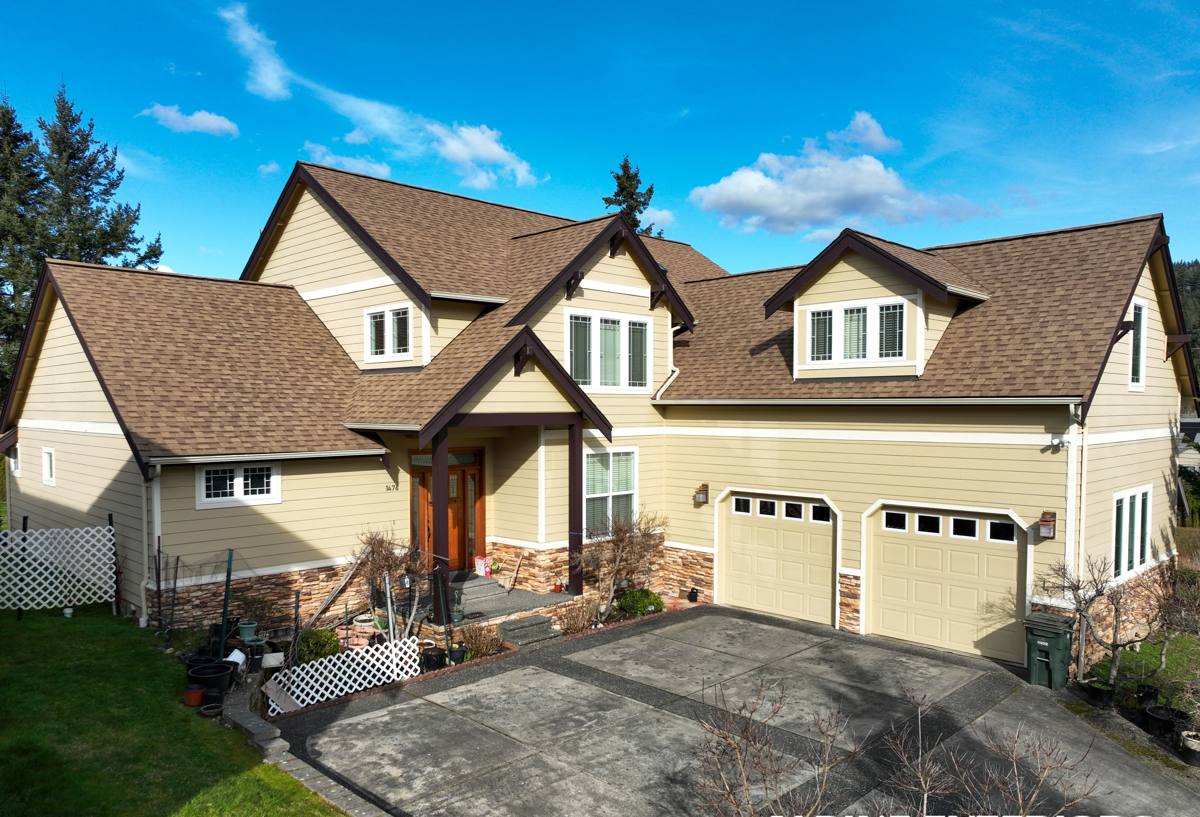
What Whatcom County Weather Does to a Roof
Three climate factors matter most for a Happy Valley roof, and they interact with each other in ways that make deferred maintenance more costly here than in drier climates.
Salt Air and Corrosion
Proximity to Puget Sound means airborne salt is a real factor for fasteners, flashing, and any exposed metal edge. Not every metal roofing product is rated the same way for coastal exposure — panel coatings, fastener coatings, and flashing metal all need to be matched to the environment, not just picked off a standard spec sheet. A fastener that corrodes prematurely isn't just a cosmetic issue; it's a future leak point.
Driving Rain
Whatcom County rain doesn't always fall straight down. Wind-driven rain finds its way under laps, around penetrations, and into any seam that wasn't sealed or lapped correctly. Metal roofing sheds bulk water extremely well, but the water-shedding advantage only holds if the underlayment, flashing, and seam details are done to the standard the system requires — a metal roof with sloppy flashing can actually trap and redirect water in ways a well-installed asphalt roof wouldn't.
Moss and Organic Growth
Long, mild, damp winters are ideal moss conditions, and moss doesn't need much to get started — a little debris in a valley, a shaded north slope, a spot where two roof planes meet. Moss on asphalt shingles works its way under the granules and lifts them over time. Moss on metal roofing behaves differently: it generally can't root into the panel the way it does into shingle mat, but it can still hold moisture against seams and fasteners longer than the roof would otherwise stay wet, which matters for the corrosion point above.
Why Metal Roofing Performs Well Here — With Caveats
Metal roofing has real advantages for this climate: a continuous, low-porosity surface that doesn't give moss the same foothold as shingles, strong wind-uplift resistance for the gusty fall storms that come through the county, and a service life that, done correctly, outlasts asphalt by a wide margin. Those are honest advantages, not sales talk.
The caveat is that metal roofing is far more installation-sensitive than asphalt. A shingle roof forgives small errors because it's a layered, redundant system. A metal roof is less forgiving — panel alignment, fastener torque, expansion allowance, and flashing details all have to be right the first time, because a metal roof doesn't have the same built-in redundancy if one detail is off. That's the main reason we treat metal roofing as a specialty within our roofing work rather than a simple swap for shingles.
Standing Seam vs. Exposed-Fastener Metal Roofing
Most Happy Valley homeowners choosing metal roofing are deciding between two general systems. Both are legitimate options; the right one depends on budget, roof pitch, and how long you want to go before any maintenance is needed.
| Factor | Standing Seam | Exposed-Fastener |
|---|---|---|
| Fasteners | Hidden, clipped beneath panel seams | Visible screws through the panel face |
| Maintenance | Minimal — no exposed fasteners to fail or re-seat | Fasteners and washers should be checked periodically |
| Coastal exposure | Better suited — fewer penetration points for salt air to attack | More exposure points; needs corrosion-rated fasteners |
| Upfront cost | Higher | Lower |
| Typical service life | Longer, with fewer maintenance touchpoints | Long, but fastener washers are the wear item over time |
| Best fit | Homes closer to the water, steeper or more visible rooflines | Budget-conscious projects, outbuildings, less exposed sites |
Neither system is "wrong" for Happy Valley — we've installed both. What matters more than the brand or the panel profile is whether the fastener spec, sealant, and flashing details were chosen for a marine-influenced climate rather than a generic inland install.
What a Correct Metal Roofing Installation Involves
Because metal roofing is so installation-sensitive, the parts you can't see matter as much as the panels you can. A correct job includes:
Underlayment
A synthetic, high-temperature underlayment rated for use beneath metal — not a leftover felt product — gives you a second line of defense if wind-driven rain ever gets past a seam, and it protects the deck during installation itself.
Ventilation
Metal roofs need to breathe. Trapped moisture under a metal panel, especially in our damp winters, can condense and cause deck problems that have nothing to do with the roofing material itself. Ridge and soffit ventilation needs to be planned as part of the roofing system, not bolted on afterward.
Flashing and Penetrations
Chimneys, vents, valleys, and wall transitions are where the large majority of roof leaks actually originate — on metal roofs even more than shingle roofs, because there's no redundant layer to bail out a poorly formed flashing detail. Each penetration needs custom-formed flashing, not a generic boot stretched to fit.
Fastening and Expansion
Metal panels expand and contract with temperature swings. Fastening patterns and clip systems have to allow for that movement, or you get oil-canning, stress cracking at fastener points, or seams that work themselves loose over years of thermal cycling.
Edge and Trim Detailing
Drip edges, rake trim, and ridge caps are where wind-driven rain gets tested first. Loose or under-lapped trim is a common source of the leaks we get called to fix on other contractors' metal roofing jobs.
Our Process, Start to Finish
- On-site assessment. We look at your existing roof structure, deck condition, ventilation, and any problem areas — moss buildup, valley wear, flashing issues — before recommending a system.
- System recommendation. Standing seam or exposed-fastener, panel gauge, and finish are chosen based on your roof's exposure, pitch, and budget, not a one-size answer.
- Written estimate. You get a clear scope of work — what's being torn off, what underlayment and flashing are specified, and what the timeline looks like.
- Deck prep. Any soft or damaged decking gets addressed before a single panel goes down. Installing metal over a compromised deck just hides the problem.
- Underlayment and flashing installation. The unglamorous part that determines whether the roof actually performs in our weather.
- Panel installation. Fastened or seamed to spec, with attention to alignment and expansion allowance.
- Final walkthrough. We go over the finished roof with you, including what maintenance — if any — the system needs going forward.
Metal Roofing and Moss: What Actually Helps
Metal roofing reduces moss problems compared to shingles, but it doesn't eliminate them. Moss and organic debris can still accumulate in valleys, around penetrations, and on shaded north-facing slopes, which are common in the tree cover around Happy Valley. A few things genuinely help:
- Keeping overhanging branches trimmed back so panels get more light and airflow
- Clearing debris from valleys and gutters before the fall rains set in, not after
- Choosing panel profiles and colors that shed debris more readily on shaded slopes
- Avoiding pressure washing directly on seams and fasteners, which can force water where it shouldn't go
- Using soft brushing or low-pressure rinsing for any moss removal rather than harsh chemical treatments that can degrade coatings over time
Maintenance Checklist for Happy Valley Metal Roofs
Metal roofing is low-maintenance, not no-maintenance. A short seasonal check goes a long way in this climate:
- Walk the roofline visually each fall and spring, looking for lifted trim, debris buildup, or moss accumulation in valleys
- Check exposed fasteners (if applicable) for backing out or washer wear every couple of years
- Clear gutters and downspouts before the heavy fall rains arrive
- Watch for staining or streaking near flashing points, which can be an early sign of a seal that needs attention
- Have penetration flashing — chimneys, vents, skylights — inspected periodically, since these remain the most common leak source regardless of roofing material
Cost Factors for Metal Roofing in Happy Valley
Metal roofing costs more upfront than asphalt shingles, and the total depends on several project-specific factors. We don't publish flat pricing because roof complexity varies too much house to house, but these are the main drivers:
| Factor | Why It Affects Cost |
|---|---|
| Panel system | Standing seam runs higher than exposed-fastener due to material and labor |
| Roof complexity | Valleys, dormers, and multiple penetrations add labor and custom flashing work |
| Tear-off vs. overlay | Removing an old roof and inspecting the deck adds cost but avoids hiding problems |
| Ventilation upgrades | Adding or correcting ridge/soffit venting is sometimes needed for the system to perform |
| Access and pitch | Steeper or harder-to-access rooflines take longer and require more safety setup |
We walk through these factors with you during the on-site estimate so there are no surprises once work starts.
Why Local Experience in Happy Valley Matters
A metal roofing crew that regularly works in and around Bellingham and greater Whatcom County knows what the salt air does to fasteners over five winters, not just what a spec sheet says it should do. We've seen which flashing details hold up to our driving rain and which ones we've had to go back and fix on other contractors' work. That local pattern recognition — knowing which slopes in this area tend to hold moss, which valleys tend to collect debris, how our winter wind direction affects flashing exposure — is the difference between a metal roof that's still performing in twenty years and one that starts causing problems in five.
If you're weighing metal roofing for a Happy Valley home, we're glad to walk your roof with you, look at what your specific site and exposure call for, and give you a straightforward estimate — no pressure, no upsell, just an honest read on what your roof needs. The form below is the easiest way to get that conversation started.