 Whatcom County
 Why Fairhaven's Waterfront Setting Changes the Siding Equation
Fairhaven sits close enough to Bellingham Bay that homes here deal with a combination few inland neighborhoods face: salt-laden air rolling off the water, wind-driven rain that hits walls sideways instead of falling straight down, and a moss and algae season that can stretch for most of the year under our cloud cover. Any one of those factors will shorten the life of the wrong siding. Together, they're unforgiving. We've standardized on James Hardie fiber cement for every home we side in Whatcom County, and nowhere does that decision matter more than in a marine-influenced neighborhood like Fairhaven.
This page isn't a generic rundown of James Hardie products. It's specific to what a Fairhaven home actually needs, what a correct installation looks like in this environment, and why the crew doing the work matters as much as the product going on the wall.
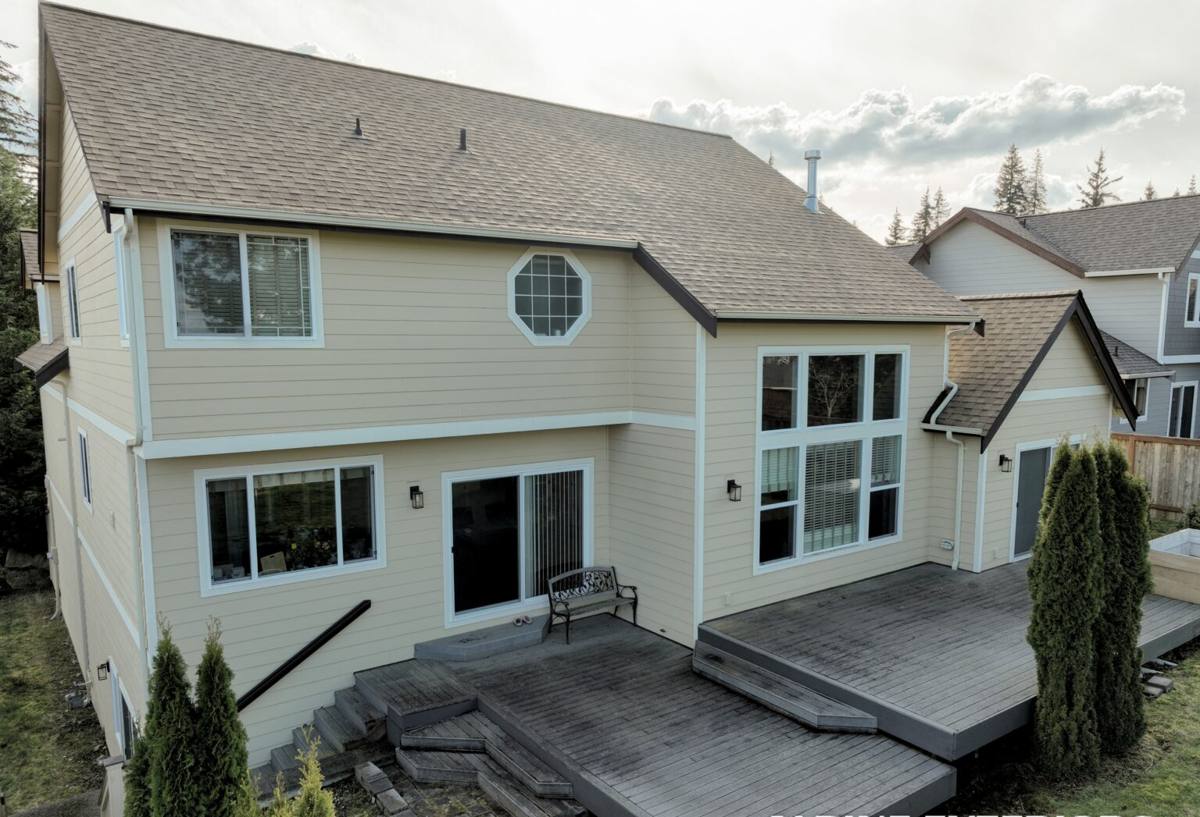
What Salt Air, Driving Rain, and Moss Actually Do to Siding
Salt air
Airborne salt is corrosive to exposed metal fasteners and trim, and it accelerates the breakdown of paint films and cheaper finishes. Siding that isn't engineered to resist it will chalk, fade, or develop surface degradation faster near the water than it would a few miles inland.
Driving rain
Wind off the bay doesn't let rain run gently down a wall — it drives it sideways and forces it into every gap, seam, and fastener hole that isn't properly sealed or flashed. This is where most siding failures actually start: not on the face of the panel, but behind it, at joints and penetrations that were installed loose or without the right water management.
Moss and algae season
Northwest Washington's long wet, shaded stretches give moss and algae months to establish themselves on north- and west-facing walls, in particular. Porous or wood-based siding gives these organisms something to root into; the surface itself starts holding moisture longer instead of shedding it.
None of this is unique to Fairhaven — it's Whatcom County's climate in general — but the neighborhood's proximity to open water intensifies the salt and wind-driven rain factors specifically.
Why We Only Install James Hardie Fiber Cement
James Hardie siding is a fiber cement product: a mix of cement, sand, and cellulose fiber that's non-combustible and dimensionally stable in a way that wood, engineered wood, and vinyl are not. For a marine-influenced neighborhood like Fairhaven, three properties matter most:
- Moisture stability: Fiber cement doesn't swell, rot, or delaminate the way wood-based products can when they take on water at seams and end cuts.
- Factory-applied ColorPlus finish: Baked-on in a controlled environment with a stronger bond than field-applied paint, so it holds color and resists fading and chalking from sun and salt exposure far longer than a job-site paint job.
- Non-combustible core: Not a climate factor, but a real advantage for coverage and peace of mind that vinyl and wood products can't offer.
James Hardie also builds region-specific product lines engineered for different climate demands — different formulations for hot-dry, humid, and cold-wet regions. That's a meaningful advantage over a one-size-fits-all product, because a siding system built for Arizona sun isn't the same as one built for a wet Pacific Northwest wall.
Why We Don't Install Vinyl, LP SmartSide, or Cedar Here
We get asked about alternatives regularly, and we'd rather be straight about the trade-offs than pretend they don't exist.
| Product | What it does well | Why it's a tougher fit for Fairhaven |
|---|---|---|
| Vinyl | Low upfront cost, low maintenance in mild climates | Can warp or become brittle with temperature swings and wind loading; seams and butt joints give wind-driven rain more entry points |
| LP SmartSide (engineered wood) | Workable, budget-friendly, good appearance | Wood-strand core is more vulnerable to sustained moisture exposure at cut ends and seams than fiber cement |
| Cedar / primed spruce | Natural look, long regional tradition | Needs regular refinishing to hold up against salt air and moss; ongoing maintenance burden is real in this climate |
| James Hardie fiber cement | Moisture-stable, factory finish, non-combustible | Higher material cost, requires correct fastening and installation technique |
None of these other products are "bad" — they're reasonable choices in the right setting. We've simply made a professional decision to install one product system we can stand behind on every home, in every part of Whatcom County, including the neighborhoods closest to the water.
What a Correct James Hardie Installation Involves
Fiber cement siding is only as good as the installation behind it. Most of the siding failures we get called out to inspect trace back to installation shortcuts, not the product itself. In a wind-driven-rain environment like Fairhaven, these details aren't optional:
- Weather-resistive barrier and rainscreen gap: A drainage plane behind the siding lets any moisture that does get past the surface drain and dry out instead of sitting against the wall sheathing.
- Correct flashing at every penetration: Windows, doors, hose bibs, and vents all need proper flashing and water-shedding detail — this is where driving rain finds its way in if it's skipped.
- Manufacturer-specified fastening: James Hardie publishes exact nailing patterns, fastener types, and clearances. Over- or under-driven fasteners, or the wrong fastener spacing, compromise the panel's performance and can void the warranty.
- Proper clearances and gaps: Siding needs to sit clear of grade, roofing, decks, and other siding-to-trim junctions per spec — tight-to-the-ground or tight-to-roof installs trap moisture.
- Caulking only where James Hardie calls for it: Over-caulking seams that are designed to be left open for drainage can trap water instead of shedding it.
Cost Factors on a Fairhaven Job
| Factor | Why it moves the number |
|---|---|
| Home size and wall complexity | More corners, dormers, and trim details mean more cutting, fitting, and labor time |
| Existing siding removal | Tear-off of old wood, vinyl, or damaged material adds labor and disposal cost |
| Sheathing and moisture barrier condition | Rot or water damage found underneath the old siding needs repair before new siding goes on |
| Product line and profile | Lap siding, shingle-style panels, and board-and-batten carry different material and install costs |
| Trim and accessory scope | Corner boards, window trim, and fascia work are often bundled into a full siding job |
We don't quote a number until we've actually looked at the home — anything else is a guess. A written estimate walks through these factors specifically for your house.
Our Process on a Fairhaven Home
- On-site assessment: We look at existing siding condition, wall exposure to wind and water, and any moisture damage already present before quoting anything.
- Tear-off and sheathing check: Old siding comes off and we inspect the wall assembly underneath for rot or damage that needs to be addressed before new siding goes on — this step gets skipped by crews trying to move fast, and it's the one that matters most.
- Weather barrier and drainage plane installation: Proper house wrap or building paper and rainscreen furring, installed to manage the water this climate throws at it.
- Flashing at every penetration: Windows, doors, and any wall penetration get flashed and sequenced correctly with the weather barrier.
- James Hardie installation to manufacturer specification: Correct fasteners, spacing, clearances, and joint treatment throughout.
- Final walk-through: We review the finished work with you before calling the job done.
Living With James Hardie Siding in a Marine Climate
Once it's installed correctly, James Hardie siding is genuinely low-maintenance — but "low-maintenance" doesn't mean "zero attention," especially this close to the water. A short seasonal checklist keeps it performing the way it's supposed to:
- Rinse the exterior periodically to clear accumulated salt residue and organic buildup, especially on walls facing the water or shaded from direct sun
- Keep gutters clear so overflow doesn't run down the wall face repeatedly in one spot
- Trim back vegetation and tree cover that keeps siding shaded and damp longer than the rest of the house
- Check caulking at trim and penetrations every year or two and have any cracked or missing sections addressed
- Watch for moss or algae establishing on north- and west-facing walls and clean it before it spreads
These are homeowner-level tasks, not repairs — the point of installing the product correctly the first time is that maintenance stays this simple.
Why Hiring a Crew That Already Works Fairhaven Matters
A siding crew that mainly works drier, inland parts of the county can still do competent work, but they may not build in the same margin for wind-driven rain and salt exposure that a waterfront-adjacent neighborhood demands. Crews familiar with Fairhaven and similar Whatcom County neighborhoods close to the water already know to prioritize flashing detail, drainage planes, and fastening discipline on every job — not just when a homeowner asks about it. That familiarity shows up in fewer callbacks and siding that's still performing well a decade or two out.
If you're weighing a siding replacement or new construction siding for a home in or near Fairhaven, we're happy to walk the property with you and put together a straightforward, no-pressure estimate — use the form below to get started.