 Whatcom County
 Board & Batten in Lynden's Climate
Board & batten has a strong following in Lynden, and it's easy to see why. The vertical lines read as clean and traditional on farmhouses, and just as sharp on newer builds with simple rooflines. It's one of the most recognizable siding profiles in Whatcom County, and for good reason — it suits both the older agricultural homes scattered through the area and the newer construction going up on infill lots.
But board & batten is also one of the least forgiving siding styles when the wrong material or the wrong installer is behind it. The vertical boards and the battens covering each seam create dozens of extra joints and fastening points compared to standard horizontal lap siding. In a climate that combines salt-laden air moving in off the Salish Sea, long stretches of driving rain, and a moss season that can run most of the year, every one of those joints is a place where moisture can start working against the wall if it isn't detailed correctly.
This page covers what board & batten needs to hold up in Lynden specifically — the material choice, the installation details, and the maintenance rhythm that keeps it looking good instead of becoming a five-year headache.
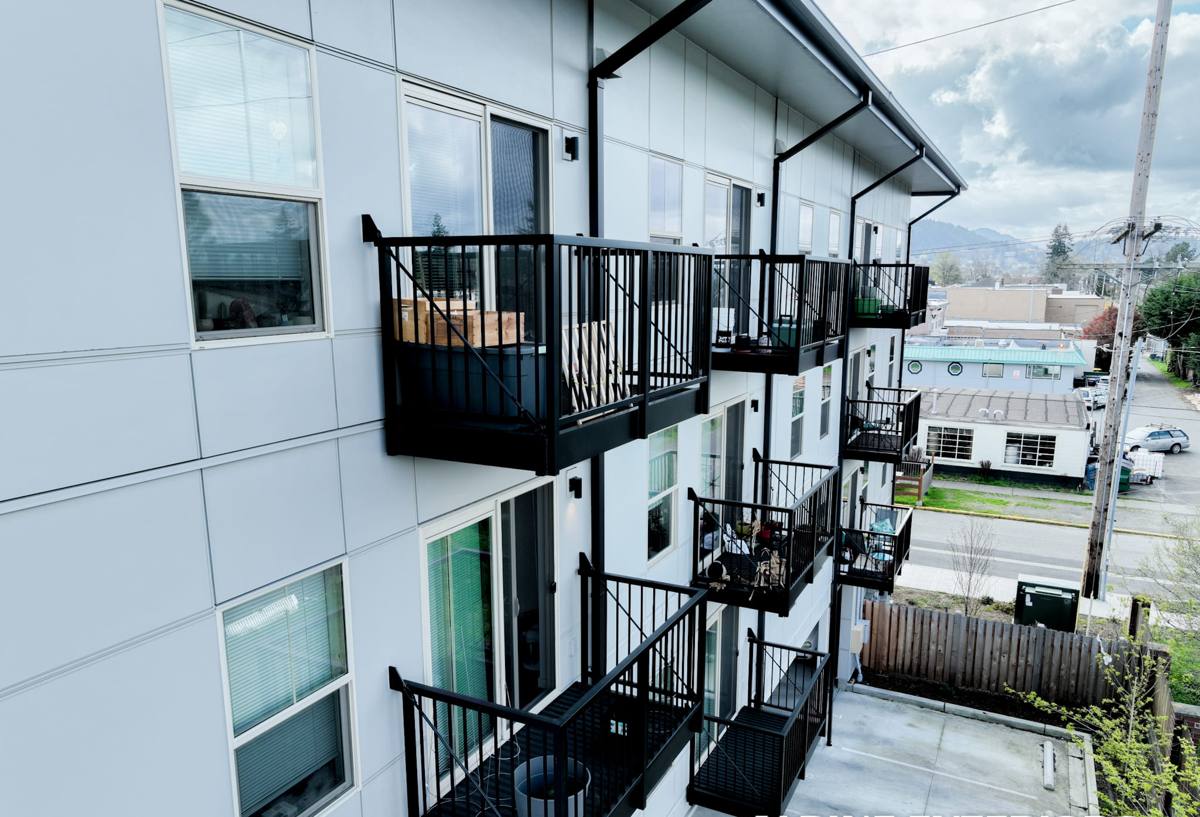
What Board & Batten Siding Actually Is
Board & batten is a two-layer siding system: wide vertical boards installed edge to edge (or with a small gap), then narrower strips — the battens — fastened over each seam. The result is a rhythmic pattern of raised vertical lines running from foundation to eave.
Historically this was built from solid wood boards, and that's still what a lot of people picture when they hear "board & batten." Wood does the look well, but it's also the version most prone to trouble in a wet coastal climate — it moves with humidity, it needs repainting on a tight cycle, and end grain exposed at the boards is a moisture entry point that's hard to fully seal over the long run.
Modern fiber cement systems replicate the same vertical-board-and-batten look using engineered panels and trim boards designed specifically to resist that movement and moisture intrusion — which is the version we install.
Why Whatcom County's Climate Is Hard on This Style
Three things make board & batten a harder test for siding here than it would be in a drier inland climate:
Salt Air
Proximity to marine air means airborne salt settles on exterior surfaces and accelerates corrosion of fasteners and metal flashing. Cheap or exposed fasteners at batten strips are a common failure point on lower-quality installs.
Driving Rain
Wind-driven rain doesn't just fall on a wall, it gets pushed sideways into every seam and gap. Board & batten has more vertical seams than any other common siding profile, so the water-management detailing behind the boards matters more here than it does on a flat lap-siding wall.
Moss Season
Extended damp, shaded conditions across much of the year let moss and algae take hold on siding surfaces, especially on north-facing walls and anywhere battens create a slight ledge that holds moisture and organic debris. Moss that's allowed to sit against siding keeps that surface wet far longer than open air would, which shortens the life of the material underneath it.
None of this means board & batten is a bad choice for Lynden. It means the material and the installation both have to be built for these conditions, not just for looks.
Why We Install James Hardie for Board & Batten — and Nothing Else
We install James Hardie fiber cement exclusively. No vinyl, no LP SmartSide, no Cemplank, no Allura, no primed spruce or cedar. That's a deliberate standard, not a limitation of what we're capable of installing.
For board & batten specifically, the reasoning is even more pointed than it is for standard lap siding, because this profile has more seams and more exposed trim edges than any other style:
- Wood (cedar, primed spruce): Looks the part but moves with moisture and needs a disciplined repaint schedule. In a climate with this much sustained dampness, exposed board and batten end grain is a recurring maintenance point, not a one-time install-and-forget.
- Vinyl: Vertical vinyl panels exist, but the plastic look reads differently up close than true board & batten shadow lines, and vinyl becomes brittle over time in coastal exposure and temperature swings — a real risk for a style with this many exposed edges.
- LP SmartSide: An engineered wood product with a resin-treated strand core. It performs reasonably well when installation and caulking are kept up on schedule, but as an engineered wood product it still relies on an intact factory coating to keep moisture out of the wood substrate — a maintenance dependency we'd rather not build a Whatcom County installation around.
- James Hardie fiber cement: Non-combustible, dimensionally stable (it doesn't expand and contract with moisture the way wood-based products do), and manufactured in HZ5 formulations engineered for wetter climate zones like ours. The ColorPlus factory finish is baked on with a warranty backing it, so touch-up painting isn't a recurring chore.
For board & batten, we build the look using HardiePanel vertical siding as the field material with HardieTrim boards as the battens over each seam — an engineered system designed to work together, rather than field-cut lumber trying to do the same job.
What a Correct Installation Involves
Board & batten done right isn't just nailing boards up and covering the seams. The parts nobody sees are what determine whether it lasts:
- Weather-resistant barrier: A continuous water-resistive barrier goes over the sheathing before any siding, lapped correctly at every seam and opening.
- Rainscreen gap: Furring strips (or an equivalent drainage mat) behind the panels create a small air gap so any moisture that does get past the outer surface can drain and dry instead of sitting against the wall assembly — this matters more on vertical board & batten than on lap siding because of the sheer number of seams.
- Proper fastening: Corrosion-resistant fasteners, placed and spaced to manufacturer spec — critical in a salt-air environment where the wrong fastener corrodes and stains the siding from the inside out.
- Flashing at every penetration: Windows, doors, hose bibs, light fixtures — every point that breaks the plane of the siding needs flashing detailed so water sheds outward, not inward.
- Batten spacing and fastening: Battens need consistent reveal and fastening that penetrates into framing or proper backing, not just into the panel below.
- Sealant at trim and transitions: High-quality sealant at the points the system is designed to be sealed — not as a substitute for good flashing, but as the finishing detail on top of it.
Skipping any one of these doesn't usually show up in year one. It shows up in year five or six, as staining, soft spots, or paint failure at the seams — right when a homeowner assumes the siding should still be holding up fine.
Comparing Board & Batten Material Options
| Material | Moisture Behavior in Wet Climate | Maintenance Cycle | Typical Lifespan Here |
|---|---|---|---|
| James Hardie fiber cement | Dimensionally stable, HZ5 formulation for wet climates, non-combustible | Occasional wash; ColorPlus finish backed by factory warranty | Decades, when installed to spec |
| Cedar / primed spruce | Absorbs and releases moisture, prone to swelling and cupping at boards and battens | Repaint/reseal every few years, more often on wet-facing walls | Shorter, heavily dependent on upkeep |
| LP SmartSide | Engineered wood core relies on intact factory coating and diligent caulk maintenance | Coating and seam inspection on a regular schedule | Moderate, upkeep-dependent |
| Vinyl vertical panel | Won't rot, but becomes brittle with age and coastal UV/salt exposure | Low, but limited repair options once damaged | Moderate; appearance can fade unevenly |
Our Process for a Lynden Board & Batten Project
We start with an on-site look at the existing wall condition — what's under the current siding matters as much as what goes on top of it. Any sheathing damage or moisture issues get addressed before new siding goes up, not covered over. From there, we walk through panel layout and batten spacing with the homeowner so the reveal and rhythm look right on that specific elevation, then install the weather barrier, rainscreen, panels, and battens to manufacturer spec, followed by a final walk-through before we call the job done.
We work in Lynden regularly enough to know how the local mix of exposure — open farmland wind on some lots, tighter tree cover on others — changes how a given wall takes on moss and weather, and we adjust flashing and drainage detailing accordingly rather than treating every wall the same.
Maintaining Board & Batten in This Climate
Even the right material needs a bit of upkeep in Whatcom County conditions. A simple annual routine keeps board & batten performing the way it's supposed to:
- Rinse the siding down once or twice a year, focusing on north-facing and shaded walls where moss and algae take hold fastest.
- Keep gutters clear so overflow doesn't run directly down siding faces or pool near the base of a wall.
- Trim back landscaping and tree cover that keeps a wall shaded and damp longer than the rest of the house.
- Check caulking at trim, windows, and penetrations every couple of years and have gaps re-sealed before they become entry points.
- Have a professional inspect any spot where paint looks like it's lifting or a seam looks discolored — early attention is cheap, deferred attention isn't.
Why Hire a Crew That Already Works in Lynden
Board & batten forgives fewer mistakes than lap siding, and a lot of what determines whether it lasts here — rainscreen detailing, fastener choice, flashing at every seam — isn't visible once the job is finished. A crew that already works Whatcom County knows which details matter most for salt air, driving rain, and a long moss season, because they've seen what happens when those details get skipped on a wall a few miles away. That's a different level of accountability than a crew installing board & batten for the first time in this climate.
If you're weighing board & batten for a home in Lynden, we're happy to take a look and talk through what your specific walls need — no pressure, no hard sell. Request a free estimate using the form below and we'll walk the property with you.