 Whatcom County
 Why Lynden Roofs Work Harder Than People Think
Lynden sits in a part of Whatcom County that gets the full range of what Pacific Northwest weather can throw at a roof. Long stretches of steady, driving rain in the fall and winter. Damp, marine-influenced air that never quite dries out for weeks at a time. Freeze-thaw swings in January that stress anything already holding moisture. And a moss and algae season that, on a shaded roof, can run nine or ten months out of the year. None of that is unusual for this part of the state, but it adds up differently on a roof than it does on siding or windows, because a roof has no downtime — it's either shedding water correctly or it isn't.
Asphalt shingles handle that load for a while, but they wear down the way asphalt always does here: granule loss from constant moisture cycling, moss lifting tabs at the edges, and a shortened lifespan compared to drier climates. Metal roofing is popular in Lynden and across Whatcom County precisely because it responds to this climate differently — steep water shed, minimal organic surface for moss to grip, and a system that, installed correctly, is built to shrug off decades of the exact weather pattern this area gets every year.
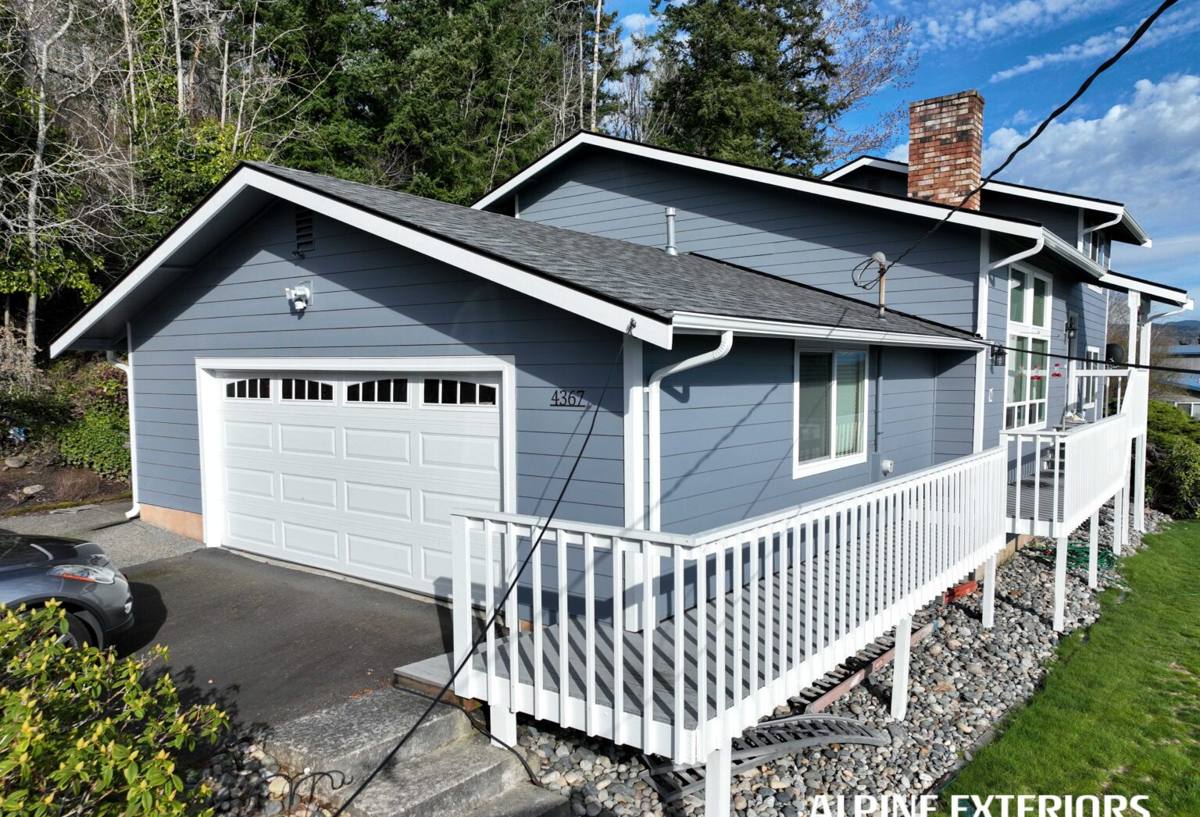
What "Correct" Actually Means on a Metal Roof Here
Metal roofing has a reputation for being nearly maintenance-free, and that's true — but only when the installation accounts for local conditions. A metal roof that's wrong for this climate usually isn't wrong because of the metal. It's wrong because of what's underneath it or around it.
Underlayment and Moisture Management
Because Whatcom County sees so much sustained rain rather than short, hard downpours, the underlayment beneath the panels matters more here than in drier regions. We use synthetic or high-temp ice-and-water underlayment at valleys, eaves, and penetrations — the spots where wind-driven rain is most likely to find a way in before it ever reaches the panel seams.
Fasteners and Attachment
Exposed-fastener panels rely on screws with rubber washers that compress against the metal. Those washers age faster under constant UV and moisture cycling, and a screw that backs out even slightly becomes a leak point. We pay close attention to fastener pattern, torque, and washer condition, and on homes with sun exposure or steep valleys, we'll often recommend a fastening approach that reduces how many exposed penetrations exist in the first place.
Flashing at Valleys, Walls, and Penetrations
Most roof leaks — metal or otherwise — start at a flashing detail, not in the middle of a panel. Chimneys, skylights, wall transitions, and valleys all need flashing that's cut, lapped, and sealed for how water actually moves during a real Whatcom County storm, not just a light rain. This is the part of the job that separates a roof that performs for thirty-plus years from one that starts showing problems in year five.
Moss and Algae Resistance
Metal doesn't feed moss the way asphalt granules can, but a roof with heavy tree cover, north-facing shade, or low-slope sections can still collect organic debris in valleys and along trim. We design drainage paths and use trim details that keep water — and the debris it carries — moving off the roof instead of pooling where moss and algae can establish.
Choosing the Right Metal Roofing System
Not every metal roof product is the same, and the right choice depends on the home, the roof's slope and complexity, and the budget. Here's how the common options compare for a Lynden home:
| System | Best For | Climate Notes | Typical Lifespan |
|---|---|---|---|
| Standing seam (concealed fastener) | Most homes, especially steeper or more visible roofs | No exposed fasteners to fail; best long-term seal against driving rain | 40-70 years |
| Exposed-fastener panel (screw-down) | Budget-conscious projects, outbuildings, simpler rooflines | Lower upfront cost but washers and screws need periodic inspection | 25-40 years |
| Metal shingles/shakes | Homes wanting a traditional look with metal performance | Interlocking design sheds water well; more seams than standing seam | 30-50 years |
For most Lynden homes, we lean toward standing seam when the budget allows, simply because it removes the long-term weak point — exposed fasteners — from a climate that's hard on rubber gaskets and washers. Exposed-fastener panels aren't a bad product; they're just a different maintenance conversation, and we'll always tell a homeowner honestly which category their project falls into.
What Drives the Cost of a Metal Roof
Pricing varies enough between projects that broad national averages rarely mean much. What actually moves the number on a Lynden home is usually one of these factors:
| Factor | Why It Matters |
|---|---|
| Roof complexity (valleys, hips, dormers) | More cuts, more flashing, more labor per square |
| Panel/system type | Standing seam runs higher than exposed-fastener panel |
| Tear-off vs. overlay | Removing old roofing adds labor but avoids trapping moisture underneath |
| Decking condition | Rot or soft sheathing found during tear-off needs repair before panels go on |
| Gauge and coating | Heavier gauge and better paint systems cost more but hold up longer against sun and salt-tinged coastal air |
We walk every homeowner through these factors before quoting, so the number makes sense rather than feeling arbitrary.
Our Process on a Lynden Metal Roof
- Roof assessment. We inspect the existing roof, decking, ventilation, and any trouble spots — including areas with a history of moss buildup or slow leaks.
- System recommendation. Based on the roof's slope, complexity, and your budget, we recommend a panel type and walk through the honest trade-offs of each.
- Tear-off and deck inspection. Old roofing comes off so we can check the decking underneath — this is where hidden moisture damage from years of Whatcom County rain often turns up.
- Underlayment and flashing. We install underlayment rated for this climate and detail every valley, wall, and penetration before a single panel goes down.
- Panel installation. Panels are set, fastened, and seamed to manufacturer spec, with attention to expansion allowance so the roof performs through temperature swings.
- Trim, ventilation, and final walk-through. Ridge caps, drip edge, and ventilation are finished, and we walk the roof with you before calling the job done.
Problems We Commonly Find on Older Lynden Roofs
When we're called out to look at an existing metal roof — or to compare metal against a failing asphalt roof — a few issues show up repeatedly in this area:
- Backed-out or over-driven fasteners on exposed-fastener panels, usually near the eaves where wind uplift is strongest
- Moss and debris buildup in valleys where slope is shallow or tree cover is heavy
- Rust starting at cut edges or fastener heads where the factory coating was compromised during a rushed install
- Flashing that was caulked instead of properly lapped, which fails within a few seasons of Whatcom County rain
- Condensation issues from inadequate attic ventilation, mistaken for a roof leak
Most of these trace back to installation shortcuts rather than the metal itself — which is exactly why the crew doing the work matters as much as the product.
Keeping a Metal Roof Performing Long-Term
Metal roofing asks very little of a homeowner, but a short annual checklist keeps small issues from becoming repairs:
- Clear leaves and needles from valleys and behind chimneys before winter rains set in
- Check that gutters are flowing freely — a clogged gutter can back water up under drip edge
- Look for any panels or trim that seem to have shifted after a windstorm
- Have fastener condition checked every few years on exposed-fastener systems
- Trim back tree branches that keep sections of the roof shaded and damp
Why a Crew That Already Works in Lynden Makes a Difference
Metal roofing installation isn't complicated in theory, but it's unforgiving of shortcuts, and a lot of that unforgiveness is climate-specific. A crew that installs roofs mainly in drier regions may not think twice about a flashing detail that's fine most places but marginal here, where rain doesn't just fall — it drives sideways for days at a time. Knowing how Whatcom County weather actually behaves against a roofline, season after season, is what keeps a flashing detail from becoming a callback two winters later.
We're not going to disparage other roofing products or crews to make our case. What we will say plainly is that our standard for a Lynden metal roof — underlayment choice, flashing method, fastener attention, and ventilation — is built around what this specific climate does to a roof over decades, not around a generic install that happens to work in a milder region. That's the difference between a metal roof that lives up to its reputation and one that quietly underperforms it.
If you're weighing metal roofing for a home in Lynden or elsewhere in Whatcom County, we're happy to take a look and give you a straightforward, no-pressure estimate — including an honest answer if your current roof still has good years left in it.