 Whatcom County
 Lynden's Weather Is Harder on a Roof Than It Looks
Lynden sits in the Nooksack River valley, open to the wind that moves across the farmland between the foothills and the county line, and soaked all winter by the same wet Pacific system that defines weather across Whatcom County. A roof out here isn't dealing with one hard climate problem — it's dealing with several at once: months of steady rain, wind gusts with nothing to slow them down across open fields, freeze-thaw swings in the shoulder seasons, and the salt-tinged marine air that moves through this part of Washington and slowly works on metal fasteners and flashing. None of that is dramatic on its own. It's the accumulation, year after year, that shortens a roof's life if it wasn't built right the first time.
The other factor that catches homeowners off guard is moss. Whatcom County's combination of shade, moisture, and mild temperatures gives moss a long growing season — it doesn't really stop for winter the way it does in drier climates. Left alone, moss holds water against shingles, lifts tabs, and works its way under flashing. A roof replacement done for this area needs to account for that from the start, not treat moss as an afterthought to be power-washed off later.
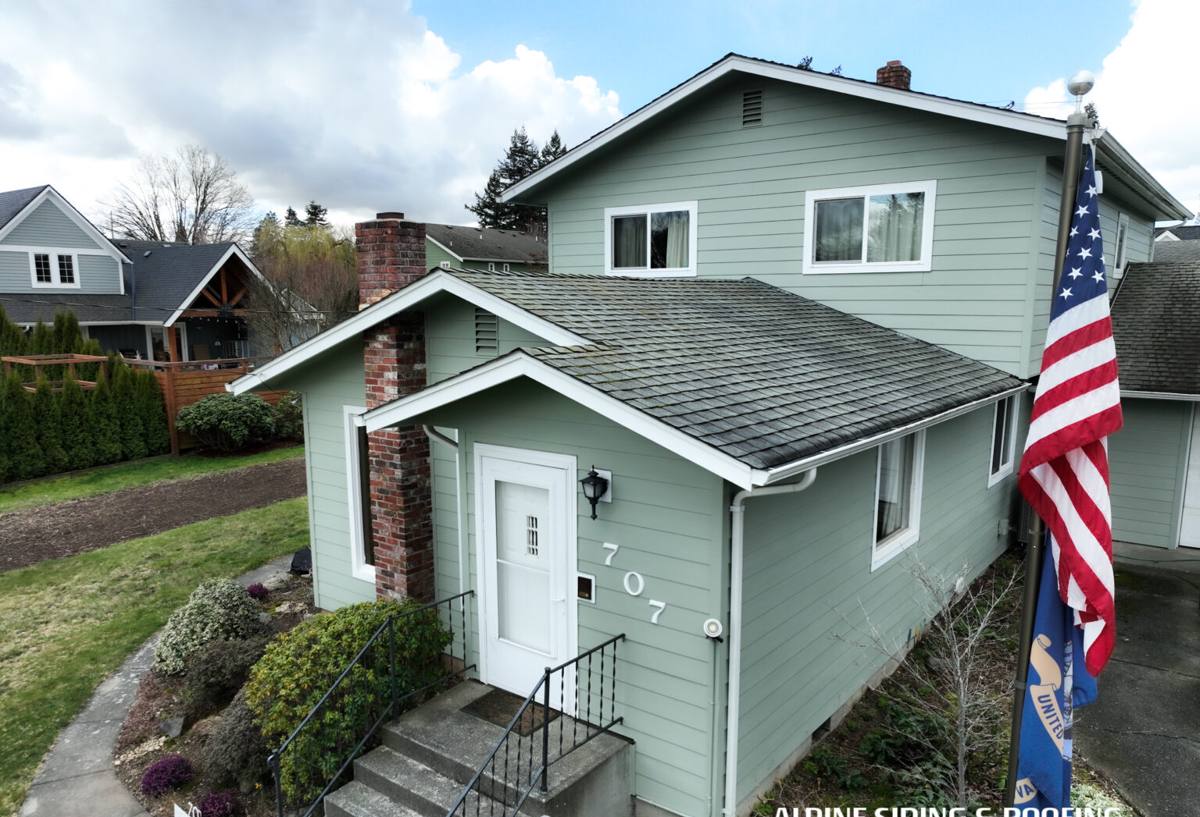
Signs a Lynden Roof Needs Replacement, Not Another Repair
Repairs make sense when a roof has isolated damage and years of usable life left. Replacement makes sense when the problems are systemic — spread across the whole roof rather than in one spot. Here's how to tell which situation you're in:
- Granule loss showing up in gutters or downspouts across multiple areas of the roof, not just one valley or slope
- Shingles that are curling, cupping, or losing their tab lines in more than a couple of spots
- Moss established at the shingle edges and ridge line, not just surface algae staining
- Soft spots or slight sag felt when walking the roof, which usually means deck damage underneath
- Daylight or water staining in the attic, especially near valleys, chimneys, or vent penetrations
- A roof approaching or past 20-25 years (asphalt) even if it looks okay from the ground
If you're seeing two or more of these at once, a patch is usually a short-term fix on a roof that's failing as a system. We'll tell you honestly which category your roof is in — there's no reason to sell a full replacement to a homeowner who genuinely just needs a repair.
What a Correct Roof Replacement Actually Involves
Tear-Off and Deck Inspection
A proper replacement starts with a full tear-off down to the deck — not a layover on top of old shingles. That's the only way to actually see the plywood or OSB underneath, which in a wet climate like this one is where problems hide. Any soft, delaminated, or water-damaged decking gets identified and replaced before anything new goes down. Skipping this step is the single most common shortcut that leads to a roof failing early.
Underlayment and Ice/Water Protection
Given how much rain Whatcom County sees, underlayment isn't a formality — it's the roof's real waterproofing layer if wind-driven rain ever gets past the shingles, which it eventually does at eaves, valleys, and around penetrations. We use self-adhered ice and water barrier at the vulnerable areas (eaves, valleys, chimneys, skylights) and synthetic underlayment across the rest of the field for tear strength and water resistance during the install itself.
Ventilation
A roof that isn't ventilated correctly traps moisture in the attic, which shortens the life of the decking from underneath — invisibly, until it isn't. Balanced intake at the soffits and exhaust at the ridge keeps air moving and helps the roof dry out between the region's frequent rain events.
Flashing and Penetrations
Chimneys, skylights, plumbing vents, and roof-to-wall transitions are where most leaks actually originate, not in the open field of shingles. New flashing, properly stepped and sealed, at every one of these points is not optional on a replacement — it's the difference between a roof that sheds water and one that eventually doesn't.
Roofing Material Options for a Lynden Home
There's no single "best" roofing material — there's the right material for your home, your budget, and how much long-term maintenance you're willing to do in a climate that stays damp and shaded for long stretches of the year.
| Material | Typical Lifespan | How It Handles Whatcom County Weather |
|---|---|---|
| Architectural asphalt shingle | 25-30+ years | Good all-around performer; needs moss treatment and gutter maintenance to hit its full lifespan in this climate |
| Standing seam metal | 40-50+ years | Sheds moss and rain fast, handles wind well, higher upfront cost, fewer seams for water to find |
| Cedar shake | 20-30 years with upkeep | Attractive but demands regular treatment and cleaning here — moss and moisture are a constant maintenance battle |
| Synthetic/composite shingle | 30-50 years | Resists moisture and moss better than wood, more cost than asphalt, less common locally so verify local installer experience |
Most Lynden homeowners land on a quality architectural asphalt shingle — it balances upfront cost, appearance, and durability well for this climate as long as it's installed with proper ventilation and moss-resistant details. We'll walk through the honest trade-offs for your specific roof rather than pushing whatever has the best margin.
Our Process, Start to Finish
- On-site inspection and estimate — we walk the roof (not just look from the ground), check the attic if accessible, and give you a written, itemized quote
- Material selection — we go over the honest pros and cons for your home and budget, not just the upsell option
- Scheduling around weather — we plan around Whatcom County's rain patterns to give the crew the driest window realistically available
- Tear-off and deck repair — full removal, deck inspection, and replacement of any damaged sheathing
- Underlayment, flashing, and shingle installation — done to manufacturer spec, not shortcuts
- Cleanup and magnetic sweep — job site cleared of debris and nails before we consider it done
- Final walkthrough — we go over the finished roof with you before we call it complete
What Affects the Cost of a Roof Replacement in Lynden
| Cost Factor | Why It Matters |
|---|---|
| Roof size and number of layers to remove | More square footage and old layers mean more tear-off labor and disposal |
| Roof pitch and complexity | Steeper roofs and more valleys/hips take longer and require more safety setup |
| Deck condition | Hidden water damage found during tear-off adds material and labor to replace sheathing |
| Material choice | Asphalt, metal, and specialty materials carry very different price points |
| Access and site conditions | Tight lots, landscaping, or limited driveway access can affect staging and disposal costs |
| Ventilation and flashing upgrades | Bringing older ventilation or flashing up to current standards adds value but also cost |
We don't quote a roof over the phone — every one of these factors needs an actual look at your house before a number means anything. What we can promise is a written estimate that breaks out where the money goes, so you're not guessing at what you're paying for.
Moss and Long-Term Roof Care After Replacement
A new roof in Whatcom County still needs some ongoing attention to reach its full lifespan. A little maintenance goes a long way here, and most of it is simple:
- Keep gutters clear of needles and debris so water actually drains instead of backing up under shingle edges
- Have moss treated or gently removed before it establishes at the ridge and edges — don't let it sit for years
- Trim back overhanging branches to reduce shade and debris buildup, both of which feed moss growth
- Walk the roof (or have it looked at) after major windstorms to check for lifted or displaced shingles
- Check attic ventilation isn't blocked by insulation, especially after any insulation work
- Schedule a periodic visual inspection every few years rather than waiting for a visible leak
None of this requires a major time investment, but skipping it entirely is how a well-installed roof still underperforms its expected lifespan in this climate.
Why It Matters to Hire a Crew That Already Works in Lynden
Roofing in Lynden isn't identical to roofing on the coast or in a drier part of the state. A crew that works this area regularly already understands how much rain protection and moss resistance to build into the install, how to time a tear-off around the region's weather windows, and what local permitting and inspection actually require. That local familiarity shows up in fewer surprises during the job and a roof that's built for the specific conditions it has to survive here, not a generic install pulled from a different climate.
If your roof is showing its age or you're just not sure whether you're looking at a repair or a replacement, we're happy to take a look. There's no pressure and no obligation — just a straight answer and a written estimate you can think over. Fill out the form below to schedule a free estimate for your Lynden home.