 Whatcom County
 Why South Hill Roofs Face a Different Set of Problems
South Hill sits close enough to the water and the weather patterns that move through Whatcom County that its roofs take on a specific combination of stress: salt-laden air moving in off the water, long stretches of driving rain, and a moss season that can run from fall through spring. None of these problems is dramatic on its own. Together, over ten or fifteen years, they quietly wear down roofing materials that weren't chosen or installed with this climate in mind.
A roof here isn't just shedding water during a storm. It's living in damp, salt-tinged air for most of the year, drying out slowly between rain events, and hosting moss and moisture-loving growth in the shaded, north-facing sections almost year-round. That's a different job than a roof has to do in a drier inland climate, and it's why we treat metal roofing for South Hill homes as its own project, not a generic install.
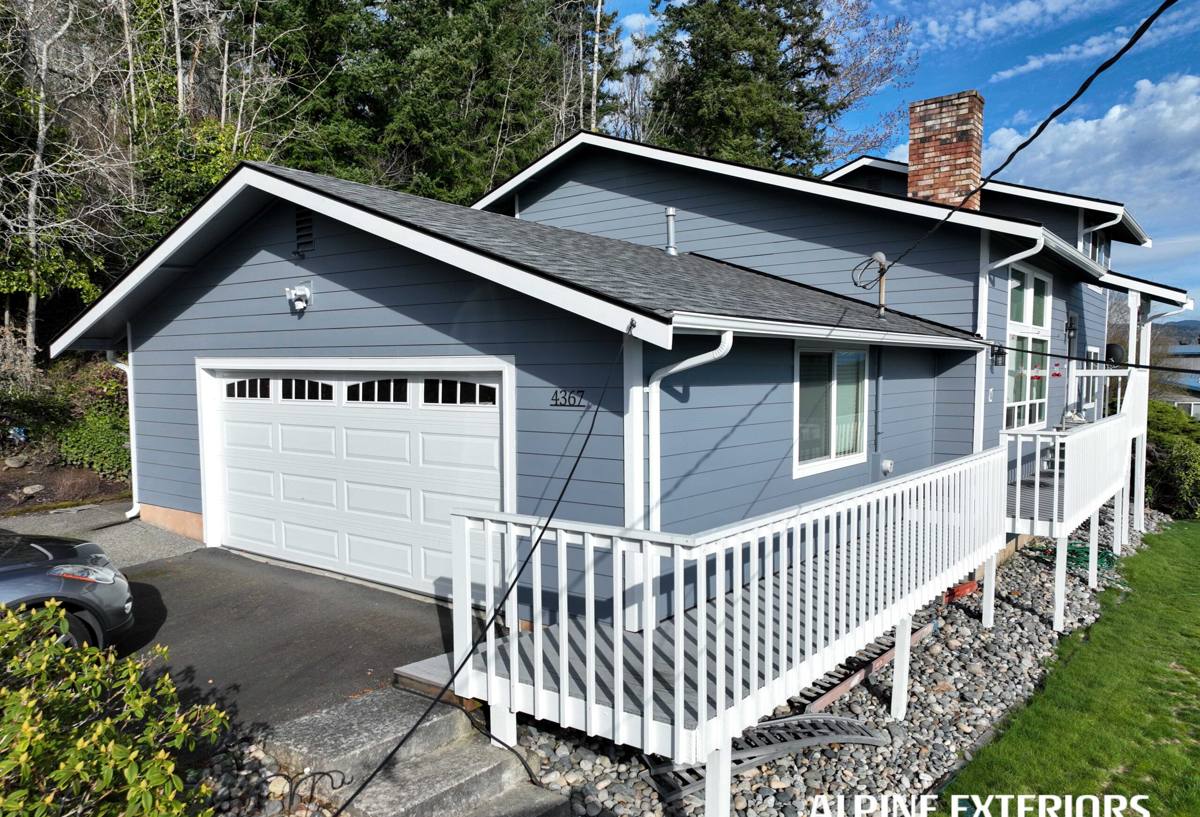
What Salt Air, Rain, and Moss Actually Do to a Roof
Salt Air and Corrosion
Airborne salt accelerates corrosion on any exposed metal — fasteners, flashing, gutters, and unprotected panel edges. On a roof with the wrong coating or the wrong fastener spec, this shows up first as rust streaking at cut edges and screw heads, then as pitting that eventually compromises the metal itself. It's a slow process, which is exactly why it gets overlooked until a roof is a decade old and starting to show it.
Driving Rain
Whatcom County's rain isn't always straight-down rain. Wind-driven rain pushes water sideways and upward under laps, around penetrations, and into any seam that wasn't detailed correctly. A roof that would perform fine in a calmer climate can leak here simply because the flashing and fastening details weren't built for wind-driven water.
Moss and Moisture
Moss needs shade and moisture to establish, and South Hill has plenty of both in the wetter months. On asphalt shingles, moss roots into the mat and lifts granules, shortening the roof's life. On metal, moss can't root into the material itself, but it can still hold moisture against seams and fasteners if it's allowed to build up in valleys or along low-slope runs, which is why panel choice and slope handling still matter even with a moss-resistant material.
Why Metal Roofing Fits This Climate
Metal roofing isn't the right answer for every home or every budget, and we'll say that plainly. But for the specific combination of problems South Hill roofs face, it has real advantages:
- Nothing for moss to root into, which cuts down on the growth and staining that plague shaded, north-facing roof sections.
- A hard, slick surface that sheds wind-driven rain more readily than a layered material, provided the underlayment and flashing details are done correctly.
- Long service life when the coating system and fasteners are matched to a coastal-influenced, high-moisture climate.
- Lower long-term maintenance than shingle roofs that need periodic moss treatment and granule loss monitoring.
The trade-off is upfront cost and installation sensitivity — metal roofing rewards a crew that knows what it's doing and punishes one that doesn't, more than shingles do. A poorly detailed metal roof can leak worse than a poorly detailed shingle roof, because water finds the one seam that wasn't handled correctly and travels along the panel until it does.
Panel Types: Matching the Roof to the House
Not all metal roofing is the same product wearing different colors. The panel type changes how the roof performs, how it's fastened, and how it ages in a wet, salty climate.
| Panel Type | How It's Fastened | Best Fit | Climate Notes |
|---|---|---|---|
| Standing seam | Concealed clips, no exposed fasteners on the field | Homes wanting the cleanest look and lowest long-term maintenance | Best performance against wind-driven rain since there are no exposed screw penetrations to fail over time |
| Exposed-fastener panel | Screws driven through the panel face | Budget-conscious projects, outbuildings, some roof styles | More affordable, but fastener washers and screw heads are the first thing salt air attacks — needs periodic inspection |
| Stone-coated steel | Interlocking panels resembling shingle or tile profiles | Homeowners wanting a traditional look with metal's durability | Good moss resistance, but more seams and profile detail than standing seam |
For most South Hill homes, we lean toward standing seam when budget allows, specifically because it removes the exposed fasteners that salt air targets first. That's a professional judgment based on how these systems age in this climate, not a claim that other panel types are poor products.
What a Correct Installation Actually Involves
The panels themselves get most of the attention, but the parts of the job that determine whether the roof leaks or lasts are mostly hidden once it's finished.
Underlayment
A high-quality synthetic or self-adhered underlayment underneath the panels is the roof's backup layer. In a climate with this much sustained rain, we don't treat underlayment as optional or a place to save money — it's the difference between a nuisance leak and a dry attic when wind pushes water somewhere it shouldn't be.
Flashing and Penetrations
Every chimney, vent pipe, skylight, and wall-to-roof transition is a place water wants to get in. Metal roofing requires flashing details specific to the panel profile — reused shingle-style flashing details on a metal roof is a common source of early leaks we get called to fix.
Fastener Spec
Fasteners and washers need to be rated for the coastal-influenced air here, not a generic inland spec sheet. This is a small line item that has an outsized effect on how the roof looks and performs after ten years.
Ventilation
A metal roof over a poorly ventilated attic can trap moisture rather than shed it, leading to condensation issues that have nothing to do with the roof's exterior performance. We check and, where needed, correct attic ventilation as part of the scope, not as an afterthought.
Our Process, Start to Finish
- Free on-site evaluation. We look at the existing roof, decking condition, ventilation, and any problem areas specific to your home's exposure and shade pattern.
- Honest scope and estimate. We tell you what panel type fits your budget and roofline, and why — including where a less expensive option is a reasonable choice, not just the upsell.
- Tear-off and deck inspection. We check the decking underneath for rot or soft spots before anything new goes down; this is where hidden moisture damage from years of moss or slow leaks usually shows up.
- Underlayment and flashing installed to spec. This is the stage that determines long-term performance, and we don't rush it.
- Panel installation. Fastened and seamed according to the manufacturer's spec for this climate zone, not a generic install pattern.
- Final walkthrough. We walk the finished roof with you, explain what maintenance (if any) it needs, and answer questions before we consider the job done.
Maintenance: What a Metal Roof Actually Needs Here
One of metal roofing's real selling points is how little maintenance it needs compared to shingles — but "little" isn't "none," especially in a moss-prone, salt-air climate.
- Clear debris from valleys and gutters at least once a year so moisture and moss-forming debris don't sit against seams.
- Do a visual check of exposed fasteners (if applicable) every year or two for early rust staining.
- Trim back overhanging branches that keep sections of the roof shaded and damp longer than the rest.
- Have flashing around chimneys and vents checked periodically — these are the most common leak points on any roof, metal included.
- Avoid pressure washing the roof surface directly; it can force water under laps and strip protective coatings.
What Drives the Cost of a Metal Roof
| Factor | Why It Matters |
|---|---|
| Panel type | Standing seam costs more upfront than exposed-fastener panels but needs less long-term attention |
| Roof complexity | More valleys, penetrations, and roof planes mean more flashing detail and labor |
| Existing deck condition | Rot or soft decking found during tear-off adds repair cost most homeowners don't budget for upfront |
| Tear-off vs. overlay | We generally recommend full tear-off on older roofs so underlayment and decking issues aren't hidden under the new roof |
| Coating and finish | Coatings rated for coastal-influenced air cost more but resist fading and corrosion better here |
We don't publish fixed prices because every roof is different, but we'll give you a clear, itemized estimate after the on-site evaluation — no vague allowances, no pressure to decide on the spot.
Why It Matters Who You Hire for This Job
Metal roofing is unforgiving of shortcuts in a way shingle roofing sometimes isn't. A crew that installs mostly shingles and occasionally does a metal roof is learning on your house. A crew that regularly works metal roofing in South Hill and the surrounding Whatcom County area already knows which flashing details fail here, which fastener specs hold up against the salt air, and which roof sections need extra attention because of shade and moss exposure.
That local, repeated experience is worth more than a lower bid from a crew unfamiliar with this specific climate combination. We've built our process around what actually goes wrong on roofs in this part of Washington, not a generic install checklist written for a different climate.
Get a Straight Answer on Your Roof
If your South Hill home has a roof showing early rust, moss buildup, or recurring leaks, it's worth getting an honest, no-pressure look before deciding what to do next. We'll tell you what we see, what your realistic options are, and what a correct metal roof installation would actually involve for your home. Reach out for a free estimate using the form below.