 Whatcom County
 Building New in Samish? Get the Windows Right the First Time
If you're framing a new home or an addition in Samish, the windows you choose and how they're installed will quietly determine how that building performs for the next 20-30 years. New construction gives you one real advantage over a retrofit: the wall is open, the sheathing is exposed, and the flashing details can be done correctly from the studs out instead of patched in around an existing window. That advantage disappears fast if the crew installing your windows isn't paying attention to the specific conditions Samish sits in — close enough to the water to deal with salt-laden air, exposed enough to catch driving rain off Samish Bay and the Salish Sea, and damp enough for long enough each year that moss and mildew become a design consideration, not just a cleaning chore.
This page covers what a new-construction window job should actually include in this part of Whatcom County, the material and installation choices that hold up here, and how we run the job from rough opening to final trim.
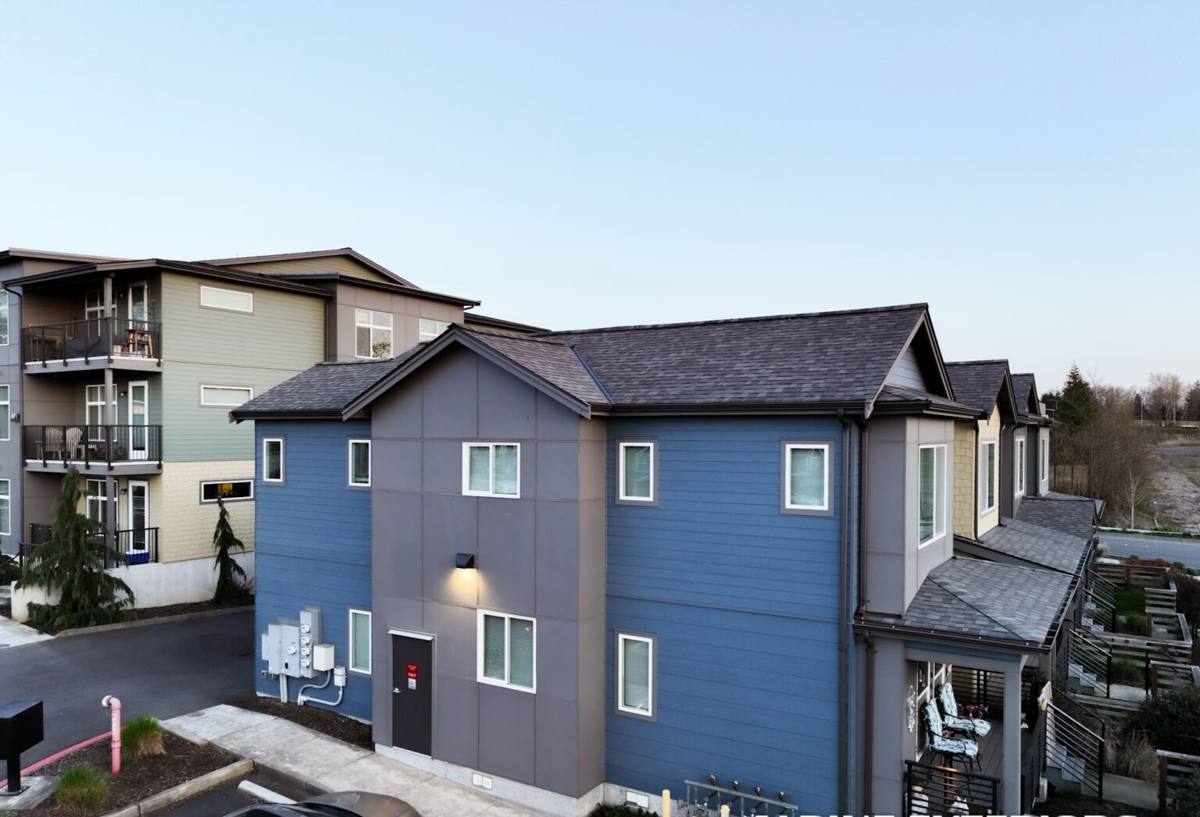
What Samish's Climate Actually Does to New Windows
Whatcom County's marine climate is generally mild, but "mild" doesn't mean easy on materials. Three things matter most for new-construction windows in and around Samish:
Salt Air and Coastal Exposure
Proximity to Samish Bay and the broader Salish Sea means airborne salt is a real, if slow, factor in how exterior materials age. Salt accelerates corrosion in unprotected fasteners, hardware, and lower-grade metal components, and it can dull or pit finishes over time. It's not a reason to avoid any particular window brand — it's a reason to pay attention to hardware quality, cladding finish, and fastener specification when a home sits within a few miles of open water.
Driving Rain and Wind-Driven Water
Whatcom County gets a lot of rain, but the more relevant detail for windows is wind-driven rain — storms that push water sideways into wall assemblies rather than letting it simply run down the siding. A window that's watertight in a still, straight-down rain can still leak under wind-driven conditions if the flashing, sill pan, and sealant details weren't built for it. New construction is the best possible time to get this right, because you can build a proper sloped sill pan and layered flashing before the siding ever goes on.
Moss Season and Prolonged Dampness
Whatcom County's long wet season — roughly fall through spring — keeps exterior surfaces damp for extended stretches, which is exactly the environment moss, algae, and mildew need to establish themselves. On windows, this shows up as green growth in horizontal grooves, sills, and anywhere water sits instead of draining. It's cosmetic more than structural in the early stages, but it's also a signal: if moss is thriving on a sill, water is pooling there, and pooling water eventually finds a way in.
What a Correct New-Construction Window Install Involves
"New construction window" isn't just a product spec — it's a whole assembly, and most of what determines long-term performance happens before the window itself is even set in the opening.
Flashing and Water Management
A correctly built rough opening in this climate should include, in order: a sloped sill pan (so any water that gets past the window drains back out, not into the wall), self-adhered flashing tape at the sill and jambs, the window set and shimmed level and square, head flashing that laps over the housewrap above the window (never tucked under it), and sealant only where it's supposed to carry load — not as a substitute for proper flashing. Skipping or reversing any of these layers is one of the most common causes of hidden water damage in new construction, and it's invisible from the outside until the siding comes off years later.
Nailing Fin and Window Type Fit
New construction typically uses nailing-fin (flanged) windows, which attach directly to the sheathing before the weather-resistive barrier and siding go on. This is different from a retrofit or "pocket" install, and it needs to be planned around from the framing stage — rough opening sizes, shimming strategy, and how the fin integrates with the housewrap all have to be coordinated with whoever's doing the siding and weather barrier, not handled as separate trades that never talk to each other.
Choosing Window Materials for a Samish New Build
There's no single "correct" window material — the right choice depends on budget, exposure, and how much long-term maintenance you're willing to take on. Here's how the common options actually compare for a home in this climate:
| Material | Coastal/Salt Air Durability | Moisture Behavior | Maintenance | Relative Cost |
|---|---|---|---|---|
| Vinyl | Good — won't corrode or rust | Doesn't absorb moisture; seams and hardware are the weak points | Low | Lowest |
| Fiberglass | Very good — stable and corrosion-resistant | Minimal expansion/contraction, handles wet-dry cycling well | Low | Higher |
| Wood (unclad) | Poor without diligent upkeep in salt/damp air | Absorbs moisture, prone to rot if finish fails | High — regular refinishing | High |
| Aluminum-clad wood | Good exterior protection if cladding and seams are sound | Wood core still vulnerable if cladding is breached | Moderate | Highest |
For a straight new-construction budget build near the water, vinyl and fiberglass are the two materials we install most often — both because they hold up to the salt and damp cycling here, and because they don't ask the homeowner to keep up a refinishing schedule to protect the investment. We're honest with clients that unclad wood windows can look beautiful, but in this specific climate they require a maintenance commitment most people underestimate, especially once you're within a few miles of the bay.
Our New-Construction Window Process
We work new-construction jobs in Samish alongside builders, framers, and sometimes directly with homeowners acting as their own general contractor. The sequence stays consistent:
- Rough opening check — verify sizes, square, and plumb against the actual window order before anything gets flashed.
- Sill pan and flashing install — sloped pan, self-adhered flashing at sill and jambs, integrated with the housewrap.
- Window set — leveled, shimmed, and fastened per manufacturer spec, checked for square and smooth operation before it's sealed in.
- Head flashing — installed to shed water down and out over the barrier below, not trap it behind the window.
- Sealant and fin fastening — sealed and fastened per the window manufacturer's requirements to keep the warranty intact.
- Final inspection — operation, seal, and flashing lap checked before siding crews close the wall up.
That last step matters more than it sounds like. Once siding goes on, a flashing mistake is hidden for years. We'd rather catch it on our own punch list than have a homeowner find it as a stain on a wall a decade from now.
Common Mistakes We See in New Construction Around Samish
Most window problems we get called to fix in newer Whatcom County homes trace back to a short list of avoidable errors:
- Sealant used in place of proper flashing, instead of alongside it
- Head flashing tucked under the housewrap instead of lapped over it
- No sloped sill pan, leaving water sitting against the window frame
- Fasteners or hardware not rated for coastal/salt exposure
- Window fin not fully nailed or sealed per manufacturer spec, voiding the warranty without anyone noticing
- Trim and cladding installed tight against the window with no room for water to drain or the assembly to move
Every one of these is a five-minute fix during installation and a much bigger, more expensive fix once the siding and interior finishes are in place.
Why a Local Whatcom County Crew Matters
Window installation instructions read the same whether the job is in Arizona or on Samish Bay, but the conditions the finished window actually has to survive are not the same. A crew that works new construction across Whatcom County regularly sees how flashing details, sealant choices, and hardware selections hold up — or don't — after a few wet seasons in this specific environment. That's the kind of judgment that doesn't come from a spec sheet: knowing which details to be stricter about because of salt exposure near the water, or which drainage details matter more given how long moss season actually runs here. We're not guessing at how a coastal Whatcom County climate treats a window assembly over time — we're building to what we've already seen hold up and what we've seen fail.
What New-Construction Windows Typically Cost
Pricing depends on window count, size, material, and how the rough openings and flashing details are being handled, but broadly:
- Vinyl new-construction windows tend to fall on the lower end of the cost range per unit, with fast turnaround and low long-term maintenance.
- Fiberglass windows cost more per unit but offer better long-term stability in wet-dry, salt-air conditions.
- Labor cost is driven mostly by flashing and sill pan work, not just setting the window — a job with proper water management detailing takes longer than a bare-minimum install, and it should.
We'll always give you a straightforward number once we know the window count, sizes, and material — there's no reason to guess at a price before we've looked at the actual plans.
If you're framing a new home or addition in Samish and want the windows done right from the rough opening out, we're happy to walk the plans with you and give you a free, no-pressure estimate — no obligation, no pressure, just a straight answer on what the job needs.