 Whatcom County
 Why Cordata Roofs Wear Differently Than Roofs Inland
Cordata sits close enough to Bellingham Bay and the Salish Sea that homes here deal with a mix of conditions that inland Whatcom County roofs don't see as often. Salt-laden air corrodes exposed metal fasteners and flashing faster than dry-climate air does. Driving rain, pushed sideways by wind off the water, finds its way into laps and seams that would stay dry in a straight-down rainstorm. And the long, wet, mild winters we get here mean moss and moss-friendly algae get months of uninterrupted growing time instead of the short window they'd have somewhere with a real freeze.
None of that means Cordata homes need exotic materials. It means the installation details that get skipped on a rushed job — proper flashing laps, correct fastener choice, adequate ventilation — matter more here than they would in a drier part of the state. A roof that's "close enough" in Spokane can fail years early in Whatcom County.
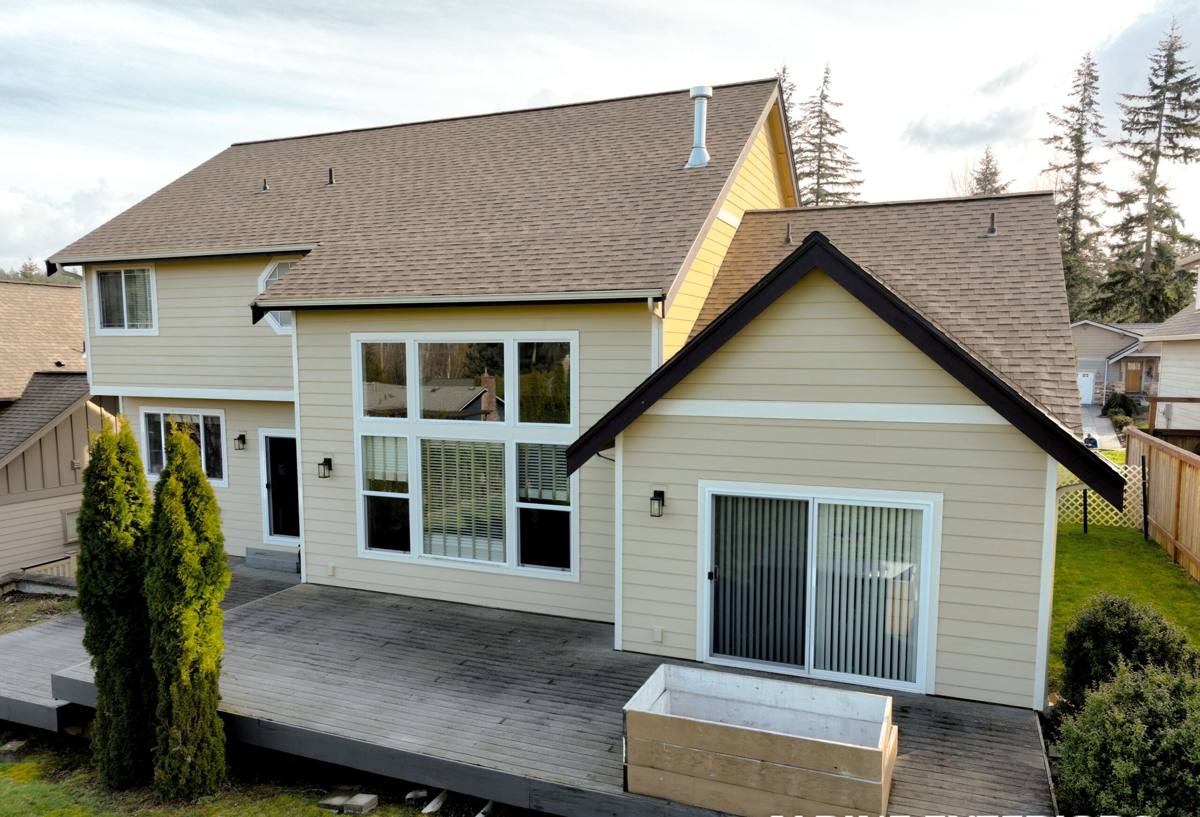
Signs a Cordata Home Actually Needs a New Roof
Not every roof problem calls for full replacement. Before we ever recommend a new roof, we're looking for evidence that repair isn't a realistic long-term fix. Common signs we see on Cordata roofs include:
- Granule loss heavy enough that you're finding grit in gutters and downspouts every time it rains
- Shingles that are cupping, curling, or cracking, especially on south- and west-facing slopes
- Moss colonies that have worked under the shingle edges rather than just sitting on the surface
- Soft or spongy decking felt underfoot in the attic, or daylight visible through the roof deck
- Staining on interior ceilings or in the attic that lines up with a valley, chimney, or vent penetration
- A roof that's simply reached the end of its material's realistic service life, especially if the original installation skipped proper underlayment or ventilation
If a roof is younger and the damage is localized, a targeted repair is almost always the right call. We'll tell you that directly rather than pushing a replacement a roof doesn't need yet.
What a Correct Roof Installation Actually Involves
A new roof is more than laying new shingles over what's there. Done right, it's a sequence of layers that each do a specific job, and skipping or shortcutting any one of them is where premature failures come from.
Tear-off and deck inspection
We remove the old roofing down to the deck rather than layering over it. That lets us actually see the plywood or OSB underneath and replace any sections that have gone soft from years of trapped moisture — a real risk on homes that have had slow leaks or poor ventilation for a while.
Underlayment
Given how much wind-driven rain this area gets, we pay close attention to underlayment coverage, especially at eaves and in valleys where water concentrates. Ice and water shield or a high-quality synthetic underlayment at vulnerable areas is standard practice here, not an upsell.
Flashing
Flashing around chimneys, skylights, vents, and roof-to-wall transitions is where the majority of leaks originate over a roof's life. Salt air accelerates corrosion on cheap or improperly lapped flashing, so we use materials and installation methods built for coastal-influenced exposure, not just what's cheapest.
Ventilation
Proper intake and exhaust ventilation keeps the attic close to outdoor temperature and humidity, which reduces condensation, ice-related issues, and the moisture buildup that feeds moss growth from underneath. We check existing ventilation as part of every roof estimate — it's frequently undersized on older Cordata homes.
Field material installation
Finally, the roofing material itself goes down following the manufacturer's nailing pattern, exposure, and fastener specifications. This is also where warranty coverage gets determined — many manufacturer warranties are void or reduced if installation doesn't meet spec, regardless of material quality.
Roofing Material Options for Whatcom County Homes
There's no single "best" roofing material — the right choice depends on your home's style, your budget, and how much long-term maintenance you want to take on. Here's an honest comparison of what we most commonly install or recommend around Cordata and the wider Whatcom County area.
| Material | Typical Lifespan | Moss/Moisture Behavior | Maintenance Burden |
|---|---|---|---|
| Architectural asphalt composition shingle | 25–30 years | Good with proper ventilation and periodic cleaning | Low to moderate |
| Standing seam metal | 40–50+ years | Sheds water and moss very well; minimal debris retention | Low |
| Cedar shake | 20–30 years with upkeep | Naturally moss-prone in our climate; needs regular treatment | High |
| Synthetic/composite shake or slate | 40–50 years | Resists moisture absorption much better than natural wood | Low to moderate |
We install natural cedar shake when a homeowner specifically wants that look and understands the upkeep it requires. But as a professional standard, we're upfront that in a climate with this much year-round moisture, cedar demands more ongoing maintenance to avoid moss and rot than asphalt, metal, or synthetic alternatives. That's a trade-off we lay out honestly rather than glossing over during an estimate.
Our Installation Process, Step by Step
- On-site inspection and honest assessment of whether repair or replacement is the right call
- Written estimate covering material options, scope of work, and a realistic timeline
- Tear-off of existing roofing and inspection of the deck for hidden damage
- Deck repair or replacement of any compromised sections before new material goes down
- Installation of underlayment, ice and water protection at vulnerable areas, and flashing
- Ventilation check and correction where intake or exhaust is inadequate
- Installation of the chosen roofing material to manufacturer specification
- Final walkthrough with you so you know exactly what was done and what to expect going forward
Every step is documented, and we don't move to the next stage until the one before it is done correctly. On a coastal-influenced roof, the steps that don't show once the shingles are down — deck condition, flashing laps, ventilation — are usually the difference between a roof that lasts and one that doesn't.
Moss, Moisture, and Ventilation: The Local Battle
Moss deserves its own section because it's the single most common long-term issue we see on Whatcom County roofs, and Cordata is no exception. Moss isn't just cosmetic. As it spreads, it holds moisture against the roofing material, works its way under shingle edges, and can lift shingles enough to let water in underneath. Left long enough, it accelerates granule loss and shortens a roof's usable life significantly.
A new roof installation is the best opportunity to get ahead of this. Correct ventilation reduces the moisture available for moss to establish itself from below, and certain shingle products include copper or zinc granules designed to inhibit moss growth over time. Neither of those is a substitute for occasional roof cleaning, but they meaningfully extend the time between cleanings and reduce how aggressively moss returns.
Cost Factors for a New Roof in Cordata
Every roof is priced based on its own specifics, so we won't quote a number without seeing the job. But the main factors that move a project's cost up or down are consistent, and it's worth understanding them before you start collecting estimates.
| Factor | Why It Matters |
|---|---|
| Roof size and number of stories | More square footage and steeper access both add labor time |
| Roof pitch and complexity | Steep roofs and roofs with multiple valleys, dormers, or penetrations take longer and use more flashing material |
| Deck condition | Hidden rot or soft sheathing found during tear-off adds material and labor to repair before new roofing goes on |
| Material choice | Asphalt, metal, cedar, and synthetic products carry different material and installation costs |
| Tear-off vs. existing layers | Removing multiple layers of old roofing takes longer than a single-layer tear-off |
| Ventilation and flashing upgrades | Bringing inadequate ventilation or outdated flashing up to current standards adds scope but pays off in roof lifespan |
Broadly, a straightforward asphalt shingle re-roof on an average-size home tends to fall in the low-to-mid five figures, with metal, complex rooflines, or significant deck repair pushing that higher. We'll walk you through exactly where your estimate's cost is coming from, not just hand you a bottom-line number.
Why Hiring a Crew That Already Works Cordata Matters
A roofing crew that works regularly in Cordata and the surrounding Whatcom County area already knows what to expect before the tear-off even starts: the moisture patterns, the moss pressure, the way salt-influenced air treats exposed fasteners over time. That familiarity shows up in small decisions — which fastener grade to use, where to add extra underlayment coverage, how much ventilation a given attic actually needs — that a crew unfamiliar with this specific climate might not think twice about.
It also means we're not learning the local permitting process, inspection expectations, or common construction patterns of the area on your project. We've already worked through those on homes near yours.
Questions to Ask Any Roofing Contractor Before You Hire
- Are you licensed and insured in Washington State, and can you provide proof?
- Will you provide a written, itemized estimate before work begins?
- Do you remove old roofing down to the deck, or install over existing layers?
- How do you handle deck damage discovered during tear-off — is it quoted separately?
- What underlayment and flashing materials do you use, and why?
- Will you check and correct attic ventilation as part of the project?
- What warranty covers the materials, and what warranty covers your labor separately?
- Can you provide references from other work in the local area?
A contractor who answers these clearly and specifically, without vague reassurances, is generally one worth trusting with a project this size.
After the Install: Keeping a New Roof Performing
A correctly installed roof still benefits from basic upkeep, especially in a climate that gives moss and debris this much time to accumulate. Keep gutters clear so water isn't backing up under the eaves, trim back overhanging branches that shade the roof and keep it damp longer after rain, and have the roof looked at periodically rather than waiting for a visible leak. Catching a small flashing issue or early moss patch early is far cheaper than dealing with the water damage that follows if it's ignored for a few seasons.
If your Cordata home's roof is showing its age, or you just want a straight answer about whether repair or replacement makes more sense, we're happy to take a look. Reach out for a free, no-pressure estimate using the form below.