 Whatcom County
 Siding That Has to Work in Nooksack's Climate, Not Just Look Good on Day One
Nooksack sits in a stretch of Whatcom County where weather doesn't do things halfway. Homes here take on driving rain that comes in sideways off open fields, salt-tinged air that drifts in from the Sound and Nooksack River corridor, and a moss season that can run eight months out of the year in the shaded, low-lying spots common to this part of the county. Siding that's rated for a mild climate on paper often struggles once it's actually nailed to a wall out here. That's the gap we build for.
Fiber cement siding, when it's the right product and it's installed correctly, handles this environment better than almost anything else on the market. But "fiber cement" isn't one thing — there are real differences between brands, product lines, and installation quality, and those differences show up fastest in a climate like this one. This page is about what a correct fiber cement job looks like on a Nooksack home, and why we only put one product on the wall.
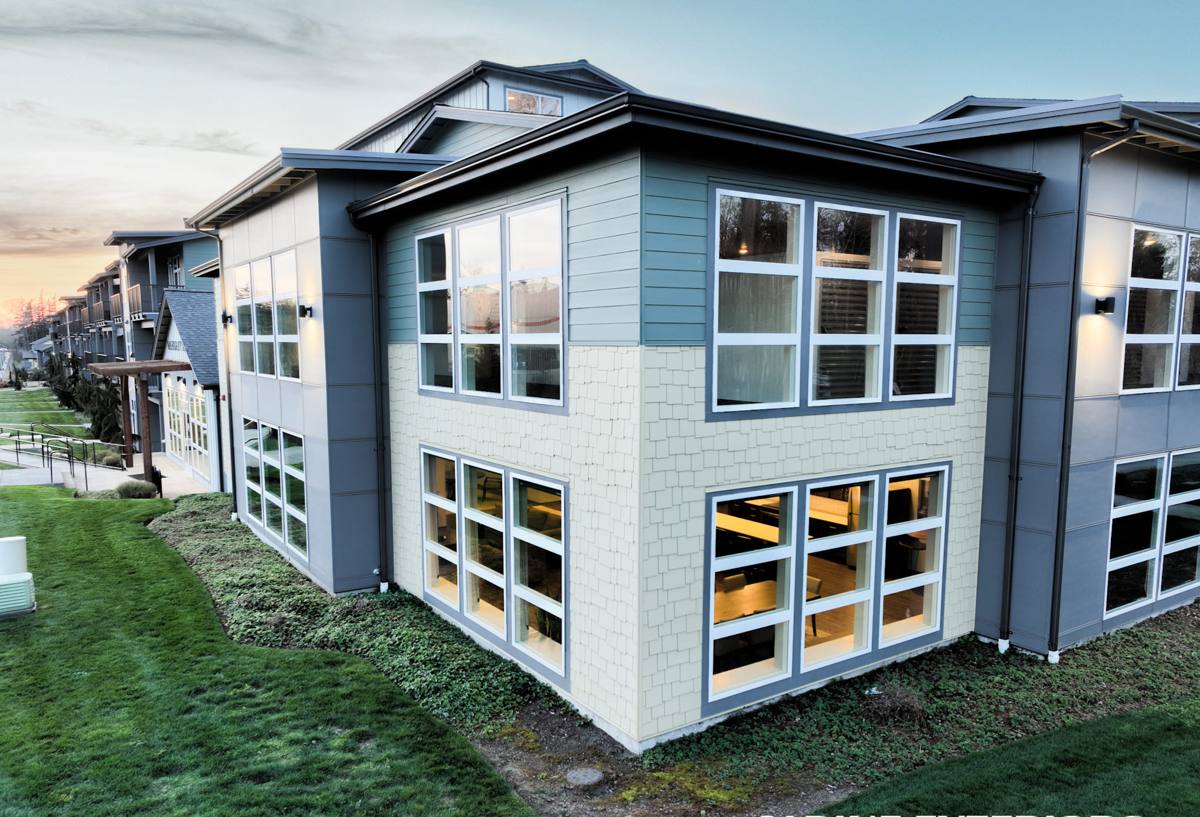
What Nooksack's Climate Actually Demands From Siding
Moisture load, not just rain totals
It's not just how much rain falls — it's how long a wall stays wet. Nooksack's mix of low elevation, tree cover, and river-valley humidity means siding surfaces can stay damp for days after a storm passes. Any siding material that absorbs water into its core, or that traps moisture behind it due to poor flashing, is going to show problems years before it should: swelling, soft spots, paint failure, or rot in the sheathing behind it.
Salt-influenced air
Whatcom County properties, even ones set back from open water, get enough salt-laden air moving through on marine weather systems to accelerate corrosion on fasteners, trim, and any metal flashing components. Siding systems need to be paired with corrosion-resistant hardware, not just a good panel.
Moss, algae, and shaded exposures
Homes with north-facing walls, mature tree cover, or tight side yards in Nooksack develop moss and algae growth faster than homes on open, sun-exposed lots. Siding with a factory-cured finish resists this kind of biological growth far better than a field-painted surface, and it matters more here than it would in a drier part of the state.
Why We Only Install James Hardie Fiber Cement
We get asked regularly why we don't offer LP SmartSide, vinyl, Cemplank, Allura, or primed wood siding alongside Hardie. The honest answer is that we made a standard, and we hold to it on every job — including here in Nooksack.
- Non-combustible core: Hardie fiber cement is cement and cellulose fiber, not an engineered wood product. It doesn't carry the same wildfire and moisture-related concerns that wood-based composite sidings do.
- ColorPlus factory finish: The finish is baked on at the factory under controlled conditions, not brushed or sprayed on-site. That gives a harder, more UV- and moss-resistant surface than field-applied paint, which matters directly in Nooksack's shaded, damp spots.
- Climate-engineered HZ product lines: Hardie manufactures region-specific formulations. Product engineered for the Pacific Northwest's wet-side climate performs differently than a formulation meant for the arid Southwest — and we spec the right one for this county.
- Warranty structure: Hardie's transferable warranty is backed by a large, established manufacturer, which matters to homeowners planning to sell in the next 10-20 years.
- Track record when installed to spec: Fiber cement's long-term performance depends heavily on correct installation. Hardie's install requirements are well documented and well supported by manufacturer training, which lets us install to spec consistently.
We're not going to tell you competing products are junk — some of them get real things right, and we say so on our other pages. But we've made a professional call: we'd rather install one system extremely well than juggle several and install all of them adequately. In a climate like Nooksack's, "adequately" isn't the bar.
What a Correct Fiber Cement Job Involves
It starts underneath the siding, not with the siding
Most fiber cement failures we get called to inspect on older homes trace back to what's behind the panel, not the panel itself. A correct install includes:
- A code-compliant weather-resistive barrier, lapped correctly from bottom to top
- Proper flashing at every window, door, and roof-to-wall intersection
- Rainscreen or drainage gap detailing where wall assembly and exposure warrant it
- Correct fastener spacing and depth — over-driven nails are one of the most common causes of premature panel damage
- Sealed, back-primed cut edges wherever a factory edge is trimmed on site
Fastener and flashing hardware matter as much as the siding
Given the salt-influenced air here, we spec corrosion-resistant fasteners and flashing components rather than whatever's cheapest at the yard. It's a small cost difference upfront and a large difference in how the wall looks in year twelve.
Joints, caulking, and butt seams
Poorly sealed panel joints are where water gets behind the system first. Correct installation uses manufacturer-approved sealants and joint treatments at every seam, not just the visible ones.
How Our Process Works on a Nooksack Job
- On-site assessment: We walk the exterior, check current siding and sheathing condition, identify moisture-prone areas (shaded walls, low clearance points, existing moss growth), and note any rot or flashing issues that need addressing before new siding goes up.
- Product and line selection: We spec the Hardie product line and finish appropriate to the home's exposure — a shaded, moss-prone north wall may get different detailing consideration than a sun-exposed south face.
- Prep and repair: Any compromised sheathing, framing, or existing flashing gets addressed before a single new panel goes up. Covering a moisture problem with new siding just delays and hides it.
- Installation to manufacturer spec: Correct fastening, flashing, and joint treatment throughout, following Hardie's published installation guidelines for this climate zone.
- Final walkthrough: We review the finished work with the homeowner, including maintenance basics and what to watch for over the first few seasons.
Why Hiring a Crew That Already Works Nooksack Matters
Fiber cement installation isn't exotic, but installing it correctly for this specific climate is a different skill than installing it for a dry-summer region. A crew that already works Whatcom County knows:
- Which wall orientations in this area need extra drainage detailing because of shade and moisture patterns
- How local moss and algae growth actually behaves against different finishes over multiple wet seasons
- What fastener and flashing corrosion resistance is actually worth specifying given the area's air quality and rainfall pattern
- How local permitting and inspection expectations typically run for exterior work in the county
None of that is dramatic, but it's the difference between siding that looks right at installation and siding that still looks and performs right ten years later.
Cost Factors to Understand Before You Get a Quote
We don't publish blanket pricing because every home's exposure, existing condition, and trim complexity changes the job. But here's what actually drives cost on a fiber cement project in this area:
| Factor | Why It Affects Cost |
|---|---|
| Existing sheathing/moisture damage | Rot or water damage found during tear-off requires repair before new siding goes up |
| Home size and wall complexity | More corners, dormers, and trim details mean more labor and cut waste |
| Product line and finish selection | Different Hardie lines and ColorPlus finish options carry different material costs |
| Access and site conditions | Tight lots, mature landscaping, or multi-story sections affect staging and labor time |
| Flashing and drainage detailing needed | Shaded, moisture-prone walls may need more thorough flashing and rainscreen work |
Maintenance: What Owning Hardie Siding in Nooksack Looks Like
One reason we standardized on Hardie is that ongoing maintenance is genuinely low for a homeowner, but "low" doesn't mean "none" in this climate:
- Rinse siding periodically to clear pollen, dust, and early moss growth, especially on shaded walls
- Inspect caulking at joints and trim every year or two and re-seal as needed
- Keep landscaping and gutters clear so water and debris don't sit against the base of the siding
- Watch for any paint or finish wear at cut edges or areas of physical damage and address promptly
Compare that to wood-based composite sidings, which often need more active moisture vigilance, or vinyl, which can't be refinished and shows impact damage permanently — and it's a big part of why we settled on Hardie as the standard we stand behind.
Ready to Talk About Your Home
If your Nooksack home's siding is showing moss buildup, paint failure, soft spots, or you're just planning ahead for a replacement, we're happy to take a look and talk through what correct installation would involve for your specific exposure. Reach out for a free, no-pressure estimate using the form below.