 Whatcom County
 Why Nooksack Homes Take a Beating From the Weather
Nooksack sits in the Nooksack River valley, in the part of Whatcom County where marine air off the Puget Sound and the Strait of Georgia collides with the foothills of the North Cascades. That combination means moisture-laden air moves through the valley for much of the year, driving rain comes in sideways during fall and winter storms, and the humidity rarely lets up long enough for exterior surfaces to fully dry out. Add in the salt-tinged air that reaches inland from the Sound on a west wind, and you have a climate that is steadily working against whatever is on the outside of your house.
The result is a long moss and algae season — realistically eight or nine months of the year in shaded or north-facing areas — plus wood-destroying moisture cycles that punish any siding material not built to shed water fast and dry out completely between storms. Homeowners in Nooksack don't need a siding product that merely looks good on installation day. They need one that holds its finish, resists moisture intrusion at the seams, and doesn't become a moss farm by its second winter.
What This Means for Siding Choice
Every siding material handles this differently. Wood-based products (including engineered wood) absorb moisture at cut edges and fastener penetrations, which is exactly where Whatcom County's climate concentrates its punishment. Vinyl doesn't rot, but it flexes and gaps as temperatures swing, opening small pathways for wind-driven rain behind the cladding. That's part of why this company installs one product system — James Hardie fiber cement — and why we're explicit with Nooksack homeowners about what a correctly installed siding job actually requires here.
What a Correct Siding Installation Involves
Siding failures in this region are rarely about the product alone — they're almost always about installation details that get skipped to save time. A correct install in a climate like Nooksack's comes down to a handful of non-negotiables:
- A continuous, properly lapped weather-resistive barrier behind the siding, with no gaps or punctures left unsealed
- Flashing at every window, door, and roofline intersection, installed so water is directed out and away from the wall assembly, not trapped behind it
- Correct fastener type, spacing, and penetration depth — under- or over-driven nails are one of the most common causes of early siding failure
- Proper clearance between the bottom of the siding and grade, decks, patios, and roof lines, so splash-back and standing water don't sit against the material
- Caulked and back-primed cut ends, especially at butt joints and around penetrations, so the factory finish isn't compromised at the one place it's most vulnerable
- Ventilation behind the cladding where the wall assembly calls for it, so trapped moisture has somewhere to go
Skip any one of these and even a premium product can underperform. This is where an installation crew's experience matters as much as the material itself.
Why We Install Only James Hardie Fiber Cement
We don't install LP SmartSide, vinyl, Cemplank, Allura, or primed spruce or cedar siding. That's a deliberate standard, not a supply limitation. Each of those products has legitimate strengths — engineered wood is cost-effective and easy to work with, vinyl is low-maintenance in mild climates, cedar has a look many homeowners love. But in a climate like Whatcom County's, with sustained moisture exposure and a moss season that runs most of the year, the trade-offs on those products (edge-swelling on engineered wood, seam and expansion issues on vinyl, and the ongoing sealing and refinishing that raw wood siding demands) are trade-offs we're not willing to install and then have to answer for down the road.
James Hardie fiber cement is non-combustible, doesn't swell or rot when it gets wet, and comes from the factory with a baked-on ColorPlus finish that resists fading and doesn't need to be repainted on the same schedule as field-painted wood. Hardie also engineers specific product lines (their HZ5 line) for climates like ours, formulated to handle sustained moisture and freeze-thaw cycling rather than a one-size-fits-all national product. Combined with a transferable warranty and a track record of holding up when installed correctly, it's the product we're willing to put our name behind on a Nooksack home.
Choosing the Right Hardie Product Line for a Nooksack Home
James Hardie makes several distinct product lines, and the right one depends on the home's architecture, existing trim, and how much of a role moss-resistance and low maintenance play in the decision.
| Product Line | Best For | Notes for Whatcom County |
|---|---|---|
| HardiePlank lap siding | Traditional and farmhouse-style homes, the most common look in the valley | Available in smooth or cedar-textured finish; wide color range through ColorPlus |
| HardieShingle | Craftsman and cottage-style homes, or as an accent on gables | Gives a cedar-shake look without the moisture absorption of real shake |
| HardiePanel vertical siding | Modern builds, accent walls, gable ends | Clean lines; pairs well with board-and-batten trim detailing |
| HardieTrim boards | Window/door casings, corner boards, fascia | Matched finish system so trim and field siding age the same way |
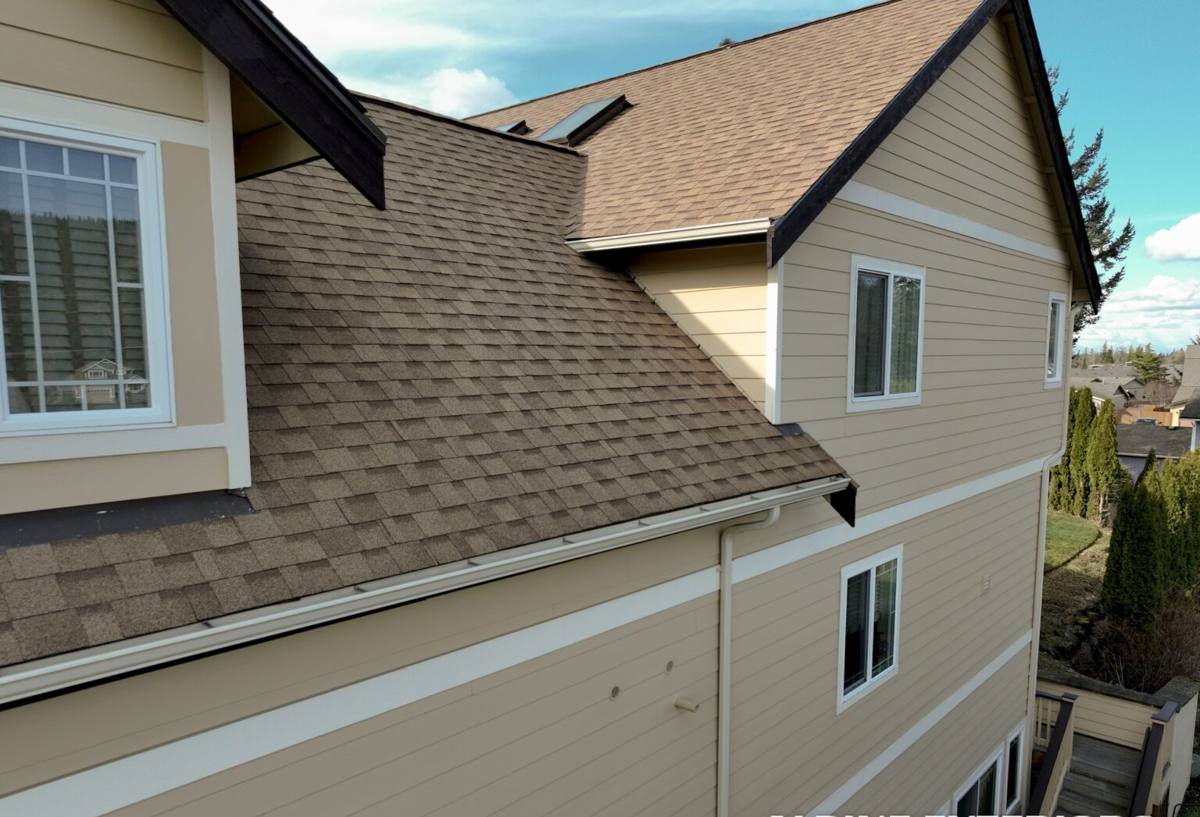
Most Nooksack homes we work on end up on HardiePlank for the main field of the house, with HardieTrim boards tying in the window and corner details. Homes with more architectural detail, or owners who want a distinct look on a porch gable or dormer, sometimes mix in HardieShingle or a HardiePanel accent.
How Our Installation Process Works
1. On-Site Assessment
We walk the exterior, check the condition of the existing sheathing and weather barrier where it's exposed, and look at drainage, grading, and any areas showing past moisture intrusion — soft trim, staining, or moss buildup at wall bases.
2. Tear-Off and Substrate Check
Old siding comes off down to the sheathing so we can actually see what's underneath, rather than covering up hidden rot or a compromised barrier. Any damaged sheathing gets addressed before anything new goes on.
3. Weather Barrier and Flashing
A new weather-resistive barrier goes on with correct laps, and flashing is installed at every penetration — windows, doors, hose bibs, vents, and rooflines — before a single piece of siding is hung.
4. Siding Installation
HardiePlank, panels, and trim go up per James Hardie's fastening and clearance specifications, with cut ends sealed and joints staggered correctly. We follow manufacturer install guidelines closely, since that's also what keeps the product warranty intact.
5. Final Inspection and Cleanup
We walk the finished exterior, check caulk lines, clearances, and fastener patterns, and clean up the site — including magnet-sweeping for stray fasteners.
What Siding Installation Costs Depend On
Every home is different, but the same handful of factors drive the price on most Nooksack projects:
| Factor | Why It Matters |
|---|---|
| Home size and wall complexity | More corners, dormers, and gables mean more cutting, flashing, and labor time |
| Condition of existing sheathing | Rot or moisture damage found during tear-off adds repair scope before siding can go on |
| Product line and finish | HardieShingle and specialty finishes run higher than standard HardiePlank lap |
| Trim scope | Full HardieTrim replacement adds cost versus reusing sound existing trim |
| Access and site conditions | Slopes, tight setbacks, and multi-story walls affect staging and labor |
We give exact numbers after seeing the home in person — broad averages don't account for what's actually happening behind the current siding, and we'd rather quote accurately than low-ball and revise later.
Signs Your Nooksack Home May Need New Siding
- Persistent moss or algae growth that returns within weeks of cleaning
- Soft spots, bubbling, or visible warping in the siding material
- Paint that's peeling or blistering repeatedly in the same spots
- Gaps or separation at seams, corners, or trim joints
- Rising energy bills that can't be explained by usage changes
- Visible staining or discoloration running down from behind gutters or flashing
- Siding that feels damp or spongy to the touch after a dry stretch of weather
Any one of these on its own isn't necessarily an emergency, but a few together — especially moisture-related ones — usually mean water is getting behind the siding rather than shedding off it.
Why a Crew That Already Works Whatcom County Matters
Siding installation isn't just about the product — it's about understanding how a specific climate behaves against a wall assembly over years, not just on install day. A crew that works Whatcom County regularly knows which wall orientations in the Nooksack valley take the worst of the driving rain, where moss establishes fastest, and how the seasonal moisture cycle here differs from a drier inland climate where a lot of generic installation guidance originates. That local pattern recognition shows up in small decisions — flashing details, fastener choices, where extra sealant matters most — that a crew unfamiliar with the area might not think to prioritize.
Caring for Hardie Siding After Installation
One of the practical advantages of fiber cement in this climate is how little upkeep it demands compared to wood. It doesn't need repainting on a recurring schedule the way field-painted wood does, and it won't swell or rot from the moisture exposure that's constant here. That said, a yearly rinse to knock down surface moss and algae before it establishes, and a quick visual check of caulk lines and trim after major storms, goes a long way toward keeping the exterior looking and performing the way it did on installation day.
If your Nooksack home's siding is showing its age, or you're planning ahead of a full replacement, we're happy to take a look and walk you through what we see — no pressure, no obligation. Use the form below to request a free estimate.