 Whatcom County
 Roof Repair Built for Birchwood's Climate
Birchwood homes sit in one of the harder climates in Whatcom County to keep a roof healthy. The combination of salt-laden air off the Sound, long stretches of driving rain, and a moss season that can run most of the year puts steady pressure on shingles, flashing, and the wood underneath. None of that damage happens overnight. It happens shingle by shingle, nail by nail, over several wet seasons, which is why so many roof repairs we're called out for in Birchwood are older problems that finally worked their way through the roof deck.
This page is about roof repair specifically — patching, flashing correction, moss remediation, and targeted leak fixes — not full tear-off replacement. Most Birchwood roofs that are otherwise in decent shape don't need a new roof; they need the right repair done correctly the first time.
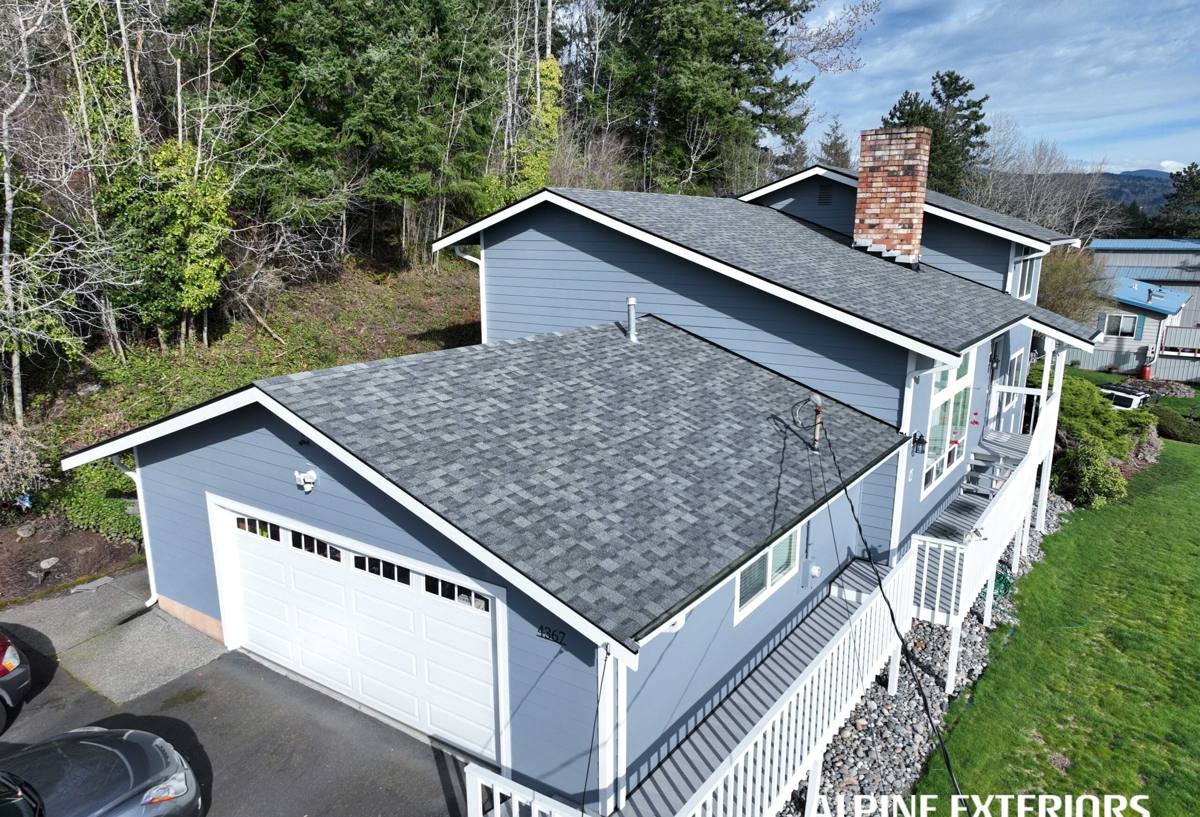
What Salt Air, Rain, and Moss Actually Do to a Roof
Salt Air
Airborne salt accelerates corrosion on any exposed metal — roofing nails, flashing, vent caps, and gutter hardware. Once fasteners start to corrode, shingles loosen and flashing seals fail well before the shingles themselves would normally wear out. This is a much bigger factor in Birchwood than it is further inland in Whatcom County.
Driving Rain
Wind-driven rain doesn't just fall straight down — it gets pushed sideways and upward under shingle edges, around chimneys, and into any gap in flashing. A roof that would hold up fine under a light, vertical rain can still leak under a driving rain if the flashing laps and shingle overlaps aren't installed with that wind pattern in mind.
Moss Season
Moss thrives in the shade, moisture, and mild temperatures common through much of the year here. It's not just cosmetic. Moss holds moisture against the shingle surface, lifts shingle edges as it grows, and works its way under tabs and around flashing, creating slow leaks that often show up as a ceiling stain in an entirely different spot than the actual roof problem.
Common Roof Repair Issues We See in Birchwood Homes
- Moss-lifted shingles along north-facing slopes and shaded valleys where sun exposure is limited
- Corroded or loosened fasteners from prolonged salt-air exposure, especially on older roofs
- Flashing failure at chimneys, skylights, and roof-to-wall transitions where driving rain finds a way in
- Clogged or undersized gutters that back water up under the shingle edge during heavy rain events
- Granule loss on aging asphalt shingles, leaving them brittle and more prone to wind lift
- Soft or discolored roof decking found once shingles are pulled back, from a slow leak that went unnoticed
What a Correct Roof Repair Actually Involves
A roof repair that actually solves the problem — instead of just patching the visible symptom — usually has the same core steps, regardless of how small the job looks from the ground.
1. Find the Real Source
Water travels. A stain on a ceiling is rarely directly below the roof entry point. A proper repair starts by tracing the leak back to its actual source, not just sealing the spot that looks wet.
2. Remove and Inspect, Don't Just Cover
Damaged shingles and flashing need to come off so the roof deck underneath can be checked. If the decking has softened from prolonged moisture, sealing over it just traps the problem — it needs to be dried out or replaced before new material goes down.
3. Match the Repair to the Existing System
New shingles, flashing, and underlayment need to integrate with the existing roof's laps and drainage path, not just sit on top of it. A patch that ignores how water is supposed to shed will leak again, often in a new spot nearby.
4. Address Moss at the Root, Not Just the Surface
Scraping visible moss off without treating the surface or improving airflow and sun exposure where possible just means it grows back within a season or two. A real moss remediation step is part of the repair, not an afterthought.
5. Recheck Fasteners and Flashing Nearby
If salt air corroded the fasteners in one section, it's very likely doing the same thing to fasteners nearby. A good repair checks the surrounding area rather than treating the job as a single isolated spot.
Repair or Replace? How to Tell
Not every roof problem in Birchwood calls for a full replacement, and not every leak can be permanently fixed with a patch. Here's how we think through it:
| Sign | Usually Points To | Typical Approach |
|---|---|---|
| One or two isolated leaks, roof under 15 years old | Localized flashing or fastener failure | Targeted repair |
| Moss concentrated on shaded slopes only | Sun exposure and drainage, not overall roof age | Moss removal + treatment, spot repair as needed |
| Multiple leaks in unrelated areas | Widespread underlayment or shingle failure | Larger repair or partial re-roof, evaluated on inspection |
| Soft decking found in more than one spot | Long-term moisture intrusion | Deck repair plus roofing section replacement |
| Roof is original and near or past its expected lifespan | General material fatigue, not a single fixable defect | Full replacement conversation, not repair |
We'll always tell you honestly which category your roof falls into. If a repair will genuinely hold, we say so. If the roof is past the point where patching makes sense, we say that too, rather than stacking repairs on a roof that needs replacing.
Our Process for a Birchwood Roof Repair
- Inspection. We walk the roof (or use a ladder/scope where pitch or access requires it) and check the interior attic space where visible, since that's often where a leak's true path shows up.
- Honest assessment. We explain what we found, what's causing it, and whether it's a straightforward repair or something bigger — before any work starts.
- Written scope and price. You know what's being done and what it costs before we touch the roof. No surprise add-ons once we're up there.
- The repair. Removal of damaged material, deck check, correct flashing and shingle integration, and moss treatment where needed.
- Cleanup and check. Nails, debris, and old material are cleared from the roof and gutters before we consider the job done.
Why It Matters to Hire a Crew That Already Works in Birchwood
Roofing crews that work across a wide, dry-climate service area don't always think in terms of salt exposure or moss cycles, because it isn't a daily factor for them. A crew that regularly works Birchwood and the surrounding Whatcom County area already knows which roof sections tend to hold moisture longest, how far driving rain typically pushes water under shingle edges in this area, and which fastener and flashing choices actually hold up against salt air over time. That familiarity shows up in fewer callbacks and repairs that are built for the conditions the roof actually faces, not generic conditions.
Local presence also matters for the practical side — following up during the next heavy rain to confirm a repair held, or coming back quickly if something unrelated shows up nearby.
What Homeowners Can Do Between Professional Checkups
- Look at the roof from ground level after major wind or rainstorms for lifted or missing shingles
- Keep gutters clear so water isn't backing up under the roof edge during heavy rain
- Watch for moss starting on shaded, north-facing slopes and address it early, before it spreads
- Check attic spaces (if accessible) for water stains, damp insulation, or daylight coming through the deck
- Trim back overhanging branches that keep sections of the roof shaded and slow to dry
- Note the age of the roof and its last inspection date so repair decisions are based on real history, not guesswork
Materials and Repair Standards We Hold To
For repairs, we match new shingles and flashing to the existing roof system as closely as possible so the repaired section performs the same as the rest of the roof, rather than creating a weak seam. Where salt-air corrosion has been a factor, we use fasteners and flashing suited to that exposure rather than the minimum standard, since replacing corroded hardware twice costs more than doing it right the first time. Moss treatment is applied as part of the repair scope, not sold separately as an upsell, because leaving it out defeats the purpose of the repair.
Get a Straight Answer on Your Roof
If you're dealing with a leak, visible moss, or just want a second opinion on a roof in Birchwood before it becomes a bigger problem, we're glad to take a look. Reach out for a free, no-pressure estimate using the form below — we'll tell you honestly what we see and what it would take to fix it right.