 Whatcom County
 Roof Repair Is a Diagnosis First, a Repair Second
A leak that shows up on a ceiling almost never starts where you see it. Water travels along framing, underlayment, and sheathing before it finds the path of least resistance into the living space below, which means the stain on the drywall and the actual point of failure on the roof deck can be several feet apart. Treating a roof repair as a diagnosis first and a repair second is the only way to fix the problem instead of just chasing the symptom.
Happy Valley is one of Bellingham's older, tree-shaded residential neighborhoods in Whatcom County, and a lot of the roofs here were installed decades ago under different assumptions about ventilation, underlayment, and how much moisture a roof system would see over its working life. That doesn't mean those roofs were built badly — it means a repair today has to account for materials and details that have moved on since the original install, not just patch around them.
Older Housing Stock, Established Trees
The mature tree canopy that gives Happy Valley a lot of its character also drops needles, leaves, and organic debris onto roof surfaces year-round, and keeps large sections of many roofs shaded for long stretches of the day. Combined with the salt air and driving rain that reach this whole stretch of Whatcom County, that shade and debris load turn an ordinary roof into one that needs a repair approach built around slow drying and organic buildup, not just wind and water alone.
What We're Actually Looking For During an Inspection
A repair call almost always starts with one visible complaint — a stain on a ceiling, a missing shingle after a windstorm, a soft spot near a chimney. Our job is to treat that complaint as a starting point, not the whole picture, and check the flashing, underlayment, decking, and surrounding roofing material before we scope any work.
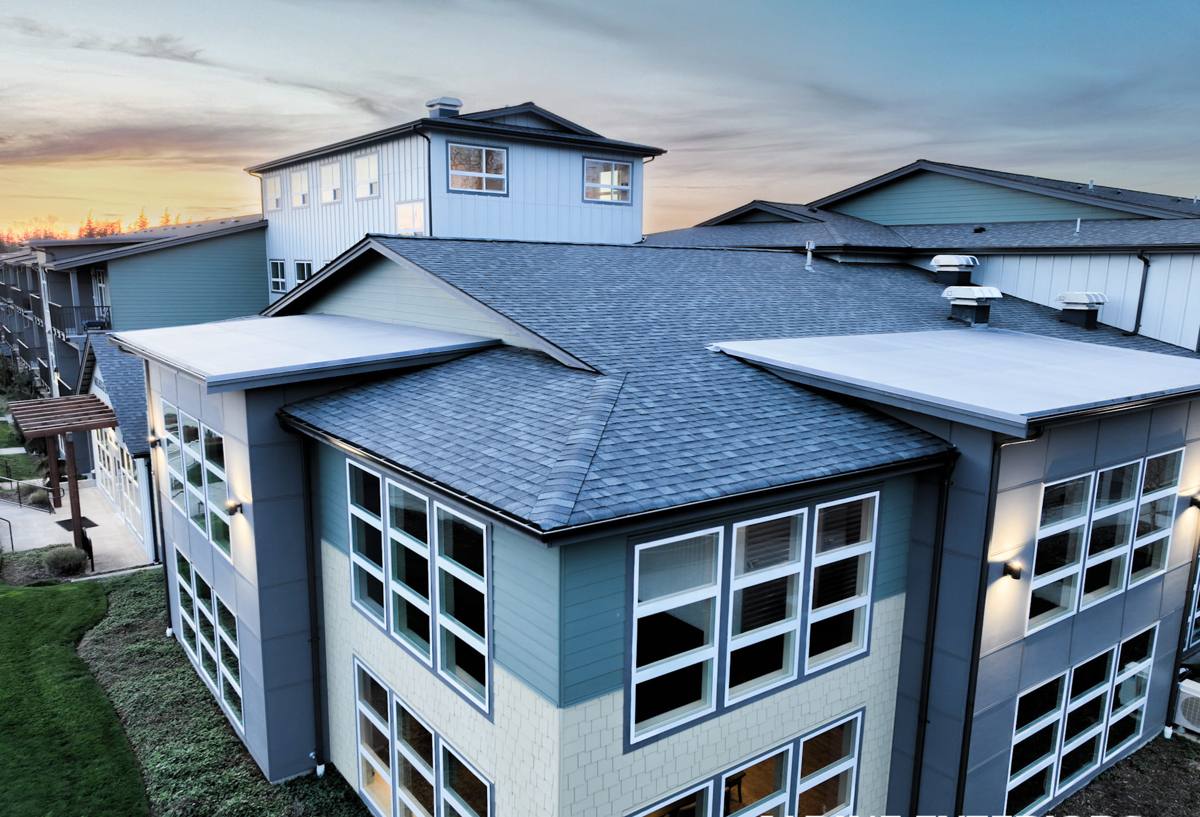
What Whatcom County's Climate Does to a Roof Over Time
Driving Rain That Doesn't Fall Straight Down
Storms moving through this part of Washington rarely drop rain straight down. Wind pushes it sideways and up under shingle tabs, into flashing laps, and behind trim that was only ever detailed to shed water falling from directly above. Over years, that wind-driven pattern finds every seam and penetration that wasn't sealed or lapped with sideways-moving water in mind.
Salt Air and Slow Material Fatigue
Whatcom County's proximity to Puget Sound and the Salish Sea puts a steady, low-level dose of salt into the air across a wide area, not just the immediate waterfront. That salt content doesn't damage a roof overnight — it works on exposed metal flashing, fasteners, and vent hardware year after year, and it's usually the hardware you can't see from the ground, not the shingles themselves, that fails first.
A Moss Season That Runs Most of the Year
Frequent rain and long overcast stretches mean many Happy Valley roofs, especially shaded ones under mature trees, don't get enough sustained dry weather to fully dry out between storms. Moss on a roof isn't just an appearance issue — it lifts shingle edges as it grows, holds moisture directly against the roofing material underneath, and accelerates granule loss and decking rot well beyond what open rain exposure alone would cause.
Common Roof Problems We Find in Happy Valley Homes
Most repair calls start with one of a handful of recurring issues. If you're seeing any of these, it's worth having the roof looked at before the next wet season adds to the damage.
- Curling, cracked, or missing shingles — often the first visible sign that a roof is past its expected service life or took wind damage in a recent storm.
- Moss and algae streaking in shaded sections — a sign the surface isn't drying between rains, which speeds up granule loss and shortens remaining roof life.
- Rust streaks or gaps at flashing around chimneys, skylights, and vents — these penetration points are where the large majority of roof leaks actually originate.
- Ceiling stains or discoloration, especially after a windy storm — a strong indicator of an active leak that has already traveled some distance from its source.
- Sagging or soft spots in the roof plane — usually a sign that decking underneath has absorbed water over an extended period and is beginning to lose structural integrity.
- Clogged or overflowing gutters tied to roof debris — a maintenance issue that, left alone, backs water up under the lowest course of roofing and accelerates edge rot.
Repair or Replace? How We Make That Call
Not every roof problem calls for a full replacement, and not every roof is worth patching indefinitely. The honest answer depends on what's happening at the decking and flashing level, not just how the roof looks from the ground.
| Factor | Favors Repair | Favors Replacement |
|---|---|---|
| Decking condition | Sheathing is sound; damage is isolated to a small section or single penetration | Widespread soft spots or rot found across multiple sections of decking |
| Age of the roofing material | Roof is within its expected service life with isolated, catchable damage | Roofing material is at or past the end of its typical lifespan across most of the roof |
| Flashing condition | Flashing is intact overall; the issue is a single seam or penetration | Flashing is corroded, undersized, or missing in multiple locations |
| Granule loss or shingle wear | Wear is localized to one slope or area, likely storm-related | Granule loss is uniform across the whole roof, indicating general material fatigue |
| Cost comparison | Targeted repair cost is clearly lower than replacement for the same result | Repair cost approaches replacement cost once the real scope is uncovered |
We walk through this comparison on-site, from the roof itself rather than a photo or a guess from the driveway, so the repair-versus-replace decision is based on what we find, not an assumption made before anyone climbs up.
What a Correct Roof Repair Actually Involves
Diagnosing Past the Symptom
A ceiling stain is a symptom, not the diagnosis. Before we replace any material, we trace the path water most likely took to get there, checking the decking, underlayment, and nearby flashing along the way. Patching the shingle directly above a stain without tracing the actual path just delays the next leak.
Flashing and Penetration Repairs
Chimneys, skylights, vent pipes, and roof-to-wall transitions are where most leaks start, because each one requires a flashing detail that has to shed water correctly in every direction, not just from straight overhead. When flashing has failed, we correct the detail itself, not just seal over the gap, since sealant alone on a poorly lapped flashing will fail again within a season or two.
Decking and Structural Repairs
When water has reached the roof deck, the repair has to address that structure directly, replacing affected sheathing and confirming the framing underneath is sound before new roofing material goes back down. This is the part of a repair that matters most and shows the least once the surface is finished.
Shingle and Surface Repairs
Replacing roofing material sounds simple, but doing it correctly means matching the material, profile, and weathering of what's already on the roof where a full replacement isn't warranted, and re-establishing correct shingle lap and nailing pattern so the repaired section sheds water the way the rest of the roof does. Material laid down without attention to lap and fastening placement just relocates the leak risk to the edge of the patch.
Cost Factors in a Roof Repair
| Repair Type | What Drives the Cost | Typical Scope |
|---|---|---|
| Shingle or surface repair | Number of courses affected, material match, and roof accessibility | Isolated wind damage, cracked shingles, or moss-damaged sections |
| Flashing replacement | Corrosion-resistant metal and correct detailing at penetrations cost more but stop repeat leaks in salt-influenced air | Rust streaking, gapped seams, or flashing original to an older install |
| Decking repair | Extent of rot and whether the surrounding framing is sound | Soft spots, sagging, or water-stained sheathing found during inspection |
| Full slope or section replacement | Square footage involved and whether tear-off is needed down to the deck | Widespread wear on one roof plane rather than the whole structure |
Our Roof Repair Process in Happy Valley
- On-site inspection — we get on the roof to look at the visible complaint plus the flashing, decking, and surrounding material around it, not just what's visible from the ground.
- Written diagnosis — a clear explanation of what's failing, why, and whether it's isolated or connected to a larger issue with the roof system.
- Scope and estimate — a straightforward breakdown of what the repair involves and what it costs, with repair-versus-replace laid out honestly if that's a live question for your roof.
- Repair work — structural and flashing fixes first, then surface material, using corrosion-resistant fasteners and hardware throughout, not just at visible connections.
- Final walkthrough — we go over what was repaired, what to watch for going forward, and basic maintenance suited to your specific roofing material.
Roof Maintenance That Actually Extends a Repair's Life
A good repair can still fail early if the roof goes right back to the same conditions that caused the original damage. A few habits make a real difference in a climate like this one.
- Clear leaf and needle litter from valleys, gutters, and around penetrations regularly, especially under mature trees.
- Address moss growth early, using a method appropriate to your roofing material rather than aggressive pressure washing that can strip granules.
- Keep gutters and downspouts clear so water isn't backing up under the lowest courses of roofing.
- Have flashing around chimneys, skylights, and vents checked periodically for corrosion or gaps in the seal.
- Schedule a roof inspection after any significant windstorm, even if nothing looks obviously wrong from the ground.
Why a Crew That Already Works Happy Valley Matters
A repair diagnosed from a generic checklist can miss what's actually driving the damage on a specific roof. A crew that already works Happy Valley and the rest of Whatcom County knows which shaded, tree-covered roof lines hold moss longest, how far salt-influenced air reaches inland, and which flashing and fastener choices actually hold up through a moss season that doesn't take much of a break. That local pattern recognition is what turns a repair into a lasting fix instead of a temporary patch.
We also treat roof flashing and water management as part of the home's overall exterior envelope, since siding and moisture control is our core trade, not a sideline. That perspective carries into every roof repair we take on, whether or not the rest of the house needs attention too.
Get an Honest Read on Your Roof
If you've noticed a stain on the ceiling, missing shingles after a storm, or moss creeping across a shaded slope, it's worth having someone look at it before another wet season adds to the damage. We're glad to walk the roof with you, explain what we find in plain language, and give you a straightforward estimate for a repair built to actually last in this climate. Reach out for a free, no-pressure estimate using the form below.