 Whatcom County
 Why Roofs in Samish Wear Differently Than Roofs Inland
Samish sits close enough to the water and the open weather patterns that move through Whatcom County that its roofs take a different kind of beating than a roof twenty miles inland. Salt-laden air corrodes exposed metal faster than it does further from the water. Driving rain, pushed sideways by wind off the bay and the Strait, finds every weak lap, every under-driven nail, and every place where flashing was installed as an afterthought instead of a planned detail. And the long, wet moss season here — often stretching from fall through spring — means organic growth has months, not weeks, to work into shingle mat and granule surfaces before a dry stretch gives homeowners a chance to clean it off.
None of that means Samish roofs are doomed to fail early. It means the margin for error is smaller. A roof replacement done to a generic standard, without accounting for this specific combination of salt, wind-driven rain, and moss, tends to show its weaknesses in year five or six instead of year fifteen or twenty. A roof replacement done correctly for this climate holds up the way it should.
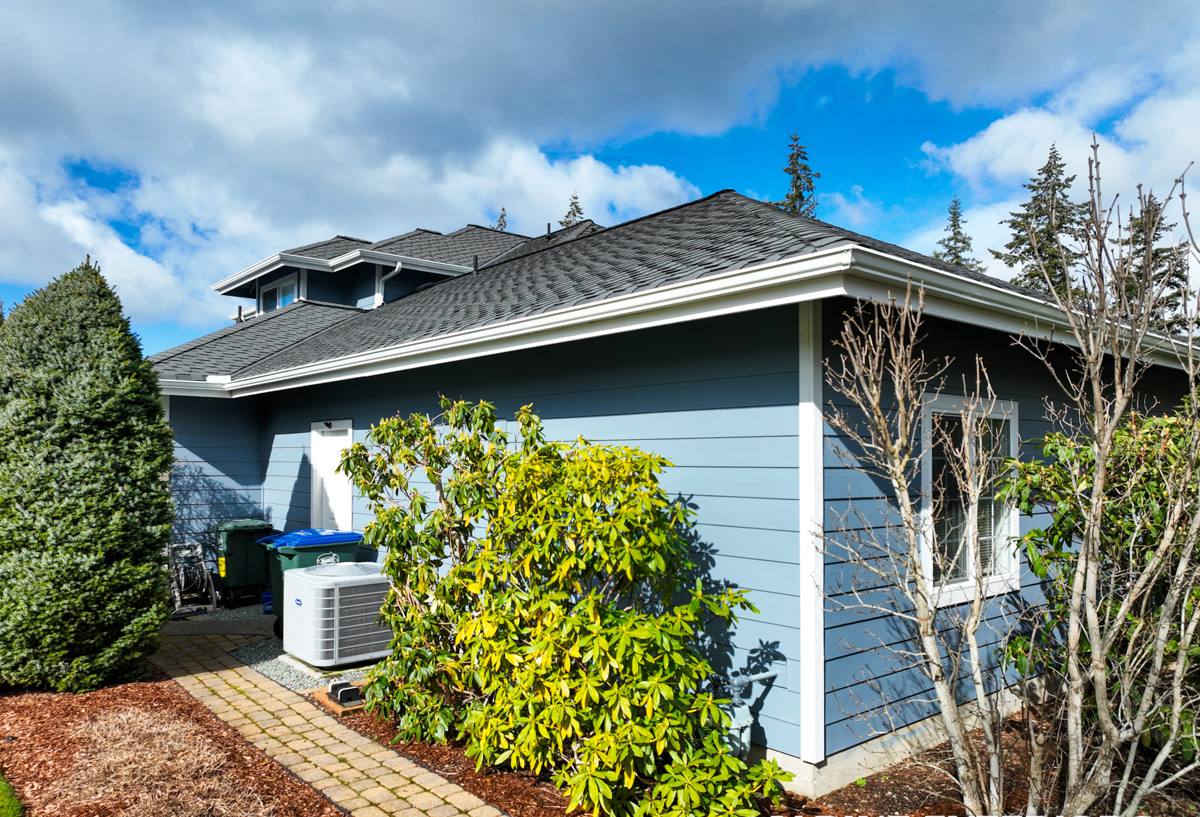
Signs a Samish Roof Needs Replacement, Not Another Repair
Repairs make sense when the underlying roof system is sound and the problem is isolated. Replacement makes sense when the roof as a whole has aged out or when repairs would just be chasing new leaks every wet season. Some signs point clearly toward replacement:
- Granule loss heavy enough that you can see bare or shiny patches on multiple slopes, not just one damaged spot
- Moss that has worked under shingle tabs rather than just sitting on the surface — this lifts shingles and breaks the seal
- Soft or spongy decking felt underfoot during any roof access, which usually means water has already reached the sheathing
- Flashing around chimneys, skylights, or wall intersections that is rusted, cracked, or was never properly stepped and counter-flashed
- A roof original to a home built more than 20-25 years ago, especially one that has never had its underlayment or flashing upgraded
- Recurring leaks in different spots each winter, rather than one consistent trouble area
- Visible sagging along the roofline, which can indicate structural moisture damage underneath
If a roof is only showing one or two of these signs in a contained area, a targeted repair is often the honest recommendation. We'll tell you that plainly rather than push a full replacement a home doesn't need yet.
What a Correct Roof Replacement Actually Involves
A roof replacement is not just stripping old shingles and nailing down new ones. In a climate like Whatcom County's, the layers underneath the visible surface matter as much as the surface itself.
Tear-Off and Deck Inspection
Every layer of old roofing comes off down to the deck. This is the only point in the project where the sheathing is fully visible, so it's also the only real chance to find soft spots, delaminated plywood, or hidden rot from old leaks before they're covered up again for another 20 years. Any damaged decking gets replaced, not skipped over or shimmed.
Underlayment and Water-Resistant Layers
Given how much driving rain Samish gets off the water, underlayment choice matters more here than in drier parts of the state. A synthetic underlayment with strong lap and seal performance, paired with self-adhered ice-and-water membrane at eaves, valleys, and other vulnerable transitions, gives the roof a real second line of defense if wind ever drives water up under the shingle course.
Ventilation
A roof deck that can't breathe traps moisture, and trapped moisture accelerates rot from underneath — a problem that's harder to see coming in a humid, wet climate like this one. Balanced intake and exhaust ventilation is part of a correct replacement, not an upsell. It also helps control the attic humidity that feeds interior moss and mildew growth over time.
Flashing at Every Transition
Chimneys, skylights, sidewalls, valleys, and any roof-to-wall intersection are where roofs actually fail — not usually in the open field of shingles. Correct step flashing, counter-flashing, and valley metal, properly lapped with the underlayment and shingle courses, is what keeps wind-driven rain from finding its way in at these joints.
Material Options for Samish Homes
There's no single "best" roofing material for every home — the right choice depends on budget, roof pitch, architectural style, and how much long-term maintenance a homeowner wants to take on. Here's an honest comparison of the main options we install in this area:
| Material | Typical Lifespan | How It Handles Salt Air & Moss | Maintenance Burden |
|---|---|---|---|
| Architectural asphalt shingle | 25-30 years | Good with algae-resistant granules; needs periodic moss treatment | Low to moderate |
| Standing seam metal | 40-50+ years | Excellent shedding of rain and moss when coated correctly; coastal-grade coating recommended near salt air | Low |
| Cedar shake | 20-30 years with upkeep | Attractive but moss-prone; needs regular cleaning and treatment in this climate | High |
| Synthetic/composite shake | 30-50 years | Resists moisture and moss better than natural cedar, holds appearance longer | Low to moderate |
We don't push one product line on every home. Cedar shake still has a place on the right architectural style, but we're upfront that it asks more of a homeowner in a climate that stays wet as long as this one does. Standing seam metal and modern composite products tend to be the lower-maintenance choice for homeowners who want to spend less time thinking about their roof once it's installed.
Our Roof Replacement Process
- On-site inspection. We walk the roof (or use ladder and drone access where the pitch or condition calls for it), check the attic for ventilation and moisture signs, and look at flashing points before quoting anything.
- Written estimate. You get a clear scope — material, underlayment, flashing plan, ventilation changes, and price — not a vague one-line number.
- Scheduling around weather. Whatcom County's wet stretches mean timing matters. We plan tear-off in workable windows and protect the open deck if weather turns during the job.
- Tear-off and deck repair. Old material comes off, decking is inspected and repaired as needed, and you get told what was found — not just a bill.
- Underlayment, flashing, and material installation. Installed in the order and overlap pattern that actually sheds water, not just what's fastest.
- Final walkthrough. We review the finished roof with you, including ventilation and any recommendations for moss maintenance going forward.
What Drives the Cost of a Roof Replacement
Every roof and every home is different, so we won't quote a number here that doesn't mean anything without seeing the actual roof. What we can tell you is what moves the price up or down:
| Factor | Effect on Cost |
|---|---|
| Roof size and number of planes | More square footage and more complex geometry mean more material and labor |
| Pitch and access | Steep or hard-to-access roofs require more safety setup and take longer |
| Existing layers to remove | Roofs with multiple old layers cost more to tear off than a single-layer roof |
| Decking condition | Rot or soft spots found during tear-off add material and labor to replace sheathing |
| Material choice | Asphalt shingle is the lower end; metal and cedar run higher upfront |
| Ventilation and flashing upgrades | Bringing an older roof system up to current standards adds cost but reduces future risk |
Homeowners in Samish should generally expect a straightforward asphalt shingle replacement to fall in a moderate range, with metal and premium materials running higher — but the only way to get a real number is a walk of the actual roof.
Why a Crew That Already Works Samish Matters
Roofing crews that mostly work drier, inland regions sometimes underestimate what Whatcom County's coastal-influenced weather does to a roof over time. A crew that regularly works Samish and the surrounding Whatcom County communities already knows to spec coastal-grade fasteners and flashing metals, to plan tear-off around realistic weather windows instead of assuming a dry week, and to treat moss prevention as part of the job instead of an afterthought. That familiarity shows up in fewer callbacks and a roof that performs the way it was designed to, season after season.
Keeping a New Roof Performing After Installation
A correctly installed roof still benefits from basic upkeep in this climate. A few habits go a long way:
- Keep gutters and downspouts clear so water isn't backing up under eave edges during heavy rain
- Trim back overhanging branches that keep shaded areas of the roof damp and feed moss growth
- Have moss treated at the first sign of growth rather than letting it establish over a full wet season
- Schedule a visual check after any major windstorm to catch lifted shingles or displaced flashing early
- Confirm attic ventilation stays unobstructed by insulation or stored items
None of this requires special equipment or expertise — it's mostly about not letting small issues sit through an entire Whatcom County winter.
Ready to Talk About Your Roof?
If you're weighing a repair against a full replacement, or just want an honest read on how much life is left in your current roof, we're happy to take a look. We offer free, no-pressure estimates for homeowners in Samish and throughout Whatcom County — use the form below to get started.