 Whatcom County
 Deck Building for Samish's Marine Climate
Samish sits close enough to the water that homes here deal with a specific combination of weather most inland decks never see: salty, moisture-laden air, long stretches of driving rain off the water, and a moss season that can run from fall through spring. A deck built to a generic spec sheet will often look fine the first summer and start showing problems by year three — soft spots near the ledger board, green film on the boards, corroded fasteners bleeding rust streaks into the wood. Building a deck that actually holds up here means treating the climate as a design input, not an afterthought.
This page is about deck building specifically for Samish-area homes in Whatcom County — what the local conditions demand, what a correctly built deck involves structurally, how we run the job, and why it matters to hire a crew that already builds decks in this exact environment.
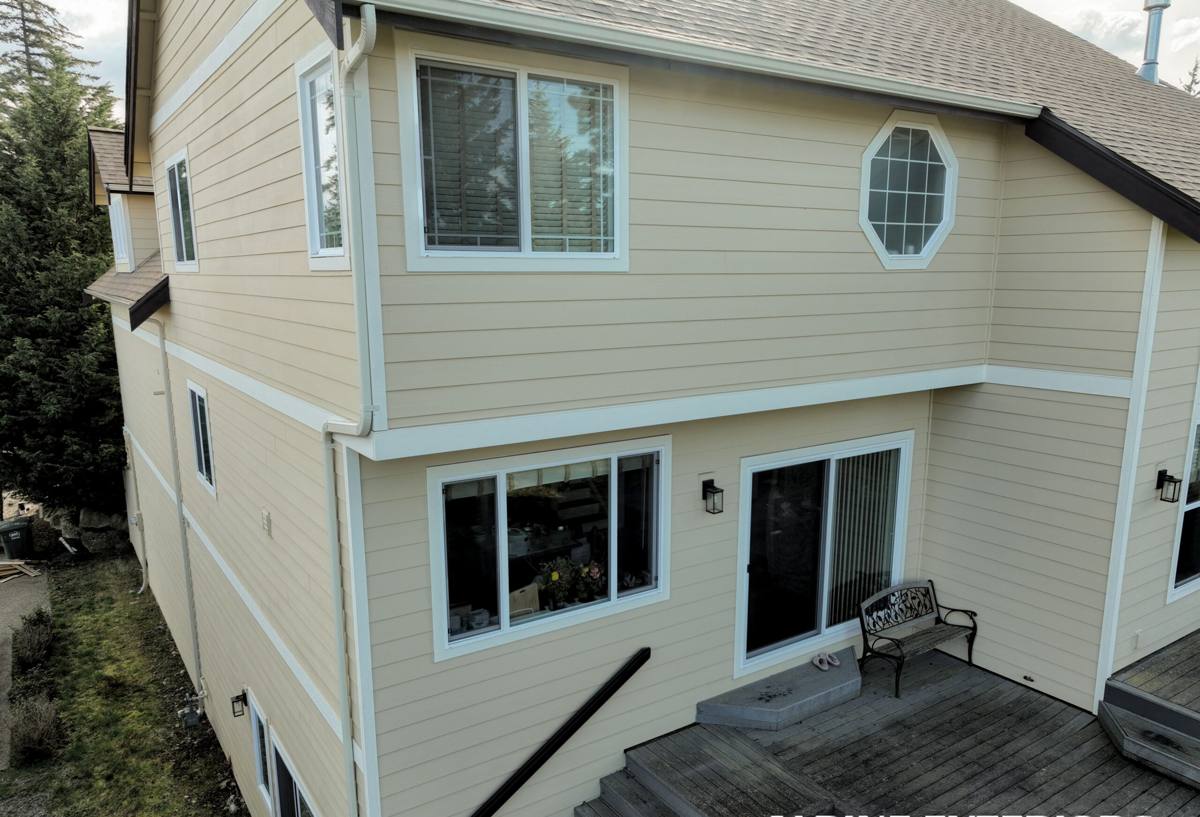
What Salt Air, Rain, and Moss Actually Do to a Deck
Fastener and Hardware Corrosion
Salt-laden air accelerates corrosion on any metal that isn't rated for it. Standard electro-galvanized screws and joist hardware can start rusting within a couple of seasons this close to the water, and once a fastener corrodes it loses holding strength long before it looks obviously bad. We spec stainless steel or hot-dip galvanized fasteners and connectors for anything exposed, and it's one of the first things worth checking on an existing deck that's showing rust streaks or loose boards.
Moss and Algae Growth
Whatcom County's wet season gives moss and algae a long runway to establish themselves on any horizontal wood surface that doesn't dry out quickly. Beyond the cosmetic issue, moss holds moisture against the board surface, and a deck surface that's constantly damp is a deck surface that's slowly rotting from the top down. Moss also turns decking dangerously slick, which is a real fall hazard on stairs and landings.
Wood Movement from Wet-Dry Cycling
Even in a mild coastal climate, wood decking goes through repeated wetting and drying cycles across the year. That movement is normal, but it's magnified when drainage is poor or when boards are installed too tight. Over time this shows up as cupping, splitting, and fasteners popping proud of the surface.
Choosing the Right Decking Material
There's no single "best" decking material — there's a best fit for your budget, your maintenance tolerance, and how much sun or shade the deck gets. Here's how the common options actually compare for a Samish-area install:
| Material | Moisture/Moss Resistance | Maintenance | Typical Lifespan | Relative Cost |
|---|---|---|---|---|
| Pressure-treated fir/hem-fir | Good if sealed regularly; moss-prone in shade | Annual cleaning + resealing every 1-2 years | 15-20 years with upkeep | Lowest |
| Cedar | Naturally rot-resistant, still needs sealing against moss | Cleaning + oil/sealant every 1-2 years | 20-25 years with upkeep | Mid |
| Composite/PVC decking | Excellent moisture resistance; still needs periodic cleaning to prevent surface algae | Occasional wash, no sealing/staining | 25-30+ years | Highest upfront |
Composite costs more up front but removes the sealing/staining cycle entirely, which matters if the deck sits under tree cover or in a shaded, damp corner of the lot where moss takes hold fastest. Cedar and treated lumber are perfectly good choices too — they just require someone actually keeping up with maintenance on the schedule above. We'll walk through the honest trade-offs for your specific site rather than push one product across the board.
Structural Details That Actually Matter
Ledger Board Flashing
The ledger board — where the deck attaches to the house — is the single most common failure point on decks in wet climates. Without proper flashing that directs water away from the house band board, moisture works its way behind the ledger and rots the framing from a spot you can't see until it's serious. Correct flashing detail here isn't optional; it's the difference between a deck that lasts decades and one that develops a hidden structural problem.
Footings and Post Bases
Footings need to be sized and set below frost depth per code, and post bases should hold the post above the concrete rather than embedding wood directly in or on grade, which traps moisture against the post end. Standoff post bases in corrosion-rated hardware are standard practice on our builds.
Joist Spacing and Hardware Grade
Tighter joist spacing than the bare code minimum gives a stiffer deck surface and reduces long-term board movement, especially under composite decking, which behaves differently under load than solid wood. All structural connectors — joist hangers, hurricane ties, ledger bolts — should be rated for the fastener corrosion environment described above, not just the framing lumber's treatment level.
Drainage and Airflow: The Difference Between a Deck That Sheds Moss and One That Doesn't
Most moss and rot problems trace back to water sitting somewhere it shouldn't. A well-built deck manages this in a few specific ways:
- Decking installed with the correct gap between boards so water passes through rather than pooling on the surface
- A slight slope away from the house on the overall deck frame so water sheds instead of collecting near the ledger
- Open or vented skirting rather than sealed-in undersides, so airflow under the deck lets things dry out between rain events
- Clear space between the lowest framing members and the soil or grade below, avoiding the trapped, damp microclimate where moss and fungus thrive fastest
- Gutters or drip edges positioned so roof runoff isn't dumping directly onto the deck surface
Get these details right during construction and you cut down dramatically on how often the deck needs cleaning or how fast moss reestablishes after you clean it.
How We Build a Deck for This Area
Site Assessment
We start by looking at sun exposure, tree cover, prevailing wind and rain direction, and how water currently moves across the yard and off the house. A deck on the shaded, wind-sheltered side of a Samish-area lot needs different drainage and material decisions than one that gets full sun and open exposure to weather off the water.
Permitting and Structural Plan
Deck permitting in Whatcom County depends on size, height, and attachment to the structure. We handle the permit and inspection process as part of the job so you're not chasing paperwork, and we design the footing and ledger details to pass inspection the first time.
Framing
Framing goes in with corrosion-rated hardware throughout, flashed ledger connections, and joist layout set for the decking material you've chosen. This is the stage where the long-term durability of the deck actually gets decided — the surface material gets all the attention, but the framing underneath is what determines whether the deck is still solid in fifteen years.
Decking and Finish Work
Board installation, railing, stairs, and any fascia or skirting go in last, with attention to the board gaps and drainage slope covered above. If you've chosen wood decking, we'll talk through sealing before the deck sees its first wet season.
Maintaining a Deck Through Whatcom County's Wet Season
No deck material is completely maintenance-free in this climate, but a manageable routine keeps a well-built deck looking and performing the way it should for decades. A realistic annual checklist looks like this:
- Sweep debris and standing leaves off the surface regularly through fall, when moss gets its foothold
- Wash the deck surface at least once a year with a deck-safe cleaner to remove algae and moss film before it embeds
- Check and reseal or re-stain wood decking on the schedule appropriate to the product — don't wait until it looks obviously dry or gray
- Inspect fasteners and hardware annually for rust staining or loosening, especially near the ledger and stairs
- Confirm gutters and downspouts near the deck are clear so roof runoff isn't draining onto the deck surface
- Look underneath the deck once a year for standing water, blocked airflow, or early signs of rot at post bases
Why a Crew That Already Works in Samish Makes a Real Difference
Deck building isn't a one-size-fits-all trade. A crew that mostly builds in drier, inland climates will often default to standard hardware, standard flashing details, and standard board spacing — because that's what works where they usually build. Those same defaults fall short here. A crew that already works Samish and the surrounding Whatcom County coastline knows which fastener grade actually holds up against the salt air, how much slope and airflow a deck needs to fight off moss instead of just delaying it, and which local permitting details get a project through inspection without delays. That local pattern-matching is the difference between a deck that needs real repair work in five years and one that just needs the ordinary upkeep in the checklist above.
If you're planning a new deck or replacing one that's showing its age, we're happy to take a look and talk through what makes sense for your site, your budget, and how much upkeep you actually want to sign up for. Reach out for a free, no-pressure estimate using the form below.