 Whatcom County
 Siding Repair Built for Samish's Climate
Samish sits in a part of Whatcom County where weather doesn't take a season off. Homes here deal with a long, wet fall-through-spring stretch, driving rain that comes in sideways off Bellingham Bay and the Salish Sea, and a moss and algae season that can run most of the year on shaded north- and west-facing walls. Add in salt-laden air moving inland off the water, and you have a combination that is genuinely harder on exterior siding than what homes in drier, inland parts of the state ever face. Siding repair in Samish isn't just patch-and-paint work — it's about understanding why a specific section failed in the first place, and fixing it so the same failure doesn't come back in two years.
We work on homes throughout this part of Whatcom County regularly, so we're not guessing at what the local climate does to siding. We're diagnosing the same patterns — moisture-driven rot at trim intersections, cracked or lifted panels from repeated wet-dry cycling, moss holding damp against a wall for weeks at a stretch — on a routine basis, and repairing them the same correct way every time.
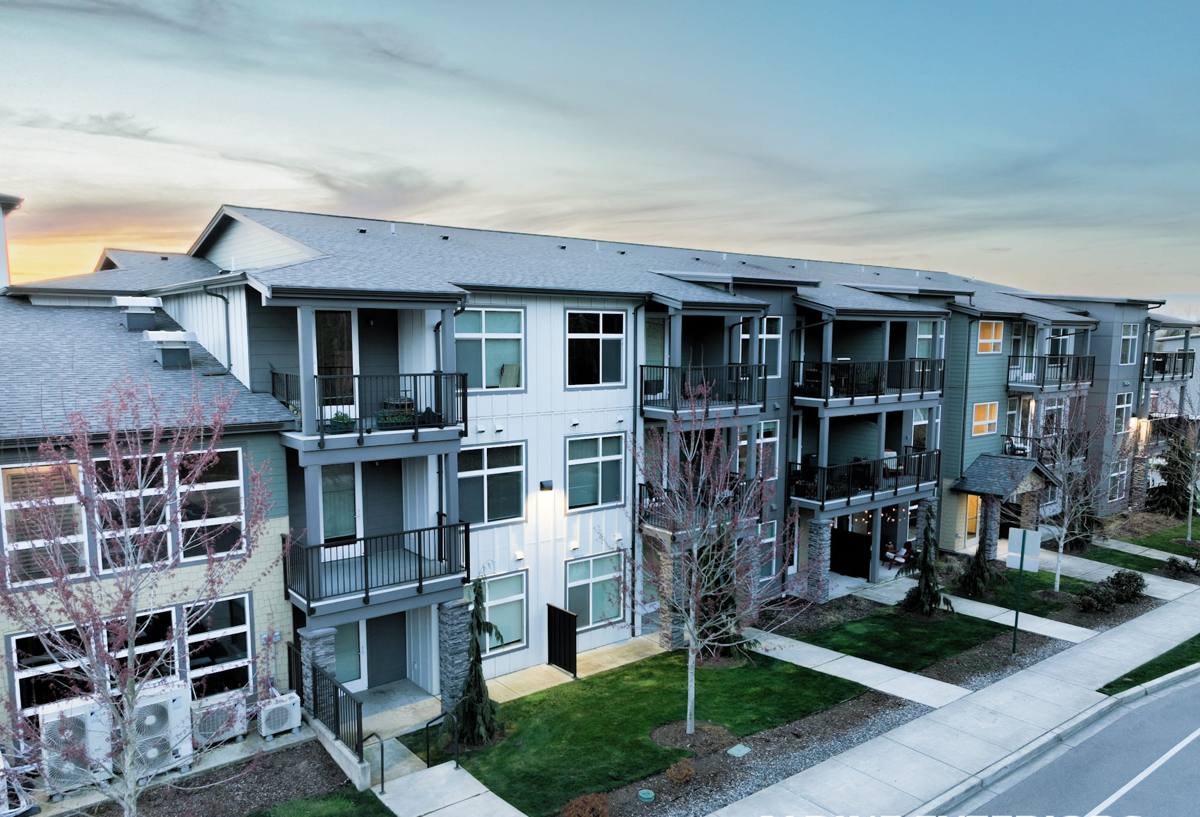
What Actually Goes Wrong With Siding in Samish
Moisture Intrusion at Joints and Trim
The most common repair call we get in this area isn't storm damage — it's slow moisture intrusion. Butt joints, window and door trim, corner boards, and anywhere siding meets a roofline or deck ledger are the weak points. When caulking fails or flashing was installed short, water works its way behind the siding instead of running off it. In a climate with as much annual rainfall as Whatcom County gets, that failure point doesn't take long to turn into rot, especially on wood-based or improperly sealed products.
Moss and Algae Growth
Shaded walls, overhanging trees, and persistent dampness make parts of Samish an easy environment for moss and algae to take hold. This isn't just cosmetic. Moss holds moisture directly against the siding surface for extended periods, which accelerates whatever underlying material breaks down under sustained wet exposure — wood fiber, OSB substrates, and some composite products all suffer here. Left unaddressed, what starts as a green tint on one wall becomes soft, failing siding underneath it.
Salt Air Effects
Homes closer to the water deal with airborne salt that accelerates corrosion on fasteners, flashing, and any exposed metal trim, and it can also affect the longevity of paint and coatings on siding that isn't factory-finished for the exposure. Repairs in these areas need to account for corrosion-resistant fastening and flashing, not just matching the visible siding.
Cracking and Panel Movement
Whatcom County's freeze-thaw cycles are milder than inland Washington, but the repeated wet-swell and dry-shrink cycle still stresses siding materials, especially anything with wood content or lower-density composite. Cracked panels, popped nails, and warped boards are common on older siding that's gone through years of this cycling without maintenance.
Why a Patch Job Isn't Always a Real Fix
A lot of "repairs" we get called to inspect in Samish are previous patch jobs that treated the symptom, not the cause. Caulking over a gap without correcting the flashing behind it. Painting over moss instead of removing it and correcting the moisture source. Replacing one visibly damaged board while the boards next to it have the same hidden rot starting underneath. None of that holds up long in this climate.
A correct repair starts with figuring out how water is getting in or staying trapped, then correcting that pathway before any new siding goes back up. That might mean re-flashing a window head, correcting a kickout flashing at a roof-to-wall intersection, improving ventilation behind the cladding, or simply removing vegetation and improving drainage away from a wall. Skipping that step means the repair fails again — usually in the same spot, usually within a couple of wet seasons.
Our Repair Process
- Inspection: We look beyond the visible damage — checking trim, flashing, house wrap condition, and adjacent panels for hidden moisture or early-stage rot.
- Diagnosis: We identify the actual cause of failure (flashing, caulking, ventilation, moss/moisture, or material breakdown) rather than just noting where the siding looks bad.
- Scope and Estimate: You get a clear picture of what needs to be repaired, what's optional, and why — no upselling a full re-side when a targeted repair will genuinely hold.
- Correction of the Underlying Issue: Flashing, sealant, or drainage problems get fixed as part of the repair, not left for next time.
- Siding Repair or Replacement: Damaged sections are replaced with matched materials, properly fastened and sealed to manufacturer specification.
- Final Check: We confirm water management is correct before considering the job done — not just that it looks right from the curb.
Why We Only Repair and Replace With James Hardie Fiber Cement
When a repair calls for replacing damaged sections, we only use James Hardie fiber cement siding. This isn't a brand preference — it's a standard we hold because of what this specific climate does to siding over time. Fiber cement is non-combustible, dimensionally stable in wet-dry cycling, and doesn't feed moss or rot the way wood-based and some composite products can when moisture gets trapped against them. Hardie's ColorPlus factory finish is baked on and engineered to hold up against exactly the kind of sustained damp exposure and UV cycling that Whatcom County delivers, which matters when you're matching new material into existing siding that needs to look right for years, not months.
We don't install LP SmartSide, vinyl, Cemplank, Allura, primed spruce, or cedar, and we won't use them in a repair either — including as a "close enough" patch material. Mixing in a different product for a repair section, even if it looks similar off the shelf, means mixing in a different moisture behavior and expansion rate into your wall, which is its own future problem. Matching Hardie repair material to existing Hardie siding, or replacing a failed section with Hardie during a broader repair, keeps the wall system consistent and predictable.
| Factor | Why It Matters in Samish |
|---|---|
| Non-combustible material | No added fire risk from siding material itself |
| Factory-applied ColorPlus finish | Resists fading and moisture damage better than field-applied paint on wood or composite |
| Dimensionally stable | Handles repeated wet-dry cycling from Whatcom County's rainfall without warping or cracking like wood-based products |
| Moisture-resistant composition | Doesn't feed rot or moss growth the way wood fiber substrates can |
| Climate-engineered HZ product lines | Built specifically for damp, marine-influenced climates like this one |
What a Correct Repair Actually Involves
Fastening and Flashing Detail
Repairs need to follow the same fastening schedule and flashing sequencing as new installation — corrosion-resistant fasteners set to correct depth, proper overlap at joints, and flashing that actually directs water out and away rather than just being present.
Matching Existing Material
Where possible, we match profile, reveal, and color to existing Hardie siding so a repair blends in rather than creating a visible patchwork. Where an exact ColorPlus match isn't available for older installations, we'll tell you honestly what your options are before starting.
Addressing the Moisture Source, Not Just the Symptom
If moss, poor drainage, or a landscaping issue is keeping a wall wet, we'll flag it as part of the repair scope. A siding repair that doesn't address why that section failed is a repair you'll be paying for again.
Signs You Need Siding Repair
- Soft or spongy areas when you press on the siding, especially near the bottom of walls or under windows
- Visible cracking, splitting, or panels pulling away from the wall
- Persistent moss or algae growth that keeps returning after cleaning
- Peeling or bubbling paint/finish, particularly on north- or west-facing walls
- Staining or discoloration around trim, corners, or window and door openings
- Visible gaps in caulking or trim that weren't there before
- A musty smell or signs of moisture inside near an exterior wall
Why Local Experience Matters for This Kind of Work
Siding repair mistakes in a climate like Whatcom County's don't show up right away — they show up a year or two later as the same failure, or a worse one nearby. A crew that regularly works Samish and the surrounding area already knows where water tends to collect on this style of home, how much moss pressure a given wall orientation typically sees, and what flashing details actually hold up here versus what looks fine on paper but fails in practice. That local pattern recognition is the difference between a repair that lasts and one that's a temporary fix.
We also know this area well enough to give you a straight answer on scope. Sometimes a repair genuinely is the right call. Other times, if enough of a wall's siding is compromised from the same underlying cause, patching one section is just delaying a bigger job — and we'll tell you that directly instead of running up repair costs on siding that's past the point of a spot fix.
If you're seeing damage, moss buildup, or moisture issues on your siding, we're happy to take a look and give you a straightforward, no-pressure estimate on what it would take to fix it right. Use the form below to get in touch.