 Whatcom County
 Composite Decking Built for Sehome's Conditions
Sehome sits close enough to Bellingham Bay that salt-laden air, driving rain off the Sound, and a moss season that can stretch from October into May all show up in how a deck ages here. A deck that would hold up fine in a dry inland climate can look tired in Sehome within a few seasons if it wasn't built and finished with this specific environment in mind. Composite decking is a strong fit for these conditions, but only when the substructure, fastening, drainage, and board selection are handled correctly for a wet, moss-prone coastal climate.
We install composite decking across Whatcom County, and Sehome's mix of older homes on established lots with mature tree cover is a pattern we see often. Big trees mean more shade, more debris, and more moss pressure on any exterior surface — decks included.
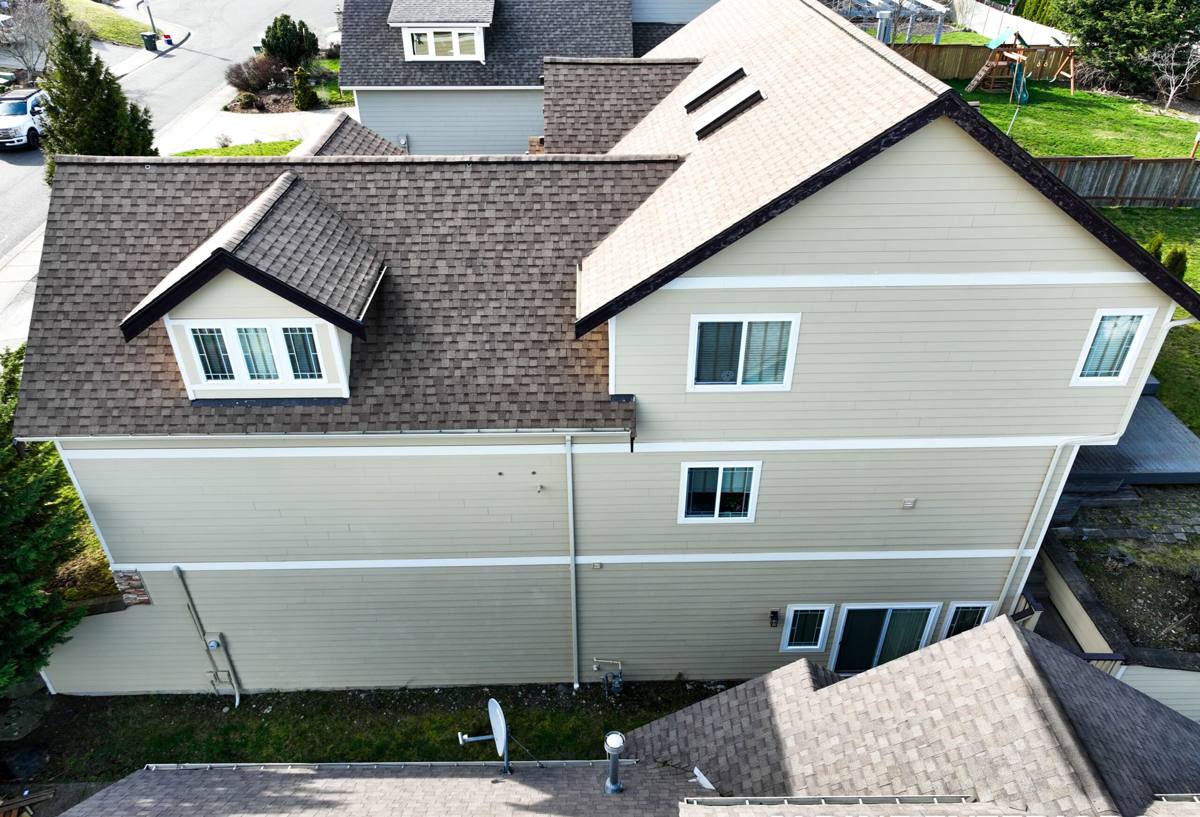
Why Sehome's Climate Matters for Deck Material Choice
Three local conditions drive most of the decking failures and headaches we get called out to fix or prevent:
Salt Air
Proximity to the bay means airborne salt settles on exterior surfaces over time. It accelerates corrosion on unprotected metal fasteners and hardware, and it can dull or discolor lower-quality finishes faster than a dry-climate product spec would predict. Fastener and hardware choice matters more here than in an inland build.
Driving Rain
Wind-driven rain off the Sound doesn't just fall straight down — it gets pushed sideways into ledger connections, stair stringers, and end grain. Any gap in flashing or end-sealing becomes a moisture entry point, and moisture trapped against wood framing or under boards is where rot and mold start.
Moss Season
Whatcom County's long wet season, roughly October through May, keeps shaded surfaces damp for extended stretches. Moss and algae need that sustained moisture to establish, and once they take hold on a deck surface they hold water against the board, get slick underfoot, and are genuinely difficult to remove without damaging some finishes. Deck orientation, tree cover, and drainage design all affect how much moss pressure a given Sehome property will actually see.
What a Correct Composite Deck Build Looks Like Here
Composite decking's main advantage over wood in this climate is that the boards themselves don't rot, splinter, or need annual staining. But composite is not maintenance-free or failure-proof — a poorly built composite deck in Sehome's climate will still trap moisture, grow moss, and stress its substructure. The parts that actually determine long-term performance are underneath and around the boards, not just the boards themselves.
Substructure and Framing
- Pressure-treated or naturally durable framing lumber rated for ground contact where it's close to grade
- Joist tape or a comparable moisture barrier on top of every joist to keep water from wicking into the framing through fastener penetrations
- Proper joist spacing for the specific composite product — many composite boards require tighter spacing than standard wood decking, especially on angled or picture-frame layouts
- Adequate ventilation underneath the deck so trapped humidity has somewhere to go
Drainage and Grading
Standing water under or around a deck is the single biggest driver of moss growth and hidden rot in framing. Correct grading away from the house, gapped board spacing for water shedding, and keeping the deck surface clear of low spots where debris and water can collect all matter more in Sehome's rain totals than they would in a drier region.
Fasteners and Hardware
We use corrosion-resistant, coastal-rated fasteners and structural hardware on every deck build near the bay, not just the ones directly on the water. Salt air travels further inland than most homeowners assume, and the cost difference between standard and coastal-rated hardware is small compared to the cost of a hidden ledger connection failing years later.
Railings, Stairs, and Trim
Rail posts, stair stringers, and any wood-to-composite transition points are common weak spots. We flash and seal these connections the same way we'd treat a wall penetration on siding work, because water intrusion at a post base or stringer notch behaves the same whether it's hitting a deck or a wall.
Choosing the Right Composite Board for a Sehome Property
Not every composite product performs the same way in a wet, shaded, salt-influenced climate. The differences that matter most here are capping, color, and how the manufacturer's warranty treats moisture and mold.
| Factor | What to Look For | Why It Matters in Sehome |
|---|---|---|
| Capping | Fully capped (all four sides) vs. partially capped | Full capping resists moisture absorption at cut ends and edges, which matters where rain exposure is constant |
| Surface Texture | Textured or wood-grain finish vs. smooth | Textured surfaces are less slick when damp or lightly mossy, an everyday factor given the wet season length |
| Color | Mid-to-light tones vs. very dark tones | Dark composite absorbs more heat and can show pollen, moss residue, and mineral staining differently than lighter tones |
| Warranty Terms | Explicit mold/mildew and fade coverage | Read what's actually excluded — some warranties limit coverage in consistently damp or shaded installations |
| Board Profile | Grooved (hidden fastener) vs. square edge | Grooved profiles need clean channels for drainage; debris buildup in the groove can hold moisture against the board |
We'll walk through specific manufacturer options and their warranty language during your estimate rather than push one brand — the right choice depends on your deck's sun exposure, tree cover, and how the space will actually be used.
Our Process for Sehome Composite Decking Projects
- On-site assessment — we look at drainage, existing framing condition (if it's a tear-off/replace project), sun and shade exposure, and how close the site is to the bay for hardware specification
- Design and material selection — board layout, color, and profile chosen for the specific site conditions, not a one-size-fits-all default
- Framing and substructure work — including joist protection, proper spacing, and ledger flashing where the deck attaches to the house
- Composite installation — hidden or exposed fastening per the manufacturer's spec, with attention to expansion gaps and end-sealing at cuts
- Railing, stair, and trim finishing — including sealing transition points between materials
- Final walkthrough — covering drainage, any manufacturer-required maintenance, and what to watch for as the deck settles in through its first wet season
Maintenance Realities: What Composite Still Requires
Composite decking is often marketed as maintenance-free, and that's an overstatement worth correcting honestly. What it eliminates is staining, sealing, and the rot risk that comes with untreated wood. What it doesn't eliminate is the need for periodic cleaning, especially in a climate like Sehome's.
- Sweep debris (needles, leaves, seed pods) out of board grooves regularly — trapped organic matter feeds moss and algae
- Rinse or lightly scrub the surface a couple of times a year, more often under heavy tree cover, to keep moss and mildew from establishing
- Check railing and stair connections annually for movement, since hardware in coastal air is the first thing to show wear
- Keep gutters and downspouts near the deck clear so runoff isn't dumping extra water onto or under the deck surface
Composite vs. Wood for This Climate: An Honest Comparison
| Consideration | Composite | Wood |
|---|---|---|
| Upfront cost | Higher material cost | Lower material cost |
| Ongoing maintenance | Periodic cleaning, no staining/sealing | Regular staining/sealing needed to resist Whatcom County's wet season |
| Moisture/rot risk | Boards themselves resist rot; framing still needs protection | Higher risk of rot and splintering without diligent upkeep |
| Moss/algae resistance | Textured caps reduce buildup but don't prevent it | Similar exposure; softer surface can hold moss longer |
| Long-term cost | Lower over 15-20+ years given reduced maintenance | Can be lower or higher depending on upkeep consistency |
Wood is a legitimate choice for some budgets and some homeowners who don't mind the upkeep. We install both, and we'll give you a straight answer on which makes more sense for your specific Sehome property rather than steering everyone toward the higher-margin option.
Why Local Experience on This Kind of Work Matters
A crew that's built decks around Bellingham and Whatcom County has already seen how Sehome's tree cover, drainage patterns, and bay proximity play out over time — not in a brochure, but in the callbacks and repairs we get asked to do on decks that were built without those conditions in mind. That experience shapes decisions a general contractor from outside the region might not think to make: which fastener grade to spec, how much ventilation a given crawlspace-height deck actually needs, and where moss pressure will be worst based on which direction the deck faces.
If you're planning a new composite deck, replacing an aging wood deck, or want a straight opinion on whether your current deck's problems are fixable or point to a rebuild, we're happy to take a look. Reach out for a free, no-pressure estimate using the form below.