 Whatcom County
 Why Sehome's Setting Is Tough on Windows
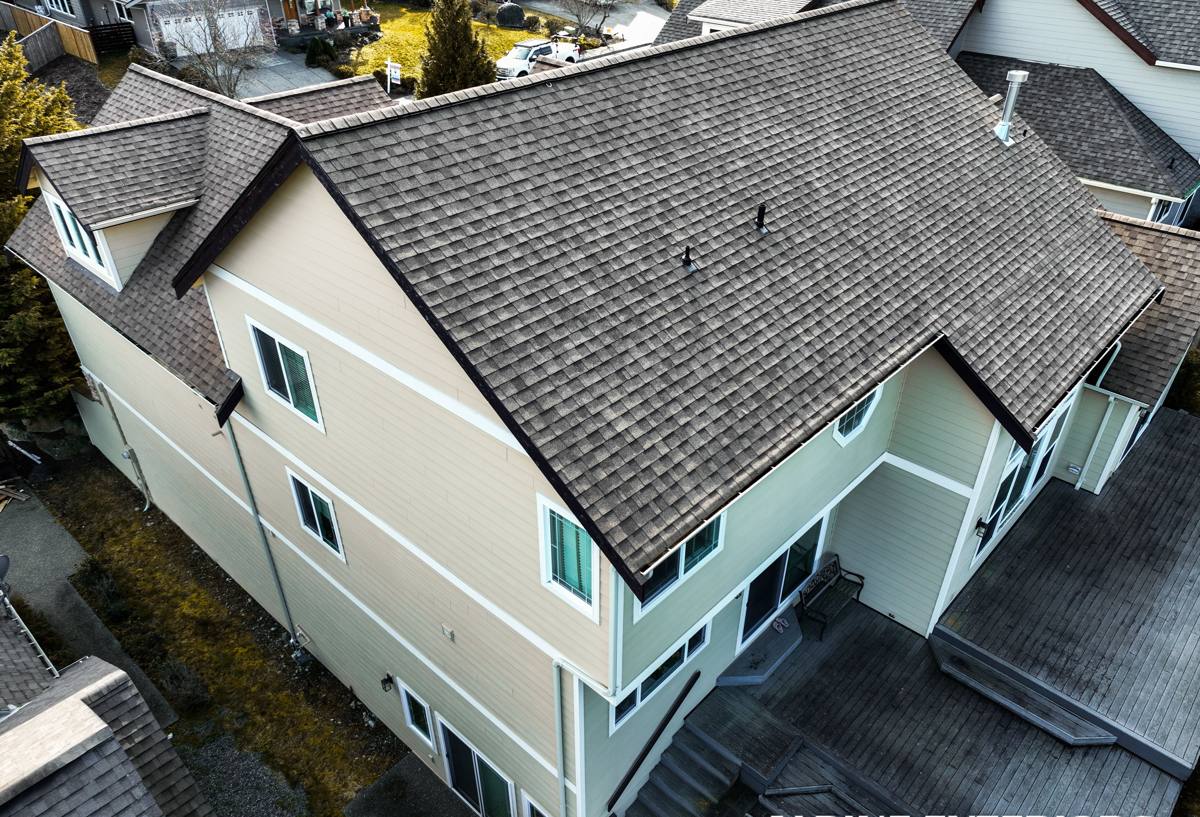
Sehome sits close enough to Bellingham Bay that salt-laden air is a real factor in how exterior materials age, and it sits in a part of Whatcom County that sees a long, wet stretch of the year with wind-driven rain coming off the water. Add in a shoulder season where moss and algae colonize anything that stays damp for more than a day or two, and you've got three separate stresses working on a window at the same time: corrosion, water intrusion, and sustained moisture exposure. None of these are dramatic on their own. They're slow. That's exactly why so many older windows in this neighborhood look fine from the street but are failing quietly at the sill, the corners, or the hardware.
Salt Air and Hardware Fatigue
Salt air doesn't need to be strong to do damage — it just needs time. Cranks, hinges, latches, and screws on lower-grade windows corrode faster here than they would twenty miles inland. Once hardware seizes or pits, a window stops sealing tightly even if the glass and frame are otherwise sound, and a window that doesn't close fully is a window that lets water in during the next storm.
Wind-Driven Rain and Water Intrusion
Rain that falls straight down is easy to manage. Rain that's being pushed sideways by wind off the bay is a different problem — it gets forced up and under trim, into gaps around the frame, and behind poorly lapped flashing. Most window leaks we find in this area aren't glass failures at all; they're installation or flashing failures that only show themselves in a real Whatcom County windstorm.
Moss Season and Persistent Moisture
The long stretch of gray, damp weather that brings moss to roofs and north-facing siding does the same thing to window sills and lower frame corners that don't drain or dry properly. Wood that stays wet swells, paint fails, and vinyl that traps moisture behind it can support mold growth you won't see until trim is pulled off during a later project.
What "Custom" Actually Means on a Sehome Job
Custom doesn't mean expensive for its own sake. It means the window is built to fit the opening and the house, instead of the house being made to fit a standard size. Sehome has a real mix of housing stock — older bungalow and craftsman-era homes near the university, mid-century houses, and newer infill construction — and openings in the older homes are frequently out of square or sized to dimensions that stopped being standard decades ago.
Non-Standard Openings
When an opening is out of square, an off-the-shelf window either gets shimmed and caulked into a rough fit — which almost always becomes a future leak point — or it gets custom-built to the actual dimensions and geometry of that specific opening. We measure every opening individually rather than assuming a stock size will work, because in a neighborhood with this much older housing, assuming costs you a callback.
Matching Character Without Sacrificing Performance
A lot of Sehome homes have visible character — divided-light patterns, specific trim profiles, particular sightlines from the street — that homeowners reasonably don't want to lose. Custom windows let you keep that look while still getting modern glass performance, weatherstripping, and drainage underneath it. You shouldn't have to choose between a house that looks right and a house that performs right.
Choosing a Frame Material for This Climate
There's no single "best" window material — there's a best material for a given house, budget, and exposure. Here's how the common options actually hold up in a salt-air, high-rainfall environment like Sehome's.
| Material | How It Handles Salt Air & Rain | Maintenance | Typical Fit |
|---|---|---|---|
| Vinyl | Won't corrode; performs well if welded corners and drainage are done correctly | Low — occasional cleaning | Budget-conscious replacements, rentals |
| Fiberglass | Very stable in wet, salty air; minimal expansion/contraction | Low | Long-term owners, larger openings |
| Wood-clad | Good if cladding and flashing details are done right; wood core still needs protection at the sill | Moderate — watch sealant joints | Character-driven homes wanting a wood interior look |
| Bare wood | Highest maintenance burden in this specific climate; requires disciplined repainting/sealing on a schedule | High | Historic restoration where owner accepts the upkeep |
We'll tell you honestly when a material isn't a good match for a specific exposure — for example, a west-facing wall that takes direct wind-driven rain off the bay is not where we'd recommend bare wood without a serious maintenance commitment, not because the material is bad, but because it demands more upkeep than most homeowners realistically want to keep up with.
Glass Packages and Performance Ratings That Matter Here
The glass package affects comfort and moisture control as much as it affects energy bills. In Whatcom County's climate, a few specs matter more than others:
- U-factor: Lower is better for keeping heat in during the cold, damp months — look for ratings suited to Pacific Northwest marine climates, not desert or general national averages.
- Low-E coating: Helps manage both heat loss in winter and glare/heat gain on the rare sunny stretch, and reduces interior condensation on cold mornings.
- Argon or krypton gas fill: Improves insulating performance between panes without changing the window's appearance.
- Warm-edge spacers: Reduce the cold edge effect that causes condensation and, over years, seal failure at the glass edge — this matters more in a consistently damp climate than in a dry one.
- Double vs. triple pane: Triple pane adds cost and weight; for most Sehome homes double-pane with a good low-E/argon package is enough, and we'll walk you through when triple pane is actually worth it versus when it isn't.
Installation Details That Determine Whether It Leaks
The window itself is often not what fails first — the installation is. This is the part of the job that's invisible once trim goes back on, which is exactly why it has to be done right the first time.
Sill Pan Flashing
A sloped, sealed sill pan gives any water that gets past the window a way out instead of a way in. This is non-negotiable on a house exposed to wind-driven rain, and it's one of the most commonly skipped steps in lower-quality window replacements.
Integration With the Water-Resistive Barrier
Window flashing has to be properly shingle-lapped into the house wrap or building paper above and below the opening — not just caulked over the top. Caulk is a backup, not a strategy. When flashing is integrated correctly with the wall's drainage plane, water that reaches the wall sheds down and out instead of tracking behind the siding.
Sealant Selection and Joint Design
Not all sealants perform the same in a marine climate with UV exposure and constant moisture cycling. We use products and joint designs meant to stay flexible and adhered through years of wet-dry cycling rather than the cheapest tube that happens to match the trim color.
Our Process for a Sehome Window Job
- On-site assessment: We look at every opening individually — framing condition, existing flashing (or lack of it), sill condition, and any signs of past water intrusion.
- Measuring and material selection: Custom dimensions are taken for each opening; we talk through frame material, glass package, and style options based on your home, budget, and exposure.
- Ordering and lead time: Custom windows take longer to arrive than stock sizes — we'll give you a realistic timeline up front, not an optimistic one.
- Removal and inspection: When old windows come out, we inspect the framing and sill for hidden rot or prior water damage before anything new goes in.
- Correct flashing and installation: Sill pan, flashing integration, insulation, and air sealing are done to spec — not shortcut to save an hour.
- Interior and exterior finish work: Trim, caulking, and touch-up are completed to match the existing look of the home.
- Walkthrough: We show you how the new windows operate and what, if anything, needs periodic attention.
Why Local Experience in Sehome Actually Matters
A crew that already works in Sehome and the surrounding Bellingham area knows what this specific exposure does to a house over time, not just in theory but from having pulled apart older windows and siding in this neighborhood and seen exactly where they failed. That translates into knowing which corners of a house take the worst of the wind-driven rain, which older framing details need extra attention, and how to work around Whatcom County's permitting and inspection process without it turning into a delay. It also means we're not guessing at material choices based on a national average climate — we're specifying for this one.
What Custom Windows Typically Cost
Pricing depends heavily on size, material, glass package, and how much flashing or framing repair an opening needs — a straightforward swap into a sound opening costs a lot less than a job where rot repair is required first. As a broad, general range for the region, custom window installation commonly runs somewhere in the low-to-mid thousands per window once you factor in premium glass packages, non-standard sizing, and correct flashing work, with simpler openings and mid-grade materials coming in well below that. We'll give you a firm, itemized number after we've actually seen the opening — not a phone estimate.
| Cost Factor | Why It Moves the Price |
|---|---|
| Frame material | Vinyl is generally the most budget-friendly; fiberglass and wood-clad cost more upfront but differ in long-term maintenance |
| Opening condition | Rot or prior water damage found during removal adds repair cost before a new window can go in |
| Glass package | Triple pane, specialty coatings, and larger glass sizes increase cost over a standard double-pane package |
| Size and shape | Non-rectangular or oversized custom units cost more to fabricate than standard rectangular sizes |
| Trim and finish work | Matching existing interior/exterior trim profiles adds labor versus a simple insert replacement |
A Homeowner's Maintenance Checklist for This Climate
Even a well-installed custom window benefits from a little seasonal attention in a climate like this:
- Rinse salt residue and grime off frames and hardware a couple of times a year, especially on sides facing the water
- Check and lightly lubricate hardware (cranks, hinges, locks) annually so corrosion doesn't get a foothold
- Clear moss and organic debris from sills and tracks before it holds moisture against the frame
- Inspect exterior caulk lines each fall and touch up any cracked or separated sealant before winter storms
- Watch for interior condensation on cold mornings — persistent condensation can signal a seal or ventilation issue worth checking
- Make sure weep holes on vinyl and fiberglass units stay clear so water can drain out as designed
If you're weighing custom windows for a home in Sehome, we're glad to take a look and walk you through what your specific openings actually need — no pressure, no upsell script. Fill out the form below for a free estimate.