 Whatcom County
 Building New in Sehome Means Building for Bellingham's Weather From Day One
Sehome sits close enough to Bellingham Bay that salt-laden air is a real factor in how long a window's hardware, finishes, and seals hold up. Add in the driving, wind-pushed rain that comes off the Sound through fall and winter, plus a moss season that can run half the year on north-facing walls, and you've got a climate that punishes shortcuts. On a new build, the window installation is one of the few chances you get to do this exactly right before siding, trim, and interior finishes close everything up. There's no going back to fix a bad flashing detail once the wall is buttoned up.
New-construction windows are a different job than replacement windows, and they need to be treated that way. This page covers what correct new-construction window installation looks like for a Sehome home, what to expect from a contractor who actually knows this neighborhood and this climate, and where the common failure points are.
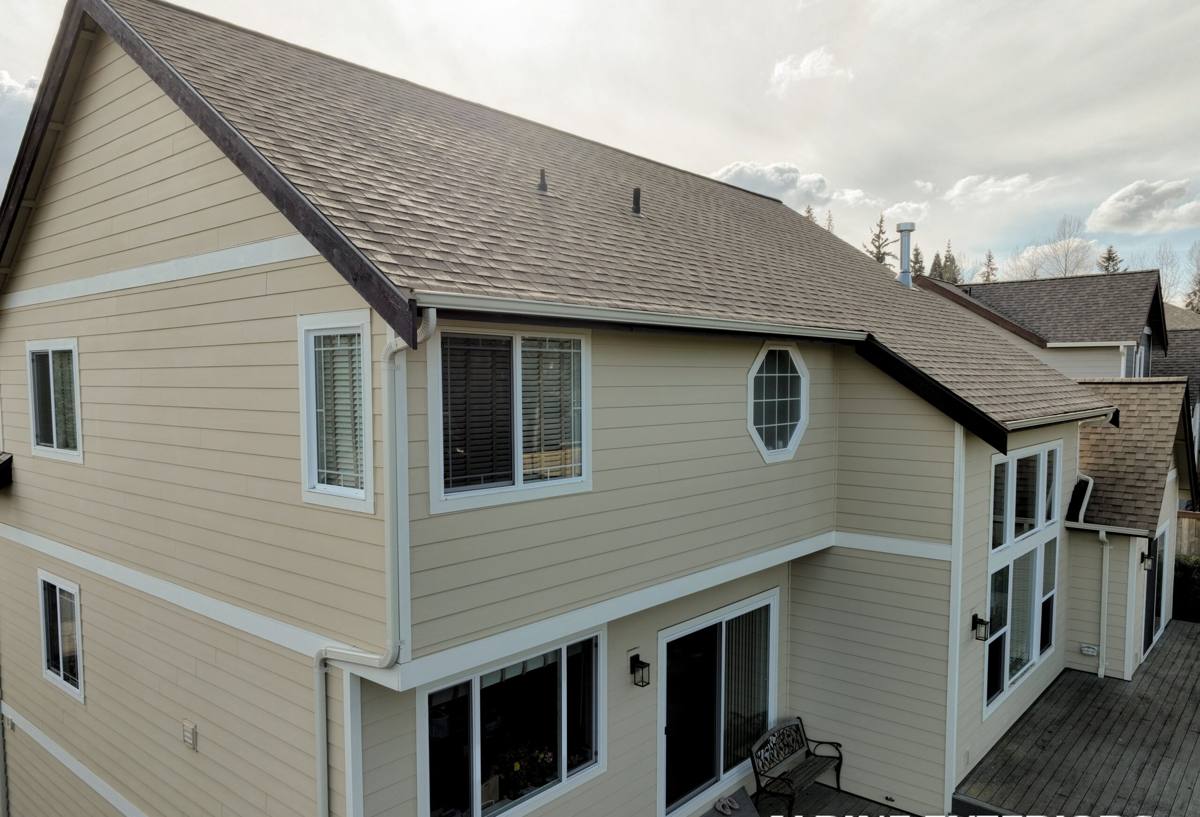
New-Construction vs. Replacement: Why the Distinction Matters
New-construction windows have a nailing fin (or flange) around the perimeter of the frame that gets fastened directly to the sheathing before the weather-resistive barrier (WRB) and siding go on. Replacement windows, by contrast, are built to fit into an existing finished opening without disturbing the exterior wall assembly. The two require completely different sequencing, different flashing strategies, and different tools.
On a new build, the window installer isn't working around finished walls — they're working inside the wall assembly, in coordination with the framer, the WRB installer, and the siding crew. Get the order of operations wrong and you build a leak path into the house that won't show up for a few years, usually right around a window head or sill.
Why This Sequencing Matters More Here Than in Drier Climates
In a low-rainfall region, a marginal flashing detail might never get tested hard enough to fail. In Whatcom County, wind-driven rain hits window walls at an angle, not just straight down, which means head flashing, sill pans, and side-jamb integration all have to work together as a system. A house going up in Sehome gets tested by real weather almost immediately, often before it's even fully dried in.
What This Climate Actually Demands From a New Window Installation
| Climate Factor | What It Does to Windows | What the Installation Needs to Address |
|---|---|---|
| Wind-driven rain | Pushes water sideways and upward at window openings, not just down | Sill pan flashing, properly lapped head flashing, sealed but drainable joints |
| Salt air off the Bay | Accelerates corrosion on hardware, fasteners, and some metal cladding | Corrosion-resistant fasteners and hardware, cladding rated for coastal exposure |
| Extended moss/algae season | Holds moisture against sills and lower sashes on shaded or north-facing walls | Sloped sills, good drainage details, finishes that don't trap moisture |
| Persistent damp/humid air | Slows drying of any water that does get behind the cladding | A WRB and flashing system that sheds water rather than relying on it drying out |
None of these factors are exotic — they're just the reality of building this close to the water in Whatcom County. The fix isn't a special product; it's disciplined, correct installation using details built for a wet climate.
Choosing Window Products for a Sehome New Build
Frame material matters less than installation quality, but it's still worth getting right, especially since a new build lets you spec exactly what you want rather than working around what's already there.
| Frame Material | Coastal/Wet-Climate Notes | Trade-offs |
|---|---|---|
| Vinyl | Doesn't corrode or rot; good value; wide range of quality tiers | Lower-end lines can be less rigid in larger sizes; color options are more limited than clad wood |
| Fiberglass | Very stable dimensionally, holds paint well, resists moisture-driven warping | Higher upfront cost than vinyl |
| Aluminum-clad wood | Attractive interior wood look with an exterior shell that resists weather | Cladding seams and corners are installation-sensitive; salt air argues for a quality-grade clad finish, not a budget one |
| Bare aluminum | Durable frame but a poor thermal performer and prone to condensation | We don't recommend it for Whatcom County new builds given the combination of cold, damp winters and salt exposure |
Our standard is to steer new-construction clients toward vinyl or fiberglass in most cases, and toward well-specified clad-wood where the design calls for it — not because any single product is bad, but because those options hold up with the least maintenance in a marine-influenced climate with a long wet season.
The Correct Installation Sequence
This is where most of the long-term performance of a window is actually decided — not in the showroom, but in the two or three days it takes to get the openings flashed and the units set.
1. Rough Opening and Sill Pan
Before a window ever goes in, the rough opening gets checked for square and level, and a sloped sill pan is built so any water that reaches the sill drains back out, not into the wall. This step gets skipped more than it should on production builds; it's not optional in a climate that sees this much rain.
2. WRB Integration
The weather-resistive barrier has to be sequenced correctly around the opening — typically lapped so that any water on the building paper or house wrap drains over the top of the flashing at the sill and under the flashing at the head. Get this order backwards and you've built a funnel instead of a drain.
3. Setting and Fastening the Window
The unit gets set into the opening, shimmed square and plumb, and fastened through the nailing fin per the manufacturer's schedule. Over- or under-fastening both cause problems — too few fasteners and the window can rack or leak; too many, or fasteners driven wrong, can distort the frame and affect operation.
4. Head Flashing and Sealant
A head flashing goes in above the window, lapped correctly with the WRB, and sealant is used only where the manufacturer's instructions call for it — not as a substitute for correct flashing. Sealant fails; flashing sheds water regardless.
5. Siding Tie-In
Once the window is set and flashed, the siding crew needs clean, correctly detailed trim and drainage behind the cladding. This is a coordination point — the window installer and siding installer need to be working from the same plan, especially around window casings and any rainscreen gap.
Energy Performance for New Builds in Whatcom County
Washington's energy code sets minimum performance requirements for new construction, and Whatcom County falls into a climate zone where window U-factor and solar heat gain coefficient (SHGC) both matter for code compliance and comfort. On a new build, this gets baked into the design early rather than retrofitted later.
- U-factor measures how well the window resists heat loss — lower is better for our cool, wet winters.
- SHGC measures how much solar heat passes through the glass — this matters less here than in sunnier climates, but orientation still affects the right choice room by room.
- NFRC labels on every unit let you and your builder verify the actual tested performance, not just a marketing claim.
- Low-E coatings and argon or krypton gas fills are standard on most new-construction packages now and are worth spec'ing rather than skipping to save a small amount up front.
Our New-Construction Window Process
We work new-construction windows as a coordinated part of the build, not a drop-in trade day.
Pre-Drywall / Pre-Siding Coordination
We walk the framing with the builder before openings are finalized, checking rough opening sizes against the ordered units and flagging anything that needs adjustment before it's a problem.
Installation
Sill pans, WRB lapping, setting, fastening, and head flashing are done in sequence per opening, not rushed across the whole house in one pass. Each window gets checked for square, plumb, and smooth operation before we move to the next.
Siding Crew Handoff
We coordinate directly with whoever is installing siding and trim so the drainage plane stays continuous from the window flashing through the cladding — no gaps in the system at the transition.
Final Walkthrough
Every window gets operated, checked for air and water sealing at the frame, and reviewed against the plans before we call the job done.
Common New-Construction Mistakes We See in This Climate
- Skipping or improvising the sill pan instead of building a real sloped drain path
- WRB lapped in the wrong order at the head or sill, directing water into the wall instead of out
- Using standard fasteners where corrosion-resistant hardware is warranted given proximity to salt air
- Relying on sealant to compensate for a flashing detail that wasn't done correctly
- Poor coordination between the window and siding trades, leaving gaps in the drainage plane at the trim
- Ordering windows with a U-factor that technically meets code but performs poorly in practice on north- or west-facing walls
Why a Crew That Already Works in Sehome Matters
New-construction window installation done wrong is invisible for a while — it usually shows up as staining, soft trim, or a musty smell two or three winters later, long after the framer and siding crew have moved on. A crew that's installed windows on other homes in this neighborhood and around Whatcom County knows which details to be strict about because they've seen what this specific climate does to a marginal installation. That's not a generic claim — it's the difference between installing to a national average spec and installing for driving rain, salt air, and a moss season that some regions never deal with at all.
We also know the practical side of building in Bellingham: typical inspection sequencing, how weather windows affect scheduling during the wetter months, and how to keep an opening protected if there's a gap between framing and window-in.
Maintenance Once the Home Is Built
Correct installation does most of the work, but a little seasonal attention keeps new windows performing for decades in this environment. Clear debris and moss buildup from sills and tracks, especially on shaded elevations, rinse salt residue off frames and hardware periodically if the home is close to the water, and check exterior sealant joints yearly for cracking rather than waiting for a leak to show up inside.
Getting Started
If you're framing a new home in Sehome or elsewhere in Whatcom County and want window installation done to a standard built for this climate — not a generic one — we're happy to walk the plans with you or your builder and provide a free, no-pressure estimate.