 Whatcom County
 Sunnyland sits close enough to Bellingham Bay that its homes take on a different weathering pattern than houses further inland. Salt-laden air moves through the neighborhood off the water, driving rain comes in sideways during fall and winter storms, and the tree cover that makes the area attractive also keeps roofs and siding shaded and damp for long stretches of the year. That combination is hard on exterior materials, and it shows up fastest and most visibly in the siding — not because siding is fragile, but because it's the first surface absorbing the abuse.
We install siding in this neighborhood regularly enough to know what fails here and why, and we've built our entire installation process around Whatcom County's specific conditions rather than a generic national standard. This page walks through what Sunnyland homes actually need from a siding job, what correct installation involves, and how our process works from first look to final walk-through.
What Sunnyland's Climate Actually Does to Siding
Three things define the exterior environment in this part of Whatcom County, and each one attacks siding a different way.
Salt Air
Proximity to Bellingham Bay means airborne salt is a constant, low-grade presence on exterior surfaces. Salt accelerates corrosion on fasteners, flashing, and any exposed metal trim, and it can degrade paint and factory finishes faster than it would inland. Materials and coatings that aren't formulated to resist it will chalk, fade, or corrode noticeably faster on a home near the water than on an identical home twenty miles east.
Driving Rain
Whatcom County storms don't always fall straight down. Wind-driven rain pushes water sideways into wall assemblies, testing every seam, joint, and penetration in the siding system. A siding job that looks fine on a dry day can still leak during a January storm if the water-management details — house wrap, flashing, kick-out flashing at roof-wall intersections, proper caulking at penetrations — weren't done correctly underneath the visible surface.
Moss Season
Sunnyland's tree canopy and the region's long wet season together create ideal conditions for moss and algae growth on north-facing and shaded walls. Moss holds moisture against the siding surface for extended periods, which is a problem for any material that can absorb water or swell when saturated. A siding product's resistance to moisture absorption, and a finish that resists organic growth, matters more here than it would in a drier or more open part of the county.
Why We Only Install James Hardie Fiber Cement
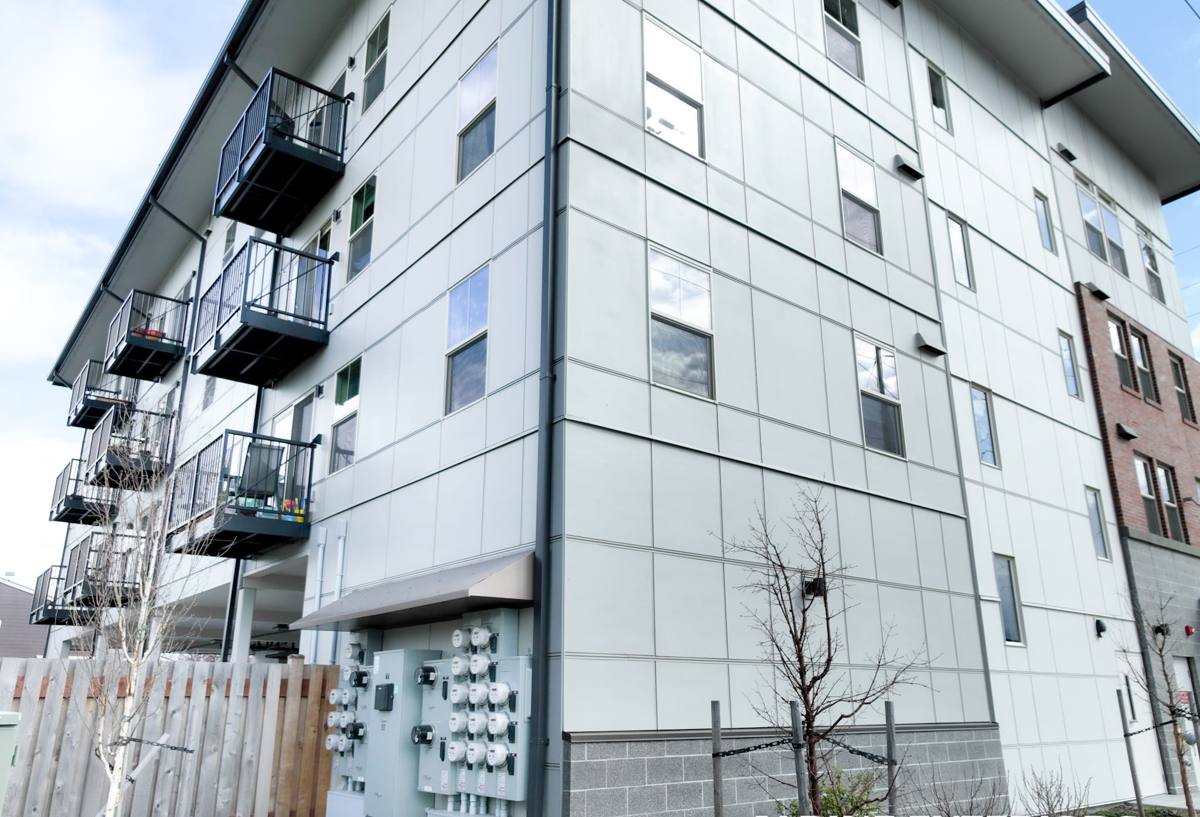
Given those three conditions, we made a deliberate decision years ago to install only James Hardie fiber cement siding, and we don't deviate from that even when a customer asks about a cheaper alternative. Fiber cement doesn't absorb water and swell the way engineered wood products can, and it doesn't require the ongoing sealing and edge maintenance that vinyl and untreated wood products need to hold up near salt air. Hardie's HZ5 product line is specifically engineered for climates like ours — freeze-thaw cycling, sustained moisture, and coastal exposure — and the ColorPlus factory finish is baked on and warrantied against fading and peeling in a way field-applied paint isn't.
We won't install LP SmartSide, vinyl, Cemplank, Allura, primed spruce, or cedar. That's not because those products have no legitimate use anywhere — it's because after years of servicing homes in this specific climate, we don't think they hold up to Whatcom County's combination of salt air, driving rain, and moss season as well as Hardie does, and we'd rather turn down that work than install something we don't stand behind fully out here.
What a Correct Siding Installation Involves
The siding board itself is only part of the system. Most siding failures we get called out to inspect in this area trace back to what's underneath the boards, not the boards themselves. A correct installation includes:
- Removal and inspection: stripping old siding down to the sheathing and checking for rot, water damage, or compromised framing before anything new goes up.
- Water-resistive barrier: a properly lapped and sealed house wrap that manages any moisture that gets past the siding surface and directs it back out.
- Flashing at every penetration: windows, doors, vents, hose bibs, and any other wall penetration get flashed to shed water outward, not into the wall cavity.
- Rainscreen or drainage gap where appropriate: a small air gap behind the siding lets any incidental moisture drain and dry instead of sitting against the back of the board.
- Correct fastening: Hardie specifies fastener type, spacing, and placement precisely, and using the wrong nail or gun pressure can void the warranty and cause premature cracking.
- Proper joint and seam treatment: factory-primed or ColorPlus edges get treated correctly at butt joints so the finish doesn't fail at the seam first.
- Trim, caulking, and paint touch-up: the finishing details that determine whether the job looks clean and stays sealed for years, not just for the first season.
Skip any one of those steps and the siding can still look fine for a year or two before problems show up — which is exactly why hiring based on the visible result alone is a mistake.
How Our Process Works
1. On-Site Assessment
We walk the home with you, look at the current siding condition, check for signs of moisture intrusion or rot at trim and penetrations, and talk through what we're seeing given the home's exposure — how much sun and wind it gets, how close it sits to mature trees, which walls face the prevailing weather.
2. Scope and Estimate
We put together a written scope covering removal, any sheathing repair we expect to find, the water-management details we'll install, the specific Hardie product and profile recommended for the home, and a clear cost breakdown. No pressure, no upsell script — just what the house needs.
3. Tear-Off and Substrate Repair
Old siding comes off, and we inspect the sheathing underneath. Any rot or water damage gets repaired before new siding goes on — covering damaged substrate with new siding just hides a problem that will resurface.
4. Water Management Installation
House wrap, flashing, and drainage details go in first. This is the stage that determines whether the home stays dry through Whatcom County's wet season, and it's the stage that's invisible once the job is done — which is why it matters that the crew doing it has done it correctly, repeatedly, in this exact climate.
5. Hardie Installation
Siding goes up to manufacturer spec — correct fastening, correct exposure, correct joint treatment — with attention to the details that matter most near the water: fully sealed penetrations, properly lapped seams, and trim work that sheds rain instead of collecting it.
6. Final Walk-Through
We walk the finished job with you, point out what was done and why, and make sure you're clear on the warranty coverage before we consider the job finished.
Why Hiring a Crew That Already Works Sunnyland Matters
A siding crew that mostly works dry inland neighborhoods can install a technically fine job on paper and still get details wrong that matter specifically near the bay — under-flashing a window because it's "usually fine," skipping a rainscreen gap because it's extra labor, or not accounting for how much longer a north-facing wall under tree cover stays wet after a storm. None of those mistakes are obvious at hand-off. They show up two or three winters later.
Crews that regularly work Sunnyland and the surrounding Whatcom County neighborhoods build habits around the conditions here — heavier attention to flashing details, awareness of which walls need extra drainage consideration, and a working knowledge of how salt air affects fastener and trim choices. That local repetition is worth more than a generic installation checklist.
Cost Factors for a Sunnyland Siding Job
Every home is different, but the line items that move the price on a siding installation in this neighborhood are fairly consistent. Broad, honest ranges depend heavily on home size, current siding condition, and how much substrate repair is needed — we won't quote a number without seeing the house, but here's what drives the estimate:
| Factor | Why It Matters |
|---|---|
| Home size and wall complexity | More square footage and more corners, gables, and trim detail mean more material and labor |
| Current siding removal | Multiple layers of old siding or difficult removal (asbestos-era materials, for example) add time |
| Sheathing condition | Rot or water damage found during tear-off requires repair before new siding goes on |
| Product line and profile | Hardie offers several plank profiles, panel systems, and shingle-style options at different price points |
| Trim and accessory work | Corner boards, window trim, and fascia detail add labor and material beyond the field siding |
| Access and site conditions | Tree cover, tight lot lines, and multi-story sections can affect staging and labor time |
Signs Your Sunnyland Home Needs New Siding
Not every siding problem is obvious from the ground. A few signs worth checking for, especially heading into the wet season:
- Persistent moss or algae growth that returns quickly after cleaning, especially on shaded or north-facing walls
- Soft spots, bubbling, or visible swelling in the siding, particularly near the bottom edges or around windows
- Paint or finish that's peeling, chalking heavily, or fading unevenly, which can point to a coating that isn't holding up to salt exposure
- Gaps opening up at seams, corners, or trim joints where caulking has failed
- Visible warping or cupping in boards, a common sign of moisture absorption in wood-based products
- Interior signs like musty smells, peeling interior paint, or water stains near exterior walls, which can indicate moisture getting past the siding
Maintenance That Actually Matters Here
Even correctly installed siding needs some upkeep in this climate, though far less than most alternatives. For a Hardie installation near Sunnyland, that mainly means periodically rinsing off accumulated moss and algae before it gets a foothold, keeping gutters clear so runoff isn't sheeting down the siding face, and doing a visual check after major storms for any new gaps at trim or caulk lines. None of that is heavy maintenance — it's the kind of occasional check that catches a small issue before it becomes a repair.
If you're weighing a siding replacement for a home in Sunnyland, we're glad to come take a look, walk you through what we're seeing, and put together a straightforward estimate — no pressure, no obligation.