 Whatcom County
 Siding Replacement Built for Lynden's Conditions
Lynden sits in farm country in the heart of Whatcom County, and the siding on homes out here works harder than most homeowners realize. Between long stretches of damp weather rolling in off the Pacific, heavy tree cover on older lots, and a moss season that can stretch for months, siding here doesn't get much of a break. When we're called out to a Lynden property for a siding replacement, the story on the wall is usually the same: the material held up fine for a while, then the moisture finally found a way in.
This page is about one thing specifically — full siding replacement for homes in and around Lynden. Not a patch, not a repair, not a general overview of siding types. If you're weighing whether your current siding has reached the point of replacement, or you already know it has and want to understand what a correct job looks like, this is written for that decision.
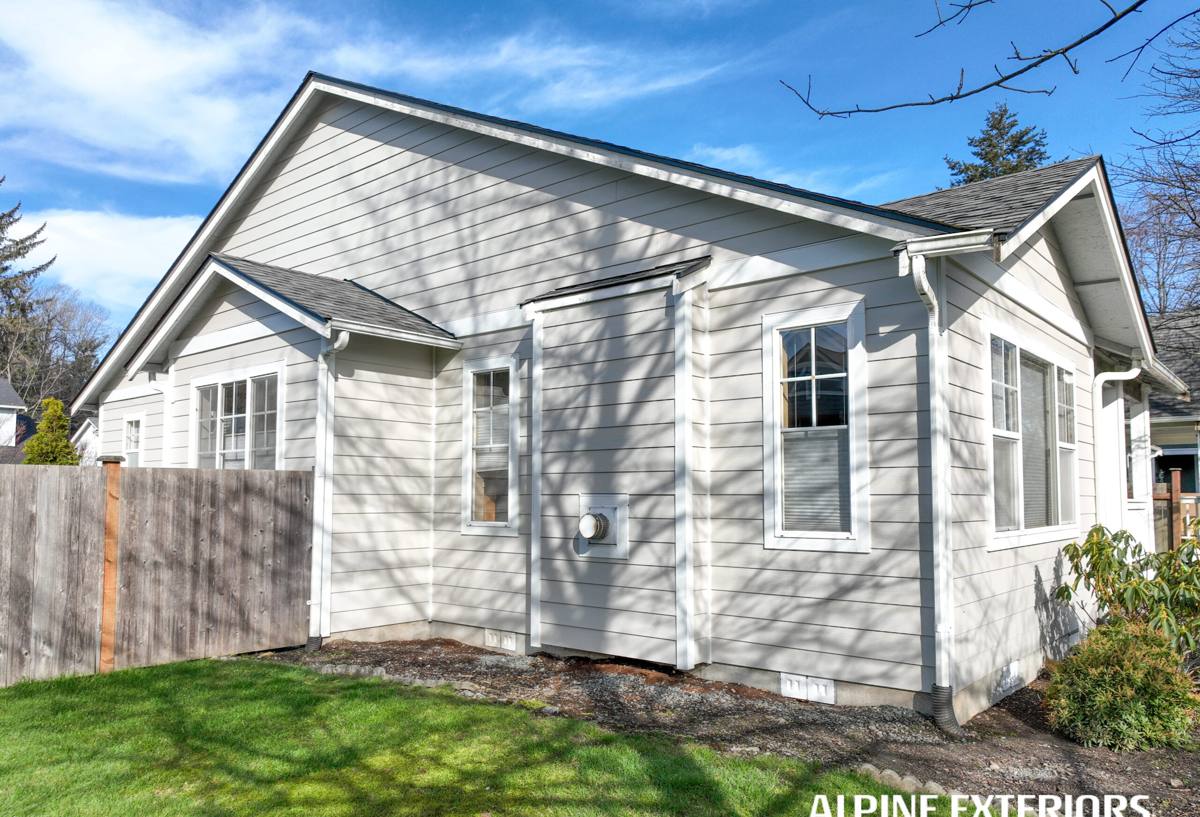
What Whatcom County's Climate Does to Siding Over Time
Driving rain and prolonged moisture exposure
Whatcom County gets a lot of rain, and a meaningful share of it comes in sideways during winter storm systems rather than falling straight down. That matters because siding systems are only as good as their ability to shed water horizontally, not just vertically. Lap siding with failing caulk joints, warped panels, or gaps at trim and window returns lets driving rain work its way behind the cladding instead of running off the face of it. Once water gets behind the siding, it can sit there for days at a time in our climate before conditions are dry enough to let it evaporate out.
Moss, mildew, and organic growth
Lynden's mix of mature trees, farmland humidity, and long shoulder seasons of shade and dampness creates ideal conditions for moss and mildew to colonize siding surfaces — especially on north-facing walls and anywhere water tends to linger. Beyond the cosmetic issue, moss and algae hold moisture against the siding surface long after a rain event has passed, extending the amount of time the material spends wet. On wood-based products, that persistent dampness is often what starts the rot process at seams and butt joints.
Temperature swings and material fatigue
Whatcom County doesn't get brutal winters, but it does get regular freeze-thaw cycling, along with humidity swings between wet winters and drier summers. Materials that absorb moisture expand and contract with those cycles. Over years, that repeated movement stresses seams, fasteners, and paint or coating systems — which is a big part of why some siding products fail from the inside out well before they look obviously bad from the street.
Signs a Lynden Home Needs Siding Replacement, Not Just Repair
Not every siding problem calls for a full tear-off. But there's a point where patching individual boards stops being cost-effective and starts being a way to delay an inevitable full job. Here's what tells us it's time to talk replacement instead of repair:
- Soft, spongy, or crumbling material when pressed, especially near the bottom courses and around window and door trim
- Paint that won't hold — repeated peeling or blistering within a year or two of repainting
- Visible gaps, warping, or bowing across multiple sections rather than one isolated board
- Persistent moss or dark staining that returns quickly after cleaning
- Rising interior humidity, musty smells, or staining on interior walls that share an exterior wall with the affected siding
- Siding that's original to a home more than 20-25 years old, particularly wood-based or lower-grade composite products
If you're only seeing one or two of these, a repair may buy you time. If you're seeing several at once, or they're spread across more than one wall, that's usually a sign the water-resistive barrier underneath has been compromised for a while — and that's a full-replacement problem, not a spot-repair one.
What a Correct Siding Replacement Job Actually Involves
Tear-off and inspection, not just cover-over
A proper siding replacement starts with removing the old material down to the sheathing, not installing new siding over the old. Covering over existing siding hides problems instead of fixing them, and it's a common shortcut we won't take. Once the wall is exposed, we inspect the sheathing itself for soft spots, rot, or prior water damage that needs to be addressed before anything new goes up.
Water-resistive barrier and flashing details
This is the part of the job that determines whether a house stays dry for the next 30 years or has problems again in five. A correctly installed water-resistive barrier, properly lapped and taped, combined with correct flashing at every window, door, and penetration, is what actually keeps driving rain out — the siding itself is the second line of defense, not the first. Given how much of Whatcom County's siding damage traces back to water getting behind the cladding, this step gets no shortcuts on our jobs.
Installation to manufacturer specification
Fastener type, fastener spacing, panel gaps for expansion, starter strip placement, and clearance from grade and roof lines all matter, and all of them are spelled out by the manufacturer for a reason. Siding installed off-spec can void the product warranty even if the material itself is excellent — which is a big part of why the crew doing the install matters as much as the product they're installing.
Why We Install Only James Hardie Fiber Cement
We made a decision a long time ago to standardize on one product line rather than offer a menu of options at different price points. That product is James Hardie fiber cement, and here's the honest reasoning behind it for a climate like ours.
| Factor | What matters in Whatcom County's climate |
|---|---|
| Moisture behavior | Fiber cement doesn't absorb and swell the way wood-based products can, which matters given how many wet days our siding sits through each year |
| Combustibility | Non-combustible material, relevant given regional wildfire smoke seasons and general fire-risk considerations |
| Factory finish | ColorPlus finish is baked on and warrantied against fading and peeling, versus field-applied paint that has to fight our humidity to cure and bond properly |
| Product engineering | Hardie's HZ climate lines are engineered specifically for moisture-prone regions like the Pacific Northwest, not a one-size-fits-all national product |
| Warranty structure | Strong, transferable manufacturer warranty backing both the substrate and the factory finish |
We don't install LP SmartSide, vinyl, Cemplank, Allura, primed spruce, or cedar. That's not a knock on every homeowner who has one of those products — plenty perform reasonably well when installed and maintained correctly. It's that after years of doing this work in a climate that punishes any weakness in a siding system, we decided we'd rather stand fully behind one product we trust than offer several we have reservations about. Vinyl can warp and doesn't hold paint if you ever want to change color. Wood-based composites and primed wood need consistent maintenance to keep moisture out, and a missed year or two in a climate this wet is often all it takes to start a problem. Fiber cement, installed correctly, removes most of that ongoing risk.
Our Process for Lynden Siding Replacement Projects
- On-site assessment — we walk the exterior, check for soft spots and moisture intrusion, and look at what's actually happening behind the current siding wherever we can access it
- Written estimate — scope, product line, color, and price laid out clearly before any work starts, no surprise add-ons buried in fine print
- Tear-off and sheathing repair — old material removed, damaged sheathing replaced as needed
- Water-resistive barrier and flashing installation — the step that actually protects the house long-term
- Hardie installation to spec — correct fastening, spacing, and trim detailing throughout
- Final walkthrough — we go over the finished job with you before calling it done
Cost Factors for a Lynden Siding Replacement
Every home is different, so we don't publish flat pricing — but these are the variables that actually move the number on a Whatcom County job:
| Factor | How it affects cost |
|---|---|
| Home size and wall complexity | More square footage and more corners, gables, and trim details mean more labor and material |
| Condition of existing sheathing | Rot or water damage found during tear-off adds repair scope before new siding can go on |
| Siding profile chosen | Lap width, shingle-style panels, and board-and-batten each have different material and labor costs |
| Trim and accessory work | Fascia, soffits, and window/door trim replacement alongside siding adds to the scope but improves the finished result and water management |
| Access and site conditions | Large rural lots, outbuildings, and setback from the road can affect staging and equipment access |
Why a Crew That Already Works in Lynden Matters
Siding installation is detail work, and the details that matter change with the climate. A crew that installs mostly in drier regions and occasionally works up here doesn't necessarily know where Whatcom County houses tend to leak first, or how much extra attention flashing and barrier work deserves given how many wet days a Lynden home sits through in a year. Local, consistent experience with this specific climate — and with the farmhouses, older rural properties, and newer builds that make up Lynden's housing stock — is what turns a siding job from "looks good for now" into "still doing its job in twenty years."
If your siding is showing wear, or you're just trying to get ahead of a replacement before it becomes an emergency, we're happy to take a look. Reach out for a free, no-pressure estimate — we'll walk the property, tell you honestly what we see, and lay out what a correct job would involve for your home.