 Whatcom County
 Windows Built for Silver Beach's Weather, Not Just the Showroom
Silver Beach sits in a part of Whatcom County where the weather doesn't take a season off. Homes here deal with salt-laden marine air, driving rain that comes in sideways off the water, and a moss season that can stretch from October well into spring. Windows take the brunt of that. A window that's rated fine on paper can still fail early here if it wasn't installed with this specific climate in mind — wrong flashing detail, wrong sealant, wrong glass package for the amount of driving rain the wall assembly actually sees.
We install and replace custom windows for homes throughout the Silver Beach area, and most of the problems we get called out for aren't the window unit itself failing — it's water finding its way behind the trim, into the sill, or down into the wall framing because the install didn't account for what this climate throws at a house year-round.
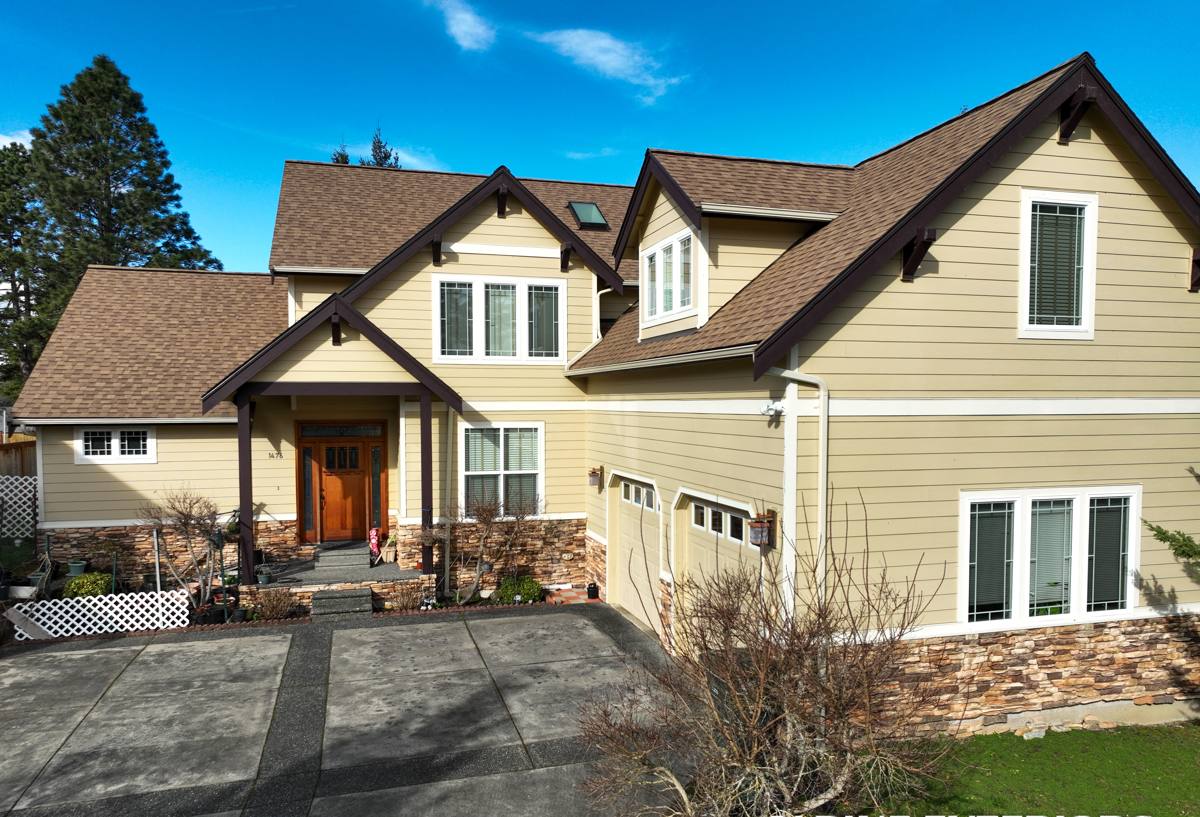
Signs a Silver Beach Home Needs Window Attention
Windows rarely fail all at once. The signs show up gradually, and homeowners often live with them longer than they should because nothing looks dramatically broken.
- Fogging or a milky haze between the panes — the seal on the insulated glass unit has failed and moisture is trapped inside
- Soft or discolored trim and sill wood, especially on walls that face prevailing wind and rain
- Persistent moss or dark streaking on the sill or the wall just below the window
- Drafts you can feel with a hand near the frame on a windy day
- Windows that are hard to open, close, or lock — frames can swell or warp as they take on moisture
- Condensation forming on the inside of the glass regularly, even in normal indoor humidity
- Visible daylight or gaps around the frame where it meets the siding or trim
Any one of these on its own might just mean a caulking touch-up. Several together, especially on a wall that takes the worst of the weather, usually means it's time to look at replacement rather than another round of patching.
What a Correct Custom Window Installation Actually Involves
"Custom" doesn't just mean a non-standard size — though a lot of older Whatcom County homes do need custom dimensions because original openings were never quite standard to begin with. It means the window and the installation are matched to the specific opening, the specific wall assembly, and the specific exposure that wall has to wind-driven rain.
Flashing Comes First
The single biggest factor in whether a window leaks in a few years isn't the window brand — it's the flashing. Water needs a continuous path down and out, never in. That means sill pan flashing under the window, properly lapped side and head flashing, and a weather-resistive barrier detail that sheds water past the window opening instead of trapping it against the framing. Skip or rush this step and even a premium window will eventually let water into the wall.
Sealing and Insulation
Gaps around the frame need to be sealed against air and bulk water infiltration, but they also need to allow the wall assembly to manage the moisture that inevitably gets in over time. Low-expansion foam or backer rod and sealant, applied correctly around the full perimeter, does both jobs. Over-foaming or using the wrong sealant for the substrate is a common shortcut that causes problems down the road.
Glass and Frame Match to Exposure
A window on a sheltered wall doesn't need the same glass package as one that takes direct driving rain and wind. We size up the exposure on each elevation and recommend glass and hardware accordingly, rather than installing the same spec everywhere just because it's simpler.
Material and Glass Options for This Climate
There's no single "best" window material — each has real trade-offs, and the right call depends on the specific wall, budget, and how much maintenance the homeowner wants to take on.
| Material | How It Handles This Climate | Maintenance | Typical Trade-Off |
|---|---|---|---|
| Vinyl | Won't rot or corrode; performs well against moisture and salt air | Low — occasional cleaning | Frame can't be painted; expands/contracts with temperature swings |
| Fiberglass | Very stable dimensionally, strong resistance to moisture and warping | Low | Higher upfront cost than vinyl |
| Wood-clad | Good insulating properties; exterior cladding protects wood from rain if detailed correctly | Higher — cladding and any exposed wood need monitoring | More sensitive to installation quality; interior wood still needs some care |
| Aluminum | Strong but conducts cold and can be prone to condensation without thermal breaks | Moderate — check for corrosion near salt-influenced air | Less energy-efficient unless thermally broken |
For most Silver Beach homes we lean toward vinyl or fiberglass on exposed elevations specifically because they don't give moisture and salt air anything to work on. Wood-clad units still have a place, particularly where the look matters and the wall is well-protected, but they demand more attention over the life of the window.
Glass Considerations Worth Understanding
- Dual-pane, low-E glass is the baseline for this region — it manages heat loss and helps control condensation on the interior surface
- Argon or krypton gas fill between panes improves insulating performance, particularly valuable given how many gray, cool months this area sees
- Condensation-resistant coatings and warm-edge spacers matter more here than in drier climates, since indoor/outdoor temperature and humidity differences drive interior condensation
- Impact and water-resistance ratings matter most on walls that face direct wind and rain — not every wall of the house needs the top-tier spec, but the exposed ones benefit from it
Our Installation Process
- On-site assessment — we look at each window opening individually, note the exposure, the condition of the existing frame and sill, and any signs of water intrusion already in the wall
- Measurement and product selection — exact custom sizing, with material and glass recommendations matched to that specific opening's exposure
- Removal — old window and any compromised trim or sill material comes out, and we check the framing underneath for rot or moisture damage before anything new goes in
- Flashing and weather barrier work — sill pan, side and head flashing installed and lapped correctly with the existing weather-resistive barrier
- Window installation and sealing — unit set, shimmed level and square, fastened per manufacturer specs, and sealed around the full perimeter
- Interior and exterior trim — finished to match the home, with attention to keeping water shedding away from any wood trim
- Final check and cleanup — operation checked on every window, worksite cleaned, and old materials hauled off
What Affects the Cost of Custom Windows
We won't quote a number without seeing the openings, but these are the factors that actually move the price on a Silver Beach job:
| Factor | Why It Matters |
|---|---|
| Number of windows and custom sizes | Non-standard openings cost more to fabricate than stock sizes |
| Material choice | Vinyl is typically the most budget-friendly; fiberglass and wood-clad cost more upfront |
| Glass package | Gas fills, coatings, and higher-performance spacers add cost but pay back in comfort and lower condensation |
| Condition of existing framing | If water has already gotten into the wall, repair work needs to happen before or during install |
| Exposure and access | Second-story or hard-to-access windows take more labor time |
| Trim and finish work | Matching existing trim profiles or upgrading trim adds to the scope |
Broadly, expect a wide range across a project — a handful of standard-size vinyl replacements will run far less than a full custom fiberglass or wood-clad package across a whole elevation. The honest answer is that it depends enough on the specifics that a real number requires a look at the actual openings.
Keeping Windows Performing Through Moss Season and Storms
Even a correctly installed window benefits from some basic upkeep, especially given how long the wet season runs here.
- Clear moss and debris off sills and tracks before it holds moisture against the frame
- Check exterior caulking annually, particularly after a hard winter, and touch up anywhere it's cracked or pulled away
- Keep gutters and downspouts clear so roof runoff isn't dumping extra water onto window heads
- Wipe down hardware and tracks periodically — salt-influenced air can accelerate wear on hinges and locks if grime builds up
- Watch for early condensation between panes; it means the seal has failed and it's worth addressing before moisture damages the surrounding frame
- Trim back vegetation that's shading a window and keeping it damp longer than the rest of the wall
Why a Crew That Already Works Silver Beach Matters
Window installation is one of those jobs where local experience shows up in the details. A crew that's worked this specific area knows which elevations tend to take the worst of the wind and rain, what kind of moisture problems show up in older Whatcom County framing, and how to sequence a job around the wet stretches of the year without leaving an opening exposed. That's not something you get from a crew passing through on a regional route — it comes from doing this work, in this weather, on homes like the ones already standing in Silver Beach.
It also means someone answers the phone if a question comes up after the job is done — no chasing down a crew that's moved three towns over.
If your windows are fogging, drafty, or just due for an upgrade, we're happy to take a look and put together a straightforward, no-pressure estimate. Use the form below to get started.