 Whatcom County
 Why Decks Wear Out Faster in Silver Beach
Silver Beach sits close to the water and under a lot of mature tree canopy, and that combination is hard on outdoor structures. Homes here deal with long stretches of damp weather, shaded ground that never fully dries out, and a moss and algae season that can run from fall through spring. A deck built without that in mind — undersized footings, no ventilation underneath, fasteners that weren't rated for wet wood contact — will show problems years before it should. We see the same failure points over and over on Silver Beach tear-outs: rotted ledger boards where the deck meets the house, joists that stayed wet against the siding all winter, and surface boards that cupped or split because moisture got trapped underneath instead of draining away.
Whatcom County's marine-influenced climate makes this a countywide issue, but low, shaded, near-water lots like the ones common around Silver Beach get it worse than a sunny, open yard across town. Driving rain off the water pushes moisture sideways into joints and end grain, not just straight down onto the deck surface, which is why flashing details and gaps between boards matter as much as the decking material itself.
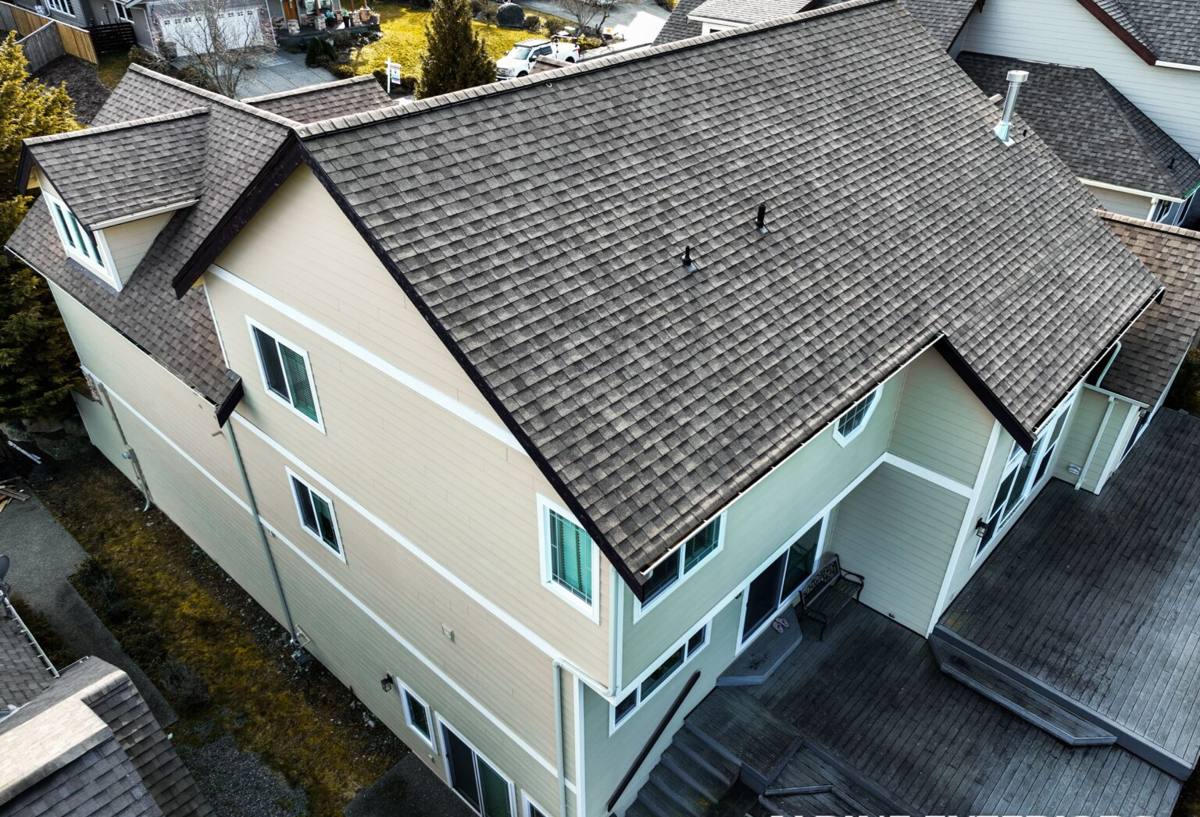
What "Deck Replacement" Actually Means
A lot of homeowners call us thinking they need a full replacement when they really need targeted repair, and a few call for a repair when the structure underneath is too far gone to save. A real deck replacement means removing the decking, railings, and usually the ledger board and framing down to the posts and footings, then rebuilding from the ground up. It's not a resurfacing job. If a contractor offers to just screw new boards over your existing frame without opening it up first, that's a red flag — you can't know what's happening to the joists and ledger connection without looking.
What We Check Before Recommending Full Replacement
- Condition of the ledger board and its flashing where it attaches to the house
- Joist and beam integrity — soft spots, rot, insect damage
- Post and footing depth, and whether they meet current code for your lot
- Railing and guardrail stability, since these are a safety item, not a cosmetic one
- Drainage and grading underneath the deck
If the framing is sound and only the surface boards have failed, a resurface can make sense and cost less. If the ledger, joists, or footings are compromised, replacing just the boards is a short-term fix that hides the real problem under new lumber.
Getting the Structure Right — Not Just the Surface
The part of a deck that fails first in this climate is almost never the visible decking — it's what's underneath it. A correctly built deck for a wet, shaded lot needs a few things a lot of older decks are missing:
- Ledger flashing: A metal flashing detail between the ledger board and the house siding that sheds water away from the wall, not into it.
- Joist protection: Joist tape or a comparable barrier over the top of each joist so fasteners don't create a path for water into the wood.
- Proper fasteners: Hot-dip galvanized or stainless hardware rated for ground and wet-wood contact — standard hardware corrodes fast in a damp, shaded environment.
- Airflow underneath: Enough clearance and, where possible, gaps in skirting so air can move under the deck and let it dry out between storms.
- Board spacing: Gapping decking boards correctly so water doesn't sit and pool, which is what drives cupping and early rot.
None of this is visible once the job is finished, which is exactly why it gets skipped by crews trying to hit a lower price. It's also exactly what determines whether your new deck lasts 10 years or 25.
Decking Material Comparison
Every material has trade-offs, and the right one depends on your budget, how much sun the deck gets, and how much upkeep you actually want to do. For a shaded, moist lot like a typical Silver Beach yard, moisture behavior matters more than it would on a dry, open site.
| Material | How It Handles Moisture & Shade | Maintenance | Typical Lifespan |
|---|---|---|---|
| Pressure-treated wood | Handles moisture fine if sealed regularly; grows moss and algae fastest in shade | Annual cleaning and re-sealing/staining | 10–15 years |
| Cedar | Naturally rot-resistant but still needs sealing; can gray and split without upkeep | Regular cleaning, periodic sealing | 15–20 years |
| Capped composite | Doesn't absorb water like wood; can still develop surface mildew in deep shade if not cleaned | Occasional washing, no sealing/staining | 25–30 years |
| PVC decking | Fully moisture-resistant, best option for damp, low-airflow spots | Lowest — soap and water rinse | 25–30+ years |
We don't install every product on the market. There are cheaper composite lines that use a thin cap or an open cellular core that soaks up water at cut ends and fastener holes — fine in a dry climate, a poor match for a shaded lot that stays damp most of the year. Our standard is to spec materials that are rated for ground-level, wet-climate installation, even if that means steering a homeowner toward a slightly higher-tier product than the cheapest option on the shelf.
Our Deck Replacement Process
- On-site assessment: We walk the existing deck, check the framing, footings, and ledger connection, and talk through what you actually want out of the new deck — size, layout, railing style, material.
- Written estimate: A clear scope and price, broken out so you can see what you're paying for structurally versus cosmetically.
- Permit handling: For most full replacements in Whatcom County, we pull the permit and coordinate inspections so you're not chasing paperwork.
- Demo and disposal: Full removal of the old deck, hauled off — we don't leave debris piled in the yard.
- Framing and footings: Rebuilt or reinforced to current code, with attention to the ledger flashing and joist protection details covered above.
- Decking, railing, and finish work: Installed per manufacturer spec, with correct fastener spacing and gapping for drainage.
- Final walkthrough: We go over the finished deck with you before calling the job done.
Cost Factors to Understand Before You Budget
Deck replacement pricing varies a lot based on size, material, and how much of the substructure needs to be rebuilt versus reinforced. Rather than quote a number that won't fit your situation, here's what actually moves the price:
| Factor | Why It Matters |
|---|---|
| Deck size and shape | Square footage and complexity of the layout (multiple levels, angles) directly affect labor and material |
| Decking material chosen | Pressure-treated wood costs less upfront than composite or PVC, but those materials cost less over the deck's life |
| Framing condition | If posts, footings, or beams need replacing (common on older lakeside lots), that adds cost beyond a simple resurface |
| Height and railing requirements | Taller decks need code-compliant guardrails, which add material and labor |
| Access to the site | Tight side yards or limited equipment access on some Silver Beach lots can add time to demo and material staging |
| Permit and inspection scope | Full rebuilds typically require permitting; resurfacing on sound framing usually doesn't |
We give a firm written number after the on-site assessment — not a phone-quote guess — because these variables genuinely change the price enough that a generic estimate isn't useful to you.
Signs You Need Replacement, Not Repair
- Soft, spongy spots when you walk across the deck
- Rot or discoloration where the deck meets the house (the ledger board)
- Railings that wobble or flex under normal pressure
- Posts that have shifted, sunk, or show rot at the base
- Persistent moss or algae buildup that comes back within weeks of cleaning
- Gaps or separation between boards that have widened significantly over time
One or two of these can sometimes be repaired in place. Several together, especially anything involving the ledger board or posts, usually means the structure has reached the point where a rebuild is the more honest recommendation than another round of patch repairs.
Permits, Setbacks, and Code Basics
Most full deck replacements in Whatcom County require a building permit, particularly when the structure is being rebuilt from the footings up or the deck height triggers guardrail requirements. Requirements can vary depending on whether your property falls under county jurisdiction or a specific overlay near the lake, so we confirm the exact requirements for your lot rather than assuming. Guardrails are required above a certain deck height, and footing depth has to meet frost-line and soil-bearing standards for the site — this is one more reason a full open-up-the-structure replacement is worth doing right rather than skipping straight to new boards over questionable framing.
Checklist: What to Ask Before You Hire a Deck Contractor
- Will you pull the permit, and is that included in the quote?
- Will you show me the condition of the framing and footings before deciding what's replaced versus reused?
- What fasteners and flashing details are you using at the ledger board?
- Is the estimate written and itemized, or a rough verbal number?
- Do you carry liability insurance and can you provide proof?
- Have you worked on decks in this specific area of Whatcom County before?
- What's the manufacturer warranty on the decking material, and does your installation keep that warranty valid?
Why Local Experience in Silver Beach Matters
A crew that's already worked on decks in and around Silver Beach knows the pattern before they even open up the frame — where the ledger boards tend to rot first, how much shade a given lot gets through the year, and which material choices actually hold up against the county's rain and moss cycle instead of just looking good on a spec sheet. That's not something you get from a crew that mostly works dry, sunny lots inland and treats every job the same way. It shows up in the small decisions: how much gap to leave between boards, whether to add extra ventilation under a deck tucked into heavy shade, and which hardware won't corrode after a few damp Whatcom County winters.
If your deck is showing rot, soft spots, or persistent moss that keeps coming back, it's worth having someone look at the structure before deciding whether it needs a repair or a full rebuild. We're happy to come out, walk the deck with you, and give you a straightforward, no-pressure estimate — just fill out the form below to get started.