 Whatcom County
 Roofing in Silver Beach: A Different Kind of Climate Test
Silver Beach sits close enough to Lake Whatcom and the broader Whatcom County weather pattern that roofs here take a beating most inland Washington homes never see. You get moisture in the air nearly year-round, long stretches of overcast, moss-friendly shade from mature trees, and wind-driven rain that finds its way into any gap a roof crew left behind. None of that is exotic or rare — it's just the baseline. A roof installed for this neighborhood needs to be built for it from day one, not patched for it later.
When we install a new roof for a Silver Beach home, we're not just matching shingles to a house. We're accounting for how much moisture the roof assembly will see over its lifetime, how well it will shed rain in a sideways storm, and how much shade and organic debris it will deal with from surrounding trees. Get those details right at installation and the roof performs quietly for decades. Get them wrong and you're looking at premature moss growth, soft decking, and leaks well before the shingles themselves wear out.
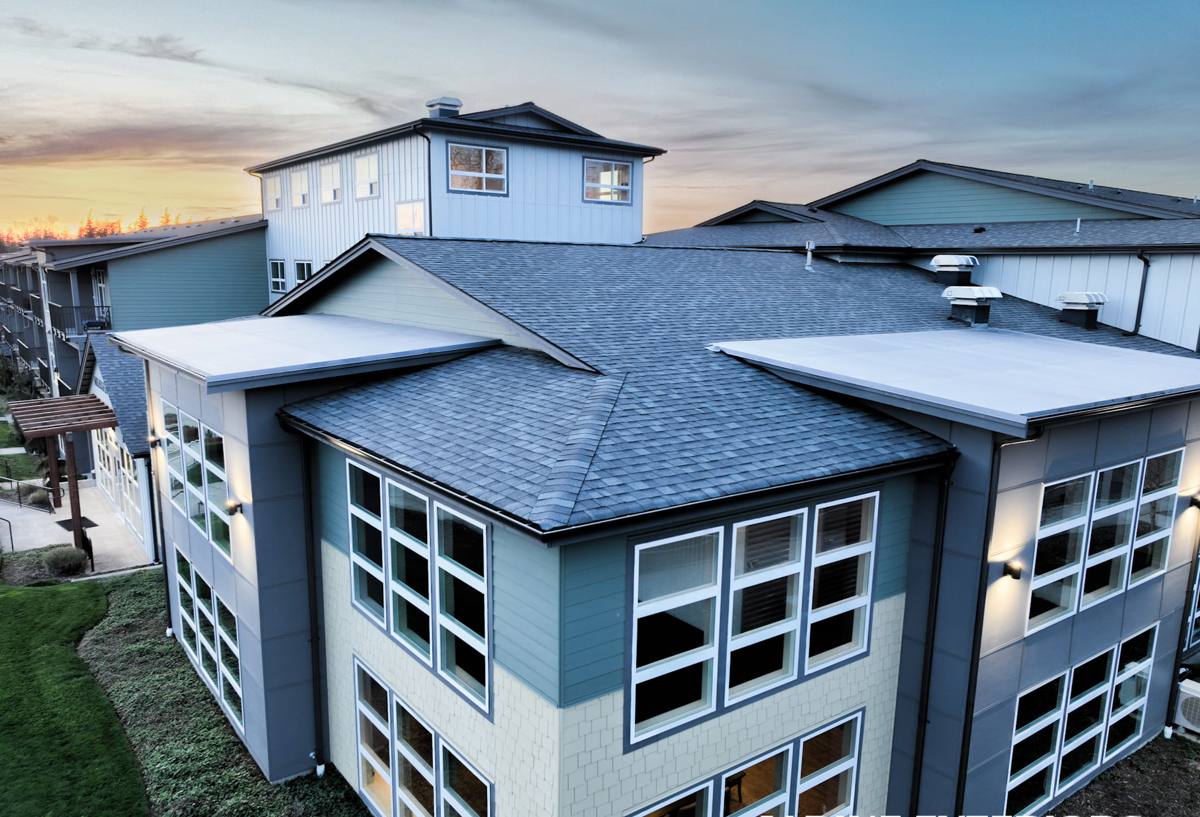
What "Correct" Actually Means for a New Roof Installation
A lot of roof failures in this part of Whatcom County aren't material failures — they're installation shortcuts. The shingles or panels themselves are usually fine. What fails is everything underneath and around them: the underlayment, the flashing, the ventilation, and the fastening pattern. A correct installation gets all of these right, not just the parts a homeowner can see from the ground.
The Layers That Actually Keep Water Out
- Deck inspection and repair — any soft, delaminated, or water-stained sheathing gets replaced before anything new goes down. Roofing over bad decking just hides a bigger problem.
- Ice-and-water shield at vulnerable points — valleys, eaves, and roof-to-wall transitions get a self-adhering waterproof membrane, not just felt, because these are the spots where wind-driven rain actually gets pushed uphill under the material.
- Synthetic underlayment across the field — a full secondary water barrier under the primary roofing material, sized and lapped correctly for our rain patterns.
- Metal flashing at every penetration and transition — chimneys, skylights, sidewalls, and vent pipes are where most leaks actually originate, so flashing detail work matters more than shingle brand.
- Balanced intake and exhaust ventilation — covered in more detail below, because it's the step that gets skipped most often and causes the most long-term damage.
Choosing a Roofing Material for Silver Beach Conditions
There's no single "best" roofing material for every home — it depends on your roof's pitch, how much shade it gets, your budget, and how long you want to go before your next major roof project. Here's how the common options actually perform under the moisture and moss pressure typical of this area.
| Material | Moss/Moisture Resistance | Typical Lifespan Here | Notes for Shaded Lots |
|---|---|---|---|
| Architectural asphalt shingles | Good, with proper ventilation and periodic cleaning | 25–30 years | Most cost-effective; needs algae-resistant granules on heavily shaded roofs |
| Standing seam metal | Excellent — sheds moss and debris well due to smooth, steep-shedding surface | 40–50+ years | Higher upfront cost, very low maintenance under trees |
| Composite/synthetic shake | Very good, engineered for moisture resistance | 30–40 years | Good option where a cedar look is wanted without cedar's upkeep |
| Cedar shake | Requires active maintenance to resist moss and rot | 20–25 years with upkeep | Beautiful, but demands the most attention in a shaded, wet lot |
We'll walk you through the trade-offs based on your specific roof, not just push whatever has the best margin. If a low-slope section, heavy tree cover, or a north-facing pitch changes the math for your home, we'll say so plainly.
Underlayment and Fastening Matter More Than Brand
Two roofs with identical shingles can perform completely differently based on how they were installed. Nail placement, fastener count per shingle, and whether the crew followed the manufacturer's exposure and nailing pattern all affect wind resistance and long-term warranty validity. We install to manufacturer specification every time — it's the difference between a roof that's actually warrantied and one that only looks like it is.
Ventilation and Moisture: The Step Most Roofs Skip
Attic ventilation is the least visible part of a roof and the most commonly under-built. In a climate like Whatcom County's, a poorly ventilated attic traps warm, moist air against the underside of the roof deck. Over a few winters, that moisture condenses, softens the sheathing, and can rot the deck from the inside — often long before the shingles on top show any wear.
A correct system balances intake (usually soffit vents) with exhaust (ridge vents or equivalent), sized to the square footage of the attic space. When we install a new roof, we check and correct ventilation as part of the job, not as an upsell — it protects the wood structure the roof depends on and it protects your investment in the roofing material itself.
Moss, Algae, and Long-Term Roof Care
Given the shade and moisture common around Silver Beach, moss and algae growth is close to inevitable over time — the question is how much it's allowed to matter. A new roof installed with proper flashing, ventilation, and (where appropriate) zinc or copper strips near the ridge will resist moss buildup far longer than one installed without those details. Moss itself isn't just cosmetic: its root structure holds moisture against the shingle surface and can lift shingle edges over time, giving wind and rain a place to start working their way in.
We don't recommend pressure washing a roof — it strips granules and shortens shingle life faster than the moss itself would. Gentle removal methods and preventive treatments, timed to your roof's exposure, do far less damage while keeping growth in check.
Our New Roof Installation Process
1. On-Site Assessment
We walk the roof and the attic, not just the yard. That means checking deck condition, existing ventilation, flashing details, and any signs of past moisture intrusion before we ever talk materials.
2. Material and Scope Conversation
We go over material options in plain terms — cost, lifespan, and how each one holds up given your roof's shade and slope — and put together a scope that matches your home, not a generic package.
3. Tear-Off and Deck Repair
Old roofing comes off down to the deck so we can see and fix what's actually there, rather than roofing over hidden damage.
4. Waterproofing, Flashing, and Ventilation
Ice-and-water membrane at vulnerable areas, underlayment across the field, new flashing at every penetration, and ventilation corrected or upgraded as needed.
5. Installation to Manufacturer Spec
Material goes on following the manufacturer's fastening and exposure requirements, which keeps your product warranty valid and your roof performing as designed.
6. Final Walkthrough
We review the finished roof with you, cover basic care and what to watch for, and make sure debris and old materials are cleared from the property.
Signs Your Silver Beach Home Needs a New Roof — Not Another Repair
Repairs make sense for isolated damage on an otherwise sound roof. A full replacement makes sense when the underlying system is compromised. Watch for:
- Shingles that are cupping, cracking, or losing granules across large sections, not just one spot
- Soft or spongy spots when walking the roof, which usually mean deck damage underneath
- Daylight visible through the attic roof boards, or damp insulation after rain
- Heavy, persistent moss coverage that returns quickly after cleaning
- Repeated leaks in different locations rather than one recurring spot
- A roof approaching or past the expected lifespan of its material, especially if ventilation was never upgraded
If you're only seeing one or two of these, a repair may still be the right call — we'll tell you honestly which situation you're in rather than defaulting to a full replacement.
Why a Crew That Already Works Silver Beach Matters
Roofing crews that mostly work drier, more sheltered parts of the county sometimes underbuild for conditions here — lighter underlayment, minimal flashing, ventilation left as-is. A crew that regularly installs and repairs roofs around Silver Beach and the rest of Whatcom County has already seen where those shortcuts show up two or three years later, and builds around them from the start. That's not a marketing point — it shows up in fastening patterns, flashing choices, and how seriously ventilation gets treated on every job.
It also matters for timing. Roofing work here has to work around a real rainy season, and a crew familiar with local weather patterns plans installation windows accordingly instead of rushing a job into a stretch of wet weather that compromises the tear-off and dry-in stages.
Ready for an Honest Look at Your Roof?
If your roof is showing its age, growing more moss than it should, or you're just planning ahead, we're happy to take a look and give you a straightforward assessment — no pressure, no upsell. Use the form below to request a free estimate, and we'll walk your roof with you and lay out exactly what your home needs.