 Whatcom County
 Roof Repair Built for Silver Beach's Climate
Silver Beach homes sit in one of the tougher spots in Whatcom County for a roof to hold up over time. Between salt-laden air drifting in off the water, long stretches of driving rain through fall and winter, and a moss season that can run most of the year, roofing materials here take a beating that homes further inland simply don't see. A roof repair that would hold up fine in a dry climate can fail in two or three years out here if it isn't done with the local conditions in mind.
We work on roofs across Whatcom County, and Silver Beach comes with its own set of recurring issues: moss working into shingle mat and lifting tabs, fasteners and flashing corroding faster than the manufacturer's spec sheet assumes, and gutters and valleys that clog with organic debris right when the rain is heaviest. A repair here isn't just patching a leak — it's addressing why that leak started in the first place, so it doesn't come back at the same spot six months later.
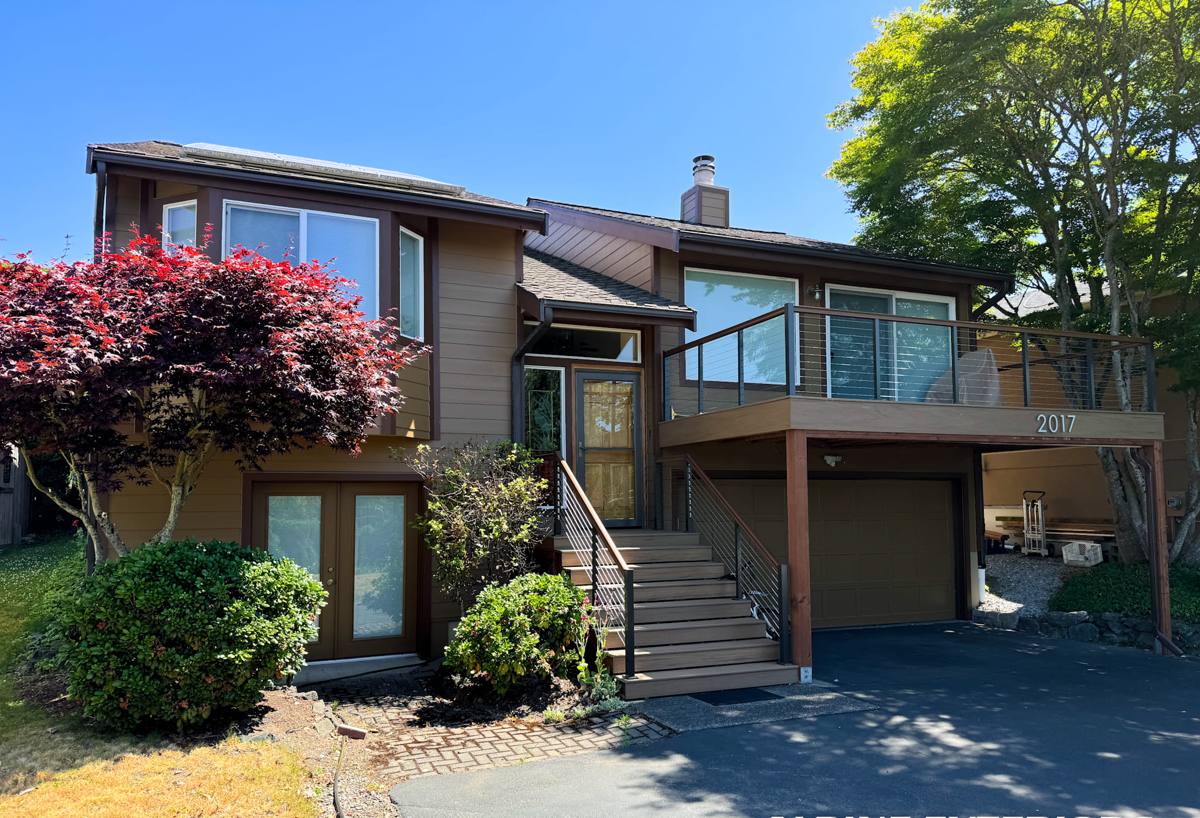
What Silver Beach Roofs Are Up Against
Salt Air and Metal Fatigue
Salt in the air accelerates corrosion on anything metal on your roof — nails, flashing, valley metal, vent boots with metal collars, and gutter hangers. Once corrosion starts on a fastener, it loses holding power long before it looks obviously rusted from the ground. That's a common source of "mystery" leaks: the shingle looks fine, but the nail under it has backed out or corroded through.
Driving Rain and Wind-Driven Water
Rain in this part of Whatcom County doesn't always fall straight down. Wind off the water pushes it sideways and up under laps, edges, and poorly sealed penetrations. A roof that would be watertight in calm rain can still leak in a storm if the underlayment, flashing laps, and edge details weren't installed with wind-driven water in mind.
Moss and Organic Growth
Shade, moisture, and mild temperatures are exactly what moss wants, and Silver Beach has all three for a good chunk of the year. Moss doesn't just look bad — it holds moisture against the shingle surface, works its rhizoids under tabs and granules, and physically lifts shingle edges over time. Left unchecked, a moss mat can turn a small granule-loss problem into a full leak path.
Signs a Silver Beach Roof Needs Repair, Not Replacement
- Isolated leak around a single penetration, chimney, or skylight, with the rest of the roof field in decent shape
- Moss or lichen concentrated in one shaded section rather than covering the whole roof
- A handful of cracked, curled, or missing shingles after a windstorm, with the surrounding field still flat and granule-covered
- Flashing that's visibly separated, rusted through, or was installed with sealant instead of proper step flashing
- Gutter or valley backup causing water to back up under shingles rather than a widespread roof-surface failure
- Roof is under 15 years old (for architectural shingle) with no widespread granule loss or mat deterioration
If a roof is showing granule loss across most of the field, multiple leak points in unrelated areas, or soft decking in more than one spot, that's usually a sign the roof is past the point where repair makes sense as a long-term fix. We'll tell you straight if that's what we're looking at rather than patch something that needs full replacement.
What a Correct Repair Actually Involves
A lot of roof repairs done in this climate fail because they only address the surface symptom. Here's what we check and address on every repair call in Silver Beach:
Decking Condition
Before any shingle or flashing goes back down, we check the decking underneath for soft spots or water staining. Salt air and long-term moisture exposure can weaken sheathing even when the surface shingles look intact. Patching over compromised decking just guarantees a repeat visit.
Underlayment at the Repair Area
Old or degraded felt underlayment doesn't hold up to repeated wetting from wind-driven rain. Where we open up a section for repair, we replace the underlayment with synthetic or self-adhered membrane material appropriate to that part of the roof — not just re-lay the shingles over old paper.
Flashing and Penetration Details
Chimneys, vents, skylights, and wall-to-roof transitions are where most Silver Beach leaks actually originate, not in the open shingle field. We rebuild flashing with proper step and counter-flashing techniques rather than relying on caulk or roofing cement as a long-term fix — sealant breaks down; correctly lapped metal doesn't.
Fastener and Metal Upgrades
Where corrosion is a factor, we use fasteners and flashing rated for coastal exposure rather than standard-grade materials. It costs a little more up front and saves a callback down the road.
Moss Treatment and Prevention
If moss caused or contributed to the damage, we remove it properly — not by pressure-washing, which can drive water under shingles and strip granules — and address the underlying moisture and shade conditions where practical, including zinc or copper strip installation to slow regrowth.
Repair Cost Factors
Every roof repair is priced based on what's actually found once we're up there, but these are the main factors that move the number up or down:
| Factor | Why It Matters |
|---|---|
| Extent of decking damage | Rotten or soft sheathing requires cutting out and replacing plywood, not just surface shingle work |
| Roof pitch and access | Steeper roofs and difficult access (trees, tight lot lines) take more time and safety setup |
| Number and type of penetrations involved | Chimney and skylight flashing repairs take longer than a straightforward shingle-field patch |
| Shingle match availability | Older or discontinued shingle colors/styles can be harder to match, sometimes requiring a slightly larger repair area |
| Moss and debris removal needed | Heavy moss buildup adds cleanup time before any repair work can start |
| Material grade selected | Coastal-rated flashing and fasteners cost more than standard grade but last longer here |
Most straightforward, isolated repairs land in a modest range; anything involving decking replacement or multiple flashing rebuilds runs higher. We'll walk the roof, show you what we find, and give you a written number before any work starts — no guessing over the phone.
Our Repair Process
- Inspection. We get on the roof (not just a ground-level look) and check the repair area, surrounding field, decking, flashing, and gutters for related issues.
- Diagnosis and estimate. We explain exactly what's causing the problem, what we recommend, and provide a clear written estimate — including whether we think repair or replacement is the right call.
- Repair. We remove damaged materials down to sound decking, replace underlayment and flashing as needed, install matching shingles or roofing material, and reseal penetrations properly.
- Cleanup and check. We clear debris, check gutters and valleys near the repair for blockages, and do a final walk-through so you know what was done and why.
Why Local Experience in Silver Beach Matters
A roofing crew that mostly works dry-climate jobs will often use standard materials and standard details because that's what works where they usually operate. In Silver Beach, standard isn't always enough. We've seen how salt air chews through the wrong grade of fastener, how wind-driven rain finds the one flashing lap that wasn't done right, and how fast moss can undo a repair that didn't account for it. That experience shows up in the small decisions — which underlayment, which flashing detail, which fastener grade — that determine whether a repair lasts five years or fifteen.
We also know this part of Whatcom County well enough to give you a straight answer about whether a repair makes sense at all. Sometimes the honest answer is that a roof has enough underlying issues that a repair is a short-term patch, and we'll tell you that instead of running up a bill on a roof that needs replacement.
Maintenance That Extends the Life of a Repair
A good repair holds up longer with some basic upkeep, especially in a moss-prone, salt-air environment like this:
- Keep gutters and valleys clear of needles, leaves, and moss debris, especially before the fall rains start
- Have moss treated or removed before it spreads across a full slope, not after
- Trim back overhanging branches that keep sections of the roof shaded and damp
- Get a roof checked after major windstorms, even if nothing looks obviously wrong from the ground
- Address small leaks or lifted shingles promptly rather than waiting for the next dry season
Get a Straight Answer on Your Roof
If you're dealing with a leak, storm damage, or moss buildup on a Silver Beach roof, we're happy to take a look, explain what's actually going on, and give you an honest recommendation on repair versus replacement. Fill out the form below for a free, no-pressure estimate.