 Whatcom County
 Roofing in South Hill Isn't the Same as Roofing Somewhere Dry
South Hill homes sit inside a Whatcom County climate that is genuinely hard on a roof. Salt-laden air moving in off the water accelerates corrosion on exposed metal. Driving rain, pushed sideways by wind rather than falling straight down, finds every weak seam, nail pop, and worn flashing detail. And the moss season here isn't a few weeks in spring — it's most of the year, thanks to shade, moisture, and mild temperatures that never really dry the roof deck out. An asphalt shingle roof that would perform fine in a drier, calmer climate can fail early here if it wasn't installed with these specific conditions in mind.
That's the core of what this page is about: what a correctly built asphalt shingle roof looks like for a South Hill home, why the details matter more here than they would elsewhere, and what our process looks like from first look to final walkthrough.
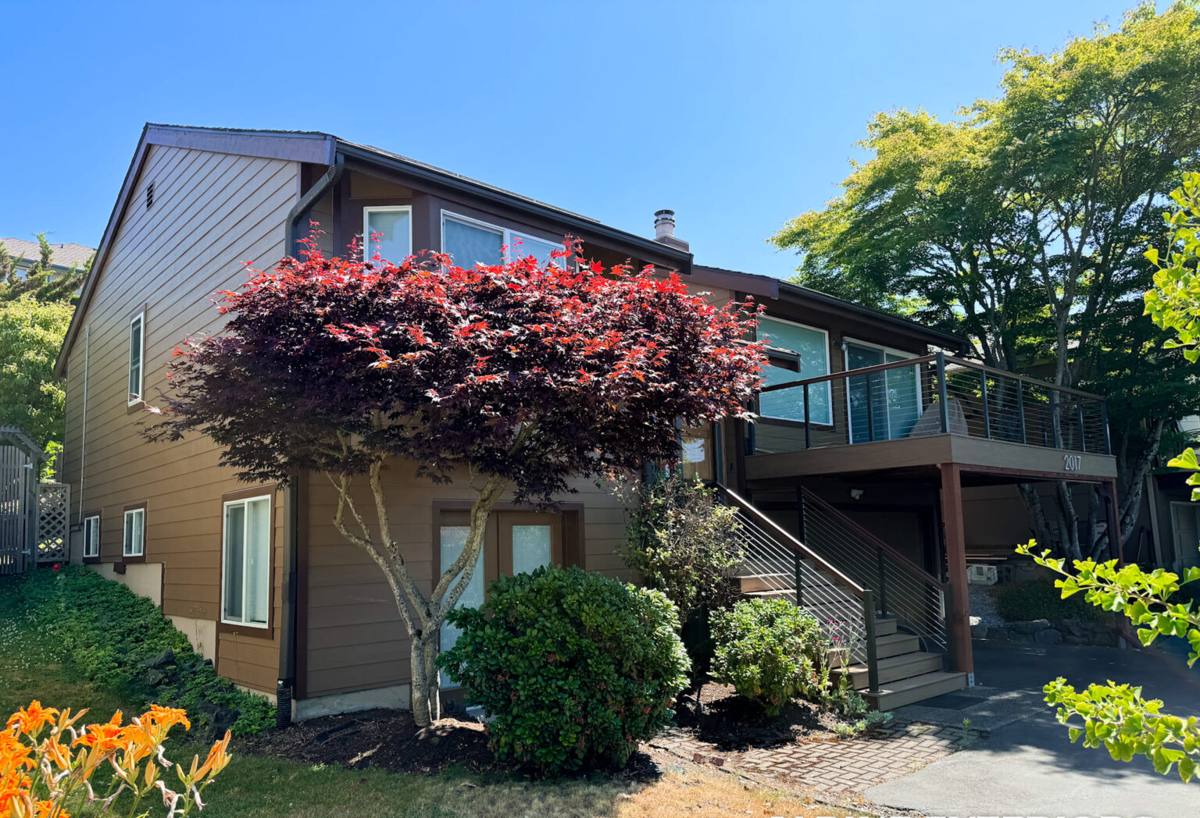
What This Climate Actually Does to a Shingle Roof
Salt Air
Homes closer to open water or exposed to onshore wind get a steady, low-level dose of salt in the air. It doesn't damage the shingles themselves much, but it's hard on exposed fasteners, drip edge, flashing, and any unpainted metal. Over years, that corrosion can loosen fastener holds and create small gaps where water gets a foothold.
Driving Rain
Wind-driven rain behaves differently than a straight downpour. It can push water up and under shingle tabs, into open valleys, and around vent boots and chimney flashing — spots that would stay dry in calmer weather. A roof here needs underlayment and flashing details that assume water will try to travel sideways and upward, not just fall straight down and run off.
Moss and Constant Moisture
Moss needs shade and moisture to establish, and South Hill has plenty of both for much of the year. Once moss takes hold on a shingle roof, it holds water against the granule surface, lifts shingle edges as it grows, and slowly breaks down the mat underneath. Left unchecked for a few seasons, moss can shave years off a roof's usable life.
What a Correct Asphalt Shingle Job Involves Here
A shingle roof is a system, not a single product. Every layer has to do its job for the roof to hold up against this kind of weather.
- Underlayment: A synthetic or self-adhered underlayment rated for high-moisture climates, with extra ice-and-water membrane at eaves, valleys, and roof-to-wall transitions — the places wind-driven rain targets first.
- Starter strips and edge metal: Properly sealed starter course and drip edge so wind can't get under the first row of shingles, which is a common failure point in gusty, wet weather.
- Flashing: New step flashing, counter-flashing, and valley metal rather than reusing old flashing — corroded or undersized flashing is one of the most common causes of hidden leaks we find on South Hill roofs.
- Shingle selection: Algae-resistant (AR) shingles with copper or zinc granules, which slow moss and algae growth far better than standard shingles in a climate this wet and shaded.
- Nailing pattern: Correct nail placement and count for the wind exposure of the specific site — under-nailing is invisible until the first real windstorm.
- Ventilation: Balanced intake and exhaust airflow through the attic, so moisture from inside the house doesn't condense against the underside of the roof deck.
Skip any one of these and the roof may still look fine for a year or two — the problems this climate causes tend to show up slowly, as slow leaks, early granule loss, or moss colonies, not as dramatic failures.
Signs a South Hill Roof Needs Attention
Because damage here tends to build quietly, it helps to know what to look for before a small issue becomes a ceiling stain.
- Moss or dark streaking building up on north-facing or shaded slopes
- Granules collecting in gutters or at downspout outlets
- Shingle edges that look lifted, curled, or cupped
- Soft or spongy spots when walking the roof (a sign of deck moisture underneath)
- Rust staining around vent boots, flashing, or exposed fasteners
- Daylight visible through the attic at roof boards or around vent penetrations
- Higher-than-usual attic humidity or musty smell after wet weeks
- Shingles missing granules down to the black substrate in patches
Any one of these on its own isn't necessarily an emergency, but a few together usually mean the roof is due for a closer look.
Choosing the Right Shingle for South Hill's Conditions
Not every asphalt shingle product is built the same way, and in a climate this demanding, the difference matters more than it would in a milder region.
| Shingle Type | Typical Lifespan | Moss/Algae Resistance | Best Fit For |
|---|---|---|---|
| Standard 3-tab | 15–20 years | Low unless AR-rated | Budget projects, secondary structures |
| Architectural (laminate) | 25–30 years | Good with AR granules | Most South Hill homes — best balance of cost and durability |
| Premium/designer architectural | 30–50 years | Very good with AR granules | Homes wanting a heavier, dimensional look with longer service life |
| Impact-rated architectural | 25–30+ years | Good with AR granules | Homes wanting extra durability against wind-blown debris |
For most South Hill homes, we recommend algae-resistant architectural shingles as the practical baseline — they hold up to wind-driven rain better than 3-tab shingles, resist moss growth far longer, and carry warranties that reflect real-world performance in wet coastal climates.
How Our Process Works
- On-site inspection. We walk the roof and attic, checking deck condition, ventilation, flashing, and any existing moss or moisture damage — not just a drive-by estimate.
- Honest scope of work. We tell you plainly whether you need a full replacement, a repair, or just moss treatment and maintenance — we don't upsell a tear-off when a repair will genuinely hold.
- Written estimate. Materials, labor, disposal, and timeline spelled out, with the shingle line and warranty terms clearly stated.
- Tear-off and deck check. Old roofing removed down to the deck, with any soft or damaged sheathing replaced before anything new goes down — this is the step that gets skipped by crews trying to save time.
- Underlayment and flashing installation. Ice-and-water membrane at vulnerable areas, new flashing throughout, correctly lapped and sealed for wind-driven rain.
- Shingle installation. Manufacturer-spec nailing, proper exposure, and attention to valleys, ridges, and penetrations.
- Ventilation check. Intake and exhaust balanced so the attic can actually dry out between wet spells.
- Final walkthrough. We go over the finished roof and the maintenance schedule with you before we consider the job done.
Ventilation and Moss Prevention Matter as Much as the Shingles
Why Ventilation Comes First
A shingle roof installed over a poorly ventilated attic will trap moisture against the underside of the deck, no matter how good the shingles are. In a climate where the air outside is often nearly as damp as the air trying to escape the attic, balanced intake and exhaust ventilation is what actually lets the roof dry out between rain events. We check this on every job, not just new installs.
Reducing Moss Before It Starts
Algae-resistant shingles slow moss growth but don't eliminate it, especially on heavily shaded slopes. Keeping overhanging branches trimmed back, keeping gutters clear so water doesn't sit at the eaves, and scheduling periodic soft washing or moss treatment all extend the life of the roof far more cheaply than an early replacement.
A Realistic Maintenance Schedule for This Climate
| Task | Recommended Frequency | Why It Matters Here |
|---|---|---|
| Gutter cleaning | 2x per year (fall and spring) | Prevents water backing up under shingle edges during driving rain |
| Moss treatment/soft wash | Every 1–2 years, more on shaded slopes | Long moss season means buildup happens faster than in drier regions |
| Flashing and fastener check | Annually | Salt air accelerates corrosion on exposed metal |
| Attic ventilation check | Every 2–3 years | Confirms airflow hasn't been blocked by insulation or debris |
| Full roof inspection | Annually, and after major windstorms | Catches lifted shingles or flashing damage before leaks develop |
Why It Matters That We Already Work in South Hill
A roofing crew that mostly works inland or in drier parts of the state will size up a South Hill roof the same way they'd size up any other roof — and that's exactly how avoidable problems get built into a new roof. We know which slopes in this area tend to hold moss longest, which roof details take the worst of the wind-driven rain, and which shortcuts show up as leaks two or three winters later. That local pattern recognition is part of what you're paying for when you hire a crew that already knows this climate, not just asphalt shingles in general.
We also stand behind the work with a workmanship warranty, in addition to the manufacturer's material warranty on the shingles themselves — so you know who to call if anything about the installation doesn't hold up.
Get a Straight Answer About Your Roof
If your South Hill home's roof is showing moss, granule loss, or you're just not sure how much life it has left, we're happy to take a look. We'll give you a clear, honest assessment and a written estimate — no pressure, no upsell. Use the form below to request your free estimate.