 Whatcom County
 Why South Hill Decks Wear Out Faster Than the Brochures Admit
A deck in South Hill doesn't fail the way a deck fails in a dry climate. Out here, the problem usually isn't sun-bleaching or cracking from heat — it's moisture that never fully leaves. Salt-laden air off the water, long stretches of driving rain, and a moss season that can run for months all work on wood and fasteners at the same time, every year, whether the deck gets used or not. Add in shaded yards and mature tree cover common around South Hill, and you get decking that stays damp for days after a storm instead of drying out in an afternoon.
That combination is why so many decks in this part of Whatcom County start showing real trouble well before their structure is actually "old." Surface rot, soft spots near ledger boards, and slick moss growth on walking surfaces are common complaints we hear, and they're almost always tied to how the deck was built and flashed in the first place — not just its age.
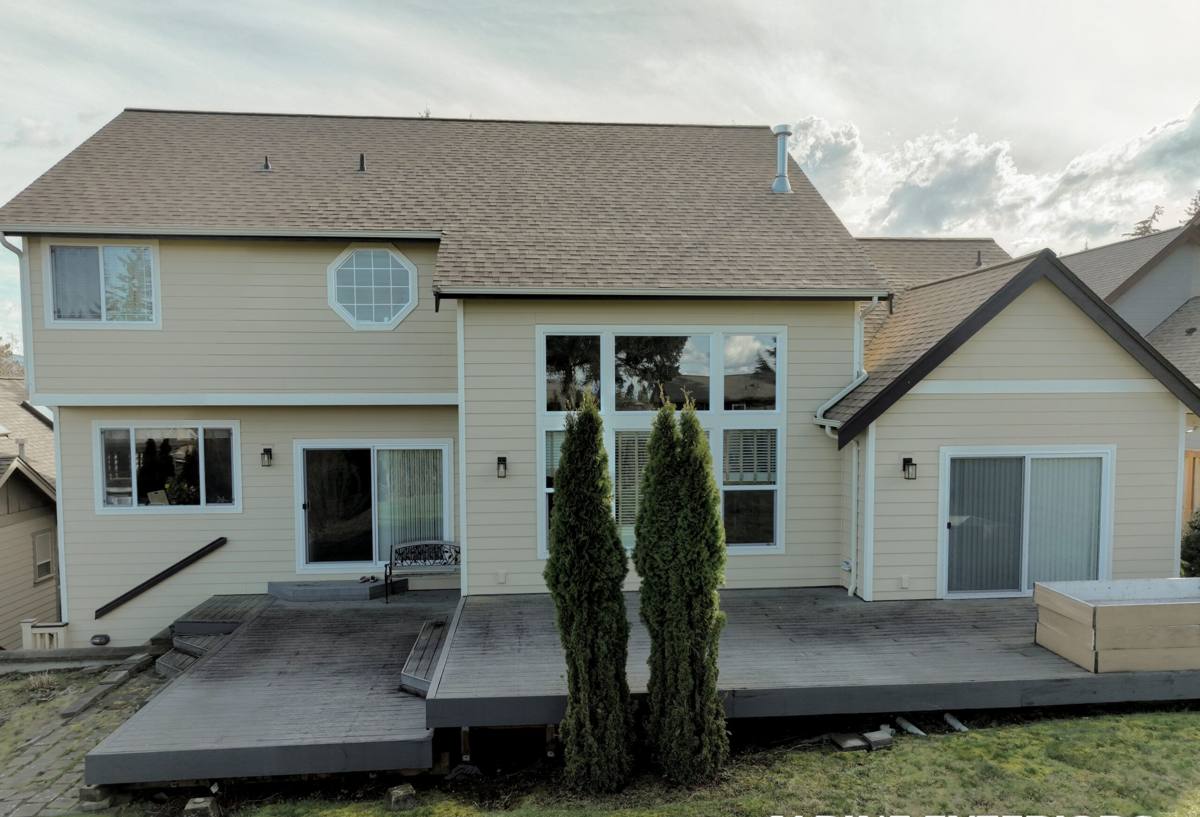
How to Tell a Deck Needs Replacement, Not Another Repair
Not every tired-looking deck needs to come out. Sometimes a board swap, a re-fastening pass, or a new coat of finish buys several more years. But there's a point where patching stops making sense — you're spending money to delay a job you'll still have to do properly later. Signs that point toward full replacement rather than repair include:
- Soft, spongy, or discolored decking near the house, especially at the ledger connection
- Visible rot or splitting in joists or beams when you look underneath the deck
- Railing posts that wiggle or feel loose at the base
- Persistent moss or algae growth that returns within weeks of cleaning
- Fasteners that are rusted, bleeding stains onto the wood, or backing out
- A deck that was never properly flashed where it meets the house siding
If more than one or two of these apply, especially anything involving the framing or the ledger, replacement is almost always the more honest recommendation. Repairing decking boards on top of a compromised structure just hides the real problem.
What a Proper Deck Replacement Actually Involves
A deck replacement is a structural project first and a finish project second. The decking boards are what everyone sees, but the parts underneath are what determine whether the deck is still solid in ten or fifteen years.
Ledger Board and Structural Connection
Where the deck attaches to the house is the single most important detail on the entire project, and it's the spot most likely to have been done wrong originally. The ledger needs proper flashing that directs water away from the house framing, not just caulk or a wrap of house wrap tape. In a climate with as much driving rain as we get here, a poorly flashed ledger is often the exact spot where hidden rot starts — sometimes in the deck framing, sometimes in the wall framing behind it.
Footings and Posts
Footings need to be sized and set to current code depth and bearing requirements, not just matched to whatever was there before. Older decks in this area were sometimes built on undersized or shallow footings that have shifted slightly over the years. Replacement is the right time to correct that, along with using post bases that keep the wood post off the concrete and out of standing water.
Joists and Framing Layout
Joist spacing, hangers, and blocking all affect how the deck feels underfoot and how long it lasts. We use corrosion-resistant fasteners and hangers rated for the treated lumber and coastal-adjacent conditions found throughout Whatcom County — mismatched metals are a quiet cause of premature framing failure that isn't visible until the damage is already done.
Decking Material Options for a Wet, Salt-Air Climate
There's no single "best" decking material for every home — it depends on budget, how much upkeep you want to do, and how exposed the deck is to weather. Here's how the common options actually compare for a place like South Hill:
| Material | Upfront Cost | Maintenance | Moisture / Salt Air Behavior | Typical Lifespan |
|---|---|---|---|---|
| Pressure-treated wood | Lowest | Annual cleaning, periodic staining/sealing | Prone to cupping and checking if not resealed regularly | 10–15 years before major issues |
| Cedar or other natural wood | Moderate | Regular sealing to hold color and resist moisture | Naturally rot-resistant but still needs upkeep in constant damp | 15–20 years with maintenance |
| Capped composite | Higher | Occasional washing, no staining/sealing | Strong resistance to moisture and salt exposure; won't rot | 25+ years |
| PVC / cellular decking | Highest | Very low; soap and water | Fully synthetic, handles constant wet/dry cycling well | 25–30+ years |
We're upfront with homeowners about the trade-offs. Wood costs less to install but asks for real annual maintenance to hold up in a climate this wet — skip a year of sealing and moisture gets ahead of you fast. Capped composite and PVC cost more up front but largely remove the moisture-maintenance problem, which matters a lot with the kind of extended damp weather and moss season we get here. There's no wrong answer, just a different maintenance commitment attached to each one.
Moisture Management: Flashing, Drainage, and Airflow
The decking material gets the attention, but moisture management underneath is what actually determines the deck's lifespan. A correct deck replacement includes flashing tape over joists to keep water from soaking into end grain and fastener holes, ledger flashing that sheds water forward off the house, and gapping between boards that's sized to let the deck dry rather than trap water and debris.
Airflow underneath the deck matters too. Decks built low to the ground or boxed in tight with skirting can hold moisture and encourage the moss and algae growth that's so common in shaded, damp yards around South Hill. Where the site allows it, we build in enough clearance and ventilation to let the structure actually dry between storms instead of staying wet for days.
Our Deck Replacement Process
Estimate and Design
We start with an on-site look at the existing deck, the framing underneath, and how the deck ties into the house. We'll tell you honestly whether repair is a realistic option or whether replacement is the better long-term move, and walk through material choices based on your budget and how much maintenance you want to take on.
Demolition and Framing
Full removal of the old decking, railing, and any compromised framing, followed by new or corrected footings, posts, ledger flashing, and joists built to current code. This is the stage that doesn't show in the finished photos but is the part that actually protects the investment.
Decking, Railing, and Finish Work
Once the structure is solid, we install the decking material, railings, and any stairs, then do a final walk-through so you know what maintenance, if any, your new deck needs going forward.
Permits and Local Considerations in South Hill
Deck replacements that involve structural changes — new footings, altered framing, or a larger footprint than what existed before — typically require a permit through the local building department. We handle that process as part of the job rather than leaving it on the homeowner. Site conditions in and around South Hill vary block to block, from sloped yards to established trees close to the build area, so we assess drainage and site access as part of the estimate rather than assuming a one-size-fits-all layout.
Why Hire a Crew That Already Works in South Hill
Building a deck that holds up in this climate isn't guesswork, but it does take experience specific to conditions here. A crew that mostly works inland or in drier regions may not think twice about ledger flashing detail or fastener corrosion resistance — problems that show up here within a few years if they're skipped. Working regularly in South Hill and the surrounding Whatcom County area means we've already seen which details matter most: the flashing choices that keep salt air and rain out of the framing, the footing depths that hold up on local soil, and the maintenance habits that actually make sense for this weather rather than a generic care sheet written for a different climate.
Keeping Your New Deck in Good Shape
Whatever material you choose, a little regular attention goes a long way in this climate. A simple seasonal routine helps:
- Sweep off leaves and debris regularly, especially in fall and during moss season
- Rinse or lightly scrub decking a couple times a year to slow moss and algae buildup
- Check railing posts and stair connections annually for looseness
- Reseal or restain wood decking on the schedule recommended for the product used
- Keep gutters and downspouts near the deck clear so runoff doesn't drain directly onto it
- Look underneath once a year for soft spots, rust staining, or signs of standing water
If you're weighing a repair against a full replacement, or just want an honest read on what shape your current deck is really in, we're happy to take a look. Reach out for a free, no-pressure estimate — the form below gets you started.