 Whatcom County
 South Hill's Siding Problem Isn't Cosmetic — It's Weather
South Hill sits up on the bluff with some of the best views in Bellingham, and that elevation and exposure come with a trade-off: homes here take a steadier beating from the weather than houses tucked into more sheltered parts of Whatcom County. Salt-laden air off the bay, wind-driven rain that hits siding sideways instead of straight down, and a moss season that can stretch from October into May all work on exterior materials in ways that are easy to underestimate until you're the one paying to fix water damage behind the wall.
Siding installation on South Hill isn't just about picking a color and nailing up panels. It's about choosing a material and a installation method that can actually stand up to salt exposure, sustained moisture, and the organic growth that thrives in this climate — year after year, without babysitting.
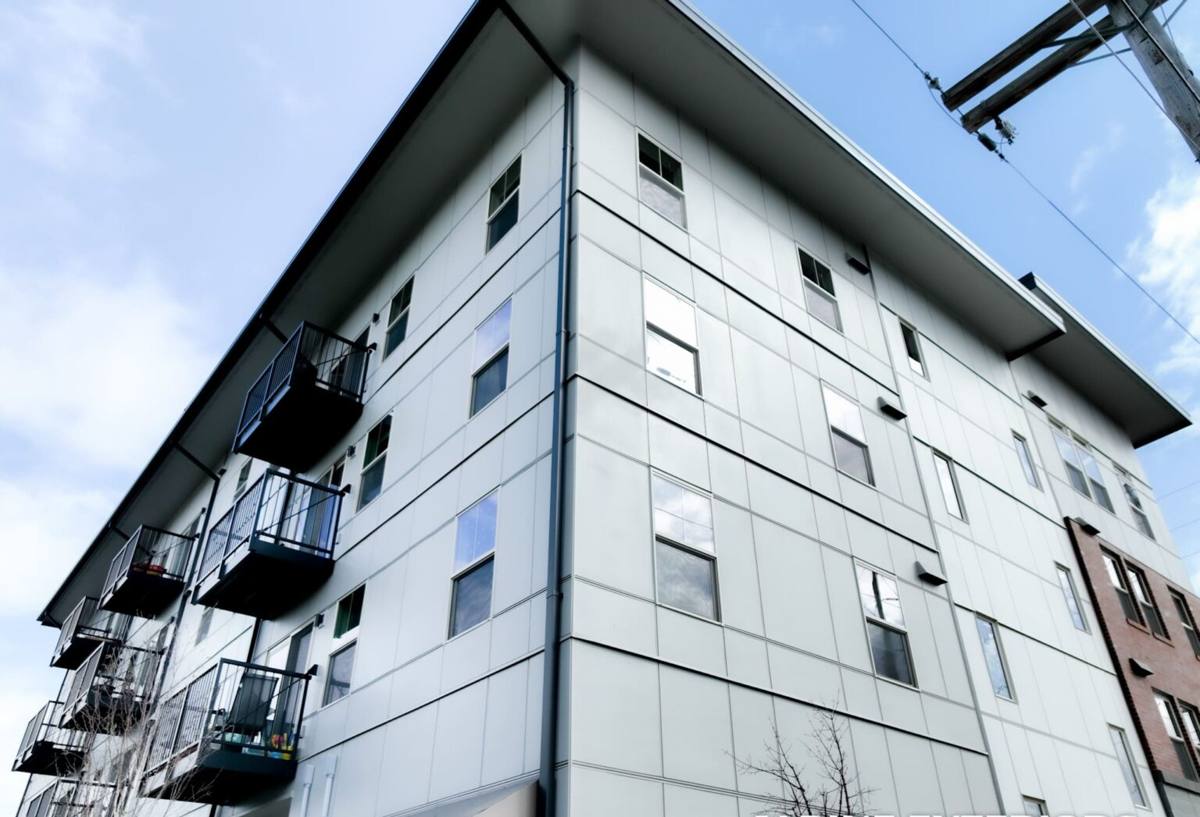
What Whatcom County Weather Actually Does to Siding
Salt Air and Corrosion
Homes closer to Bellingham Bay deal with airborne salt that accelerates corrosion on fasteners, trim, and any siding material with metal components or a finish that isn't built to resist it. Over years, that corrosion shows up as streaking, fastener failure, and premature finish breakdown — especially on the weather-facing sides of the house.
Driving Rain
Whatcom County doesn't just get a lot of rain — it gets a lot of wind-driven rain, which behaves very differently than a straight downpour. Wind-driven moisture gets pushed up under laps, into seams, and behind trim in ways vertical rain never would. Siding systems and installation details that work fine in drier climates can fail here simply because they weren't designed with lateral water intrusion in mind.
Moss and Sustained Dampness
Shade, humidity, and mild temperatures make Whatcom County ideal moss habitat, and siding is one of its favorite surfaces — particularly on north-facing walls and anywhere tree cover blocks sun and airflow. Moss holds moisture against the siding surface far longer than the material would otherwise be exposed to it, which is exactly the condition that causes rot in wood-based products and finish failure in lower-grade composites.
What a Correct Siding Installation Actually Involves
A lot of siding problems we get called out to inspect aren't material problems — they're installation problems. The siding itself may be fine; the way it was hung is what let water in. On South Hill homes specifically, we pay close attention to:
- Weather-resistive barrier continuity — a properly lapped and sealed barrier behind the siding is the actual water management system; the siding is the first line of defense, not the only one.
- Flashing at every penetration — windows, doors, vents, and hose bibs are where wind-driven rain finds its way in if flashing is missing, reversed, or not integrated with the barrier correctly.
- Proper fastener placement and type — correct fastener spacing, embedment, and corrosion-resistant fasteners matter more here than in drier, less coastal climates.
- Clearance from grade, decks, and roof lines — siding installed too close to soil, hardscape, or roofing traps moisture against the bottom edge and accelerates damage exactly where it's hardest to spot.
- Caulking discipline — sealing joints that should be sealed, and leaving weep paths open where the system is designed to drain rather than trap water.
Skip any one of these and the house looks fine for a year or two. Then the callbacks start.
Why We Install Only James Hardie Siding
We install James Hardie fiber cement exclusively — not vinyl, not LP SmartSide, not Cemplank, Allura, primed spruce, or cedar. That's a deliberate standard, not a limitation we apologize for, and on South Hill it's an even easier call to defend.
Non-Combustible and Dimensionally Stable
Fiber cement doesn't expand and contract with moisture and temperature the way wood-based products do, which matters directly for the driving-rain problem described above — fewer gaps opening up at seams over time means fewer entry points for wind-driven water.
Climate-Engineered Product Lines
Hardie's HZ5 product line is engineered specifically for wetter, freeze-prone climates like Western Washington, with moisture-resistance formulated for exactly the sustained dampness and moss-friendly conditions South Hill sees for much of the year.
ColorPlus Factory Finish
A factory-applied, baked-on finish holds up to salt air and UV exposure far better than field-applied paint, and it means the color doesn't rely on a perfect caulk-and-paint job at installation to look right five years later.
Warranty That Actually Transfers
Hardie backs its siding with a strong, transferable warranty — a real asset if you ever sell the home, and a signal of how confident the manufacturer is in the product's long-term performance when installed correctly.
We won't install the alternatives not because they're worthless products, but because we've made a professional decision about what we're willing to put our name behind on homes in this specific climate. That's the whole point of standardizing on one system instead of offering five.
How Our South Hill Installation Process Works
- On-site assessment — we look at exposure (which sides take the wind-driven rain, which stay shaded and moss-prone), existing siding condition, and any moisture damage already present behind the current cladding.
- Tear-off and substrate check — old siding comes off and we inspect sheathing for rot or damage before anything new goes up. This is the step that gets skipped on rushed jobs and it's the one that matters most.
- Weather barrier and flashing installation — done to manufacturer spec, with particular attention to laps and seals given how much wind-driven rain this area gets.
- Hardie installation to spec — correct fastener schedule, clearances, and joint treatment, following James Hardie's published installation requirements rather than shortcuts that happen to look fine at handoff.
- Final walkthrough — we go over caulking, trim details, and touch-up before calling the job done, not before.
Comparing Siding Approaches for South Hill's Climate
| Factor | James Hardie Fiber Cement | Vinyl | Wood / Primed Spruce |
|---|---|---|---|
| Moisture behavior | Engineered HZ5 line for wet climates; dimensionally stable | Doesn't absorb water but can warp/gap, letting water behind panels | Absorbs moisture; prone to rot without diligent upkeep |
| Salt air resistance | Factory ColorPlus finish holds up well | Can chalk and fade faster near salt exposure | Finish breaks down faster; repainting cycle shortens |
| Moss/algae resistance | Hard, non-porous surface sheds growth more easily | Surface texture can trap grime and growth | Porous surface is a common moss and algae host |
| Fire resistance | Non-combustible | Combustible | Combustible |
| Maintenance | Occasional wash; no repainting needed with ColorPlus | Low but can crack/fade over years | Regular repainting/resealing required |
Signs a South Hill Home Needs New Siding Now
- Soft or spongy spots when you press on the siding near the bottom edge or under windows
- Persistent moss or dark streaking that comes back within weeks of cleaning
- Visible gaps or warping at seams, especially on wind-exposed walls
- Peeling or bubbling paint that keeps returning in the same spots
- Rust staining below fasteners or trim
- A musty smell or visible staining on interior walls that back up to exterior siding
Any one of these can be minor. Two or three together, especially on the sides of the house that take the worst of the wind and rain, usually mean water has been getting behind the siding for a while.
Why Local Experience on South Hill Matters
A crew that already works this neighborhood knows which sides of a South Hill home typically take the worst wind-driven rain, where moss tends to establish first, and how the salt air off the bay shows up in fastener and finish wear over time. That's not something you can fully account for from a spec sheet — it comes from having done the tear-offs and seen what was actually happening behind the old siding on homes just like the one you're standing in front of.
It also means fewer surprises during permitting and inspection, since local crews are already familiar with how Whatcom County jurisdictions handle exterior work, setback requirements, and inspection timing.
What to Expect Cost-Wise
Siding installation pricing depends on square footage, the condition of what's being torn off, trim complexity, and how much sheathing repair is needed once the old siding comes off — that last variable is often the biggest unknown until we're actually into the tear-off. Rather than quote a number that doesn't mean much without seeing your home, we'll walk the exterior with you, point out anything that affects scope, and give you a written estimate based on what's actually there.
If your South Hill home's siding is showing its age — or you're just tired of scrubbing moss off the north wall every spring — we're happy to take a look and give you a straightforward, no-pressure estimate. Use the form below to get started.