 Whatcom County
 Storm Damage Roof Repair for Everson Homes
Everson sits in the lowland stretch of Whatcom County near the Nooksack River, and that location means local roofs take a particular kind of beating. Wind funneling down the valley, long stretches of driving rain off the Pacific, and moss that never really stops growing between October and June all work on a roof at the same time. When a storm does real damage — torn shingles, lifted flashing, a limb through the decking, water finding its way into the attic — the fix needs to account for all of that, not just patch the visible hole.
We work storm damage calls throughout Whatcom County, and Everson is regular territory for us. That matters more than it sounds like it should: knowing how a specific area's roofs are built, what the local weather actually does to them over a winter, and what the county requires for permits and inspections saves time and prevents repeat problems.
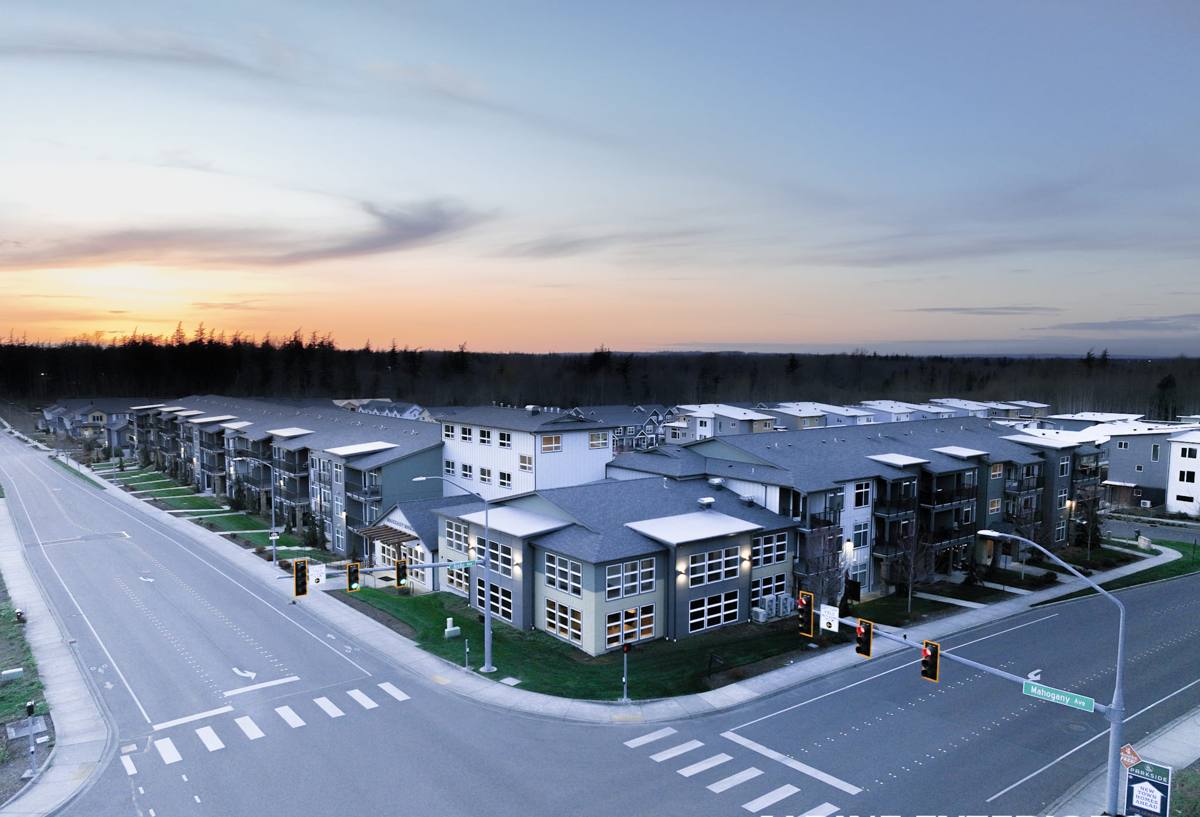
Why Storm Damage Here Isn't Like Storm Damage Everywhere
Wind and Rain Together
A lot of storm damage in this part of Whatcom County isn't from wind alone or rain alone — it's the combination. Wind lifts a shingle edge or works a nail loose, and then the next rain event drives water sideways under that lifted edge instead of over it. By the time a homeowner notices a stain on the ceiling, the water has usually been getting in for more than one storm cycle. That's why we always check the areas around a visible leak, not just the leak itself.
Salt Air and Metal Components
Whatcom County isn't right on the open coast, but salt-laden air still moves inland and accelerates corrosion on exposed metal — flashing, fasteners, gutter hardware, vent caps. After a storm, we look closely at these components even when the shingles themselves look fine, because a corroded flashing seam is a slower, quieter version of the same leak problem.
Moss and Trapped Moisture
The long moss season here does damage on its own timeline, separate from any single storm — but it makes storm damage worse. Moss holds moisture against the roof surface, which softens shingles and speeds up granule loss, and it clogs the small channels water needs to drain off the roof. A storm that would shed water cleanly off a moss-free roof can instead pond or back up on a mossy one, pushing water toward seams and edges that were never designed to hold standing water.
What a Correct Storm Damage Repair Actually Involves
A lot of storm repairs go wrong not because the crew did bad work, but because they didn't do enough work — they fixed the obvious damage and left the roof exposed to the same failure next time. A correct repair covers:
- A full-roof inspection, not just the area around the reported leak — wind and impact damage often shows up in more than one spot
- Checking the decking underneath damaged shingles for soft spots, rot, or water staining before any new material goes down
- Inspecting and, where needed, replacing flashing around chimneys, vents, skylights, and roof-to-wall transitions
- Matching shingle type, color, and exposure as closely as possible so the repair doesn't stand out or create an uneven wear pattern
- Clearing moss and debris from the surrounding area so the repaired section drains the way it's supposed to
- Checking gutters and downspouts near the repair — a clogged or damaged gutter can undo a good roof repair by backing water up under the eaves
- A final walk-through with photos and a plain explanation of what was found and what was fixed
Our Process, Start to Finish
1. Assessment
We start with a full inspection, both on the roof and from the attic or crawlspace side where we can access it. We're looking for the extent of the damage, not just the entry point of the leak. In storm situations, we also check whether the damage is likely to qualify for an insurance claim and can document accordingly.
2. Honest Scope
We tell you what actually needs to happen — sometimes that's a targeted repair, sometimes it's a larger section, and occasionally the storm damage reveals that the roof was already near the end of its useful life and a repair would just be a short-term patch. We'd rather tell you that up front than sell a repair that won't hold.
3. Repair
We use materials that match your existing roof as closely as possible and follow manufacturer installation specs, including proper flashing details and fastening patterns — the parts of a roof job that don't show but determine whether it holds up through the next storm season.
4. Cleanup and Walkthrough
We clear debris, check gutters and drainage near the work area, and walk the results with you before we consider the job done.
Temporary Fixes vs. Permanent Repair
After a bad storm, especially if a tarp is needed to stop active leaking, there's a real difference between a temporary stopgap and a permanent repair. Both have a place, but homeowners should know which one they're getting.
| Factor | Temporary Tarp / Emergency Cover | Permanent Repair |
|---|---|---|
| Purpose | Stop active water intrusion immediately | Restore the roof's actual weatherproofing |
| Typical timeline | Same day or next day | Scheduled once materials and scope are confirmed |
| Insurance role | Often required to prevent further damage claims | The claim's actual repair line item |
| Longevity | Days to a few weeks, weather dependent | Matches the lifespan of surrounding roofing |
| What it doesn't do | Address decking damage or flashing underneath | N/A — this is the complete fix |
If your roof is actively leaking during a storm, the priority is stopping water intrusion first. We can get emergency covering in place and then schedule the full repair once conditions allow safe roof access and the right materials are on hand.
What Drives Cost on a Storm Repair
Every storm repair is different, so we don't quote sight-unseen prices, but the main cost factors are consistent:
| Factor | Why It Matters |
|---|---|
| Size of the damaged area | A single lifted section costs far less than a wind-stripped slope |
| Decking condition | Rotted or soaked decking underneath adds material and labor to replace before new roofing goes on |
| Flashing scope | Chimney, skylight, and valley flashing repairs take more time than field shingle replacement |
| Roof access and pitch | Steeper roofs and limited access require more safety setup time |
| Material match | Discontinued or unusual shingle profiles can be harder to source and match |
| Insurance involvement | Documentation and adjuster coordination can affect timeline, not usually total cost to you beyond your deductible |
Working With Your Insurance
Most storm damage repairs in this area go through homeowners insurance. We can document damage with photos and a written scope that adjusters can work from, and we're happy to walk an adjuster through what we found on the roof directly. We won't inflate a scope to pad a claim, and we won't downplay damage to make a quick sale — the goal is an accurate picture so the repair gets funded correctly and actually solves the problem.
Preventing the Next Storm From Doing the Same Damage
Once a storm repair is done, a few habits go a long way toward keeping Everson roofs in good shape through the next winter:
- Keep gutters and downspouts clear before the fall rains start — clogged gutters back water up under roof edges during heavy storms
- Address moss growth before it thickens; a light, roof-safe treatment early in the season is far cheaper than a moss removal job later
- Trim back tree limbs that overhang the roofline, since falling or wind-whipped branches are one of the most common causes of storm damage here
- Have flashing and roof penetrations checked periodically — these fail quietly, well before shingles show obvious wear
- After any significant windstorm, do a visual check from the ground for missing or lifted shingles rather than waiting for a leak to show up inside
Why a Local Crew Matters for Storm Work
Storm damage repair rewards familiarity with the area. A crew that already works Whatcom County roofs knows how local homes are typically built, what the county's permitting and inspection process looks like for repair work, and how the specific combination of wind direction, rain volume, and moss growth in this part of the state tends to show up as roof damage. That local knowledge means fewer surprises once we're up on the roof and a repair scope that's realistic the first time, not revised twice after work has already started.
If your roof took damage in a recent storm — or you're not sure whether what you're seeing is storm damage or ongoing wear — we're glad to take a look. Reach out for a free, no-pressure estimate using the form below, and we'll give you a straight assessment of what's going on and what it would take to fix it right.