 Whatcom County
 Sunnyland's Siding Problem Isn't Cosmetic — It's Moisture
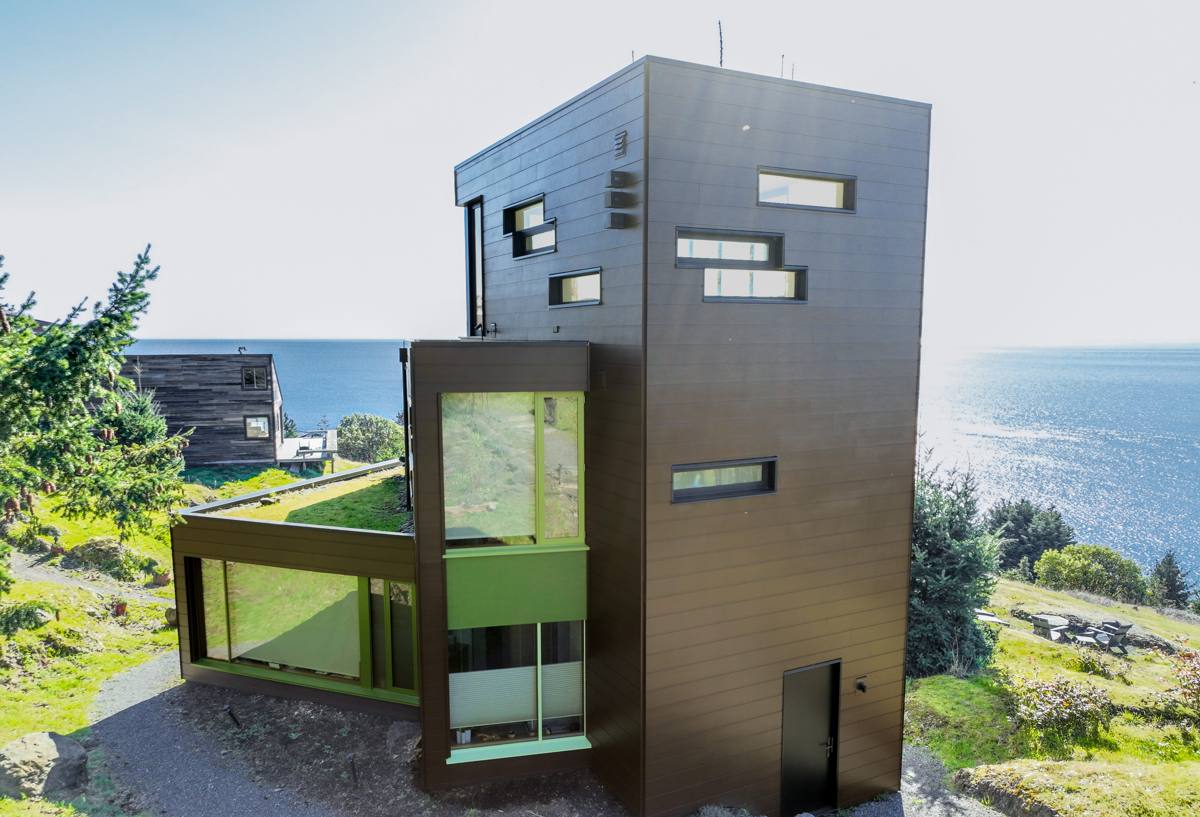
Sunnyland sits close enough to Bellingham Bay and the Whatcom County coastline that homes here deal with a specific combination most inland siding never has to survive: salt-laden air, wind-driven rain that hits walls sideways rather than straight down, and a wet season that runs long enough to grow moss on anything that stays damp for more than a few days. None of that is exotic weather. It's just persistent, and persistence is what breaks siding down over time — not one storm, but ten years of small exposures nobody notices until the wall behind the siding is already compromised.
Salt air is corrosive to fasteners and trim hardware, and it accelerates the breakdown of paint films on wood and some composite products. Driving rain doesn't just wet the surface of a wall — it gets pushed under laps, around trim, and into any gap that a standard installation leaves open, which is why the quality of the install matters as much as the material itself. And moss doesn't just look bad; where it establishes on siding, it holds moisture against the surface for weeks at a time, which is exactly the condition that rots wood substrates and delaminates lower-grade composites.
Why James Hardie Fits This Specific Environment
We install James Hardie fiber cement siding exclusively, and Sunnyland is a good example of why. Hardie's HZ5 formulation is engineered for climates with the kind of moisture cycling Whatcom County gets — repeated wet-dry cycles rather than sustained dry heat. Fiber cement doesn't absorb water the way wood does, it won't rot, and it isn't a food source for the algae and moss spores that settle out of damp coastal air. That doesn't mean moss can't grow on the surface — anything can collect organic growth if it never dries — but it means the substrate underneath stays sound even where growth does form, which is the difference between a wash-down and a wall reconstruction.
The ColorPlus factory finish is the other piece that matters here. It's baked on in a controlled environment rather than field-applied, which gives it better adhesion and UV/salt resistance than a job-site paint job, and it comes with its own finish warranty separate from the substrate warranty. In a salt-air neighborhood, that finish durability is doing real work every year the siding is up.
Non-Combustible Is a Real Consideration Here Too
Fiber cement doesn't contribute fuel to a fire the way wood or vinyl siding can. That's a genuine safety and insurance consideration for any Whatcom County homeowner, independent of the coastal weather argument, and it's one more reason we don't install combustible alternatives when a client is trusting us to put something permanent on their home.
What a Correct Installation Actually Involves
Fiber cement siding fails prematurely almost never because of the material — it fails because of installation shortcuts. The product is only as good as the water management system behind it, and in a driving-rain environment like Sunnyland, that system has to be right the first time because you don't get a do-over without tearing the wall back open.
- Correct weather-resistive barrier installed and lapped shingle-style so water sheds outward, never inward
- Proper flashing at every window, door, and roofline intersection — this is where most water intrusion actually starts
- Minimum clearance maintained between the bottom of the siding and grade, decks, or roof lines so splash-back and standing water don't sit against the plank
- Fasteners set to Hardie's specified pattern and depth — overdriven nails crack the board's edge and create a water entry point that isn't visible from the ground
- Field-cut edges primed or sealed before installation, since raw cut edges are the most absorbent part of any fiber cement board
- Caulking used only where Hardie's install guide actually calls for it — over-caulking traps moisture behind the board instead of letting it escape
Every one of those steps is invisible once the job is finished and the siding looks good from the curb. That's exactly why they matter — a bad install and a good install can look identical for the first year or two, and the difference only shows up once the wall's been through several wet seasons.
Our Process on a Sunnyland Home
1. On-Site Assessment
We walk the exterior and check the condition of the existing siding, sheathing, and trim, paying particular attention to north- and west-facing walls, which tend to take the brunt of the driving rain and hold moss longest. Any soft sheathing or existing rot gets identified before a bid is finalized, not discovered mid-project.
2. Scope and Product Selection
We walk through the relevant Hardie product line, board profile, and ColorPlus color options for the home, and explain what each choice means for maintenance and appearance long-term — not just what looks good in a sample.
3. Tear-Off and Substrate Check
Old siding comes off, and the sheathing underneath gets inspected properly rather than covered over. Any water damage found at this stage gets addressed before new siding goes up — installing new siding over a compromised wall just hides the problem for a few more years.
4. Installation to Manufacturer Spec
Flashing, house wrap, fastening pattern, and clearances are all installed to Hardie's published specifications, which is also what keeps the manufacturer's warranty intact if it's ever needed.
5. Final Walkthrough
We go over the finished exterior with the homeowner, point out any maintenance basics specific to their site conditions, and make sure everything matches what was agreed to at the start.
Hardie Compared to the Alternatives in This Climate
| Material | Behavior in Salt Air / Driving Rain | Moss Season Impact |
|---|---|---|
| James Hardie fiber cement | Non-combustible, doesn't rot, factory finish resists salt and UV | Substrate unaffected by surface growth; washes down without damage |
| Vinyl siding | Can warp or become brittle with temperature swings; seams are a common water entry point | Growth holds moisture against seams and fasteners longer |
| Primed wood / cedar | Absorbs moisture, prone to rot at laps and end cuts without diligent upkeep | Moss holds constant moisture against an absorbent substrate — highest rot risk |
| LP SmartSide (engineered wood) | Better than raw wood but still wood-based; edges and cuts are moisture-sensitive | Similar exposure risk to wood at any point the factory coating is compromised |
This is why we standardized on one product rather than offering all of the above. We'd rather install fewer things correctly than install several things where the trade-offs get explained after the sale.
Maintenance Through a Whatcom County Wet Season
Fiber cement is low-maintenance, not no-maintenance. A few habits keep a Sunnyland installation looking and performing the way it should:
| Task | Why It Matters Here | Rough Frequency |
|---|---|---|
| Soft wash to remove moss/algae film | Prevents organic buildup from holding moisture on the surface | Every 1-2 years, more often on shaded north walls |
| Check and clear gutters before wet season | Overflowing gutters dump water directly onto siding and trim | Annually, early fall |
| Inspect caulking at trim and penetrations | Salt air and UV break down sealants faster than inland climates | Annually |
| Trim back vegetation and maintain grade clearance | Keeps splash-back and shade-driven moss growth to a minimum | As needed, seasonally |
Why a Crew That Already Works Sunnyland Matters
Siding installation isn't a one-size-fits-all trade even within a single county. A crew that regularly works Sunnyland and the surrounding Whatcom County coastline knows which walls on a typical local home take the worst of the driving rain, understands how quickly moss establishes given the shade and moisture pattern here, and doesn't have to relearn local flashing and clearance requirements on every job. That familiarity shows up in fewer callbacks and a longer service life for the siding, not in anything you'd notice on the surface right after installation.
It also means a faster, more accurate estimate. We're not guessing at regional wear patterns — we've seen what a decade of this specific coastal climate does to the various siding materials on homes near yours.
What to Ask Any Siding Contractor Before You Hire
- Are you a certified or preferred installer for the specific product you're proposing, and can you explain the installation spec, not just the sales pitch?
- Will you inspect the sheathing once the old siding is off, before quoting a final price?
- What's your fastening and flashing detail at windows, doors, and rooflines — can you walk me through it?
- What does the manufacturer's warranty actually require from the installation to stay valid?
- Do you have experience with homes in this specific part of Whatcom County, not just the region generally?
Answers that are vague on the installation details — but confident on price — are usually a sign the quality of the work behind the walls hasn't been thought through.
Get a Straight Answer for Your Home
If you're weighing a siding replacement in Sunnyland, we're glad to come take a look, tell you honestly what condition your current siding and sheathing are in, and walk you through what a proper James Hardie installation would involve for your specific home. There's no pressure and no obligation — just a straight assessment from a crew that works this part of Whatcom County regularly. Use the form below to request a free estimate.