 Whatcom County
 Why Siding Wears Differently in Sunnyland
Sunnyland is a settled, tree-shaded Bellingham neighborhood with a lot of homes built well before today's building codes and moisture-management standards existed. That's part of what gives the area its character, but it also means a lot of original or once-replaced siding is now reaching the point where patching stops making sense. Whatcom County's marine climate is not gentle on exterior materials. Salt-laden air moving in off the water, driving rain that comes in sideways during fall and winter storms, and a moss season that can run eight months or longer all work on siding in ways that homeowners in drier climates never have to think about.
None of that is unique to any one street in Sunnyland — it's a neighborhood-wide and really a county-wide condition. What matters is that siding replacement here has to be planned around those specific stressors, not treated as an interchangeable job that happens the same way it would in Spokane or Sacramento.
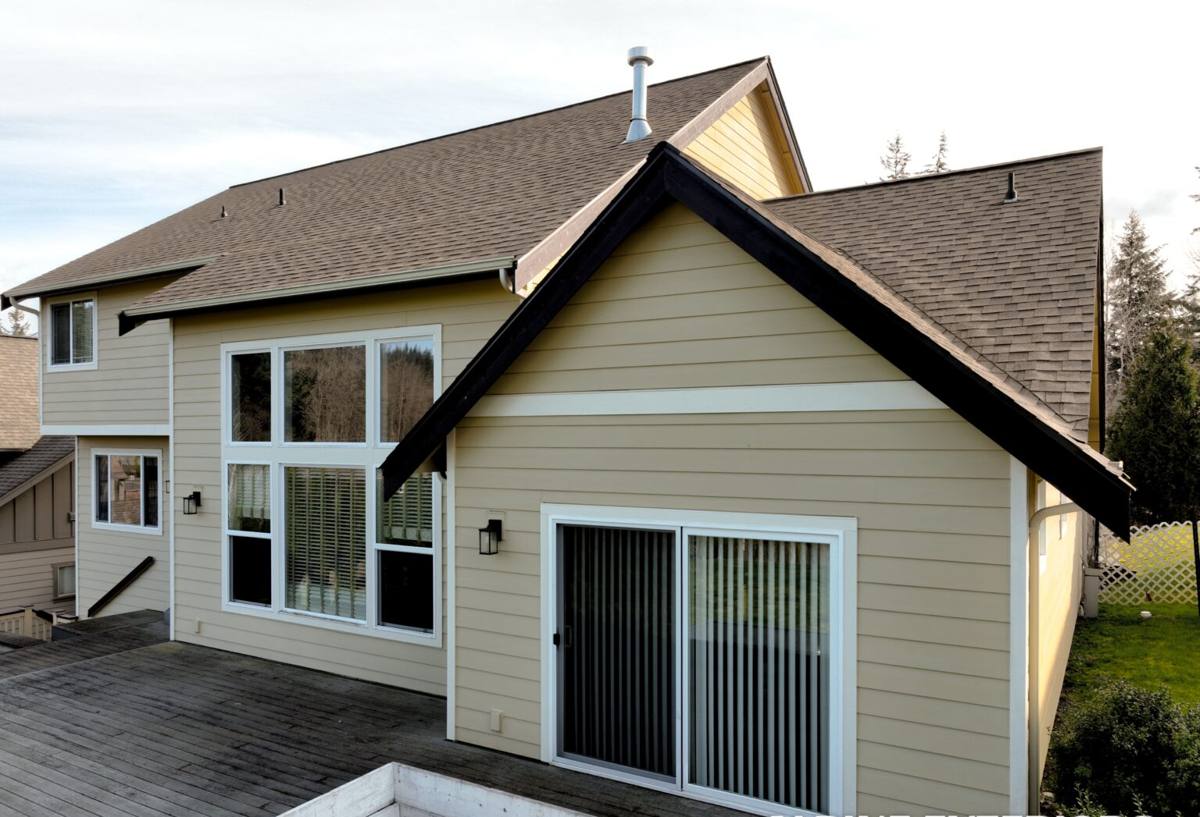
What Salt Air, Rain, and Moss Actually Do to Siding
Salt Air and Corrosion
Airborne salt doesn't just sit on the surface of a wall — it works into fasteners, trim joints, and any exposed metal flashing. Over years, that accelerates corrosion at nail heads and staples, which is often the first place water finds its way behind the siding. Materials and fasteners that aren't rated for coastal-adjacent exposure fail faster here than the manufacturer's general warranty language would suggest.
Driving Rain and Wind-Driven Moisture
Whatcom County storms frequently push rain horizontally, not straight down. That means water gets forced up under laps, into butt joints, and around window and door trim in ways that a simple "shingle effect" installation doesn't always stop. Siding systems and installation details that work fine in calmer climates can let water past the surface here, and once moisture gets behind the cladding, it's the sheathing and framing that pay the price — not just the siding itself.
Moss, Algae, and the Long Wet Season
Bellingham's wet season stretches long enough that shaded, north-facing, and tree-covered walls — common throughout Sunnyland's mature lots — rarely get a real chance to dry out between storms. That sustained dampness is exactly what moss and algae need to take hold. On some materials this is mostly cosmetic. On others, sustained moisture retention at the surface contributes to swelling, delamination, or rot over time, which is a real durability issue, not just an appearance one.
Signs Your Sunnyland Home Is Due for Siding Replacement
Not every siding problem means a full replacement, but several signs together usually mean patching or spot repair is no longer the honest answer.
- Boards or panels that are soft, spongy, or visibly swollen when pressed
- Paint that won't hold — repeated peeling, bubbling, or cracking within a couple years of repainting
- Moss or dark streaking that returns quickly after cleaning, especially on shaded walls
- Visible gaps, warping, or cupping at board edges and joints
- Rust streaks running down from nail heads or metal trim
- Rot or soft spots found near window sills, corners, or where siding meets the foundation
- Interior signs — musty smell, peeling interior paint, or damp drywall on exterior walls
- Siding that's simply original to a much older home and has never been fully replaced
What a Correct Siding Replacement Actually Involves
Tear-Off and What's Underneath
A proper job starts with full removal, not overlay, so the crew can actually see the sheathing. In a climate like this, hidden rot behind old siding is common enough that we treat inspection of the sheathing and framing as a required step, not an optional upsell. Any soft or compromised sheathing gets replaced before anything new goes up — covering it over just hides the problem for the next owner to find.
Weather-Resistive Barrier and Flashing
This is the part that determines whether driving rain actually stays out. A correctly lapped weather-resistive barrier, properly integrated flashing at windows, doors, and roof-to-wall intersections, and correct sealing at penetrations matter more to long-term performance than the siding brand on the surface. We install siding on top of a system, not just against bare sheathing.
Installation to Manufacturer Spec
Fastener type, placement, and spacing; minimum clearance from the ground, roofline, and decks; caulking only where the manufacturer specifies it and leaving the rest to drain — these details are what separate an installation that holds its warranty from one that voids it. Fiber cement in particular is unforgiving of shortcuts here: incorrect nailing or gaps left where manufacturer guidance says to caulk are among the most common causes of premature failure.
Ventilation and Drying Path
Given how long walls stay damp here, giving the wall assembly a way to dry — rather than trapping moisture between the siding and sheathing — is worth doing right the first time. On shaded or moss-prone elevations especially, that drying path is what keeps a new installation looking and performing well past year one.
Why We Install Only James Hardie Fiber Cement
We don't install vinyl, LP SmartSide, Cemplank, Allura, primed spruce, or cedar. That's a deliberate standard, not a limitation in what we're capable of installing. In a climate that combines salt air, sustained wet-season moisture, and heavy rain, the trade-offs of those other products show up faster and cost homeowners more over time than most people expect when they first compare price tags.
| Material | How It Handles This Climate |
|---|---|
| Vinyl | Doesn't rot, but expands/contracts with temperature swings, can crack in impacts, and doesn't stop moisture from tracking behind it at seams |
| Engineered wood (LP SmartSide) | Improved over old hardboard, but still wood-based — edge swelling and moisture sensitivity remain real risks in a sustained-wet climate if any seal fails |
| Cedar | Attractive, but needs ongoing refinishing and is a natural food source for the moss and mildew this climate produces in abundance |
| Primed spruce | Budget-friendly upfront, but primer is not a finish coat — it needs prompt, ongoing paint maintenance to avoid moisture entry |
| James Hardie fiber cement | Non-combustible, dimensionally stable in wet-dry cycling, factory ColorPlus finish resists the fading and peeling this climate causes on field-painted materials |
James Hardie's HZ product lines are engineered specifically for climate zones like ours, and the factory-applied ColorPlus finish means the color coat isn't relying on a painter's prep work and weather window the way field-applied paint does. Combined with a strong transferable warranty, it's the system we've found actually holds up to a Whatcom County wet season year after year — which is the entire reason we standardized on it.
Our Process for Sunnyland Homes
- On-site assessment — we look at existing siding condition, sheathing risk areas, and elevation-specific exposure (shaded sides, rain-facing walls) before quoting anything
- Scope and product selection — matching the right Hardie product line and profile to the home and its exposure
- Removal and sheathing check — full tear-off, with any rot or damage addressed before new material goes up
- Weather barrier and flashing installation — the moisture-management layer that does the real work
- Siding installation to manufacturer spec — correct fastening, clearances, and joint treatment
- Final walkthrough and cleanup — site cleared, work reviewed with the homeowner before we call it done
What Siding Replacement Typically Costs
Every home is different, but the main cost drivers on a Sunnyland siding replacement tend to be consistent. We'll always give a firm number after an on-site look — broad ranges below are for planning purposes only.
| Cost Factor | Why It Matters |
|---|---|
| Home size and wall complexity | More corners, gables, and trim detail mean more labor and material waste factored in |
| Sheathing/framing condition | Rot discovered during tear-off adds repair scope that can't always be predicted beforehand |
| Siding profile and trim choice | Lap width, shingle-style panels, and trim detailing all affect material cost |
| Number of stories and access | Second-story and hard-to-access walls take more time and equipment |
| Existing paint/material removal | Full tear-off of old cedar or hardboard adds disposal and labor time |
Why Local Experience Matters for This Job
A crew that already works Whatcom County knows what to expect from a Bellingham fall and winter — how long a wall stays wet after a storm, which elevations moss hits first, and what county permitting and inspection actually require before a job starts. That's not something a crew traveling in from outside the area picks up on the first try. It also means we're still around after the job is done if a question comes up down the road, which matters more here than in a climate where siding just doesn't get tested the way ours does.
If your Sunnyland home's siding is showing its age, we're happy to take a look and give you a straight assessment — no pressure, no upsell, just what we'd actually recommend for your home. Fill out the form below to schedule a free estimate.