 Whatcom County
 Windows in Columbia Take a Different Kind of Beating
Columbia sits close enough to the water and the weather patterns that move through Whatcom County that windows here don't age the same way they do further inland. Salt-laden air works on metal hardware and finishes. Driving rain, pushed sideways by wind off the water, tests every seal and flashing detail a window has. And the long stretch of grey, damp months each year gives moss and algae months to colonize any surface that holds moisture — including window sills, trim, and the gaps around a poorly sealed frame.
None of that means windows here need to be exotic or overbuilt. It means the installation has to be done correctly the first time, because a mediocre install that might get away with it in a drier climate will show its flaws fast in Columbia. Water finds the weak point. Given enough damp weeks in a row, it usually finds it.
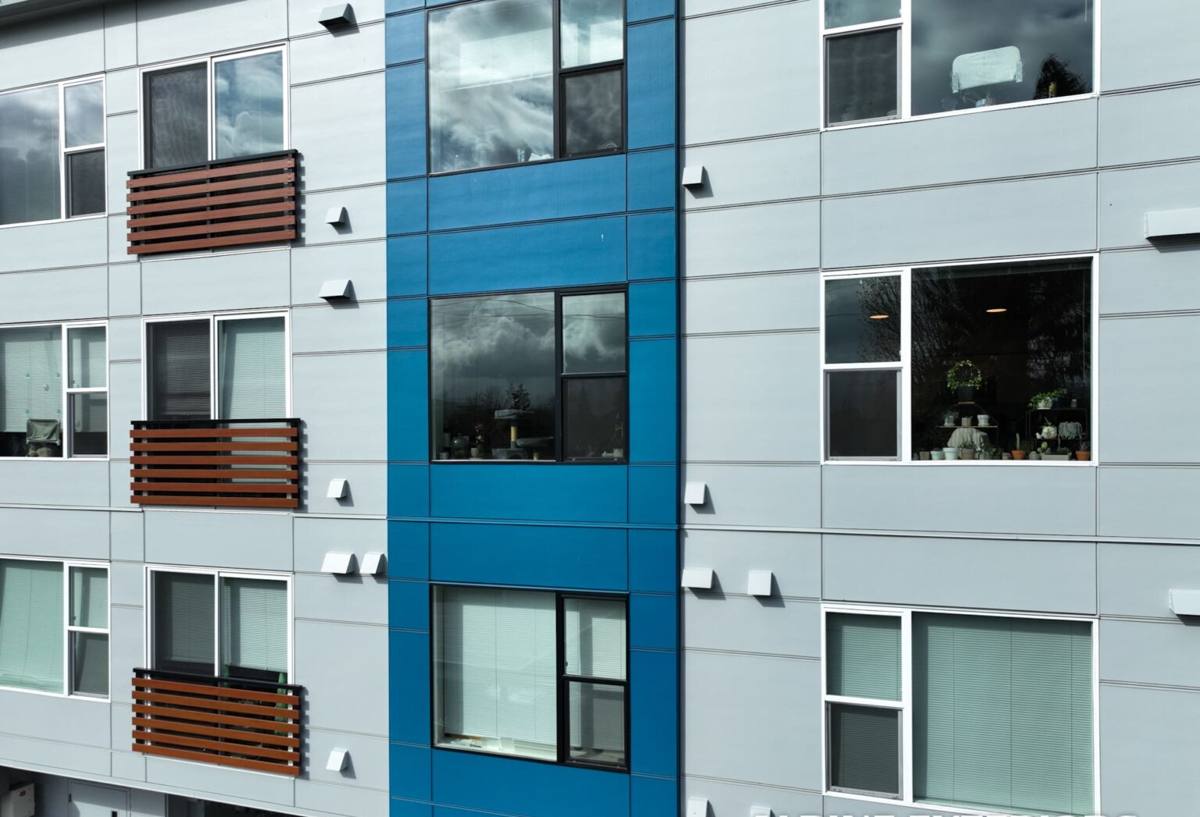
What "Correct" Window Installation Actually Involves
A window installation is judged on what you can't see once the trim goes back on. The window itself matters, but the flashing, the sealing, and the way the opening is prepped matter more for how the job holds up over the next fifteen or twenty years.
The details that actually keep water out
- A sloped sill pan under the window that directs any water that gets past the frame back outside, instead of into the wall cavity
- Correctly lapped flashing tape at the sides and head, installed in the right order so water always sheds downward and outward
- A continuous bead of the right sealant at the right points — not sealant everywhere, which can trap moisture instead of releasing it
- Proper shimming so the frame isn't racked, which keeps the sash operating smoothly and the seals compressing evenly for years
- Insulation in the gap around the frame that doesn't compress the frame itself or leave voids that become cold spots
Skip any one of these and the window can look fine for a year or two before a leak, a drafty spot, or fogged glass shows up. In a climate that gets as much sustained rain as Whatcom County does, that timeline is often shorter, not longer.
Full-Frame Replacement vs. Insert Replacement
One of the first decisions on any window project is whether to do a full-frame (also called "new construction") replacement, which removes the old frame down to the rough opening, or an insert (pocket) replacement, which fits a new window into the existing frame. Both are legitimate approaches — the right one depends on the condition of what's already there.
| Factor | Insert (Pocket) Replacement | Full-Frame Replacement |
|---|---|---|
| Best when | Existing frame is square, dry, and structurally sound | Frame shows rot, water staining, or is out of square |
| Labor and disruption | Lower — faster, less disturbance to siding and interior trim | Higher — siding and trim around the opening are removed |
| Access to hidden damage | Limited — problems behind the old frame stay hidden | Full — lets us inspect and fix any rot or moisture damage found |
| Glass area | Slightly reduced, since new frame nests inside old | Can match or maximize original opening size |
| Typical fit for Whatcom County homes | Newer homes with intact original frames | Older homes, or any opening with a history of leaks |
We don't default to one method. On a home in Columbia with older wood-frame windows that have taken decades of coastal rain, we're often finding softened wood or old caulking failures once we open things up — which is exactly why full-frame is worth the extra labor in those cases. On a newer home with sound framing, an insert replacement gets the same performance benefit without the extra cost.
Choosing Materials for This Climate
Frame material affects how a window handles moisture, temperature swings, and salt-influenced air over time. There's no single "best" material for every home — it depends on your siding, your budget, and how much upkeep you want to take on.
Vinyl
Vinyl frames don't rot, don't need paint, and handle moisture well because there's no organic material for it to break down. The trade-off is that vinyl expands and contracts more with temperature swings than fiberglass, which places extra importance on correct installation tolerances — a vinyl frame installed too tight can bind or distort over a hot summer week.
Fiberglass
Fiberglass moves very little with temperature change and holds paint well if you want a custom color to match existing trim. It costs more up front than vinyl, and that cost is usually justified on homes where the owner wants a longer-term, lower-maintenance window and is planning to stay in the home.
Wood and wood-clad
Wood interiors with a clad (usually aluminum or fiberglass) exterior give you a traditional look inside with weather protection outside. The standard we hold ourselves to here is being upfront about the maintenance: any exposed wood, even clad wood at the sill or in tight reveals, needs periodic inspection in a climate this wet. We'll tell you honestly if a wood option makes sense for your specific opening, rather than selling it as maintenance-free.
Our Installation Process
- On-site assessment. We look at each opening individually — condition of the existing frame, siding type, and any signs of past water intrusion — before recommending insert or full-frame replacement.
- Measurement and ordering. Windows are ordered to the actual opening dimensions, not a catalog standard, so the fit is tight without forcing.
- Removal and inspection. Old windows come out carefully so we can inspect the sheathing and framing underneath before anything new goes in.
- Repair as needed. Any soft wood, rot, or compromised sheathing gets addressed before the new window is set — installing over a problem just hides it.
- Setting, shimming, and flashing. The window is leveled, shimmed without racking the frame, and flashed in the correct sequence so water sheds outward at every layer.
- Sealing and insulating. Gaps are insulated and sealed at the points that matter, avoiding over-sealing that can trap moisture in the wall assembly.
- Interior and exterior trim. Trim is reinstalled or replaced to match, and the exterior is checked against the surrounding siding for a clean, weathertight transition.
- Final walkthrough. We test operation, check seals, and walk the job with you before we consider it done.
What Affects the Cost
Every home is different, so we'll always give you a number based on your actual openings rather than a flat rate — but these are the factors that move the price up or down.
| Factor | Effect on Cost |
|---|---|
| Insert vs. full-frame replacement | Full-frame costs more due to added labor, siding, and trim work |
| Frame material (vinyl, fiberglass, wood-clad) | Vinyl is typically the most economical; fiberglass and wood-clad cost more |
| Hidden rot or water damage found during removal | Adds repair cost, but avoiding it just delays a bigger problem |
| Number of windows done at once | Doing several openings together usually lowers the per-window cost |
| Glass package (double vs. triple pane, low-E coatings) | Higher-performance glass adds cost but reduces long-term energy loss |
| Access and opening size | Second-story, oversized, or hard-to-access windows add labor time |
Signs Your Current Windows Are Already Failing
In a climate that stays damp for months at a time, window problems tend to show up as small annoyances before they become real damage. Worth checking for:
- Fogging or a permanent haze between the panes — a sign the seal has failed and the gas fill is gone
- Soft or discolored trim or sill wood around the frame
- Visible daylight or a draft you can feel with your hand along the frame edge
- Moss or dark staining building up on the sill or the siding just below the window
- Difficulty opening, closing, or locking a window that used to operate smoothly
- Condensation forming on the interior glass regularly during colder months
Any one of these on its own isn't an emergency, but several together — especially soft wood plus staining — usually means water has already been getting past the seal for a while.
Why a Local Crew Matters for This Job
Window installation is one of those jobs where regional experience shows up in the details. A crew that already works in Columbia and around Whatcom County knows what a properly weathered opening looks like after years of coastal rain, knows which flashing sequence actually holds up through a wet fall and winter, and isn't guessing at how much margin to leave for material movement in this specific climate. That's different from applying a generalized installation method built for a drier region and hoping it performs the same way here.
It also means someone is nearby if a question comes up after the job — not a crew that did one project in the area and moved on.
If you're dealing with drafty, foggy, or aging windows in Columbia, we're happy to take a look and give you a straightforward, no-pressure estimate. Use the form below to get started — there's no obligation, just an honest read on what your windows need.