 Whatcom County
 Windows in Samish Take a Different Kind of Beating
Samish sits in one of the wetter, wind-exposed pockets of Whatcom County, and that shows up in how windows age here compared to homes further inland. Moisture-laden air off the water works its way into wood sashes and aluminum frames year-round, driving rain finds every gap in old glazing and flashing, and the long moss season means algae and organic growth get a foothold on anything that stays damp for more than a day or two. None of this is dramatic on its own, but stacked over ten or fifteen years it adds up to fogged glass, swollen sashes that won't latch, and frames that have started to soften at the corners.
We replace windows in Samish on a regular basis, and the failures we see are consistent: seal failure in double-pane units letting moisture between the panes, wood rot at the bottom corners and sill where water sits longest, and hardware that's corroded from salt-laden air even when the frame itself still looks fine. A correct replacement job here isn't just swapping glass — it's addressing the water management around the opening so the new window actually outlasts the old one.
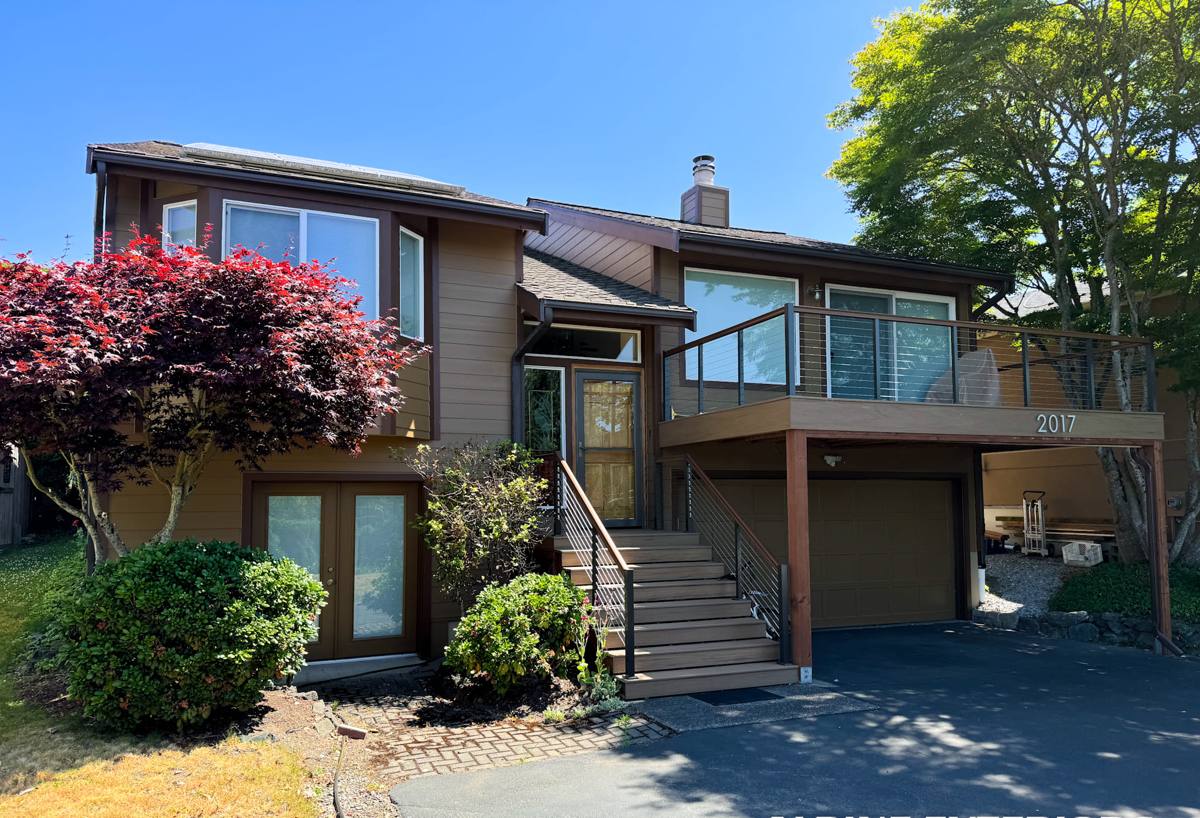
What Whatcom County Climate Does to a Window Over Time
Salt Air and Corrosion
Homes with any exposure to marine air deal with accelerated corrosion on metal components — hinges, cranks, balance systems, and screen frames. Aluminum-clad and vinyl windows resist this better than bare aluminum or unprotected steel hardware. If your current windows have hardware that's chalky, pitted, or seized, that's a sign of long-term air exposure, not necessarily a defect in the window itself.
Driving Rain and Wind-Driven Moisture
Whatcom County storms don't just drop rain straight down — wind pushes it sideways into wall assemblies, and older window installs weren't always flashed to handle that. Water finds the path of least resistance: under the sill, behind trim, into the rough opening framing. This is often where the real damage is, hidden behind the window itself rather than in the glass or sash.
Moss and Sustained Dampness
A long moss season means anything shaded or slow to dry — north-facing windows, units tucked under eaves or trees — stays damp longer than it should. That sustained moisture is what breaks down wood glazing putty, softens exterior wood trim, and gives algae a place to grow on sills and frames.
Signs a Samish Home Needs Window Replacement, Not Just Repair
- Fogging or a visible haze between the panes that won't clean off — the seal has failed and the gas fill is gone
- Windows that are hard to open, won't stay up, or don't latch fully — often a sign of frame swelling or a failed balance
- Soft or spongy wood at the sill, corners, or surrounding trim when pressed with a screwdriver
- Visible daylight or a draft at the frame edge when the window is closed
- Condensation forming on the inside of the glass regularly, even in normal humidity
- Paint that's persistently peeling or bubbling on the frame, which usually points to moisture getting in behind it
- A noticeable jump in heating costs without another clear explanation
Not every one of these means full replacement — a single failed seal on an otherwise sound window can sometimes be addressed with a sash or glass unit swap. But once you're seeing two or three of these signs on the same window, or the same issue across multiple windows, replacement is usually the more honest recommendation than another repair.
What a Correct Window Replacement Involves Here
The window unit itself is maybe half the job. In a climate like this, the other half is what happens at the opening before and after the new window goes in.
Before the New Window Goes In
We check the rough opening for rot or water damage once the old window is out — this is often the first real look anyone's had at that framing in decades. Any soft or compromised wood gets addressed before a new window goes in, not covered over. Skipping this step is how a new window ends up failing early for reasons that have nothing to do with the window itself.
Flashing and Water Management
Proper flashing — sill pan, side flashing, and head flashing integrated with the house wrap or building paper — is what keeps wind-driven rain from getting behind the window over time. This is the step most likely to be shortcut on a fast, low-cost install, and it's the one that matters most in a wet, wind-exposed area like this.
Sealing and Insulation
The gap between the window frame and the rough opening gets properly insulated and sealed — not just foam-filled and forgotten, but done in a way that allows any incidental moisture to drain rather than get trapped.
Exterior Trim and Finish
Trim gets resealed and finished to shed water, with attention to any spots that tend to stay shaded or damp longest given the moss season here.
Choosing Window Materials and Glass for This Climate
There's no single "best" window for every home, but some choices hold up better than others given the moisture and salt-air exposure common in Samish.
| Frame Material | How It Handles This Climate | Trade-Offs |
|---|---|---|
| Vinyl | Doesn't rot or corrode; handles moisture and salt air well | Fewer color options; can't be repainted |
| Fiberglass | Very stable in wet, temperature-swinging conditions; strong resistance to warping | Higher upfront cost than vinyl |
| Wood (clad exterior) | Attractive interior finish; exterior cladding protects against weather | Any gap in the cladding exposes wood to moisture — installation quality matters more |
| Bare aluminum | Strong and slim sightlines | Poor insulator and prone to corrosion in salt air; we don't recommend it for this area |
On glass, we default to dual-pane with low-E coating and argon fill for most Samish homes — it balances energy performance with cost. For rooms that face prevailing weather or get direct wind exposure, triple-pane is worth pricing out for the added comfort and reduced condensation risk, though it's not a requirement for every window in the house.
What the Process Looks Like
- Free on-site estimate — we look at your existing windows, check for signs of water intrusion or frame damage, and talk through what's actually needed versus what's optional
- Written quote — clear pricing by window, material and glass options explained honestly, no pressure to upgrade beyond what makes sense for your home
- Scheduling — we plan around the weather where we can, since a dry install window matters for sealing and flashing to cure properly
- Removal and opening inspection — old windows come out, and we check the rough opening before anything new goes in
- Installation — new window set, shimmed level and plumb, flashed and sealed properly
- Finish work — interior and exterior trim completed, area cleaned up
- Walkthrough — we go over operation, hardware, and care with you before calling the job done
Why Hiring a Crew That Already Works in Samish Matters
Window installation looks similar on paper everywhere, but a crew that regularly works homes in Whatcom County's wetter, wind-exposed areas makes different calls in the field — where to add extra flashing detail, which sill conditions need extra attention before closing up the wall, and which materials genuinely hold up versus which ones just look fine on day one. That's the kind of judgment that comes from doing this work repeatedly in this specific climate, not from a general install checklist.
We're also familiar with the kind of homes common to this part of the county — their age, typical construction, and the failure patterns that show up in older window installs here. That means fewer surprises once the old windows come out and less guesswork about what your home actually needs.
Maintaining Your New Windows in a Wet Climate
- Rinse frames and sills periodically to keep salt residue and organic buildup from accumulating, especially in shaded or slow-drying spots
- Check exterior caulking and trim seals once a year, ideally before the wet season ramps up
- Keep weep holes on vinyl and aluminum windows clear of debris and moss so water can drain properly
- Operate hardware a few times through the year, even on windows you don't open often, to keep mechanisms from seizing
- Address any new paint bubbling or soft trim promptly rather than waiting — it's cheaper to fix early
Ready for an Honest Look at Your Windows?
If your windows in Samish are fogging, sticking, drafty, or just past their reasonable service life, we're happy to take a look and give you a straight answer about what's needed — whether that's full replacement, a targeted repair, or nothing urgent at all. Fill out the form below for a free, no-pressure estimate.