 Whatcom County
 Why Asphalt Shingle Roofs Take a Beating in Sunnyland
Sunnyland sits close enough to Bellingham Bay that salt-laden air is a real factor in how roofing materials age here, not just a coastal talking point. Add in the driving rain that comes off the water during fall and winter storms, plus a moss season that can stretch from October well into spring under the tree cover common in this part of Whatcom County, and you have a climate that is genuinely tougher on a roof than most manufacturers' warranty literature assumes. A shingle roof that would coast through twenty-five quiet years in a dry inland climate has to work harder here, every year, just to keep water and organic growth out of the wood underneath it.
None of this means asphalt shingles are the wrong choice for the neighborhood — they remain the most practical, cost-effective roofing material for the vast majority of homes here. It does mean that installation details that would be optional in a milder climate are not optional in Whatcom County. The difference between a roof that looks fine for five years and then fails, and one that quietly does its job for two-plus decades, almost always comes down to what happened at the flashing, the underlayment, and the ventilation — not the shingle brand printed on the wrapper.
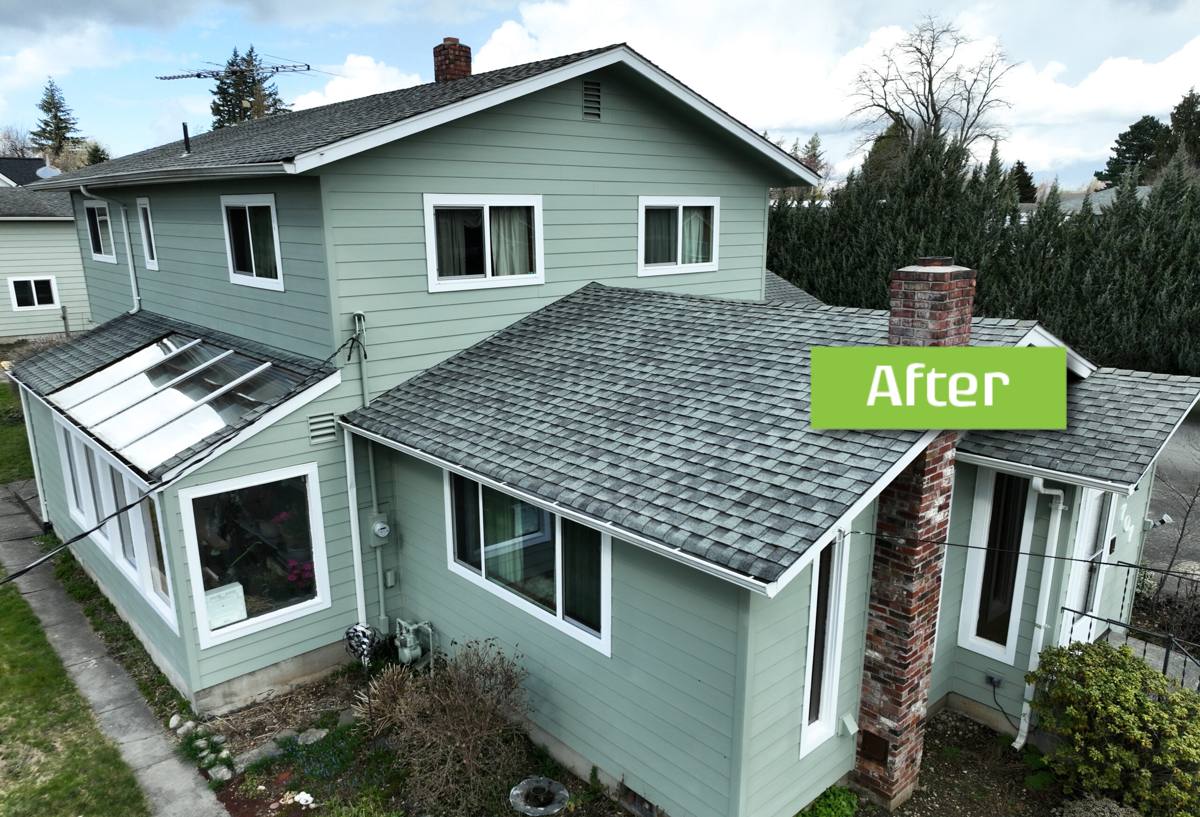
What a Correct Asphalt Shingle Installation Looks Like Here
Underlayment and Water-Entry Protection
In a region where wind-driven rain is routine, the underlayment matters as much as the shingles themselves. We use synthetic underlayment across the full roof deck rather than older felt products, because it holds up better to the repeated wetting and drying cycles typical of a Whatcom County winter. Eaves, valleys, and any roof-to-wall transitions get self-adhering ice-and-water membrane, since these are the spots where wind-driven rain is most likely to find a way past the shingle layer.
Ventilation That Matches the Attic
A shingle roof and the attic underneath it are one system. Balanced intake at the eaves and exhaust at the ridge keeps attic humidity down, which matters twice here: it slows moss and mold formation on the underside of the sheathing, and it prevents the temperature swings that make shingles curl and crack early. On older Sunnyland homes we frequently find intake vents painted over, blocked with insulation, or simply undersized for the roof area — problems that show up as premature shingle wear long before anyone thinks to check the attic.
Flashing Details That Actually Shed Water
Chimneys, skylights, dormers, and sidewall transitions are where the majority of roof leaks originate, not in the open field of shingles. Step flashing, counter-flashing, and properly lapped valley metal all need to be installed so that every layer sheds water onto the layer below it, not into a seam. This is slower, more careful work than laying shingles in a straight run, and it is the part of a roofing job that separates a lasting result from a roof that leaks at the first hard storm.
Moss, Algae, and Salt Air: What Long-Term Care Requires
Moss doesn't just sit on top of a shingle roof — its root structure lifts shingle edges and holds moisture against the granule surface, which accelerates wear underneath the growth long before it's visible from the ground. Given how much shade and moisture this part of Whatcom County gets for much of the year, moss isn't a maintenance item you can skip; it's a recurring task, the same as gutter cleaning. We recommend a gentle moss treatment and soft removal on a regular schedule rather than pressure washing, which strips granules and shortens shingle life faster than the moss itself does.
Salt air is a slower but steady factor. It doesn't attack asphalt shingles directly the way it corrodes bare metal, but it does accelerate the breakdown of exposed metal flashing, fasteners, and gutter systems, which are all part of keeping a shingle roof watertight. Specifying corrosion-resistant flashing and fastener hardware at installation, rather than standard-grade materials, costs a little more up front and saves real money over the life of the roof in a bay-adjacent neighborhood like Sunnyland.
Choosing a Shingle Line for Whatcom County Weather
Not every asphalt shingle is built the same way, and the differences matter more here than in a drier climate. The table below outlines how the common tiers compare on the factors that actually affect performance in this area.
| Shingle Tier | Wind Rating | Algae Resistance | Typical Lifespan Here |
|---|---|---|---|
| Standard 3-tab | Lower (60-70 mph) | Basic or none | 15-20 years |
| Architectural / laminate | Higher (110-130 mph) | Copper or zinc granule options available | 25-30 years |
| Premium / designer laminate | Highest available in class | Enhanced algae-resistant granules standard | 30+ years |
For most Sunnyland homes we recommend an architectural laminate shingle with algae-resistant granules as the baseline, not an upgrade. The moss and algae exposure in this climate makes that granule treatment worth the modest price difference over the life of the roof. Manufacturers such as GAF, Owens Corning, and CertainTeed all offer algae-resistant lines at the architectural tier, and we'll walk through the specific options and warranty terms during your estimate rather than push a single brand.
How We Approach a Sunnyland Roofing Project
- Roof and attic inspection. We check the deck condition, existing ventilation, flashing points, and any signs of past moisture intrusion before quoting anything.
- Written scope and material selection. You get a clear breakdown of tear-off, underlayment, flashing, ventilation work, and shingle choice — no vague line items.
- Tear-off and deck check. Old roofing comes off down to the deck so we can actually see the sheathing condition, not guess at it from above.
- Underlayment and flashing installation. Ice-and-water membrane at vulnerable areas, synthetic underlayment across the field, new flashing where the old flashing is reused or replaced.
- Shingle installation. Installed to the manufacturer's nailing and exposure specifications, which is what keeps the wind-rating and warranty valid.
- Ventilation verification. Intake and exhaust checked and corrected so the finished roof and attic work as a system, not just a new shingle layer on old problems.
- Final walkthrough. We go over the completed work, cleanup, and warranty paperwork with you directly.
Signs Your Roof Needs Attention
Most shingle roof failures give warning signs well before an active leak shows up on a ceiling. Worth checking for, especially heading into the wetter months:
- Granules collecting in gutters or at downspout outlets
- Shingle edges curling, cupping, or lifting, especially on south- and west-facing slopes
- Visible moss or dark streaking concentrated in shaded areas of the roof
- Soft or spongy decking felt underfoot in the attic near valleys or chimneys
- Daylight visible through the roof deck from inside the attic
- Missing or cracked shingles after a windstorm
- Rusted or loose flashing around chimneys, vents, or skylights
What Affects the Cost of a Shingle Roof in This Area
| Cost Factor | Why It Matters Here |
|---|---|
| Roof pitch and complexity | Steeper roofs and multiple valleys or dormers take longer to flash correctly and increase labor time |
| Number of existing layers | Older Sunnyland homes sometimes have a second layer of shingles, which adds tear-off cost and requires a full deck inspection |
| Deck condition | Moisture-damaged sheathing found during tear-off needs replacement before new roofing goes down |
| Ventilation upgrades | Adding or correcting intake and exhaust venting is inexpensive during a re-roof and far more disruptive afterward |
| Shingle tier selected | Algae-resistant architectural shingles cost more per square than 3-tab but carry lower long-term maintenance needs in this climate |
| Access and site conditions | Tree cover, tight lot lines, and steep driveways affect staging and disposal logistics on individual lots |
Why Hire a Crew That Already Works in Sunnyland
Roofing crews that split time between a wet coastal climate and drier inland regions tend to default to generic specifications — standard felt, minimum-code ventilation, whatever flashing is on the truck. A crew that works Whatcom County roofs consistently already knows which details are worth the extra time here: where moss tends to collect on this neighborhood's roof orientations, which older flashing styles are prone to failure after years of salt air exposure, and how local building department requirements apply to re-roofing and ventilation. That familiarity shows up in fewer callbacks and a roof that's actually specified for the climate it has to survive, not a national average.
If you're weighing a repair against a full replacement, or just want an honest read on how much life is left in your current roof, we're happy to take a look. Fill out the form below for a free, no-pressure estimate on your Sunnyland home.