 Whatcom County
 Roofing Built for Barkley's Marine Climate
Homes in the Barkley area deal with a specific combination of weather that most roofing crews from outside Whatcom County simply don't plan for. You've got salt-tinged air drifting in off the water, long stretches of driving rain that can last for days at a time, and a moss season that seems to start earlier and run later every year. None of that is dramatic on its own, but stacked together year after year, it's exactly the kind of slow, steady exposure that wears out an asphalt shingle roof faster than the manufacturer's warranty paperwork suggests it should.
An asphalt shingle roof that's installed correctly for this climate can still give you fifteen to twenty-five years of solid protection. One that's installed to a generic spec sheet, without accounting for our rain volume and moss pressure, tends to show granule loss, moss colonization, and edge deterioration well before that. The difference almost always comes down to what happens underneath the shingles, not just the shingles themselves.
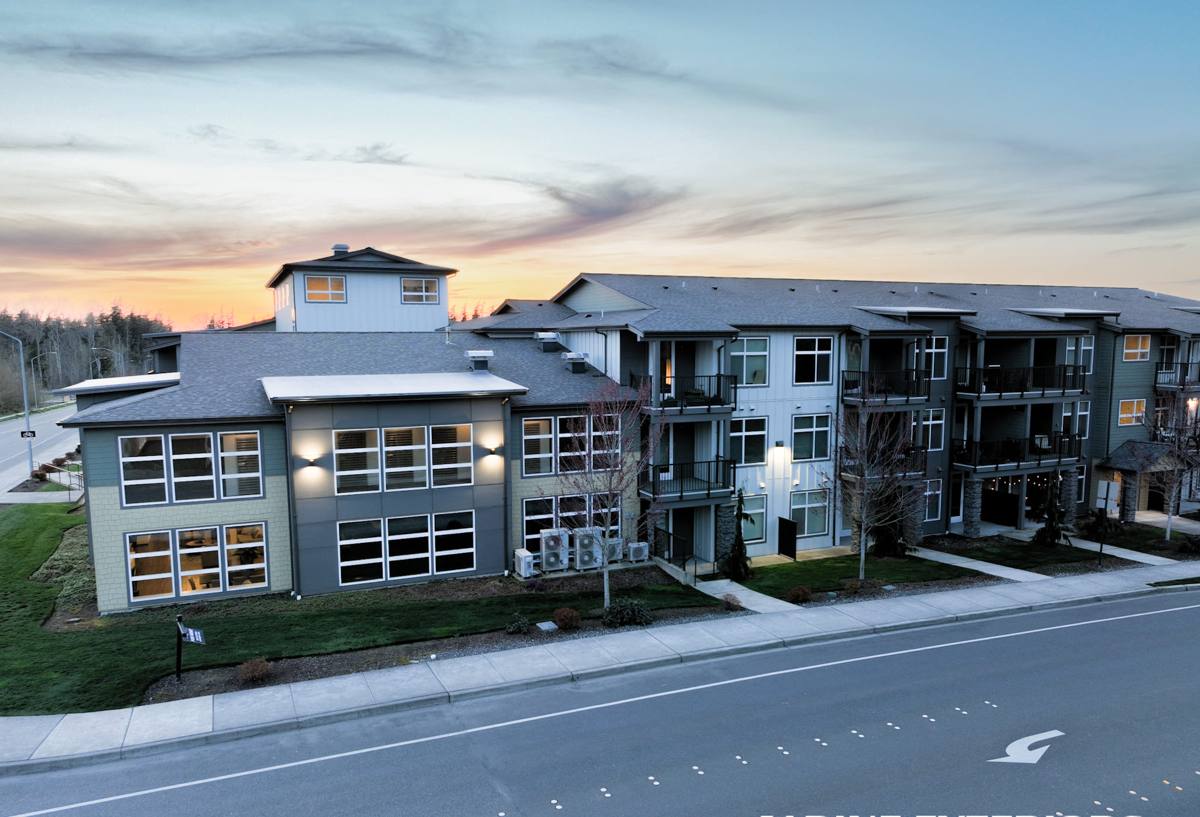
Why Barkley Homes Take Extra Wear
A few things about this part of Whatcom County make roofs work harder than they would in a drier inland climate:
- Sustained wet weather. It's not just total rainfall — it's the number of consecutive damp days, which keeps shingle surfaces and roof decks from ever fully drying out.
- Salt air exposure. Airborne salt accelerates corrosion on exposed metal — flashing, fasteners, and vents — long before the shingles themselves are due for replacement.
- Moss and moisture-loving growth. Shade from mature trees, combined with consistent moisture, gives moss and algae a long growing season on north-facing and shaded slopes.
- Wind-driven rain. Storms off the water don't just fall straight down — they push rain sideways into laps, valleys, and edges that a fair-weather installation might not seal as tightly as it should.
None of these factors are unique to any one house — they apply across Whatcom County — but they add up differently depending on tree cover, roof orientation, and how exposed a particular home is to weather coming off the water, which is why a roof assessment should always be specific to the property, not just the neighborhood.
What a Correct Installation Actually Involves
Asphalt shingle roofing looks simple from the ground, but the parts you can't see are what determine whether it holds up in this climate.
Underlayment and Ice/Water Barrier
We use synthetic underlayment across the full deck for its tear resistance and water shedding, with self-adhered ice-and-water membrane at eaves, valleys, and any low-slope transitions — the spots where wind-driven rain is most likely to work its way backward under the shingle laps.
Ventilation
A roof deck that can't breathe traps moisture from inside the house against the underside of the sheathing, which shortens shingle life from below even while the top surface looks fine. Balanced intake and exhaust ventilation matters as much here as the shingle brand does.
Flashing and Fasteners
Given the salt air, we favor corrosion-resistant flashing and fastener materials over the cheapest available option, and we pay close attention to step flashing at walls, chimneys, and skylights — these are the most common places we find leaks starting on older Barkley-area roofs.
Nailing Pattern and Sealant Strips
Manufacturer-specified nailing patterns aren't a formality — under-nailed or improperly placed fasteners are one of the leading causes of shingle blow-off in coastal wind events, and they void warranty coverage if a claim ever comes up.
Choosing a Shingle Class for This Climate
Not every asphalt shingle product is built the same way, and the differences matter more here than in a dry climate.
| Shingle Type | Typical Lifespan | Fit for Barkley Conditions |
|---|---|---|
| 3-Tab (economy) | 15–20 years | Lower upfront cost; less wind resistance and algae protection — a tighter fit for well-sheltered roofs only |
| Architectural / Dimensional | 25–30 years | Our standard recommendation — heavier mat, better wind rating, more algae-resistant options available |
| Algae-Resistant (AR) coating | Adds years to visible lifespan | Worth the small upcharge on shaded or north-facing slopes where moss and algae pressure is highest |
| Premium/Designer | 30+ years | Best wind and impact ratings; makes sense on exposed or high-visibility roofs |
For most Barkley homes, we steer people toward architectural shingles with an algae-resistant rating as the baseline, not the upgrade — the marginal cost difference is small compared to what moss cleanup and premature granule loss cost over the life of the roof.
Our Process on Barkley Roofing Projects
Inspection and Estimate
We walk the roof (weather permitting) and inspect the attic space when accessible, checking deck condition, existing ventilation, flashing points, and moss or moisture damage before writing a scope of work. You get a written estimate that spells out materials, not just a lump-sum number.
Tear-Off and Deck Prep
We remove old roofing down to the deck rather than layering over it, which lets us actually see and repair any soft or water-damaged sheathing before it's covered up again. Covering rot instead of fixing it is one of the more common shortcuts we see on older re-roofs in this area, and it always costs more to fix later.
Installation
Underlayment, ice-and-water membrane, flashing, and shingles go on in that order, following manufacturer specs for nailing and exposure. We manage debris and job-site cleanliness throughout, not just at the end.
Final Walkthrough
We review the completed roof with you, cover warranty documentation, and answer questions about maintenance before we consider the job finished.
Signs Your Barkley Roof Needs Attention
A lot of roof problems in this climate develop slowly and get dismissed as cosmetic until they're not. Worth checking for:
- Granules collecting in gutters or at downspout outlets
- Moss visibly gaining ground on shaded or north-facing slopes
- Curling, cupping, or cracked shingle edges
- Dark streaking that doesn't wash off with light rain (often algae, not just dirt)
- Soft spots underfoot or sagging along the roofline
- Water stains on interior ceilings, especially after a windy rainstorm
- Daylight visible through the attic roof deck
- Rust streaking around flashing, vents, or fasteners
Any one of these on its own may not be urgent, but catching them early is almost always cheaper than waiting for a leak to show up inside the house.
Cost Factors for Asphalt Shingle Roofing
| Factor | Why It Matters |
|---|---|
| Roof size and pitch | Steeper roofs take longer to work safely and require more material overlap |
| Number of layers to remove | Tear-off of multiple existing layers adds labor and disposal cost |
| Deck condition | Rotted or soft sheathing found during tear-off needs replacement before shingles go on |
| Shingle class chosen | 3-tab, architectural, and premium products carry different material costs |
| Ventilation upgrades | Adding or correcting intake/exhaust venting is easiest to do during a full re-roof |
| Flashing and detail work | Roofs with more valleys, walls, chimneys, or skylights require more flashing labor |
Every one of these varies by house, which is why we avoid quoting a price over the phone — an accurate number requires actually looking at the roof.
Maintenance to Extend Roof Life Through Moss Season
A good installation is the foundation, but a bit of regular upkeep goes a long way in a climate this wet:
- Keep gutters and downspouts clear so water isn't backing up under the eaves
- Trim back overhanging branches to reduce shade and debris buildup on the roof
- Have moss physically removed rather than pressure-washed, which can strip protective granules
- Schedule a roof check after major windstorms, not just once a year
- Address small leaks or lifted shingles promptly instead of waiting for the next dry spell
None of this requires climbing on the roof yourself — a quick annual inspection from a crew that knows what moss damage and early flashing failure look like catches most problems while they're still cheap to fix.
Why a Local Crew Matters for Barkley Homes
Roofing crews that don't work Whatcom County regularly tend to install to a generic national spec — fine in a lot of climates, not ideal in ours. A crew that already works in and around Barkley knows which slopes on which orientations collect moss fastest, understands how sideways rain off the water behaves differently than a straight-down storm, and specs flashing and fasteners with salt air corrosion in mind rather than as an afterthought. That local pattern-recognition is the difference between a roof that just meets code and one that's actually built for what this area throws at it.
If you're weighing a repair, a full replacement, or just want an honest read on how much life is left in your current roof, we're happy to take a look. Reach out for a free, no-pressure estimate — use the form below to get started.