 Whatcom County
 Storm Damage Roof Repair Built for Silver Beach's Waterfront Exposure
Silver Beach sits close to Bellingham Bay, and that proximity to open water shapes what a storm actually does to a roof out here compared to a home a few miles inland. Wind off the water hits harder and more consistently, salt-laden air works on exposed metal year-round, and the long moss season that defines this part of Whatcom County means roofs are often already carrying some moisture stress before a storm ever arrives. When wind, rain, or falling debris damages a roof in this neighborhood, the repair needs to account for all of that — not just patch the visible hole and move on.
We do storm damage roof repair for homes throughout Silver Beach and the surrounding Bellingham area, and we've built our process around the specific conditions this location deals with: driving rain that gets pushed sideways and upward under shingle edges, salt air that accelerates corrosion on fasteners and flashing, and a climate wet enough that a repair job needs to fully dry out and seal before the next round of weather moves through.
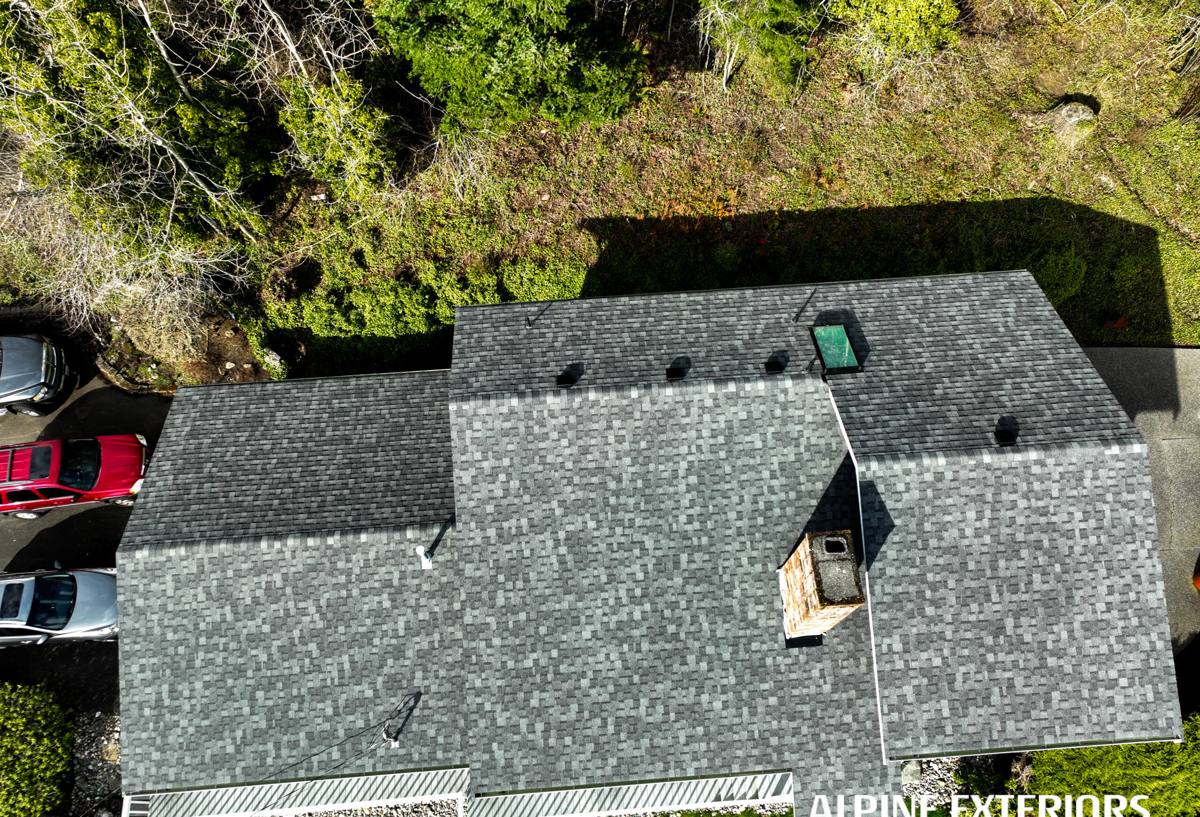
What Storms Actually Do to a Roof Here
Wind Damage and Lifted Shingles
Wind off Bellingham Bay doesn't just blow straight across a roof — it creates uplift at edges, ridges, and any place a shingle tab has started to loosen. Once wind gets under an edge, it can peel shingles back, crease them, or tear them off entirely. Even shingles that look intact after a storm can have broken seals underneath, which means they're no longer bonded down and will lift again in the next wind event even though nothing looks visibly wrong from the ground.
Wind-Driven Rain Intrusion
Because rain in this area frequently comes in at an angle rather than falling straight down, storm damage often shows up as water intrusion at points that a straight-down rain test would never catch — under shingle laps, around chimney and vent flashing, and at roof-to-wall transitions. This is one of the most common reasons a homeowner sees a new stain on a ceiling weeks after a storm rather than the day it happened: water worked its way in sideways and traveled before it ever became visible indoors.
Debris Impact
Falling branches and wind-carried debris are common causes of storm damage in neighborhoods with mature trees, which describes a lot of Silver Beach. Impact damage can range from obvious — a punctured section of roofing — to subtle bruising of shingles that weakens them without an immediate visible hole. Bruised shingles often fail months later, which is why a proper post-storm inspection checks more than just the spot where a branch clearly landed.
Compounding Moss and Moisture Damage
A roof that already has moss buildup or trapped moisture from Whatcom County's long wet season is more vulnerable to storm damage, not less. Moss holds water against the roofing material and can lift shingle edges just enough for wind to get a grip during a storm. Repairing storm damage on a roof with existing moss issues without addressing the moss itself is a short-term fix — the same failure point is likely to reopen.
What a Correct Storm Damage Repair Involves
A storm damage repair is only as good as the inspection behind it. We start by getting on the roof — not just looking at it from the ground or from photos — because a lot of storm damage, especially lifted shingles with broken seals and subtle flashing displacement, simply isn't visible from a ladder or the yard.
- Full-roof inspection, not just the area around the obvious damage, since wind and impact damage often affects more than the spot that prompted the call
- Check of all flashing points — chimneys, vents, skylights, and roof-to-wall transitions — where wind-driven rain is most likely to have found a way in
- Assessment of shingle seal integrity, not just whether shingles are visibly missing or torn
- Interior check of attic space and ceilings for signs of water intrusion that may not yet show up as a visible stain
- Documentation of the damage with clear notes and photos, useful whether or not you end up filing an insurance claim
- A written scope that separates true storm damage from any pre-existing wear, so you know exactly what you're paying to fix
Once the scope is set, the repair itself follows the same standards as new roofing work: proper underlayment integration so patched sections tie into the existing roof system correctly, corrosion-resistant fasteners and flashing given the salt exposure this close to the bay, and shingle installation that accounts for wind-driven rain rather than just straight-down coverage. A repair that's rushed to "just stop the leak" without matching these details tends to become a repeat service call within a year or two.
Our Process for a Silver Beach Storm Repair
1. Inspection and Documentation
We assess the full roof, document the damage, and give you a clear written explanation of what we found — including anything that isn't storm-related, like pre-existing moss damage or aging materials, so there's no confusion about what a storm caused versus what was already there.
2. Temporary Protection If Needed
If there's active water intrusion or exposed decking, we can put temporary protection in place to stop further damage while the full repair is scheduled, especially important during Whatcom County's wetter months when leaving a roof exposed even briefly can lead to interior damage.
3. Written Estimate
You get a clear, itemized estimate before any repair work starts — what's being replaced, what materials are used, and what it costs. No pressure to sign on the spot.
4. The Repair
We match the repair to the surrounding roof system as closely as possible, using proper flashing, underlayment, and fastening details suited to this climate rather than a quick patch.
5. Final Walkthrough
We walk the finished repair with you, explain what was done, and make sure you know what (if anything) to keep an eye on going forward.
Insurance Claims: What to Know
Storm damage repairs are one of the more common reasons homeowners file a roofing insurance claim, and having clear, professional documentation matters for that process. We provide detailed inspection notes and photos that you can submit to your insurer, and we're glad to walk an adjuster through what we found if that's helpful. That said, we work for you, not the insurance company — our documentation reflects what we actually find on your roof, and we won't inflate a scope to chase a bigger claim or minimize damage to make an inspection go faster.
A few things worth knowing before you file:
| Situation | What It Usually Means |
|---|---|
| Damage clearly tied to a specific storm date | Generally the clearest type of claim to document and file |
| Gradual wear mixed with storm damage | Insurers often distinguish covered storm damage from pre-existing wear, so clear documentation matters more |
| No visible damage but a leak appears after a storm | Still worth an inspection — wind-driven rain intrusion isn't always visible from outside |
| Repair delayed several weeks | Can complicate a claim if further damage occurs in the meantime; getting an inspection soon after a storm is worth it |
Repair or Full Replacement? What Actually Determines It
Not every storm-damaged roof needs full replacement, and not every roof can be reasonably patched. The honest answer depends on a few factors we walk through with you rather than defaulting to whichever option is more profitable for us.
- Age and remaining life of the roof — a roof already near the end of its expected service life may make more sense to replace than repeatedly repair
- Extent of the damage — isolated damage to one section is usually a straightforward repair; widespread damage across multiple slopes changes the math
- Underlying condition — a roof with significant pre-existing moss damage or deteriorated underlayment may not be a good candidate for a targeted patch
- Material availability — matching older shingle products can be difficult or impossible if the original material is discontinued, which sometimes tips the decision toward a broader repair or full replacement of a section
- Your plans for the home — how long you intend to stay is a legitimate factor in deciding how much to invest in a repair versus a longer-term replacement
Why It Matters to Hire a Crew That Already Works in Silver Beach
Storm damage repair isn't a one-size-fits-all trade. A crew that mostly works drier, inland climates may not think twice about wind-driven rain intrusion or salt-accelerated fastener corrosion, because those aren't problems they deal with regularly. Working in and around Silver Beach and the greater Bellingham Bay area means we see the specific failure patterns this location produces — lifted shingle seals from bay wind, flashing corrosion from salt air, moss-related moisture trapped under roofing material — often enough that diagnosing them correctly is routine rather than guesswork.
That local familiarity also means faster response after a storm. When a wind event moves through Whatcom County, being able to get a crew on your roof within a reasonable window — rather than waiting on a company based well outside the area — can be the difference between a contained repair and a ceiling stain that spreads for a week before anyone gets a tarp up.
Preventing Storm Damage Before It Happens
While no roof is entirely storm-proof, a few maintenance habits reduce how much damage a given storm actually causes, and they're worth doing on a Silver Beach home given the local wind and moisture exposure.
- Keep gutters and downspouts clear so storm runoff doesn't back up under roof edges
- Trim back branches that overhang the roof, reducing both direct impact risk and the shade that feeds moss growth
- Address moss buildup before it lifts shingle edges and creates a foothold for wind
- Have an aging roof inspected proactively rather than waiting for a storm to find its weak points for you
- Check attic ventilation, since poor ventilation contributes to the kind of trapped moisture that weakens roofing material from underneath
Getting an Estimate
If a recent storm has left you with missing shingles, a new stain on a ceiling, or just some uncertainty about whether your roof came through okay, a straightforward inspection is the right first step. We'll give you a clear, no-pressure estimate and an honest read on what your roof actually needs — repair, a larger fix, or, in some cases, confirmation that it's fine and no work is needed at all. Use the form below to request a free estimate for your Silver Beach home.