 Whatcom County
 Happy Valley sits close enough to Bellingham Bay that salt-laden air reaches window frames and hardware year-round, and far enough into Whatcom County's marine climate that driving rain and a long, damp moss season are simply part of owning a home here. Windows in this neighborhood work harder than windows almost anywhere else in the state. When they're installed correctly for this environment, they can go decades without trouble. When they're not, homeowners end up dealing with fogged glass, soft framing, and drafts years before they should.
What This Climate Actually Does to Windows
It helps to understand the specific stresses Happy Valley windows are under, because they're different from what a contractor in a dry inland climate deals with.
Salt Air and Metal Components
Proximity to the bay means airborne salt settles on everything, including window hardware. Over time it corrodes cheaper latches, hinges, and screws, and it can accelerate wear on lower-grade aluminum components. This is a slow process, but it's constant, and it's one reason hardware quality matters more here than in a lot of other places.
Driving Rain
Whatcom County storms don't just fall straight down — wind pushes rain sideways against west- and southwest-facing walls. That means water is regularly forced against and around window openings under pressure, not just sitting on a sill. A window and its surrounding flashing need to shed that water actively, not just tolerate it.
A Long Moss Season
Extended damp periods encourage moss and algae growth on siding, trim, and window sills, especially in shaded or north-facing spots. Beyond the cosmetic issue, moss holds moisture against wood trim and caulk lines longer than plain rain does, which shortens the life of anything that isn't properly sealed or detailed to shed water.
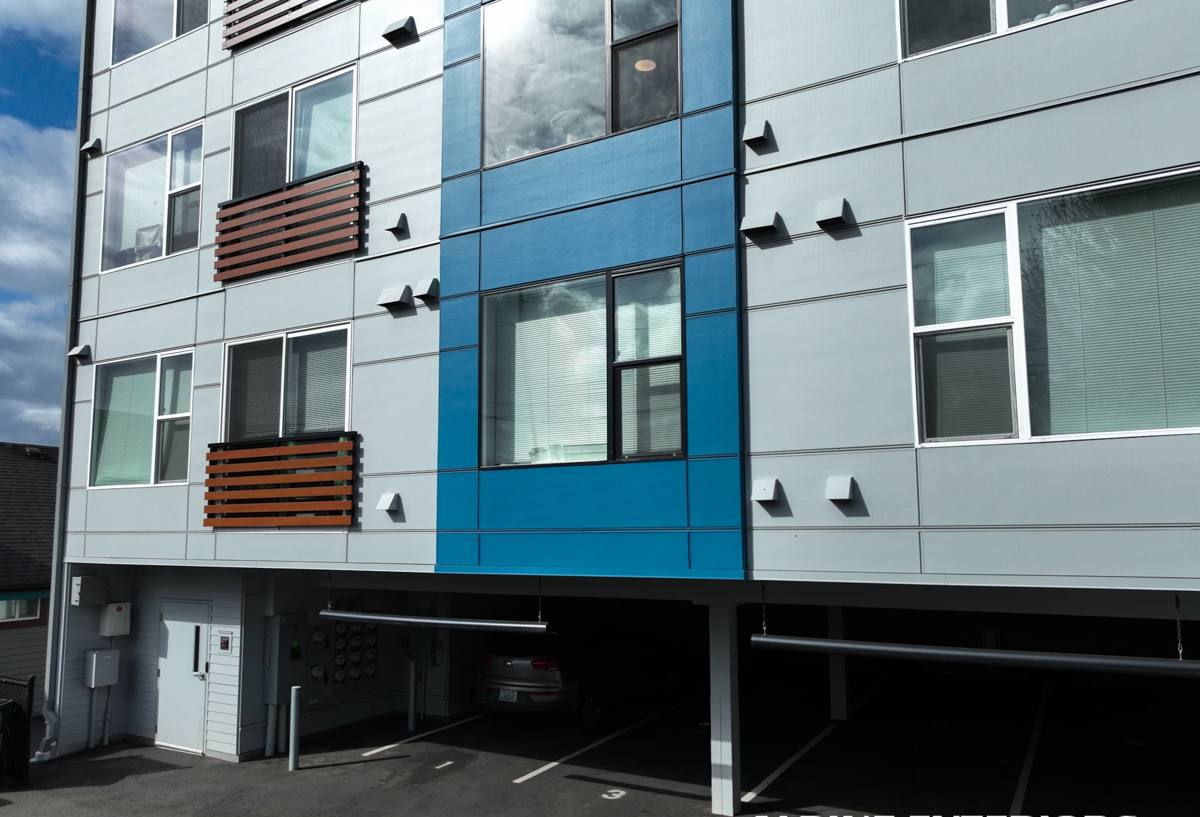
Signs a Happy Valley Home Needs Window Replacement
- Fogging or a permanent haze between panes — the seal has failed and the insulating gas is gone
- Soft or spongy wood at the sill or lower frame corners
- Persistent drafts you can feel near the frame on a windy day
- Difficulty opening, closing, or latching that didn't used to be there
- Visible gaps between the window frame and siding or trim
- Moss or dark staining building up on the sill or lower casing every year
- Noticeably higher heating bills with no other explanation
Any one of these on its own might just need a repair. Several together, especially on the same window, usually mean the unit and its surrounding seal have reached the end of their service life.
What a Correct Installation Actually Involves
Window replacement has a reputation for being simple — pull the old one, drop in the new one, caulk the edges. In a climate like this, that shortcut is exactly how homeowners end up with rot behind the wall five years later. A proper job includes:
Opening Inspection
Before anything new goes in, the rough opening gets checked for hidden water damage, soft sheathing, or existing rot from the old installation. Replacing a window over a compromised opening just seals the problem inside the wall.
Flashing, Not Just Caulk
Caulk is a maintenance item — it degrades and needs attention over time. Proper flashing (housewrap integration, sill pan, and head flashing that directs water outward and down) is what actually keeps wind-driven rain out of the wall assembly long-term. This is the single biggest difference between a durable installation and one that fails early in a wet, windy climate.
Correct Shimming and Squaring
A window that isn't square or properly shimmed will bind, won't seal evenly, and puts uneven stress on the frame — all of which shorten its life regardless of how good the window itself is.
Interior and Exterior Sealing
Both sides of the window need appropriate sealant and insulation — not just a bead of caulk on the outside. Interior gaps left unsealed are a common source of drafts even when the exterior looks fine.
Choosing a Window Frame for This Environment
Frame material matters more here than in a dry climate, because it's dealing with moisture and salt exposure nearly year-round. Here's how the common options generally compare for a home in this area:
| Frame Material | Moisture Resistance | Maintenance | Typical Trade-Off |
|---|---|---|---|
| Vinyl | Very good — won't rot or corrode | Low — occasional cleaning | Fewer color/finish options; can expand/contract with temperature swings |
| Fiberglass | Excellent — very stable in wet climates | Low | Higher upfront cost than vinyl |
| Aluminum | Fair — prone to corrosion near salt air unless well-coated | Moderate | Conducts heat/cold; needs quality coating in this climate |
| Wood / Wood-Clad | Good on the clad exterior, vulnerable at the wood core if seals fail | Higher — periodic inspection and finish maintenance | Best appearance for some homes, but least forgiving of a bad seal here |
We don't push one material on every home — the right call depends on the house, the budget, and how much upkeep an owner wants to take on. What we won't do is install a frame type into a wall detail it's poorly suited for just to save a step, because in Happy Valley's climate that decision shows up as a problem later, not right away.
Glass Packages Worth Considering
Beyond the frame, the glass unit itself affects both comfort and long-term performance:
- Double-pane, low-E coated: The standard baseline for this region — good insulating value and UV control at a reasonable cost.
- Argon or krypton gas fill: Improves insulating performance modestly; worth it for most homeowners given how much of the year is spent heating.
- Triple-pane: Better insulation and sound dampening, at added weight and cost — most useful on street-facing or particularly exposed walls.
- Impact or laminated glass: Less about storm risk here than about sound and security; an option, not a default need, for most Happy Valley homes.
Our Process for a Happy Valley Job
The steps don't change much house to house, but the details we check are shaped by what we consistently see in this neighborhood's homes:
- On-site assessment: We look at every window being considered, not just the ones the homeowner flagged, and check for hidden moisture damage around openings.
- Straightforward estimate: Clear pricing by window, with the reasoning behind any material or glass recommendation explained plainly.
- Removal and opening inspection: Old units come out carefully so we can actually see the condition of the framing before anything new goes in.
- Repair as needed: Any soft or damaged framing gets addressed before the new window is set — not covered over.
- Installation with proper flashing and sealing: Built for wind-driven rain, not just vertical rainfall.
- Final check: Operation, seal, and finish are all confirmed before we consider the job done.
Why Local Experience Matters Here
A crew that mainly works drier inland climates can install a technically fine window and still miss the details that matter in a place like Happy Valley — how far up a wall wind-driven rain typically reaches, which wall orientations collect the most moss and moisture, or which hardware finishes actually hold up near the bay. None of that is exotic knowledge, but it only comes from doing this work repeatedly in this specific environment. It's the difference between a window that looks right on installation day and one that's still performing well a decade later.
Cost Factors to Expect
Every home is different, but the main variables that drive window replacement cost in this area are fairly consistent:
| Factor | Why It Matters |
|---|---|
| Window size and type (single-hung, casement, slider, bay, etc.) | More complex shapes and larger units cost more in both materials and labor |
| Frame material chosen | Vinyl, fiberglass, aluminum, and wood-clad differ meaningfully in unit cost |
| Condition of the existing opening | Hidden rot or damage found during removal adds repair work before installation can proceed |
| Number of windows done together | Bundling multiple windows in one project is typically more efficient than doing them one at a time over separate visits |
| Access and wall height | Second-story or hard-to-access windows take more time and equipment |
Simple Maintenance to Extend Window Life
Once new windows are in, a little seasonal attention goes a long way in this climate:
- Rinse sills and tracks periodically to clear salt residue and grit
- Clear moss or algae from sills and lower trim before it builds up, especially on shaded sides of the house
- Check exterior caulk lines once a year and touch up any cracking before wet season sets in
- Wipe down and lightly lubricate hardware if it starts to feel stiff
- Keep gutters and downspouts clear so roof runoff isn't dumping extra water near window openings
If your windows are showing wear, drafts, or fog between the panes, we're happy to take a look and give you a straightforward, no-pressure estimate — just fill out the form below and we'll get in touch.