 Whatcom County
 Why Bellingham Homes Need More Than "Good" Siding
Bellingham sits right where marine weather off Bellingham Bay meets a long, wet Pacific Northwest winter, and that combination is unusually hard on exterior siding. Salt-tinged air moves through the city year-round, rain arrives sideways as often as it falls straight down, and shaded or tree-covered walls can stay damp for months at a stretch during moss season. None of that is exotic weather by Whatcom County standards, but it's a demanding environment for a building material, and it's exactly why we install James Hardie fiber cement siding and nothing else. This page focuses specifically on what a correct Hardie installation looks like on a Bellingham home, not siding in general.
A siding product that performs fine in a drier inland climate can still fail here, not because it's a bad product everywhere, but because Bellingham's specific mix of salt exposure, sustained moisture, and wind-driven rain finds the weak points other climates never test. Hardie fiber cement was engineered with climates like this one in mind, and when it's installed correctly, it's the closest thing to a long-term answer to that problem that we've found.
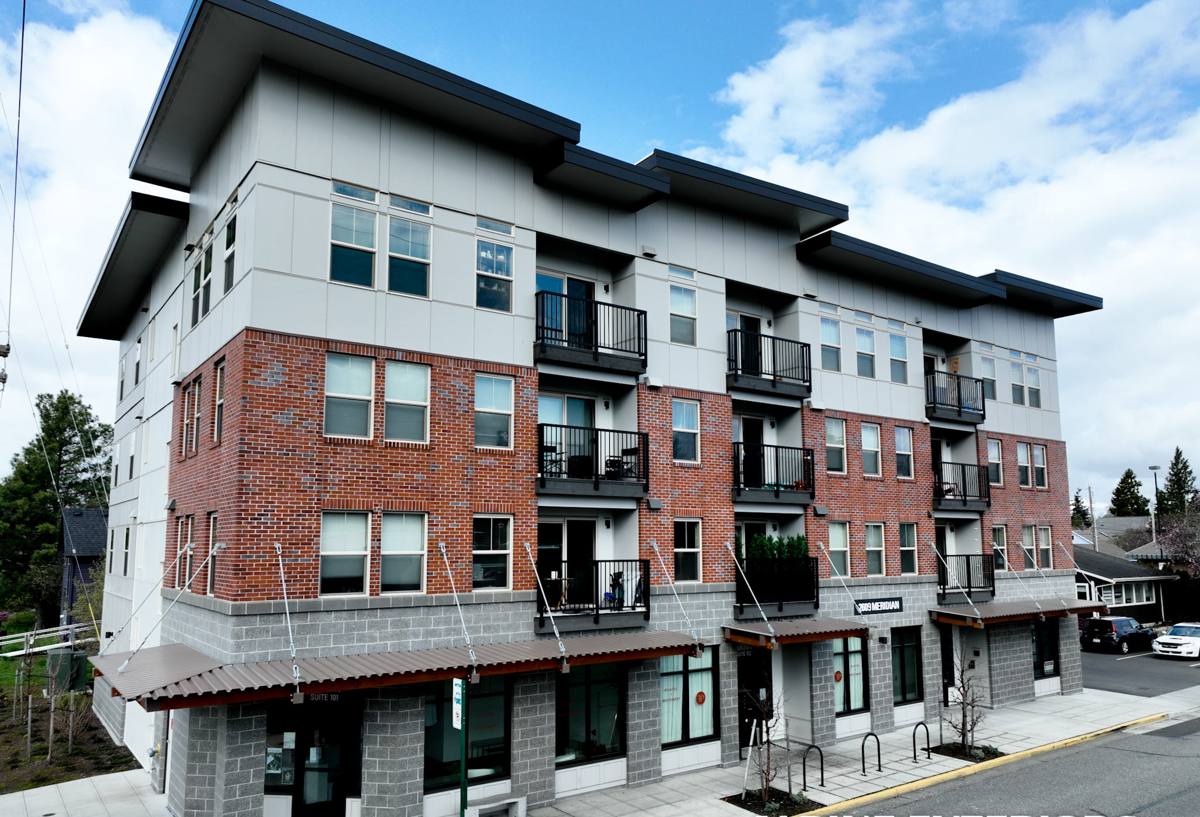
What Bellingham's Climate Actually Does to a Wall Assembly
Salt Air and Bay Exposure
Homes near the bay and throughout much of Bellingham sit in a steady flow of moisture-laden, salt-tinged air. That exposure accelerates corrosion on fasteners and hardware and works against lower-grade finishes over time. It's a slow, cumulative kind of wear rather than a single dramatic event, which is part of why it goes unnoticed until it's already done real damage.
Wind-Driven Rain
Rain in Bellingham doesn't just fall, it gets pushed. Wind off the water drives rain into lap joints, trim seams, and wall penetrations at an angle, which means a siding and flashing system that would hold up fine under calm, vertical rainfall can still let water in here. Correct lap spacing, fastener placement, and flashing integration matter more in this climate than in a drier one.
A Long Moss and Mildew Season
Mild temperatures, tree cover, and near-constant dampness add up to extended moss and mildew growth on north-facing and shaded walls, often for most of the year. Any siding material that's even slightly porous, or that holds moisture against the substrate rather than shedding it, becomes a growth surface. It typically shows up first in the places nobody checks often: behind shrubs, under eaves, on the shaded side of the house.
Why James Hardie Is the Only Siding We Install
We don't offer a lineup of siding brands at different price points. We install James Hardie fiber cement, full stop, because of what we've consistently seen on tear-offs and repair calls throughout this region.
- Non-combustible core: Fiber cement doesn't feed a fire the way wood-based siding products can, which matters for household safety and can matter for insurance considerations as well.
- Factory-applied ColorPlus finish: The color coat is cured under controlled factory conditions instead of brushed on at the jobsite, which gives it far better resistance to fading, chipping, and moisture intrusion than field-applied paint.
- Climate-engineered HZ product lines: Hardie's HZ5 formulation is built for regions with sustained moisture and freeze-thaw cycling, which fits coastal Whatcom County better than a one-size-fits-all national siding spec.
- Dimensional stability: Fiber cement doesn't swell, cup, or warp the way engineered wood products can after repeated wet-season moisture cycles.
- Strong transferable warranty: Hardie backs its products with one of the more substantial warranty structures in the industry, provided the installation follows manufacturer spec.
We don't install LP SmartSide, vinyl siding, Cemplank, Allura, primed spruce, or cedar. Those are legitimate products, and other contractors install them well. But we made a professional decision that in a climate this consistently wet and salt-exposed, standing fully behind one system is a better position for our customers than offering a cheaper alternative that quietly shifts maintenance risk onto them a few years down the line.
What the Alternatives Trade Off Here
LP SmartSide is an engineered wood product with a resin-treated strand core, and it performs reasonably in drier climates. In a marine environment with this much sustained rain and humidity, engineered wood siding is more sensitive to moisture intrusion at cut edges and fastener penetrations than fiber cement is. Vinyl is affordable and low-maintenance in a general sense, but it can warp under sun exposure, crack in cold snaps, and trap moisture behind the panel if house wrap and flashing details aren't handled with real care. Cedar and primed spruce are attractive natural materials, but they need ongoing painting or sealing to keep moisture out, and in a climate that stays wet this much of the year, that maintenance schedule tends to slip in a way that shortens the material's real-world lifespan.
The James Hardie Product Lines We Work With
Hardie makes several distinct siding profiles, and picking the right one for a given Bellingham home depends on its architecture and exposure, not just personal preference.
| Product Line | Profile | Common Use on Bellingham Homes |
|---|---|---|
| HardiePlank | Lap siding, smooth or cedarmill texture | The standard choice for most single-family homes; wide range of exposures and colors |
| HardiePanel | Vertical panel siding | Modern builds, accent walls, and gable ends where a vertical line reads well |
| HardieShingle | Individual or panelized shingle profile | Craftsman and cottage-style homes common in Bellingham's older neighborhoods |
| HardieTrim | Fascia, corner boards, and trim | Paired with any of the above to finish edges and openings correctly |
All of these come with the factory ColorPlus finish option, and all are available in the HZ5 formulation appropriate for this climate zone. The right choice is usually driven by the home's existing style and the exposure of specific walls, which is part of what we walk through during an on-site estimate rather than over the phone.
What a Correct Installation Actually Requires
Buying the right material is only half the job. A James Hardie installation that performs the way it's engineered to needs correct fastening patterns, proper clearances from grade and roofline, joints that are lapped and sealed to spec, and house wrap and flashing that function as one integrated system rather than separate steps done in isolation. Rushed or corner-cut installation is one of the most common reasons a good product develops a bad reputation, and it's why we treat install detail with the same seriousness as the material choice itself.
- Manufacturer-specified nailing pattern and fastener type, not whatever's fastest for the crew
- Minimum clearance maintained between siding and grade, decks, and roof lines to prevent wicking
- Rain screen or drainage plane behind the siding where the wall assembly calls for it
- Flashing integrated at every window, door, and penetration before siding goes on, not caulked over afterward
- Properly lapped and gapped joints that allow for seasonal movement without opening a water path
- Cut edges sealed per manufacturer instructions, since an unsealed cut edge is one of the more common points of moisture entry
Any one of these done wrong can undercut the material's entire performance advantage. A Hardie board installed without a drainage plane behind it, or with fasteners driven at the wrong spacing, can still trap moisture just like a lesser product would. The product and the installation are a package deal.
New Siding vs. Repair on an Existing Hardie Home
Not every siding issue on a Bellingham home means a full tear-off. Isolated impact damage, a section that failed around a window, or trim that's come loose can often be repaired and matched into existing Hardie siding without redoing the whole house. But when moisture has been tracking behind the wall assembly for a while, or the existing siding is an older product that's simply reached the end of its service life, a patch usually just postpones a bigger job. We'll tell you plainly which situation you're actually in before recommending either path.
Signs Your Bellingham Home's Siding Needs Attention
- Moss or dark staining that returns quickly after cleaning, especially on shaded or north-facing walls
- Soft or spongy siding, particularly near the base of the wall or around window and door trim
- Peeling paint, bubbling, or visible warping on siding boards
- Cracked, chipped, or missing sections after storms or wind events
- Visible gaps at seams, corners, or trim joints where water can track in
- Rising heating bills that may point to a wall assembly that's no longer sealing properly
Cost Factors for a Bellingham Hardie Project
| Factor | What It Affects | Why It Matters Here |
|---|---|---|
| Home size and wall complexity | Total material and labor | Bellingham's older hillside homes often have more dormers, trim, and roof intersections where wind-driven rain can work its way in |
| Tear-off vs. overlay | Labor scope and substrate access | Tear-off exposes hidden moisture damage common under decades-old siding in this climate |
| Substrate condition | Repair costs before new siding goes on | Years of trapped moisture behind failing siding can rot sheathing and framing before it's visible from outside |
| Product line and texture | Material cost | Shingle and panel profiles typically run higher than standard lap siding due to detail work |
| ColorPlus vs. primed for field paint | Finish cost and long-term maintenance | Factory finish costs more upfront but resists salt air and UV fading far longer than site-applied paint |
| Site access and lot terrain | Labor time and equipment needs | Sloped hillside lots and mature tree cover common in Bellingham neighborhoods can add staging and setup time |
Real numbers depend on the specific house, which is why we walk the property before quoting instead of pricing off square footage alone.
Our Process, Start to Finish
- On-site walkthrough: We look at the current siding, wall orientation, and any visible moisture or damage before recommending anything.
- Honest scope and estimate: You get a clear read on whether repair or full replacement fits your situation, and what's driving the cost either way.
- Tear-off and substrate check: If we're removing old siding, we inspect the sheathing underneath before anything new goes up, since that's often where hidden problems live.
- House wrap and flashing installed as a system: Every window, door, and penetration gets flashed correctly before siding goes on.
- Hardie installation to manufacturer spec: Correct fastening, clearances, and joint detailing throughout, not just on the parts that are easy to see.
- Final walkthrough: We go over the finished work with you before calling the job done.
Why a Local Crew Matters for a Hardie Install in Bellingham
A crew that installs Hardie siding across Bellingham regularly sees how salt air, wind-driven rain, and moss actually behave on real houses through a full year, not just how the product performs on paper. That shows up in practical decisions on install day: where extra flashing attention pays off, which wall orientations stay wet longest, and which details are worth the extra time so you're not dealing with a callback two winters later. Bellingham's mix of bay exposure, hillside terrain, and older housing stock rewards that kind of familiarity in ways a crew passing through from out of the area typically won't account for.
If you're considering James Hardie siding for a Bellingham home, whether it's a full replacement, a targeted repair, or just an honest second opinion on what's happening behind an aging wall, we're glad to take a look. Reach out using the form below to schedule a free, no-pressure estimate.