 Whatcom County
 Why Decks in Blaine Wear Out Faster Than the Manuals Say
Blaine sits right up against Semiahmoo Bay and Drayton Harbor, which means most decks here are living in a slightly different world than the ones described on a lumber tag or a composite brand's warranty sheet. Salt-laden air off the water accelerates corrosion on fasteners and hardware, driving rain gets pushed sideways by wind more often than it falls straight down, and the long gray stretch from fall through spring keeps wood surfaces damp for weeks at a time. Add in moss and algae that thrive in that shade-and-moisture combination, and you get decks that can look tired well before they've hit the lifespan a manufacturer might quote.
None of that means a deck in Blaine is doomed — it means the build has to account for the environment from the start. A deck built the same way you'd build one in a dry inland climate is going to show problems sooner: soft spots at the ledger, rust streaks around fasteners, boards that cup or crown, and a substructure that's degrading in places you can't see from the top.
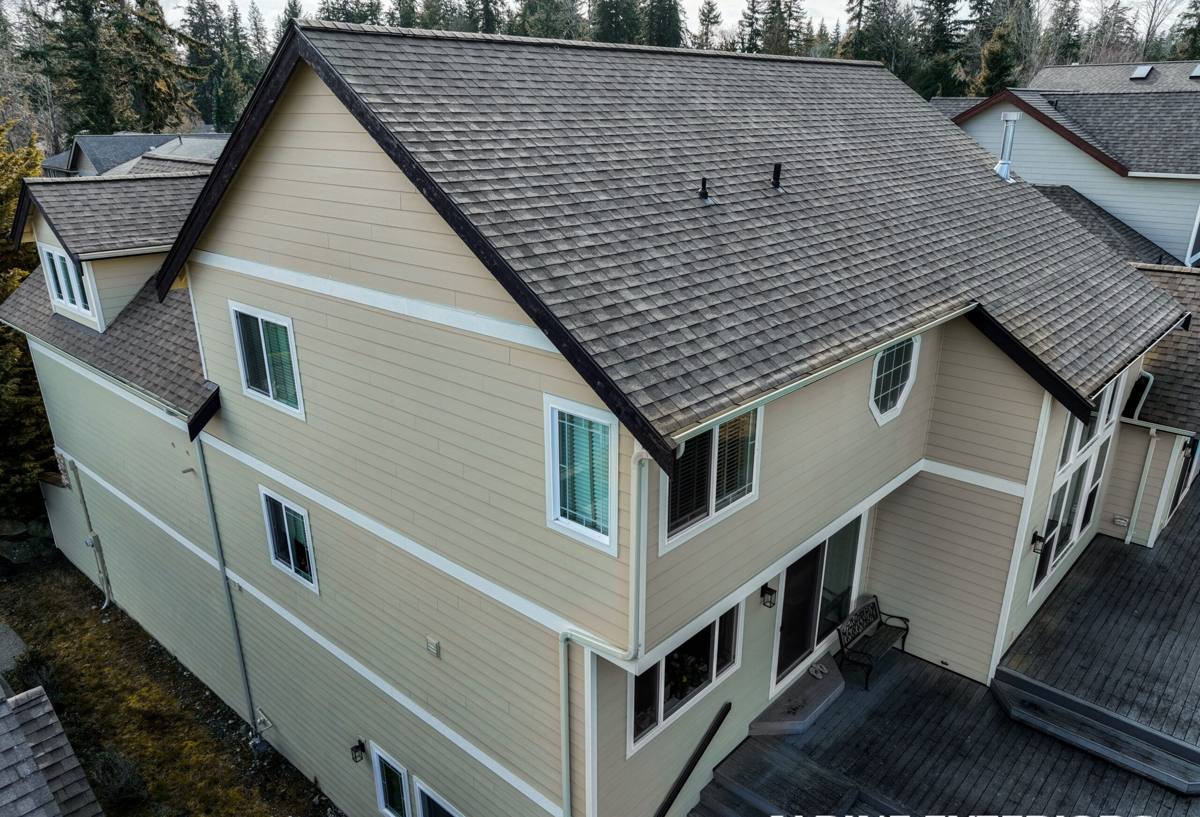
Repair, Resurface, or Full Replacement — How to Tell
Not every tired-looking deck needs to come out entirely. Part of an honest assessment is figuring out whether the problem is cosmetic, surface-level, or structural. The distinction matters because resurfacing a deck with a compromised frame just hides a problem instead of fixing it.
- Boards that are gray, splintering, or holding moss but the frame underneath feels solid and doesn't flex — often a resurfacing candidate.
- Soft, spongy decking near the house, around posts, or at stair treads — usually points to moisture getting into the structure, not just the surface.
- Visible rot, rust bleeding through paint or stain, or fasteners backing out on their own — signs the substructure is failing.
- Deck that feels bouncy, sways, or has a ledger board pulling away from the house — a structural and safety issue, not a cosmetic one.
- Railings that wiggle or posts that rock at the base — often tied to footing or post-base failure below grade.
- A deck older than 15-20 years that's never had the ledger, flashing, or fasteners inspected — worth a full evaluation before spending money on the surface.
If the frame, ledger connection, and footings are sound, a resurface can extend a deck's life for a reasonable cost. If those elements are compromised, patching the surface is money spent on a structure that's still failing underneath — that's when full replacement is the honest recommendation.
What a Correct Deck Replacement Actually Involves
The Ledger and Flashing
The ledger board — where the deck attaches to the house — is the single most common failure point on decks in wet coastal climates, and it's also the part homeowners see the least. Water that gets behind an improperly flashed ledger doesn't just rot the ledger itself; it can work its way into the house's rim joist and framing. A correct replacement means proper flashing detail at this connection every time, not an assumption that "it was fine before."
Footings and Posts
Footings need to sit below frost depth and bear on stable, undisturbed soil. In areas with poor drainage or heavier clay content, we look at footing size and placement carefully rather than defaulting to the smallest size code allows. Posts should be set on bases that keep the wood off standing water, not buried directly in or against concrete.
Joists, Framing, and Fasteners
Joist spacing and beam sizing depend on the decking material you choose and the span involved — composite and PVC decking generally want tighter joist spacing than solid wood. Fasteners matter more here than most homeowners realize: in a salt-air environment, standard coated screws and joist hangers can start corroding years before the wood around them fails. We spec stainless or high-grade coated hardware rated for coastal exposure, because replacing a deck's surface twice due to failed hardware underneath costs more than doing it right the first time.
Drainage and Airflow
A deck that traps moisture underneath it — because of poor grading, no airflow, or decking laid too tight — stays damp longer after every rain. Board spacing, joist tape, and site grading around the footings all factor into how long the structure stays wet after Whatcom County's wetter months.
Choosing Decking Material for Blaine's Climate
There's no single "best" decking material — there's a best material for your budget, maintenance appetite, and how much moisture and salt exposure your specific site sees. Here's how the common options actually compare in this environment.
| Material | Upfront Cost | Maintenance | Salt Air & Moisture Behavior | Typical Lifespan |
|---|---|---|---|---|
| Pressure-treated wood | Lowest | Annual cleaning, periodic staining/sealing | Prone to graying, splintering, and moss buildup without upkeep | 10-15 years with upkeep |
| Cedar | Moderate | Regular sealing to hold color and resist moisture | Naturally decay-resistant but still needs sealing near the coast | 15-20 years with upkeep |
| Composite | Higher | Occasional washing, no staining/sealing | Won't rot or splinter; can hold surface moss if shaded and unwashed | 25-30 years |
| PVC / capped polymer | Highest | Lowest — mainly rinsing | Fully moisture-resistant surface, best for damp shaded areas | 25-30+ years |
Composite and PVC decking cost more up front, but in a climate where wood needs recoating every couple of years just to keep moisture out, the maintenance savings add up. That said, plenty of homeowners still prefer the look and feel of real wood and are willing to keep up with sealing — that's a legitimate choice as long as it's a fully informed one, not a surprise a few years in.
How Moss and Algae Should Factor Into the Build
Moss doesn't just make a deck slippery and unattractive — sustained moss growth holds moisture against the board surface, which shortens the life of wood decking and can stain composite. Site conditions matter here: decks under tree cover or on the shaded side of a house hold moisture longer and need decking and finishes chosen accordingly. Board spacing, surface texture, and finish all play a role in how much moss takes hold and how easy it is to keep clean.
Our Replacement Process
- On-site assessment. We inspect the ledger, framing, footings, and posts — not just the visible boards — to determine what's actually driving the deck's condition.
- Honest scope. We tell you plainly whether you're looking at a resurface or a full tear-out, and why, before any work starts.
- Material walkthrough. We go over wood, composite, and PVC options against your budget and how the space is used, without steering you toward whatever's easiest for us to install.
- Demolition and disposal. Old decking, framing, and hardware are removed and hauled off — you're not left with a pile of old lumber.
- Rebuild from the ground up. Proper ledger flashing, footings set to code depth, coastal-rated fasteners, and framing sized for your chosen decking material.
- Final walkthrough. We check railings, stairs, board fastening, and drainage with you before calling the job done.
Permits and Code in Whatcom County
Deck replacement work in Whatcom County and within Blaine's jurisdiction typically requires a permit once you're rebuilding the structure — not just swapping worn boards on an otherwise sound frame. Permitted work means footings, framing, and railing heights get inspected against current code, which matters most for older decks that were built under looser standards decades ago. We handle the permit process as part of the job rather than leaving it as something you have to sort out separately, and we build to current code even on the parts of the structure that won't be visible once it's finished.
Maintenance Checklist for Whatcom County Decks
- Sweep debris off the deck regularly, especially in fall — trapped leaves hold moisture against boards.
- Wash down surfaces at least once or twice a year to slow moss and algae buildup.
- Check fasteners and hardware annually for early rust or backing-out, especially near the water.
- Reseal wood decking on the manufacturer's recommended schedule — don't wait until it's visibly gray.
- Keep an eye on the ledger connection and any spot where the deck meets the house for staining or soft wood.
- Make sure gutters and downspouts aren't dumping water directly onto or under the deck.
Why a Crew That Already Works Blaine Makes a Difference
A deck built for a dry inland climate and a deck built for a coastal Whatcom County lot aren't the same project, even if the plans look identical on paper. A crew that regularly works in Blaine already knows which fastener grades hold up against salt air, how local soil and drainage tend to behave, and what Whatcom County's permitting process actually requires — not in theory, but from doing it repeatedly on homes like yours. That familiarity shows up in fewer surprises during the build and in a deck that's still solid well past the point where a poorly matched build would already be showing problems.
If your deck is showing its age — or you're just not sure whether it needs a resurface or a full rebuild — we're happy to take a look and give you a straight answer. Reach out for a free, no-pressure estimate using the form below.