 Whatcom County
 Fairhaven's Waterfront Climate Is Rough on Decks
Fairhaven sits close to Bellingham Bay, which means homes here deal with a combination of weather stresses that inland Whatcom County properties don't face as often. Salt-laden air off the water accelerates corrosion on fasteners, hardware, and any metal components in a deck's structure. Add in the region's long stretch of driving rain through fall and winter, and you've got moisture finding its way into every gap, seam, and end-cut that isn't properly protected. Then there's moss — Whatcom County's mild, wet climate gives it a long growing season, and a shaded or north-facing deck can start showing green growth within a single season if it isn't built and maintained with that in mind.
None of this makes composite decking a bad choice for Fairhaven. It actually makes it a smart one, provided the installation accounts for these conditions rather than treating the site like any other build. The material choice matters, but so does the substructure underneath it, the fasteners holding it together, and the drainage path water takes once it's on your deck.
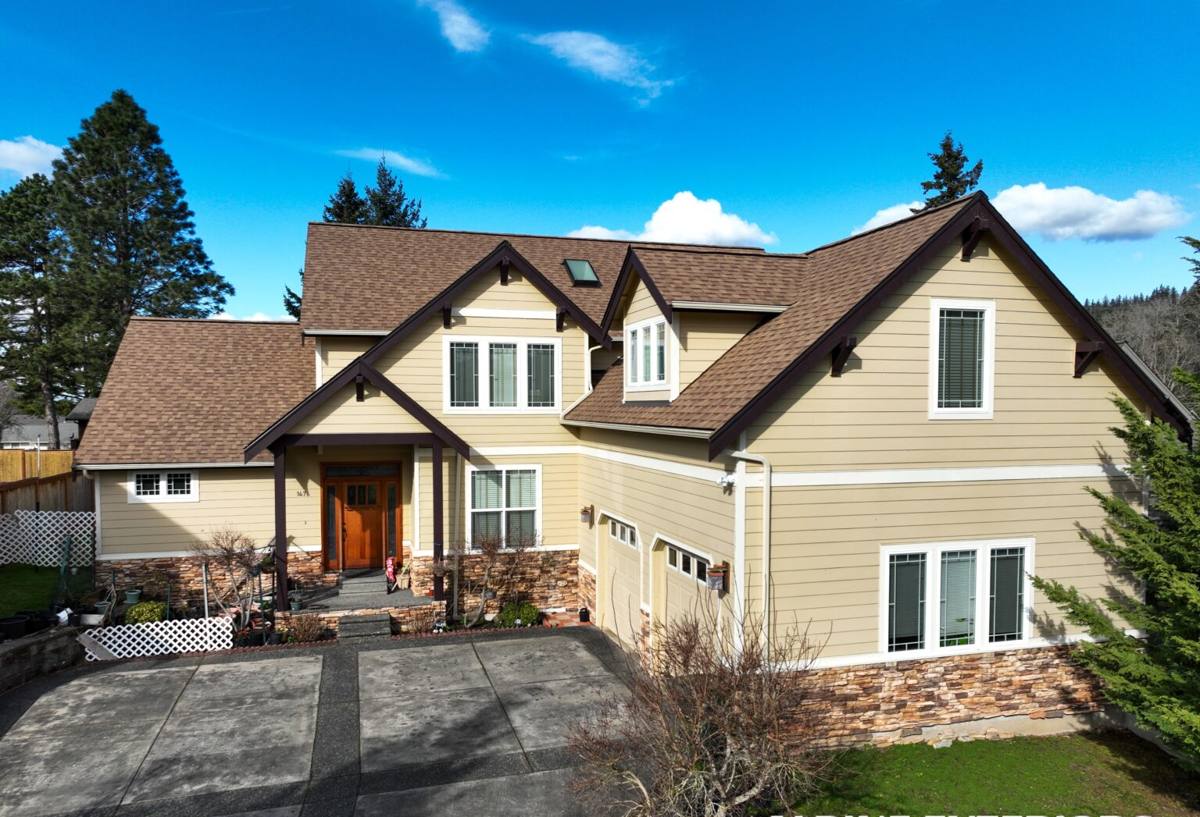
What a Deck Actually Needs to Survive Here
Corrosion-Resistant Hardware Throughout
In a salt-air environment, standard galvanized fasteners can start showing rust streaks and pitting well before the decking itself shows any wear. We spec stainless steel or high-grade coated fasteners rated for coastal and ground-contact exposure on every hidden fastener, joist hanger, and structural screw — not just the visible ones. The visible hardware is easy to catch on a walk-through; it's the framing connectors buried under the boards that fail quietly and cause the real problems years later.
Proper Ventilation Under the Deck
A deck built low to the ground or over poorly drained soil traps moisture underneath, which is exactly the environment moss, mold, and rot organisms need. We build in adequate clearance and airflow paths under the frame so the structure can actually dry out between rain events instead of staying damp for weeks at a time during a typical Whatcom County winter.
Flashing Where the Deck Meets the House
The ledger board connection — where the deck attaches to your house — is the single most common source of hidden water damage on any deck, anywhere. In a high-rainfall coastal area like Fairhaven, we treat this connection as non-negotiable: proper flashing, correct fastener spacing, and a drainage gap that keeps water from wicking into the house's wall assembly. This is the detail that separates a deck that lasts decades from one that causes a rot problem behind your siding five years in.
Composite vs. Other Decking Materials for This Climate
Homeowners in Fairhaven usually compare three general categories when planning a new deck. Here's how they hold up specifically against salt air, sustained rain, and moss pressure.
| Material | Moisture Behavior | Moss & Algae Resistance | Long-Term Maintenance |
|---|---|---|---|
| Pressure-treated wood | Absorbs water, prone to swelling/cupping over time | Low — porous surface holds moisture, feeds growth | Regular sealing/staining required; sanding for splinters |
| Traditional (uncapped) composite | Better than wood but can still absorb moisture at cut ends and surface | Moderate — improved but not immune to surface growth | Periodic cleaning; less sealing than wood |
| Capped composite | Sealed polymer shell resists moisture penetration on all faces | Higher — smooth cap sheds standing moisture, resists staining | Occasional washing; no staining or sealing |
For a property this close to the water, we generally steer homeowners toward capped composite products. The fully encapsulated board resists the surface staining and slow moisture uptake that uncapped products can develop over years of coastal exposure, and it holds up better against the kind of green film that shows up on shaded decks during a long wet season. This isn't a knock on other products — it's a matter of matching the material to what your specific site will throw at it.
How We Approach a Fairhaven Composite Deck Build
- Site assessment — we look at sun exposure, prevailing wind and rain direction, proximity to the water, existing drainage patterns, and any shaded areas prone to moss buildup.
- Structural evaluation — for a replacement deck, we check the existing ledger, posts, and footings before deciding what can be reused versus what needs to be rebuilt to current code.
- Framing and hardware — pressure-treated or coated structural lumber with corrosion-resistant fasteners and connectors throughout, not just where it's visible.
- Moisture management — ledger flashing, joist tape on structural members, and a drainage plan that directs water away from the house and off the site rather than pooling underneath.
- Decking installation — hidden fastener systems where the product allows, correct board spacing for expansion and drainage, and properly finished cut ends to prevent moisture intrusion at edges.
- Railings and trim — matched fascia, post sleeves, and railing components rated for the same coastal exposure as the decking itself.
- Final walkthrough — we go over care and cleaning specific to your deck's sun exposure and how much shade it gets, since that drives how often it'll need attention.
Substructure Details That Get Skipped Elsewhere
A lot of deck problems in this region don't start with the decking boards at all — they start underneath. Joist tape over the top of every structural joist protects the wood from the moisture that inevitably gets past the decking surface over time, whether from rain, condensation, or splash-back. Post bases should sit on proper footings above grade, not buried in soil where standing water collects during Whatcom County's wet months. And any structural wood in contact with concrete or masonry needs a moisture barrier, since capillary action can pull water up into lumber even when the surface looks dry.
We also pay attention to how water sheds off the deck once it's built. A deck that dumps runoff directly against a foundation wall or into a low spot in the yard creates problems that have nothing to do with the decking material — but they'll get blamed on the deck anyway. Getting the grading and drainage right at installation avoids that entirely.
Living With Moss Season: What Actually Helps
Composite decking dramatically reduces moss and algae problems compared to wood, but no exterior surface in Whatcom County is completely immune to a persistent damp shady spot. A few habits make a real difference on a composite deck near the water:
- Sweep leaves and organic debris off the deck regularly in fall — decomposing matter holds moisture and gives moss something to root in.
- Rinse the deck a few times a year with plain water and a stiff (non-metal) brush to clear surface film before it establishes.
- Keep gutters clear so overflow isn't dumping extra water directly onto the deck surface.
- Trim back overhanging branches or shrubs that keep a section of the deck shaded and damp longer than the rest.
- Check board-to-board gaps periodically to make sure they haven't filled with debris that traps water between boards.
None of this is heavy maintenance — that's the point of choosing composite in the first place. But a five-minute seasonal check catches small issues before they become a reason to call us back out.
Railings, Fascia, and Coastal-Grade Finishing
The decking boards get most of the attention, but the finishing details determine how the whole structure ages. Railing systems near the water should use hardware and post hardware rated for the same exposure as the deck itself — an aluminum or coated-steel railing system with the wrong fasteners will show rust streaks down the face of the railing within a couple of seasons. Fascia boards, which wrap the visible edge of the deck frame, should match the decking's moisture resistance rather than being left as untreated lumber, since that edge takes direct rain exposure with no runoff path. These are inexpensive details to get right during construction and expensive ones to fix afterward.
Permits and Local Considerations
Deck projects in Whatcom County typically require a building permit once you're above a certain height or attached to the structure, and any deck near a shoreline or steep slope can involve additional review depending on the property's location relative to the water. We handle the permitting conversation as part of the project so you're not left figuring out county requirements on your own, and we build to the structural code that applies regardless of whether a project happens to fall under simplified permitting rules.
Why a Crew That Already Works Fairhaven Matters
A contractor who builds decks across Whatcom County generally, but doesn't spend much time specifically in waterfront neighborhoods like Fairhaven, can still do a technically fine job — but they're less likely to default to the coastal-grade hardware, ventilation planning, and drainage details as a matter of course. Those choices come from having seen what actually fails on decks a few blocks from the bay, not from a general specification sheet. We build every Fairhaven deck to handle the salt air and rain exposure specific to this stretch of the county, because that's the environment the deck actually has to survive, season after season.
If you're planning a new deck or replacing one that's showing its age, we're happy to come take a look and walk you through what your specific site needs — no pressure, no obligation. Fill out the form below and we'll set up a time to talk through your project.