 Whatcom County
 Why Window Installation in Blaine Is Its Own Job
Blaine sits right on the water at the northern edge of Whatcom County, and that location shapes almost every decision that goes into a window installation here. A window that performs fine forty miles inland can fail early in Blaine if it's installed the same way. Salt-laden air off the water, wind-driven rain that comes at the wall sideways instead of straight down, and a long wet season that keeps moss and algae established on north- and west-facing surfaces for much of the year all put extra load on the window opening, the flashing, and the hardware. Getting a window installation right in this climate isn't about buying a fancier window — it's about respecting what the site does to that window over the next 20 years.
Salt Air and Hardware Corrosion
Coastal air carries fine salt particles that settle on window frames, screens, and especially hardware — hinges, locks, balance systems, and exposed fasteners. Over time this accelerates corrosion on lower-grade metal components and can pit or discolor finishes that would hold up fine in a drier, inland part of Whatcom County. This matters most on window styles with exposed hinge hardware (casements and awnings) and on any home within direct sight of the water, where salt exposure is heaviest.
Wind-Driven Rain and Flashing
Blaine gets its share of storms coming off the water, and wind-driven rain behaves differently than rain falling straight down — it gets pushed up and under trim, sills, and poorly lapped flashing. A window installation that only relies on caulk at the perimeter, instead of a proper shingle-lapped flashing sequence tied into the wall's weather-resistive barrier, is the single most common reason we find water staining, soft framing, or mold inside a wall cavity when we open one up.
Moss, Shade, and Trim Rot
Whatcom County's long moss season isn't just a roof problem. On shaded elevations, moss and algae hold moisture against wood trim, sills, and casings around windows far longer than the surrounding siding dries out. If the window and its trim weren't properly flashed and back-primed at installation, that constant dampness is what eventually turns into soft, rotting wood at the sill — usually years before the window sash itself would have failed.
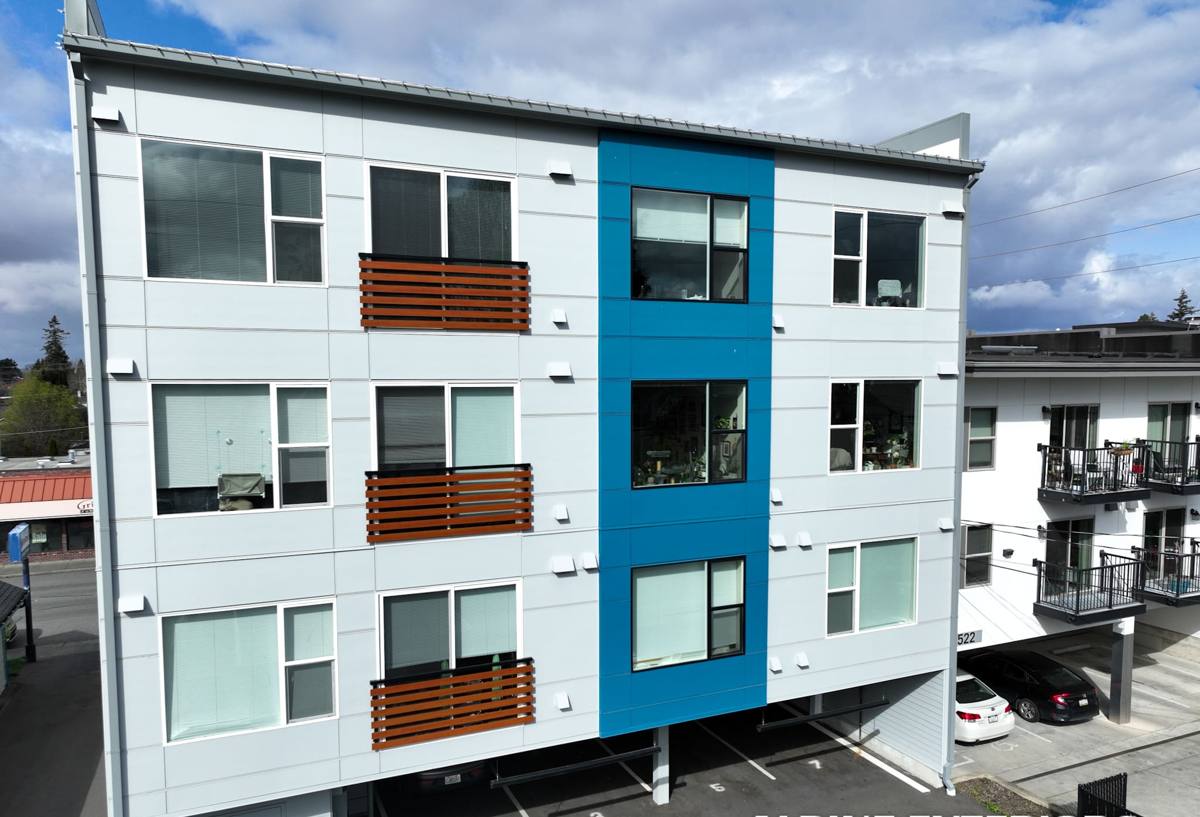
What a Correct Window Installation Actually Involves
A window installation is a sequence, not a single step, and skipping or shortcutting any part of it is where problems start. This is the order we follow, and it's the same order any qualified crew should be following.
Opening Prep and Rot Check
Before a new window goes in, the rough opening gets inspected — not just measured. We check the sill, jack studs, and header for soft or discolored wood, since a window installed over hidden rot is a callback waiting to happen. Any compromised framing gets addressed before the new unit is set, not covered up and hoped for.
Flashing and Water Management Sequence
Sill pan flashing goes in first to catch and direct any water that gets past the window back outside instead of into the wall. Side and head flashing are then lapped in the correct shingle-style order — each piece overlapping the one below it — and tied into the house's weather-resistive barrier so water sheds down and out, never behind the barrier. This sequence is what actually keeps wind-driven rain out over time; sealant is a backup layer, not the primary defense.
Insulation, Air Sealing, and Energy Code
The gap between the window frame and the rough opening gets filled with a low-expansion foam or backer rod and sealant rated for window applications — never packed tight with fiberglass alone, which does little for air sealing and nothing for water management. Washington's energy code sets minimum performance requirements for replacement windows, and in a marine climate like Whatcom County's, a good U-factor also helps control the condensation that mild, humid coastal winters tend to produce on glass and frames.
Retrofit vs. Full-Frame Replacement
One of the first decisions on any Blaine window project is whether to do an insert (retrofit) replacement, which fits a new window into the existing frame, or a full-frame replacement, which removes everything down to the rough opening. The right call depends on the condition of what's already there — not on which option is cheaper.
| Factor | Insert (Pocket) Replacement | Full-Frame Replacement |
|---|---|---|
| Best for | Sound existing frame, no rot or water damage | Rot, water damage, or a frame that's out of square |
| What's replaced | Sash and frame inside the existing structure | Everything, down to bare rough opening |
| Access to flashing | Limited — existing flashing stays in place | Full access to re-flash correctly |
| Relative cost | Lower | Higher |
| Disruption to siding/trim | Minimal | Trim and adjacent siding are opened up |
| Best fit for coastal exposure | Sheltered walls in good condition | Water-facing or high-exposure walls |
In our experience, homes closer to the water or on the more exposed sides of a house are more likely to need a full-frame approach, simply because that's where wind-driven rain and long-term moisture exposure have had the most time to work on the original framing. We won't push a full-frame job where an insert will do, but we also won't install a new window over damage we can see — that's a warranty problem for everyone down the road.
Choosing Materials for a Salt Air, High-Moisture Climate
Not every window product is a good match for a coastal Whatcom County property. Material choice affects how the window handles humidity, salt exposure, and the freeze-thaw swings that show up in winter.
| Material | How It Handles Coastal/Salt Exposure | Maintenance |
|---|---|---|
| Vinyl | Won't corrode or rot; performs well in salt air | Low — occasional cleaning |
| Fiberglass | Very stable in temperature swings and moisture; strong long-term option | Low |
| Wood (unclad) | Attractive but vulnerable to rot without diligent upkeep in a wet climate | High — regular painting/sealing |
| Aluminum-clad wood | Good exterior protection if cladding and flashing details are done correctly | Moderate |
We steer most Blaine homeowners toward vinyl or fiberglass frames precisely because of the salt air and rain exposure — not because wood windows are a bad product, but because an unclad wood exterior surface is simply more maintenance than most people want to keep up with in a marine climate. If a homeowner wants the look of wood, a clad option with correctly detailed flashing is the better trade-off. On glass, we typically recommend Low-E, argon-filled dual-pane units as the baseline for this climate — they help with both energy performance and reducing interior condensation on cold, damp mornings, which is a common complaint in older single-pane homes here.
Our Window Installation Process
- On-site assessment — we look at the actual window openings, existing flashing, and any visible sill or trim damage, not just a quote based on square footage.
- Product selection — we walk through material, glass package, and style options based on the wall's exposure, not a one-size answer for the whole house.
- Opening prep — old window removal, framing inspection, and repair of any soft or damaged wood before anything new goes in.
- Flashing and installation — sill pan, then window, then properly lapped side and head flashing tied into the wall's weather barrier.
- Insulation and sealing — window-rated foam or backer rod and sealant around the full perimeter, interior and exterior.
- Trim and finish — interior and exterior trim reinstalled or replaced, siding tie-in restored to match the surrounding wall.
- Walkthrough — we go over operation, locking hardware, and basic care before we call the job done.
Signs a Blaine Home Needs New Windows or a Reinstall
Not every window problem means a full replacement, but these are the signs worth having a professional look at:
- Visible water staining or soft wood on the interior or exterior sill
- Persistent condensation or fogging between panes (a sign the seal has failed)
- Drafts or noticeable temperature difference near the window even when closed
- Difficulty opening, closing, or locking the window
- Visible gaps, cracked caulk, or daylight around the frame
- Paint peeling or bubbling on interior trim near the window
- Moss or dark staining building up on exterior trim around the frame
- Rising energy bills without another clear explanation
Permits and Energy Requirements in Whatcom County
Window replacement in Whatcom County and the City of Blaine typically requires a permit, and the work needs to meet current Washington State Energy Code minimums for replacement windows. Permit requirements and specifics can vary depending on the scope of the project and the property, so we handle the permitting conversation as part of the job rather than leaving homeowners to figure it out. Meeting code isn't just a formality — it's what keeps the window's energy performance and moisture management up to the standard the rest of the house depends on.
Why a Crew That Already Works in Blaine Matters
A window installation crew that regularly works in Blaine and along the Whatcom County coastline already knows which walls take the worst of the wind-driven rain, which elevations hold moss and moisture the longest, and which material and flashing choices actually hold up here versus on paper. That's the kind of judgment that only comes from doing the work in this specific climate repeatedly — not from a generic install checklist written for a drier region. It also means we're set up to coordinate window work with siding and trim repairs on the same visit when both are needed, instead of treating them as unrelated projects.
If you're dealing with drafty, foggy, or water-damaged windows, or you're planning ahead for a full replacement, we're happy to take a look and give you a straightforward, no-pressure estimate — just fill out the form below.