 Whatcom County
 Board & Batten in a Neighborhood That Earns Its Character
Fairhaven's mix of historic storefronts and residential streets gives the neighborhood a distinct visual identity, and a lot of homeowners here choose board & batten siding specifically because of that vertical, high-contrast look. It reads as craftsman, farmhouse, or coastal cottage depending on the trim and color choices, and it holds up visually in a way that flat lap siding sometimes doesn't on homes with steep gables or narrow lots. But board & batten is also one of the least forgiving siding profiles to get wrong. The battens create dozens of extra seams, fastener points, and drainage paths compared to standard lap siding, and every one of those details has to be handled correctly or the wall behind it pays the price. In a neighborhood this close to the water, that margin for error gets even smaller.
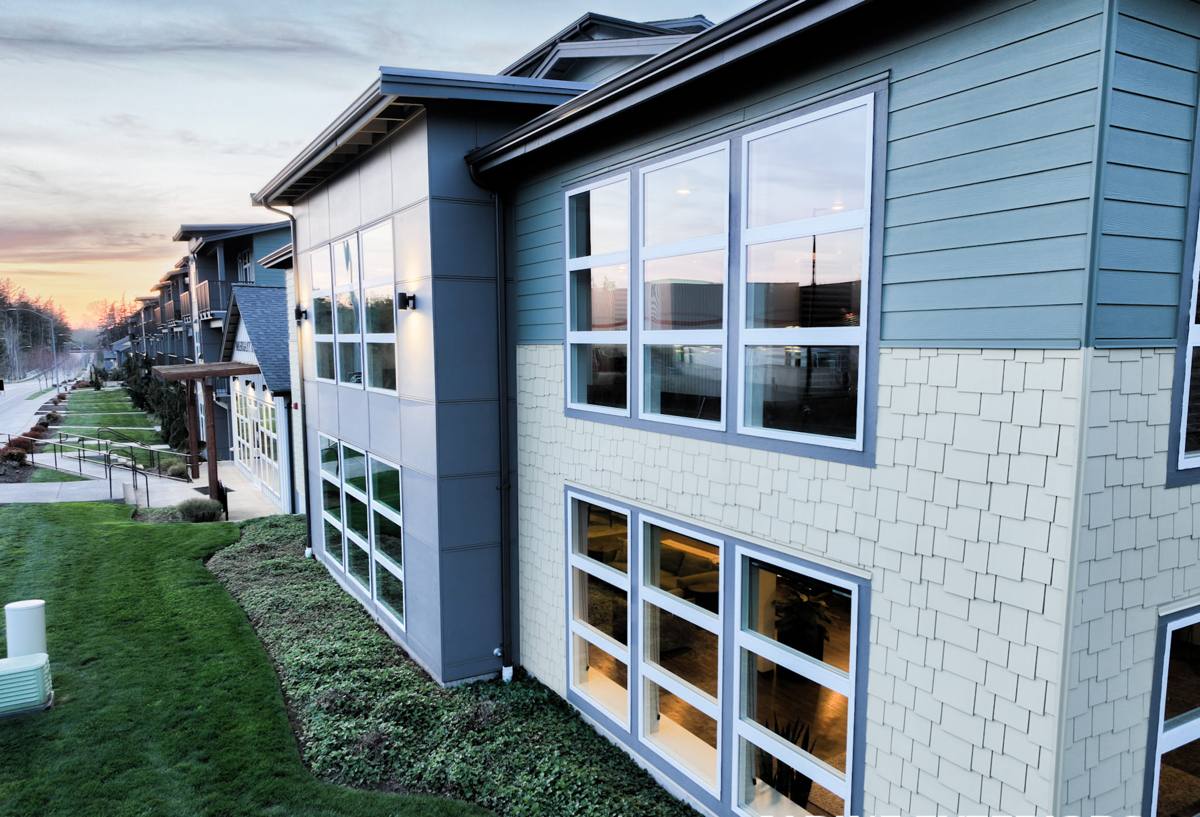
What Fairhaven's Climate Actually Does to Vertical Siding
Whatcom County's marine climate is generally mild, but "mild" doesn't mean "easy" on a home's exterior. Fairhaven sits close enough to Bellingham Bay that its siding deals with a combination of stresses that inland Whatcom County homes see less of.
Salt Air and Marine Exposure
Airborne salt and moisture accelerate corrosion on fasteners, hinges, and any metal trim components, and they slowly break down finishes that aren't built to handle it. Board & batten siding has more exposed fastener heads and more trim edges than lap siding, which means more places for salt-laden moisture to find a weak point.
Driving Rain and Wind
Storms coming off the water often arrive with real wind behind them, pushing rain sideways into wall assemblies instead of letting it run straight down. Vertical siding profiles like board & batten can actually channel wind-driven rain along the battens toward the base of the wall or toward window and door openings if the drainage plane behind the siding isn't built correctly.
An Extended Moss and Algae Season
Whatcom County's damp, mild winters and shaded, tree-lined streets — common throughout Fairhaven — add up to a long season where moss, algae, and mildew can take hold on north-facing and shaded walls. Vertical battens create narrow ledges and shadow lines that hold moisture longer than a flat wall would, which is exactly where organic growth gets started if the material and finish aren't up to it.
None of this makes board & batten a bad choice for a Fairhaven home. It just means the material, the fastening details, and the drainage plane behind the siding all have to be treated as non-negotiable, not as line items to value-engineer down.
Why We Only Install James Hardie for Board & Batten
We install James Hardie fiber cement exclusively, and board & batten is one of the profiles where that decision matters most. We don't install vinyl board & batten, LP SmartSide, Cemplank, Allura, primed spruce, or cedar battens — not because those products can't be installed, but because none of them hold up to Fairhaven's specific combination of salt air, driving rain, and moss exposure as reliably as Hardie does over the long run, and we'd rather stand behind one system we trust completely.
Vinyl board & batten looks the part from a distance, but it's a thin, temperature-sensitive material — it expands, contracts, and can warp or fade faster under UV and salt exposure than most homeowners expect, and damaged sections are hard to color-match years later. Wood battens (cedar or primed spruce) look great on day one, but they need ongoing painting, caulking, and moisture vigilance to avoid rot, and that maintenance burden only grows in a climate this damp. LP SmartSide is an engineered wood product with a real fan base, but wood-based cores are more vulnerable to sustained moisture exposure than fiber cement, and the seams on a board & batten install multiply the number of places that vulnerability can show up.
James Hardie fiber cement is non-combustible, dimensionally stable, and engineered specifically for climates like this one — the HZ5 product line is formulated for wetter, harsher regions of the Pacific Northwest. Its ColorPlus factory finish is baked on under controlled conditions rather than field-applied, which matters enormously on a batten profile where field-painted seams are the first thing to fail. It carries a strong, transferable warranty, and installed correctly, it's the product we're confident will still look right on a Fairhaven home a couple of decades from now.
What a Correct Board & Batten Installation Actually Involves
A Real Drainage Plane, Not Just a House Wrap
Every board & batten install we do goes over a weather-resistant barrier with a properly detailed drainage plane behind it — ideally a rainscreen gap that lets any water that gets past the siding drain and dry out instead of sitting against the sheathing. This matters more on vertical profiles than on lap siding because the battens can direct water flow in ways flat siding doesn't.
Batten Spacing and Fastening
Batten width and spacing affect both the look and the performance of the wall. Fasteners have to hit framing consistently, follow Hardie's specified nailing pattern, and use corrosion-resistant fasteners rated for the exposure — a detail that matters even more given the salt air common to Fairhaven's location.
Flashing at Every Penetration
Windows, doors, hose bibs, light fixtures, and vent penetrations all need proper flashing integrated with the drainage plane before a single batten goes on. On a board & batten wall, these details get covered by trim, which means mistakes here are invisible until there's a leak — and expensive to trace once the siding is finished.
Caulking and Sealant Discipline
Board & batten has more vertical seams than lap siding, and those seams need the right sealant, applied correctly, at the right joints — not everywhere, and not nowhere. Over-caulking can trap moisture just as badly as under-caulking lets it in.
Board & Batten Against Other Options for This Climate
| Material | Look | Salt Air / Moisture Behavior | Maintenance Over 15+ Years |
|---|---|---|---|
| James Hardie board & batten (fiber cement) | Crisp, factory-finished, holds color | Engineered for marine/wet PNW exposure; non-combustible | Occasional wash; repaint typically not needed for many years |
| Vinyl board & batten | Can look flat or plasticky up close | Warps/fades under UV and salt exposure; seams can loosen | Panels crack or discolor and are hard to color-match |
| Cedar battens | Warm, natural, ages with character | Absorbs moisture; vulnerable to rot in damp, shaded walls | Regular painting/staining and caulk upkeep required |
| LP SmartSide board & batten | Wood-grain texture, factory primed | Wood-strand core sensitive to sustained moisture at seams | Field-painted finish needs periodic recoating |
Our Process for a Fairhaven Board & Batten Project
We start with a site walk to assess sun exposure, prevailing wind and rain direction, existing moisture damage, and how close the home sits to salt-air exposure — all of which affect fastening, flashing, and drainage decisions before we ever order material. From there we handle tear-off and inspect the sheathing for hidden rot, common on older siding that's been fighting Whatcom County moss and moisture for years without a proper drainage plane behind it. We install the weather-resistant barrier and drainage system, flash every penetration, then install the Hardie panels and battens to spec, finishing with factory-matched trim and touch-up rather than field-mixed paint. We walk the finished job with the homeowner before calling it done.
Living With Board & Batten in a Salt-Air, High-Moss Climate
Even correctly installed fiber cement siding benefits from a bit of homeowner attention in a climate like this one. A simple annual routine goes a long way:
- Rinse shaded and north-facing walls once a year to keep moss and algae from establishing, especially under trees or near fences that block sun and airflow
- Check caulking at trim joints and penetrations for cracking or separation, particularly after a hard winter
- Keep gutters clear so overflow doesn't run down the wall face and concentrate moisture at the base of the battens
- Trim back vegetation and landscaping that traps moisture against the siding
- Watch for any soft spots, staining, or fastener corrosion near the ground line, where salt spray and splash-back are most concentrated
What Affects the Cost of a Board & Batten Job Here
Board & batten generally costs more per square foot than standard lap siding, mainly due to the added material (battens plus base panels) and labor time from the extra seams and fastening points. On a Fairhaven project specifically, a few things tend to move the number: how much of the existing wall assembly needs repair once old siding comes off, how many window and door penetrations need flashing, wall height and roof pitch complexity, and whether the home needs a full rainscreen retrofit versus building on an assembly that's already in reasonably good shape. We give homeowners a real number after a site visit, not a phone estimate, because those variables matter too much to guess at.
Why Hiring a Crew That Already Works Fairhaven Matters
Board & batten forgives almost nothing when it's installed wrong, and a crew that hasn't worked homes in this specific stretch of Whatcom County is more likely to underbuild the drainage plane or under-spec the fastening for what salt air and driving rain actually do here over time. A crew that's already worked Fairhaven knows to treat this profile as a system — barrier, drainage, flashing, fastening, and finish — not as a stack of boards nailed to a wall, and knows what this particular climate demands of every layer in that system.
If you're considering board & batten siding for a home in Fairhaven, we're glad to walk the property, talk through what your specific exposure and wall condition call for, and give you a straightforward, no-pressure estimate using the form below.