 Whatcom County
 Board & Batten in Ferndale: A Style That Has to Earn Its Keep
Board and batten has a strong following in Ferndale, and it's easy to see why. The vertical lines read as clean and modern on newer builds, and they sit comfortably next to the farmhouse and craftsman homes scattered around town and out along the flats toward the Nooksack River. It's a look that works with Whatcom County's mix of rural acreage, in-town lots, and newer developments alike.
But board and batten is also one of the least forgiving siding styles when the material or the installation is wrong. Every vertical batten creates a seam, and every seam is a place where water can either shed cleanly or find its way in. In a climate like ours, that distinction matters more than the look does.
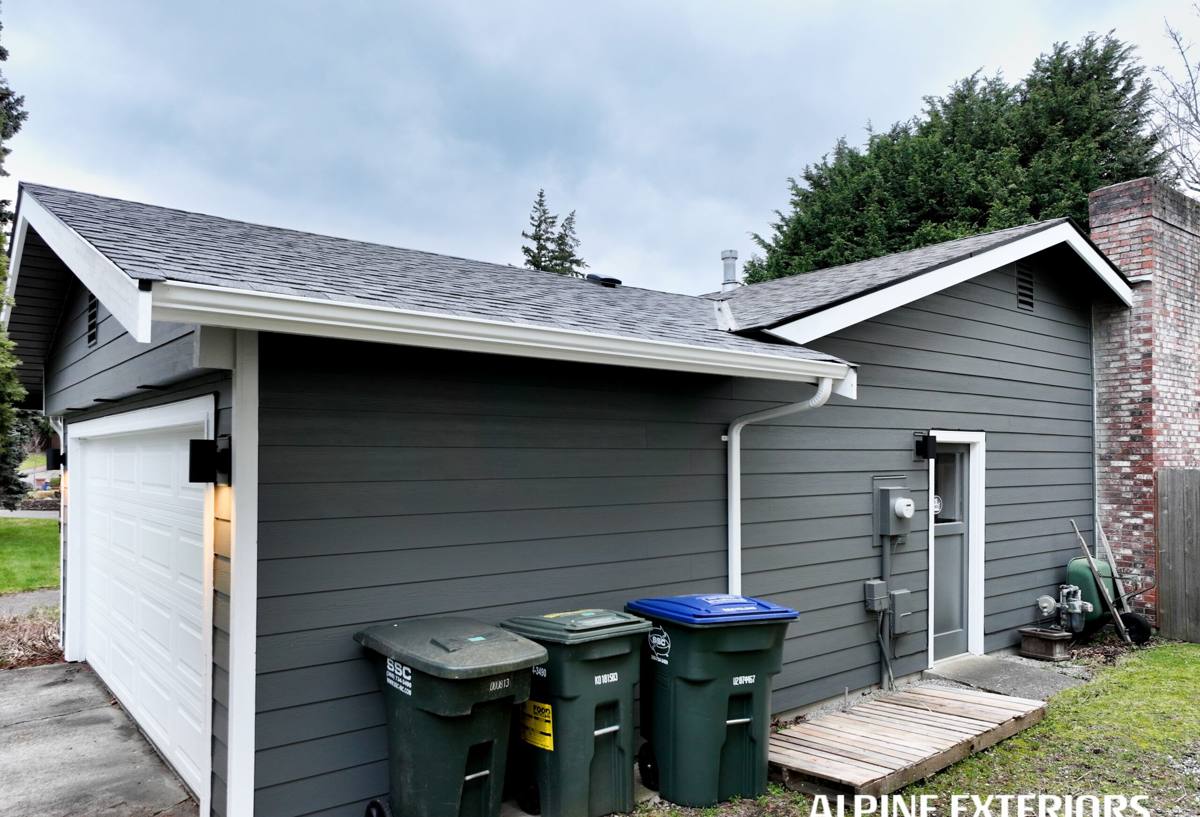
What Ferndale's Climate Actually Does to This Siding Style
Ferndale sits close enough to Bellingham Bay and the Puget Sound shoreline that salt-laden air is a real factor on siding, trim, and fasteners — not just on the waterfront, but well inland when weather comes off the water. Add in Whatcom County's driving, wind-pushed rain and the long gray stretch from fall through spring, and you have conditions that push moisture sideways into vertical seams rather than just down the face of the wall.
Then there's moss. Whatcom County's moss season isn't a cosmetic nuisance — it's a moisture-retention problem. Moss and algae hold water against the siding surface for extended periods, which is exactly the kind of sustained dampness that punishes any material not engineered to handle it. On a board and batten wall, moss tends to establish first in the batten shadow lines and at the bottom courses, where airflow is lowest and splashback is highest.
Why Vertical Siding Is More Exposed Than Horizontal
Horizontal lap siding is designed to shed water downward, course over course, by nature of its overlap. Board and batten relies on the battens themselves, plus the gap and flashing detail behind them, to manage water. That means the installation detailing carries more of the burden than it does on a lap job — there's less built-in redundancy if something is done wrong.
Why the Material Choice Matters Even More on This Profile
Wood board and batten looks the part when it's new, but real wood battens and panels absorb moisture at cut edges and fastener penetrations, and in a wet, moss-prone climate that means repainting, caulking, and eventually board replacement on a recurring cycle. Vinyl board and batten avoids rot but is a thin, flexible material that can show waviness, doesn't hold paint if you ever want a color change, and softens or warps under the kind of sustained damp-and-dry cycling Whatcom County delivers.
We don't install either. We install James Hardie fiber cement exclusively, in every profile we sell — including board and batten — because fiber cement doesn't rot, doesn't feed moss the way wood fiber does, and holds its shape and finish through decades of wet Pacific Northwest weather. That's a standard we apply company-wide, not just here.
The James Hardie Board & Batten System
Hardie's vertical siding is typically built from HardiePanel vertical siding with HardieTrim battens over it, or from the Artisan line for a more refined reveal and shadow line. Both are engineered fiber cement — sand, cement, and cellulose fiber cured into a dense, dimensionally stable board that doesn't swell, cup, or delaminate the way wood-based panels can.
Hardie also builds its products in climate-specific HZ formulations. For Western Washington, that means a panel engineered for a wet freeze-thaw climate rather than a generic, one-size-fits-all board. On top of that, ColorPlus finish is a factory-applied, baked-on finish that resists the fading and moss-friendly surface roughness that field-painted wood or vinyl develop over time, and it comes with its own finish warranty separate from the substrate warranty.
Why This Matters Specifically for Vertical Profiles
Because board and batten depends so heavily on correct seam and joint detailing, starting with a material that doesn't move, swell, or absorb water at the cut edge removes one whole category of failure before installation even begins.
What a Correct Board & Batten Installation Actually Involves
The material is only half the job. A board and batten wall fails or holds up based on details most homeowners never see once the crew leaves:
- A drainage plane (weather-resistive barrier) installed correctly behind the panel, not just draped over sheathing
- A rain screen gap where conditions call for it, so water that does get behind the battens can drain and dry instead of sitting against the wall
- Correct flashing at every window, door, and roof-to-wall intersection — these are the leak points on any vertical siding job, board and batten included
- Proper fastener placement and spacing per the Hardie installation spec, not just "close enough"
- Battens fastened with room for the panel to handle normal expansion and contraction, and joints caulked with a product rated for the exposure
- A clean weep path at the base of the wall so bulk water has somewhere to go
Skip any one of these and you can end up with moisture trapped behind a material that otherwise would have lasted decades. This is where installation quality outweighs brand choice — even Hardie siding installed wrong will fail wrong.
How We Work in Ferndale
We start with a walk of the house and a look at the existing wall assembly — what's behind the current siding, whether there's existing moisture damage, and how the home is oriented relative to prevailing wind and rain. Homes closer to the water or on more exposed lots get a closer look at drainage plane and rain screen detailing before we ever price the job.
From there we handle the permitting through the applicable jurisdiction, remove the old siding, address any sheathing or framing issues we find (rather than siding over them), install the weather-resistive barrier and flashing package correctly, then run the HardiePanel and battens to spec. We finish with a walkthrough so you know exactly what was done and why.
Why It Matters That We Already Work This Area
A crew that regularly works Ferndale and the rest of Whatcom County already knows how differently a wall performs a mile off the water versus further inland, how much moss pressure a shaded north wall carries compared to a sun-exposed south face, and which flashing details actually hold up through a full wet season here rather than in a milder climate. That's not something you can fully substitute with a general contractor pricing sheet — it comes from doing the work locally, repeatedly, in this specific climate.
Cost Factors on a Ferndale Board & Batten Job
| Factor | Why It Moves the Price |
|---|---|
| Wall condition underneath | Rot or moisture damage found during tear-off adds repair scope before new siding goes on |
| House height and access | Multi-story walls and tight lot access add labor and equipment time |
| Trim and batten density | Board and batten uses more linear trim than lap siding, which affects material and labor |
| Rain screen / drainage upgrades | Adding or upgrading a drainage plane on an older home is worth the cost but adds a step |
| Color and finish | Factory ColorPlus finishes vs. field-painted trim affect both cost and long-term upkeep |
We walk every one of these through with you before you get a number, so the estimate reflects your actual house and site, not a generic square-footage guess.
Living With Board & Batten Through Moss Season
Even a correctly installed fiber cement wall benefits from basic upkeep in a climate like ours. A few habits go a long way:
- Keep gutters clear so runoff isn't sheeting directly down the siding face
- Trim back vegetation and tree cover that keeps north- and shade-facing walls damp longer than the rest of the house
- Rinse visible moss or algae buildup with a garden hose and soft brush rather than a pressure washer, which can force water behind joints
- Have caulked joints and flashing checked periodically, since caulk is a maintenance item on any siding system
None of this replaces correct installation — it just protects the investment once the wall is done right.
If you're weighing board and batten for a Ferndale home, we're glad to walk the property, look at what's there now, and put together a straightforward, no-pressure estimate for a James Hardie installation built for this climate. Use the form below to get started.