 Whatcom County
 Composite Decking for Columbia Homes
Columbia sits close enough to the water and the weather patterns that move through Whatcom County that decks here take a beating most inland homes never see. Salt-laden air, long stretches of driving rain, and a moss season that can run from October into May all work against wood decking in ways that show up as soft boards, rot at the ledger, and slick green film underfoot within just a few seasons. Composite decking was built to resist exactly this kind of punishment, but only when it's specified and installed correctly for this specific climate. That distinction matters more here than in drier parts of the state.
This page covers what we actually do when we build or replace a composite deck for a home in the Columbia area: the material choices that make sense given local conditions, what a correct substructure and drainage plan looks like, and why a crew that already works this neighborhood catches problems that an out-of-town installer often misses.
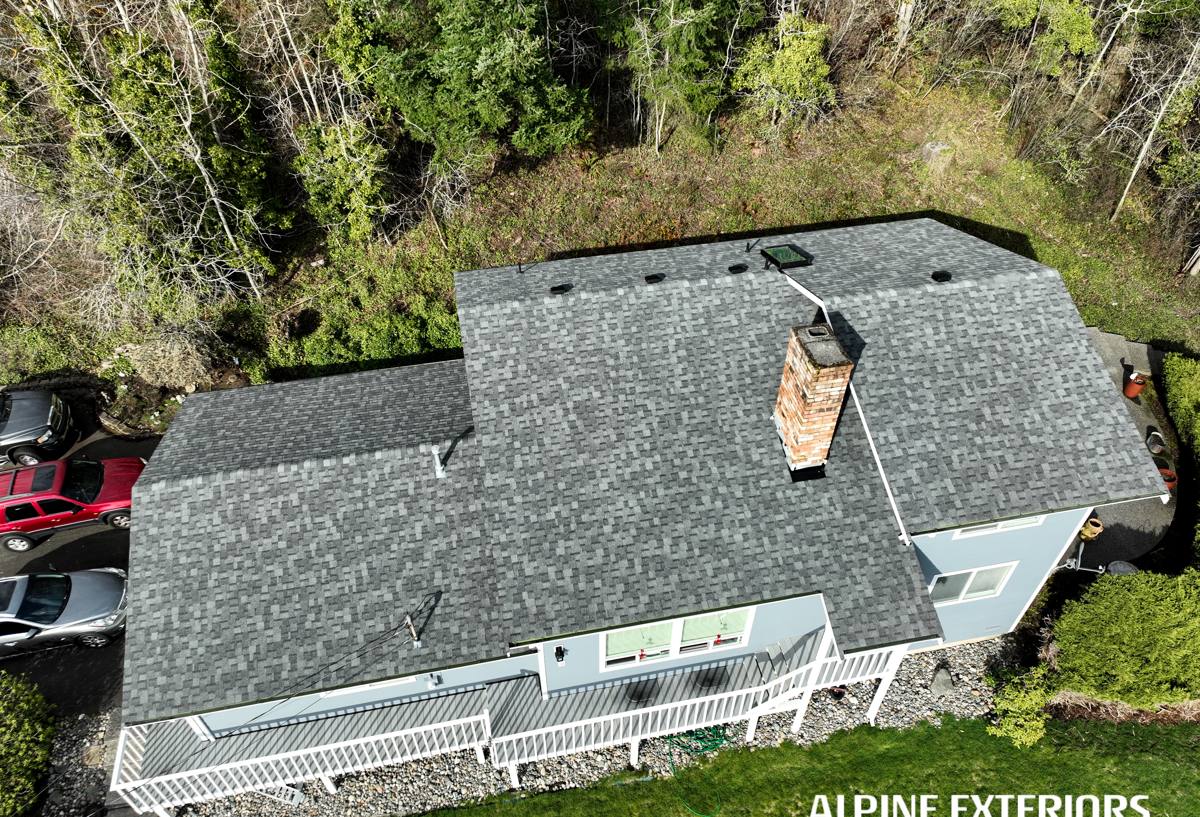
What Whatcom County Weather Does to a Deck Over Time
It helps to understand the specific forces at work before talking about the fix.
Salt Air
Proximity to Bellingham Bay and the greater Salish Sea means airborne salt is a constant, low-level presence. Salt accelerates corrosion on fasteners, joist hangers, and any exposed metal hardware. A deck built with standard interior-grade screws or uncoated brackets will show rust streaks and weakened connections years before the decking boards themselves show wear.
Driving Rain
Whatcom County doesn't just get rain — it gets sustained, wind-driven rain that finds its way into every gap, seam, and fastener hole that isn't properly sealed or flashed. Water that pools on a deck surface or gets trapped between boards and joists is the single biggest driver of long-term deck failure, composite or wood.
Moss Season
Cool, damp, shaded conditions for much of the year create ideal moss and algae growth on any deck surface that doesn't shed water quickly or get enough light and airflow. Moss isn't just cosmetic — it holds moisture against the board surface and turns a deck into a slip hazard, especially on stairs and near shaded exterior walls.
A deck built for Columbia has to answer all three of these at once, not just resist rain or just resist rot in isolation.
Composite vs. Wood: A Straight Comparison for This Climate
We install both materials and we're honest about the tradeoffs. Composite isn't automatically the right call for every budget or every homeowner, but here's how the two compare specifically under Whatcom County conditions.
| Factor | Composite Decking | Pressure-Treated Wood |
|---|---|---|
| Moisture absorption | Very low; won't swell, cup, or splinter from rain exposure | Absorbs water repeatedly; prone to cupping and splitting over time |
| Moss and algae resistance | Better on capped boards; still needs periodic cleaning | Porous surface holds moisture, moss establishes faster |
| Maintenance | Occasional washing; no staining or sealing required | Needs re-staining or sealing every 1-3 years to hold up |
| Upfront cost | Higher material cost | Lower material cost |
| Long-term cost | Lower over 15-20 years given minimal upkeep | Higher when factoring recurring maintenance and earlier replacement |
| Fastener/hardware sensitivity | Still requires corrosion-resistant hardware near salt air | Requires the same, but failures show up sooner due to wood movement |
The honest takeaway: composite costs more up front but removes the recurring maintenance burden that Whatcom County's climate makes especially punishing on wood. For a lot of Columbia homeowners who don't want to re-stain a deck every couple of years in a climate that barely gives you a dry week to do it, that tradeoff makes sense.
What a Correct Composite Deck Install Actually Involves
Composite boards themselves are low-maintenance, but the deck as a whole is only as good as what's underneath and around them. This is where a lot of installs go wrong, and it's not something you can see just by looking at the finished surface.
Substructure and Framing
Joists and framing need adequate spacing for the specific composite product being used — composite typically requires tighter joist spacing than wood, especially on diagonal or picture-frame board patterns. We also use joist tape or a comparable barrier on top of the framing to keep rainwater from sitting directly on the wood substructure, which is one of the most common hidden failure points on decks in wet climates.
Ledger Board and Home Attachment
Where the deck attaches to the house is the single highest-risk point for water intrusion. Correct flashing at the ledger board, with proper counterflashing tucked behind the home's siding or house wrap, keeps driving rain from working its way behind the deck and into the wall structure. This detail matters more in a driving-rain climate than almost anything else on the project.
Drainage and Slope
The deck surface needs a slight slope away from the house — typically a small fraction of an inch per foot — so water sheds instead of pooling. Board gapping also matters: too tight and water sits between boards and encourages moss; too wide and the deck feels unfinished and can trap debris.
Fasteners and Hardware
Given the salt air, we use stainless steel or heavily coated, corrosion-rated fasteners and joist hangers rather than standard galvanized hardware. It costs more but it's the difference between hardware that's still solid in fifteen years and hardware that's rusting and weakening the structure in five.
Our Process, Start to Finish
- On-site assessment: We look at the existing structure (if replacing a deck), grade and drainage around the home, sun/shade exposure, and how the deck will actually be used.
- Material selection: We walk through composite board options, color, and hardware grade based on your budget and how much sun or shade the site gets.
- Permitting: Most deck projects in Whatcom County require a permit depending on size and height; we handle that process rather than leaving it to the homeowner.
- Demo and structural work: Removal of the old deck if applicable, framing repairs or new substructure, and ledger flashing done correctly the first time.
- Decking installation: Boards installed to manufacturer spec for gapping, fastening pattern, and expansion allowance — composite still expands and contracts with temperature, just less dramatically than wood.
- Final walkthrough: We go over the finished deck with you, including what maintenance (if any) is actually needed going forward.
Choosing the Right Board and Hardware for This Site
Not all composite decking is built the same, and the right choice depends on where on the property the deck sits. A deck that gets afternoon sun most of the day has different needs than one tucked under trees and shaded most of the year — the shaded deck is the one that needs the most attention paid to moss resistance and airflow underneath. We also factor in how close the home is to open water or exposed to prevailing wind, since that affects how aggressively we spec corrosion-resistant hardware.
Capped composite boards — where a protective outer shell surrounds a composite core — generally hold up better against moss staining and moisture than uncapped composite, and we default to capped products for most Columbia-area installs given the climate. It costs a bit more but it's a better match for what the weather here actually does to a deck surface.
Maintenance: What Composite Actually Needs in This Climate
Composite decking is low-maintenance, not no-maintenance. In a climate with a long moss season, a little seasonal attention goes a long way.
- Sweep debris (leaves, needles, dirt) off the deck regularly, especially in shaded areas where organic matter builds up and holds moisture
- Wash the deck surface once or twice a year with a mild soap-and-water solution and a soft-bristle brush to prevent moss and algae from establishing
- Keep gutters and downspouts near the deck clear so water isn't dumping directly onto or near the deck surface
- Check and trim back vegetation that shades the deck heavily, since more sun exposure means less moss
- Inspect fastener heads and any visible hardware annually for early signs of corrosion, particularly on decks close to open water
None of this requires stripping, sanding, staining, or sealing — which is the core advantage over wood in a climate that doesn't give you many dry stretches to do that kind of maintenance work anyway.
Questions Worth Asking Before You Hire
Deck failures are rarely about the composite boards themselves — they're almost always about what's underneath, what's flashing the ledger, or what hardware was used. Before hiring anyone for a composite deck project in this area, it's worth asking:
- What joist spacing will you use for this specific composite product, and does it meet the manufacturer's requirement?
- What fastener and hardware grade are you specifying, given the salt air here?
- How will the ledger board be flashed where it meets the house?
- What slope and gapping plan will you use for drainage?
- Will you pull the required permit, and is that included in the quote?
- Do you carry manufacturer certification for the composite brand you're installing?
A contractor who can answer these without hesitation has done this enough times in this climate to know where the real risk is.
Why Local Experience in Columbia Matters
A composite deck built to a generic national spec sheet isn't necessarily built for Columbia. We work in Whatcom County year-round, which means we've seen firsthand how salt air corrodes the wrong hardware, how driving rain finds gaps in a poorly flashed ledger, and how quickly moss takes hold on a shaded deck that wasn't sloped or gapped correctly. That experience shapes every material and installation decision we make on a project here — it's not theoretical, it's based on what actually fails on decks in this exact area over time.
If you're planning a new composite deck or replacing an aging wood deck in Columbia, we're happy to walk the site with you, talk through material options honestly, and put together a straightforward estimate. There's no pressure and no obligation — just a clear look at what your project would actually involve.