 Whatcom County
 Building Decks for Columbia Homes
Columbia sits within the stretch of Whatcom County where weather off the water shapes almost every outdoor building decision a homeowner makes. A deck here isn't just an outdoor living space — it's a structure that has to shed water efficiently, resist the slow creep of moss and algae, and stand up to salt-laden air without the fasteners, framing, or finish failing years ahead of schedule. We've built and repaired enough decks in this corner of the county to know that a design that works fine in a drier inland climate often struggles here within a few seasons.
This page is about deck building specifically for Columbia properties — what the local climate demands, what a properly built deck actually involves, and how our crew approaches the work differently because we're already familiar with this area's conditions.
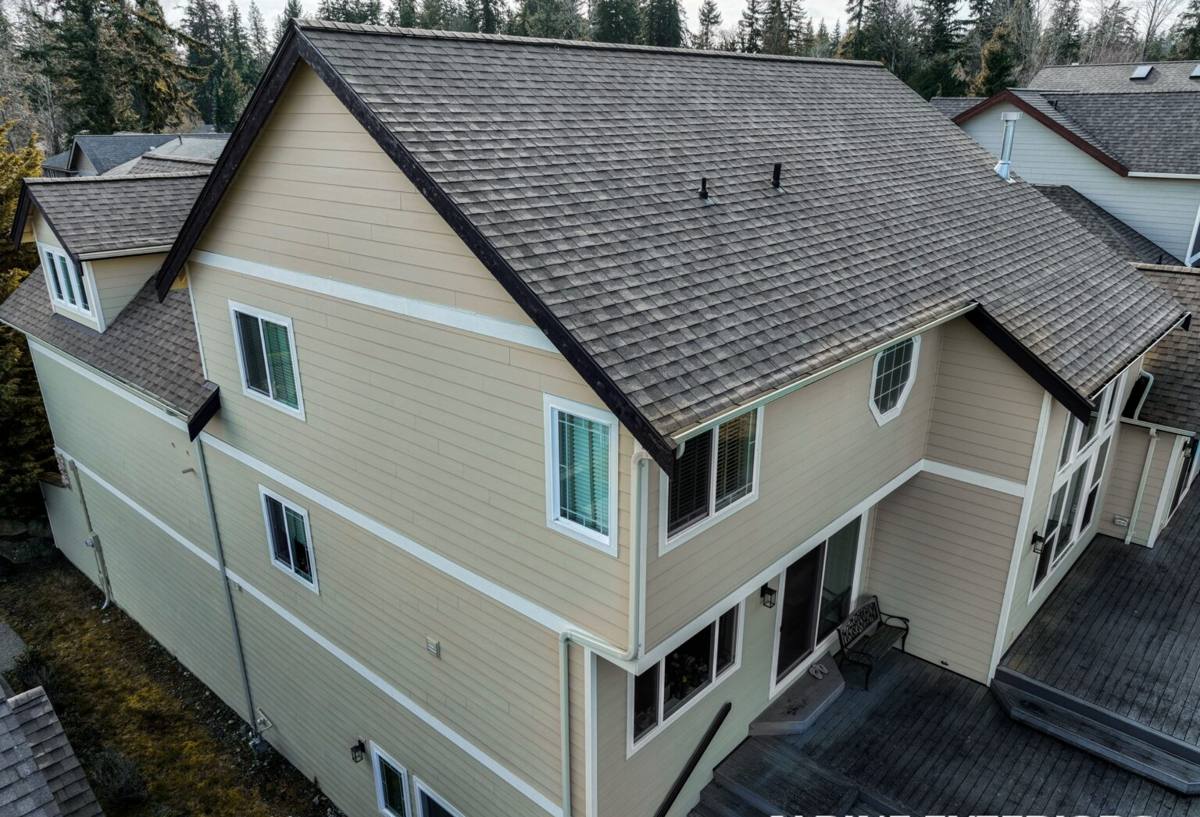
What Whatcom County Weather Does to a Deck
Three climate factors drive almost every deck failure we get called out to inspect in this region:
Salt Air
Proximity to Puget Sound and the Salish Sea means airborne salt is a constant, low-grade presence, even a fair distance inland. Salt accelerates corrosion in fasteners, joist hangers, and any exposed metal hardware. A deck built with standard interior-rated screws and connectors will show rust bleed and weakening hardware well before a deck built with marine-grade or coated fasteners designed for coastal exposure.
Driving Rain
Wind-driven rain doesn't just fall straight down — it gets pushed sideways into ledger connections, under poorly flashed rim joists, and into end-grain cuts that weren't sealed. Over time, this is how rot gets started in framing that looks fine from the top. The ledger board attachment to the house, in particular, is one of the most common failure points we see on decks that weren't flashed correctly at installation.
Moss Season
Whatcom County's long, damp shoulder seasons give moss and algae months to establish themselves on any deck surface that holds moisture. Beyond being a slip hazard, moss and algae growth traps water against decking boards, which speeds up wood decay and can void warranties on composite products if left untreated. Deck surfaces that don't drain and dry quickly become moss farms by the second winter.
What a Correctly Built Deck in This Climate Requires
A deck built to hold up in Columbia's conditions isn't fundamentally different in concept from a deck anywhere else — but the details matter more here. The core requirements:
- Proper ledger flashing: A code-compliant, properly flashed ledger connection at the house is the single most important detail on an attached deck. This is where water intrusion into the home's structure most often starts.
- Coated or stainless fasteners: Hot-dip galvanized or stainless steel hardware resists the corrosion that salt air accelerates. This includes joist hangers, structural screws, and any exposed connectors.
- Gapped, ventilated decking: Proper spacing between boards and adequate airflow underneath the deck lets surfaces dry out between rain events instead of staying damp — which is what keeps moss from taking hold.
- Sloped and sealed surfaces: Decking should be installed with a slight slope away from the house, and any cut ends should be sealed to prevent water wicking into end grain.
- Footings sized for local soil and frost conditions: Post footings need to be sized and set to the depth appropriate for this region's soil and frost line, not a generic minimum.
Choosing Materials for Coastal Whatcom County Conditions
There's no single "best" decking material — the right choice depends on budget, maintenance tolerance, and how much upkeep a homeowner actually wants to commit to. Here's how the common options compare specifically under this area's conditions:
| Material | Moisture & Moss Resistance | Maintenance | Typical Lifespan |
|---|---|---|---|
| Pressure-treated wood | Good if sealed regularly; moss grows readily if neglected | Annual cleaning and periodic sealing | 15-20 years with upkeep |
| Cedar | Naturally rot-resistant, still needs sealing in this climate | Sealing every 1-2 years | 15-25 years with upkeep |
| Composite decking | Very good; doesn't absorb moisture like wood, but surface still needs periodic cleaning to prevent moss film | Low — occasional washing | 25-30+ years, manufacturer-dependent |
| PVC decking | Excellent; fully moisture-resistant surface | Lowest — washing only | 25-30+ years |
We'll walk through these trade-offs honestly during an estimate. Composite and PVC cost more upfront but demand far less of a homeowner's time over the life of the deck — which matters in a climate where neglect shows up fast. Wood costs less initially but only performs well if someone keeps up with sealing on schedule.
Framing and Substructure — Where Decks Actually Fail
Most deck problems we're called to fix in this region aren't cosmetic surface issues — they're framing failures that started underneath, out of sight. Rot at the ledger, corroded hangers, and undersized or poorly set footings are the recurring culprits. A deck can look fine on top for years while the structure underneath is quietly failing, which is why we treat the substructure as the part of the job that determines whether the deck lasts.
This means using framing lumber rated for ground contact where posts meet soil, protecting joists with flashing tape at cut ends, and never relying on decking boards alone to shed water away from structural members below.
Our Process for a Columbia Deck Build
1. On-Site Assessment
We look at the site's exposure — how much direct weather and salt-laden wind it gets, drainage patterns around the foundation, and how the deck will tie into the existing structure.
2. Design and Material Selection
We walk through decking, railing, and hardware options based on the homeowner's budget and appetite for maintenance, with honest trade-offs laid out rather than upsold.
3. Permitting
Deck work in Whatcom County typically requires permitting depending on size and height. We handle the permit process so the structure is inspected and compliant.
4. Build
Footings, framing, ledger flashing, decking, and railing installed in sequence, with attention to the details — fastener choice, spacing, sloping — that determine how the deck performs five and ten years out, not just on install day.
5. Final Walkthrough
We go over care and maintenance specific to the material installed, including what to expect during moss season and how to stay ahead of it.
Why a Crew That Already Works This Area Matters
Deck building isn't unique to Whatcom County, but building one that actually holds up here requires knowing which shortcuts don't work in this climate. A crew that mostly builds decks in drier, inland conditions may not default to coastal-grade fasteners, may under-flash a ledger, or may not think twice about airflow underneath the decking — because in a different climate, those details matter less. Working regularly in this county means we default to the coastal-appropriate choice without it being an upcharge conversation after the fact.
It also means familiarity with the county's permitting process, typical soil conditions, and the kind of weather exposure a given property faces — details that inform decisions from footing depth to material selection.
Maintenance Checklist for Columbia Deck Owners
Whatever material a deck is built from, a few habits go a long way toward fighting off this region's moss and moisture pressure:
- Sweep debris off the deck surface regularly, especially in fall when leaves and needles accumulate and trap moisture
- Wash the deck surface at least once a year to remove early moss and algae growth before it establishes
- Check and clear gaps between boards so water and debris aren't trapped
- Inspect railing hardware and fasteners annually for rust or corrosion, especially on wood decks with exposed metal
- Reseal wood decking on the schedule appropriate to the product — don't wait until graying and cracking are visible
- Confirm the area under the deck has airflow and isn't collecting standing water
Repair, Rebuild, or New Build
Not every deck problem means starting over. Sometimes a ledger reflash, hardware replacement, or a section of rotted framing repair extends a deck's life significantly. Other times — particularly with older decks that were never properly flashed or that used undersized framing — a rebuild is the more honest recommendation than patching around a structural problem. We'll give a straight assessment of which situation applies rather than defaulting to the bigger job.
If you're planning a new deck or dealing with an aging one in Columbia, we're happy to take a look and talk through options — no pressure, no obligation. Use the form below to request a free estimate.