 Whatcom County
 Metal Roofing Built for the Way Cordata Actually Weathers
Cordata sits close enough to the water and far enough into the seasonal drizzle pattern that a roof here works harder than the sales brochures ever mention. Homes in this part of Whatcom County deal with a specific combination: salt-tinged air moving in off the Strait, long stretches of driving rain rather than short downpours, and a moss season that can run eight or nine months out of the year in shaded, north-facing sections of a roof. None of that is exotic weather. But it's persistent, and persistent is what wears out cheap flashing, undersized fasteners, and underlayment that was never meant to sit wet for days at a time.
A metal roof, installed correctly, handles all three of those conditions better than most other roofing materials available in this market. Installed incorrectly, it fails in exactly the same places every other roof fails — just with more expensive materials on top. This page covers what a metal roof needs to actually perform in Cordata, what we do differently because of that, and what to expect if you're weighing metal against other options for your home.
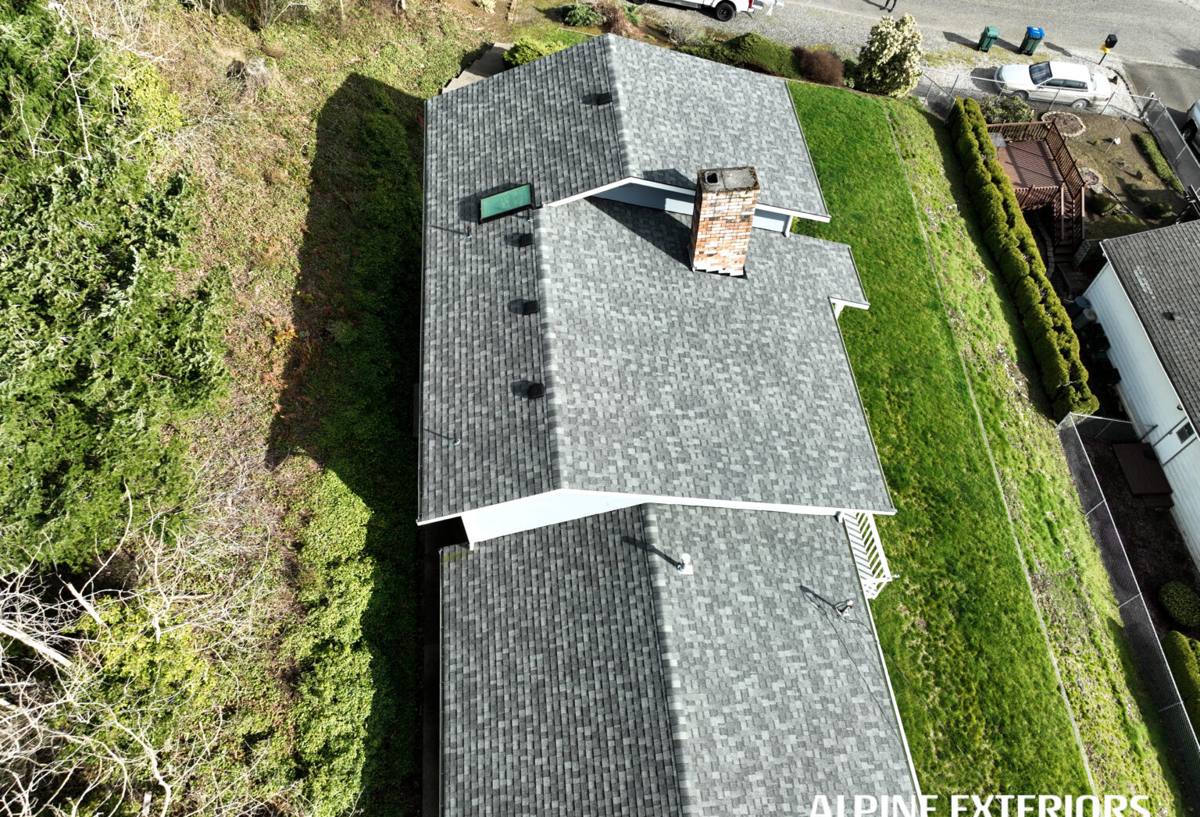
What the Local Climate Does to a Roof Over Time
Salt Air and Metal Fatigue
Proximity to Bellingham Bay and the broader Salish Sea means airborne salt is a real, ongoing factor for exterior materials in this area — not just at waterfront addresses. Salt exposure accelerates corrosion at cut edges, exposed fasteners, and any spot where a coating has been scratched or worn thin. It's not a reason to avoid metal roofing; it's a reason to be specific about panel coatings, fastener hardware, and how edges get finished.
Driving Rain and Water Path
Whatcom County rain tends to come in sustained, wind-driven bands rather than brief cloudbursts. That matters for roofing because wind-driven rain finds its way sideways under laps, around penetrations, and into any gap that a fair-weather installation might get away with. A roof here needs a real water management plan — underlayment, flashing, and panel seams that all assume water will be pushed uphill at some point, not just running downhill.
The Long Moss Season
Shade, moisture, and moderate temperatures are exactly what moss wants, and a lot of Cordata's tree cover provides all three. Moss holds moisture against a roof surface far longer than open sky and sun would allow, which is hard on any roofing material but especially damaging to anything with exposed seams or organic-based components. Metal roofing resists moss growth far better than composition shingle because there's no granulated surface for spores to root into — but flashing details, valleys, and low-slope sections still need attention so moisture doesn't sit and cause problems elsewhere.
Choosing the Right Metal Roofing System
"Metal roofing" covers a range of products, and the right choice depends on the home's roofline, budget, and how much of a factor appearance is. We walk homeowners through the real trade-offs rather than pushing one product line.
| System | Best Fit | Trade-Offs |
|---|---|---|
| Standing seam (concealed fastener) | Most Cordata rooflines, especially anything with moderate to steep pitch | Higher upfront cost; best long-term weathertightness since fasteners aren't exposed to weather or salt air |
| Exposed-fastener metal panel | Outbuildings, garages, budget-driven projects | Lower cost, but exposed screws are the first thing to fail under salt exposure and need periodic inspection |
| Stone-coated steel | Homeowners who want the look of shingle or tile with metal's durability | More installation detail at laps and fasteners; higher material cost |
| Metal shingle/shake panels | Homes where HOA or neighborhood character calls for a traditional look | More seams than standing seam, so flashing quality matters even more |
For most homes in this area, we lean toward standing seam because the concealed fastener system removes the biggest long-term liability — exposed screws loosening or corroding over years of salt air and rain cycles. It costs more going in and it's worth explaining why before anyone commits to it.
What a Correct Installation Actually Involves
The panel itself is only part of the system. Most metal roof failures we get called out to inspect trace back to what's underneath or around the panels, not the panels themselves.
- Underlayment: A synthetic, self-adhering underlayment rated for the exposure this region sees — not the minimum-grade felt sometimes used to cut cost.
- Fastener spec: Corrosion-resistant fasteners matched to the panel metal, sized and spaced to the manufacturer's wind and snow-load tables, not just "what usually works."
- Flashing at every transition: Valleys, chimneys, skylights, and wall intersections are where wind-driven rain actually gets in. Custom-bent flashing beats stock trim pieces here.
- Ventilation: Metal roofs need proper intake and exhaust airflow to prevent condensation forming on the underside of the panels — a common issue when ventilation gets treated as an afterthought.
- Panel seam and lap direction: Set to shed water with the prevailing wind and rain direction for the specific roof plane, not a one-size-fits-all layout.
- Edge and eave detail: Proper drip edge and eave protection so water leaving the panel doesn't wick back under the roof edge.
How Our Process Works
1. On-Site Assessment
We look at the existing roof structure, decking condition, ventilation, and any moss or moisture staining before recommending a system. A metal roof going over compromised decking is a problem waiting to surface later, so this step isn't skipped.
2. Straightforward Proposal
You get a written scope covering panel type, underlayment, flashing plan, and ventilation changes if needed — not just a per-square-foot number with no detail behind it.
3. Install
Panels, flashing, and fastening are installed to manufacturer spec and to the water-management standard this climate actually requires, with attention to the valleys and penetrations that tend to get rushed on lower-bid jobs.
4. Final Walkthrough
We walk the finished roof with you, confirm drainage paths, and go over what maintenance (if any) the system needs going forward.
Cost Factors Homeowners Should Understand
Metal roofing costs more per square foot than composition shingle, and the range for a given home depends on several factors beyond just roof size.
| Factor | Why It Moves the Price |
|---|---|
| Panel system | Standing seam runs higher than exposed-fastener panel; stone-coated and shingle-profile metal fall in between |
| Roof complexity | Valleys, dormers, and multiple roof planes mean more flashing and labor time than a simple gable roof |
| Tear-off vs. overlay | Removing an existing roof down to decking costs more than overlay, but lets us inspect and fix decking issues before they're covered up |
| Ventilation upgrades | Adding or correcting intake/exhaust venting adds cost but protects the investment long-term |
| Accessibility | Steep pitch, height, and limited staging area affect labor and safety equipment needs |
We're not going to quote a number without seeing the roof — anyone who does that over the phone is guessing. What we can say honestly: metal is a bigger upfront investment than shingle, and the return is in longevity and lower maintenance, not in being the cheapest option today.
Living With Moss Season
Even a moss-resistant material benefits from a little seasonal attention in this climate. We recommend a visual check each fall before the rains settle in — looking at valleys, around penetrations, and under any tree cover for moss or debris buildup. Metal roofing doesn't need the scraping and treatment that shingle roofs often do, but keeping gutters and valleys clear of needles and leaf litter prevents standing water from sitting against flashing longer than it should.
Why a Crew That Already Works Cordata Matters
Roofing crews that mostly work drier inland markets sometimes under-detail the flashing and ventilation work that this area's rain and moss actually demand — not out of carelessness, but because it's not what they deal with every day. Working Whatcom County roofs regularly means knowing which valleys collect moss, which roof orientations take the worst of the wind-driven rain, and where salt exposure actually matters versus where it doesn't. That local repetition shows up in the details — the ones you don't see until a roof is ten years old and either still tight or already leaking.
Signs Your Current Roof May Need Attention
- Moss buildup in valleys or on north-facing slopes that keeps returning after cleaning
- Streaking or rust staining near fasteners, flashing, or metal trim
- Granule loss or bare patches if you currently have composition shingle
- Water stains on interior ceilings, especially after wind-driven rain events
- Visible daylight or gaps at flashing around chimneys, vents, or skylights
- Sagging or soft spots when walked, which can indicate decking damage underneath
If you're weighing a metal roof for your Cordata home, or just want an honest read on whether your current roof still has useful life left, we're happy to take a look. The estimate is free, there's no pressure attached to it, and you'll get a straight answer either way — use the form below to get started.