 Whatcom County
 Building New in Cordata Means Building for Whatcom County Weather
Cordata sits close enough to Bellingham Bay and the Strait of Georgia that salt-laden air is a real factor in how exterior materials age, not just a coastal talking point. Add in the driving rain that comes through Whatcom County most of the year and a moss season that can stretch from fall through spring, and you've got a climate that's genuinely hard on window systems if they're installed even a little bit wrong. New construction gives you one real chance to get it right before siding, trim, and interior finishes close everything in. There's no do-over once the wall is buttoned up.
We install new-construction windows in Cordata for builders, remodelers, and homeowners managing their own project. The work itself isn't complicated in concept — set the window, flash it, seal it, move on — but the sequence and the materials matter enormously in a marine climate. A window that's technically "in" but poorly flashed will usually perform fine for the first year or two, then start leaking quietly behind the siding where nobody sees it until there's rot.
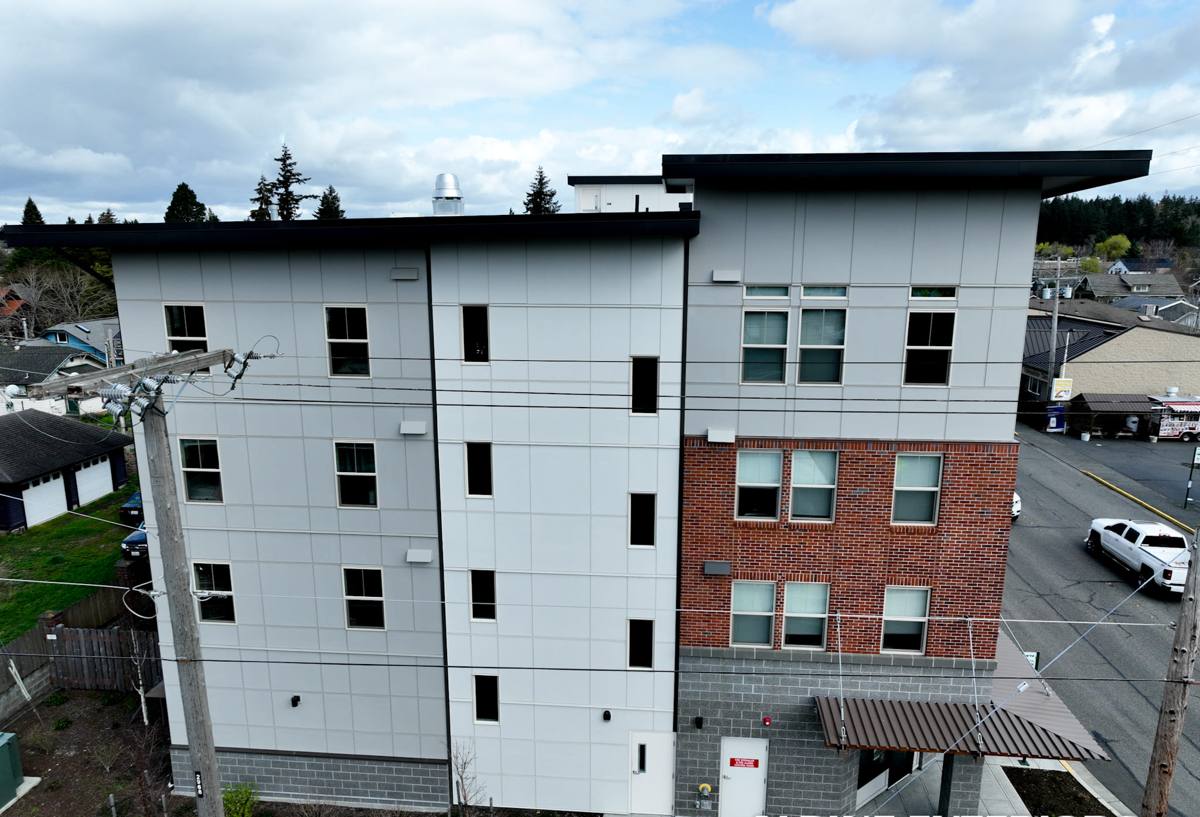
Why New-Construction Installation Is a Different Job Than a Retrofit
A lot of homeowners assume window installation is window installation. It isn't. New-construction windows have a nailing fin around the perimeter and get installed before the exterior cladding goes on, integrated directly into the weather-resistive barrier (WRB) and flashing system. Retrofit or "pocket" windows go into an existing opening after the fact, often reusing the old frame. The two jobs use different products, different sequencing, and different failure modes.
On a new build or an addition in Cordata, we're working with the rough opening, the WRB, and the siding installer's timeline all at once. That coordination is where a lot of the value is — a window installed out of sequence with the house wrap or flashing tape can undo good work from every other trade on the job.
What Goes Wrong When the Sequence Is Rushed
The most common issue we see on new builds isn't a bad window — it's a good window installed in the wrong order relative to the WRB and flashing. Flashing tape applied over the nailing fin instead of under the head flashing, house wrap cut and taped without proper shingle-lap order, or sealant used as a substitute for correct flashing geometry. In a dry climate those shortcuts might not show up for years. In Whatcom County's rain, they show up fast.
What a Correct New-Construction Window Install Involves
Rough Opening and Sill Pan
Before a window ever goes in, the rough opening needs to be square, properly sized, and protected at the sill with a sloped sill pan or flashing membrane that directs any water that gets past the window back outside the wall — not down into the framing. This is the single most skipped step on rushed jobs, and it's the one that matters most in a wet climate.
Flashing Sequence
Correct flashing follows a shingle-lap principle: sill flashing first, then the window itself, then jamb flashing over the nailing fin, then head flashing last, integrated with the WRB above it so water always sheds outward and downward, never into a seam. Skipping or reversing this order is how water finds its way behind the cladding.
Nailing Fin, Shimming, and Fastening
The window needs to be shimmed level, plumb, and square before the nailing fin is fastened — an out-of-square window strains the sash, causes uneven weatherstripping wear, and can crack glazing seals over time. Fasteners go where the manufacturer specifies, not wherever is convenient.
Sealant and Backer Rod
Interior and exterior sealant joints use backer rod where the gap calls for it, with sealant tooled to shed water rather than trap it. Sealant is a secondary defense, not the primary one — it should never be doing the job that flashing and the sill pan are supposed to do.
Choosing the Right Window Frame Material for a Cordata Build
Frame material affects how a window holds up against sustained moisture exposure and salt air over decades, not just how it looks on day one. Here's how the common options compare for a new build in this area:
| Frame Material | Moisture Behavior | Maintenance | Typical Fit for Cordata New Builds |
|---|---|---|---|
| Vinyl | Won't rot; can expand/contract with temperature swings | Low | Common, cost-effective, solid performer if installed correctly |
| Fiberglass | Dimensionally stable, handles moisture and salt air well | Low | Strong long-term choice, higher upfront cost |
| Wood (unclad interior) | Attractive but vulnerable to moisture without diligent upkeep | High | We're cautious recommending unclad wood on exterior-exposed elevations here |
| Aluminum-clad wood | Wood warmth inside, protected exterior face | Moderate | Works well when detailing and flashing are done right |
We don't push any single brand or material on every job — the right call depends on the elevation's rain exposure, the home's design, and budget. What we do insist on is a frame system with a track record in Pacific Northwest conditions and manufacturer-specified flashing details we can actually follow.
Performance Ratings Worth Paying Attention To
Two numbers matter more than the rest for a Whatcom County build: U-factor (how well the window resists heat loss — lower is better) and the presence of a quality low-E coating (which helps with both energy performance and comfort near the glass). Air infiltration ratings matter too, since driving rain often arrives with wind. We can walk through NFRC labels with you during the estimate rather than relying on a sales sheet.
Condensation resistance is also worth asking about if the home has larger glass areas — a well-built window with a warm-edge spacer will resist interior condensation far better in our damp winters than a bargain unit that looks similar on a showroom floor.
Our Process for New-Construction Installs in Cordata
- Review plans and rough openings with the builder or homeowner before windows are ordered, catching sizing issues early
- Confirm flashing and WRB details with the general contractor so trades aren't working against each other
- Install sill pans and flashing membrane before the window goes anywhere near the opening
- Set, shim, square, and fasten each window to manufacturer spec
- Complete jamb and head flashing in proper shingle-lap sequence, tied into the WRB
- Seal interior and exterior joints with correctly sized backer rod and sealant
- Walk the job with photos of flashing details before siding covers them, so there's a record if anyone ever needs it
Mistakes We See on Rushed New-Construction Jobs
- Sealant used in place of proper sill pan flashing
- Flashing tape applied out of shingle-lap order
- Windows fastened before being checked for square, straining the frame
- WRB cut too tight around the opening with no integration to window flashing
- Inconsistent shimming leading to operational problems within a year or two
- No photo documentation of flashing before it's covered by siding
Timeline and Cost Factors
Every new build is different, but a few factors consistently move the timeline and price on a Cordata project:
| Factor | Why It Matters |
|---|---|
| Number and size of openings | More windows and larger units mean more flashing detail work and labor hours |
| Coordination with siding/WRB installer | Working in sequence avoids delays and rework for either trade |
| Frame material selected | Vinyl, fiberglass, and clad-wood units carry different material costs and lead times |
| Elevation exposure | Walls facing prevailing wind-driven rain often warrant extra flashing detail |
| Lead time from manufacturer | Custom sizes or specific glass packages can add weeks to ordering |
Broad ranges for new-construction window packages vary a lot by home size and window count, so we'd rather give you real numbers based on your actual plans than a generic figure that doesn't apply to your build.
Why Hiring a Crew That Already Works Cordata Matters
A crew that regularly works new construction in Whatcom County has already seen how salt air, driving rain, and moss buildup affect installations over years, not just at the walkthrough. That experience shows up in small decisions — which flashing tape holds up long-term in this humidity, how much slope a sill pan needs given local rain intensity, where extra attention to sealing pays off on a north- or west-facing wall. It also means we're used to coordinating with builders and other trades on active job sites, not just doing standalone replacement work.
If you're building new in Cordata and want windows installed correctly the first time, we're happy to provide a free, no-pressure estimate. Send us your plans or opening schedule using the form below and we'll walk through the details with you.