 Whatcom County
 Why Edgemoor Homes Need a Different Approach to Windows
Edgemoor sits close enough to the water that salt air, wind-driven rain, and the long gray stretch of moss season all show up in a window's performance long before most homeowners notice. Whatcom County's marine climate is mild compared to inland Washington, but "mild" doesn't mean easy on building materials. It means near-constant moisture exposure, temperature swings between day and night that stress seals, and enough salt-laden air off the bay to accelerate corrosion on hardware and frames that weren't built for it.
We've worked on enough homes in this neighborhood to know the pattern: older single-pane or early-generation dual-pane windows that were fine when installed decades ago are now the weak point in the building envelope. Drafts around the frame, fogged glass between panes, sashes that stick from swollen wood or warped vinyl, and condensation on interior glass in winter are all signs the window assembly has stopped doing its job. Energy-efficient replacement windows solve more than a utility bill problem here — they solve a moisture and durability problem specific to this location.
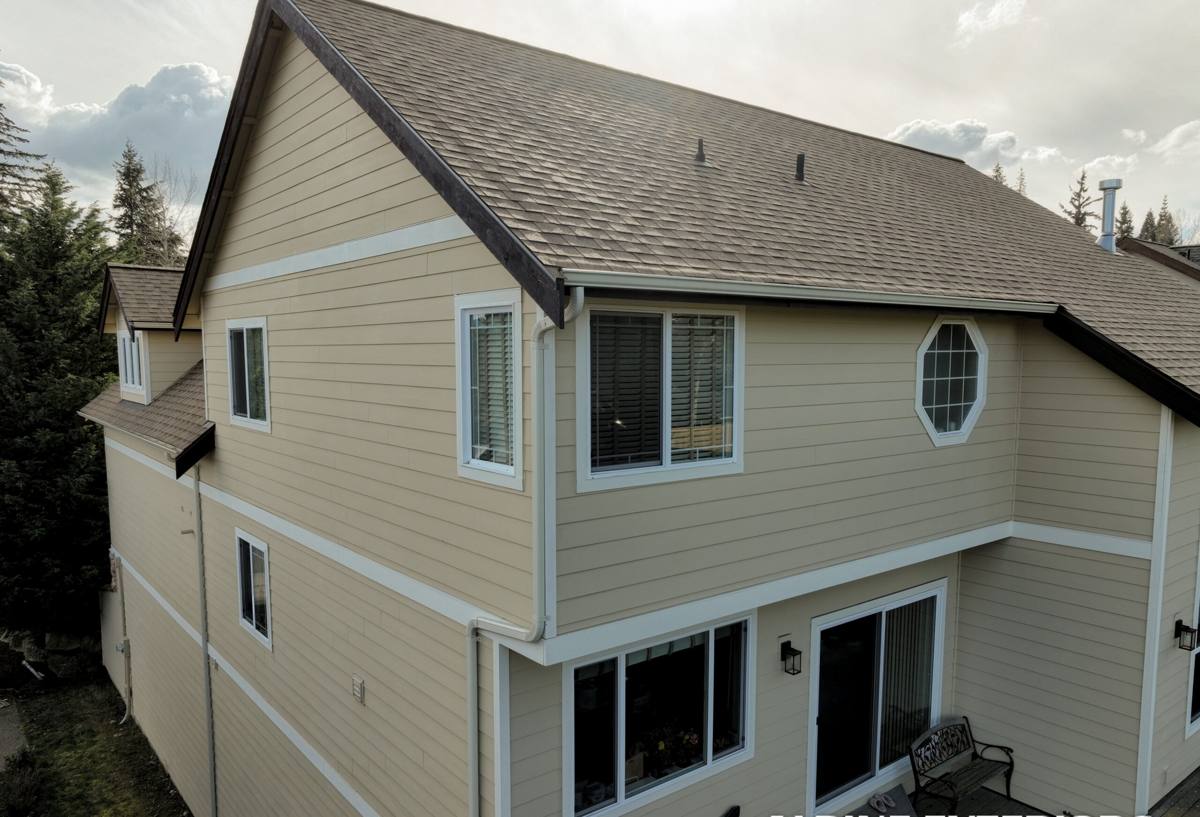
What "Energy-Efficient" Actually Means for This Climate
Energy-efficient windows get marketed heavily around insulation value, but insulation is only part of what matters in a place like Edgemoor. The window has to manage three things at once: heat loss, air infiltration, and moisture — and moisture is the one that gets overlooked most often in sales conversations.
Heat Loss and Comfort
Whatcom County doesn't see extreme cold, but it does see long stretches of damp, chilly weather where a home's heating system runs steadily for months. A window with a poor U-factor (the rating for heat transfer) turns into a cold surface that homeowners feel from several feet away, and it makes rooms with a lot of glass — which is common in homes taking advantage of bay or territorial views — noticeably harder to keep comfortable.
Air and Water Infiltration
Driving rain off the water tests a window's weatherstripping and flashing details differently than a straight vertical downpour does. Wind-driven rain gets pushed sideways and upward into gaps that would stay dry in a calmer climate. This is where installation quality matters as much as the window product itself — a well-rated window with poor flashing will still leak.
Moisture and Condensation Control
Interior condensation on glass or between panes is a sign the seal or the glazing package isn't keeping pace with the humidity difference between inside and outside air. Left alone, that moisture works into the frame and sill, and in a climate with a genuine moss season, anything holding moisture against wood trim becomes a rot risk over a few seasons rather than a few decades.
What a Correct Installation Involves
Replacing a window is not just swapping glass in an existing opening. In a marine climate, the details around the window matter as much as the window itself.
- Opening inspection: checking the existing sill, jamb, and framing for hidden rot or moisture damage before anything new goes in — a common find on older Edgemoor homes with original wood-frame windows.
- Flashing and water management: proper flashing tape and pan flashing at the sill so any water that does get past the exterior finish drains out instead of pooling against wood framing.
- Air sealing: continuous, correctly rated sealant and backer rod around the full perimeter — not just foam sprayed in gaps, which degrades and gaps over time.
- Correct fastening and shimming: the window has to sit square and be fastened per manufacturer specification, or the seals and hardware wear unevenly and fail early.
- Interior and exterior trim finishing: sealed and finished properly so moisture can't track in behind the trim.
- Hardware selection: corrosion-resistant hardware and fasteners suited to a salt-air environment, not standard-grade components that pit and seize within a few years near the water.
Skipping any one of these steps is how a brand-new, well-rated window still ends up drafty, fogged, or rotting at the sill within five to ten years. The product rating on paper doesn't matter if the installation around it fails.
Choosing the Right Window Type and Materials
There's no single "best" window for every home — the right choice depends on the home's age, exposure to wind and rain, and how much upkeep the homeowner wants to take on.
| Frame Material | Strengths | Trade-offs in This Climate |
|---|---|---|
| Vinyl | Good insulation value, low maintenance, competitive cost | Can expand/contract with temperature swings; quality varies a lot between manufacturers |
| Fiberglass | Very stable dimensionally, strong resistance to moisture and corrosion, holds paint well | Higher upfront cost than vinyl |
| Wood (clad exterior) | Classic look, good for older or historic-style homes | Exterior cladding must be intact and well-sealed, or moisture reaches the wood core — a real risk given local rain and moss exposure |
| Aluminum | Strong, slim sightlines | Poor insulator on its own unless thermally broken; can corrode faster in salt air without the right finish |
For homes closer to the water and exposed to more direct wind and salt spray, we generally steer homeowners toward vinyl or fiberglass with corrosion-resistant hardware over bare aluminum or unclad wood — not because those materials are bad products, but because they demand more maintenance to hold up long-term in this specific exposure. If a homeowner wants the look of wood, a properly clad and well-detailed unit is still a reasonable choice; it just needs to be installed and flashed correctly and checked periodically.
Glazing and Gas Fill
Double-pane windows with a low-E coating and argon gas fill are the standard baseline for energy efficiency today. Triple-pane goes further on insulation value but adds weight, cost, and isn't always necessary in Whatcom County's moderate climate — it tends to make more sense on north-facing rooms or homes with unusually high heating demand than as a blanket upgrade.
Our Process, Start to Finish
- On-site assessment: we look at each window opening individually — condition of the existing frame, sill, and surrounding siding or trim, not just the glass.
- Honest recommendation: we tell you which windows genuinely need replacement now, which can wait, and which just need re-caulking or hardware service instead of full replacement.
- Product and material selection: we walk through frame material, glazing package, and hardware options suited to the home's exposure and the homeowner's budget.
- Written estimate: clear scope, materials, and pricing before any work starts — no surprise add-ons mid-project.
- Removal and opening prep: careful removal of the old unit, inspection and repair of any hidden rot or damage found in the opening.
- Installation: flashing, air sealing, fastening, and finishing done to manufacturer spec, every window, every time.
- Final walkthrough: we check operation, seals, and finish work with the homeowner before calling the job done.
Signs It's Time to Replace, Not Repair
Not every window problem means full replacement. Here's a rough guide to what's usually fixable versus what points to replacement:
- Foggy glass or visible moisture between panes — seal failure, replacement of the glass unit or window is usually needed.
- Drafts around a single window with an otherwise sound frame — often a caulking or weatherstripping fix.
- Soft or spongy wood at the sill or jamb — rot has set in; the surrounding structure needs repair regardless of whether the window itself is replaced.
- Window won't stay open, or the sash is visibly warped — mechanical or material failure, typically a replacement situation.
- Consistently cold room near large window areas — could be the glazing, could be poor installation around a newer window; worth an on-site look before assuming a product defect.
Why Hiring a Crew That Knows Edgemoor Matters
Window installation instructions from manufacturers are written for average conditions across the country. A crew that only installs a handful of windows a year, or that works mostly inland, doesn't have the day-to-day experience of what wind-driven rain off the bay does to a poorly flashed sill, or how quickly corrosion shows up on the wrong grade of hardware in a salt-air setting. That experience is what closes the gap between a window that performs well on a spec sheet and one that actually holds up on an Edgemoor home for the next twenty-plus years.
We also know that homes in this part of Whatcom County range widely in age and construction style — from older wood-frame homes to newer builds — and each one needs its own read on what the opening actually needs, not a one-size answer.
Maintenance That Extends the Life of New Windows
Even a correctly installed, high-quality window benefits from basic upkeep in this climate:
- Rinse salt residue and grime off exterior glass and frames a few times a year, especially after storms.
- Check and clear weep holes (the small drainage openings at the base of the frame) so water doesn't pool.
- Inspect exterior caulking annually and touch it up before gaps widen.
- Keep gutters and downspouts clear nearby so roof runoff isn't sheeting down across window openings.
- Watch for early moss or algae growth on sills and trim during the wetter months and clean it off before it holds moisture against the surface.
Get a Straightforward Estimate
If your windows are drafty, fogged, hard to operate, or just original to a home that's decades old, it's worth having someone look at the actual openings before assuming you know what's needed. We offer free, no-pressure estimates for Edgemoor homeowners — an honest look at what's going on with your windows and what it would take to fix it right, using the form below.